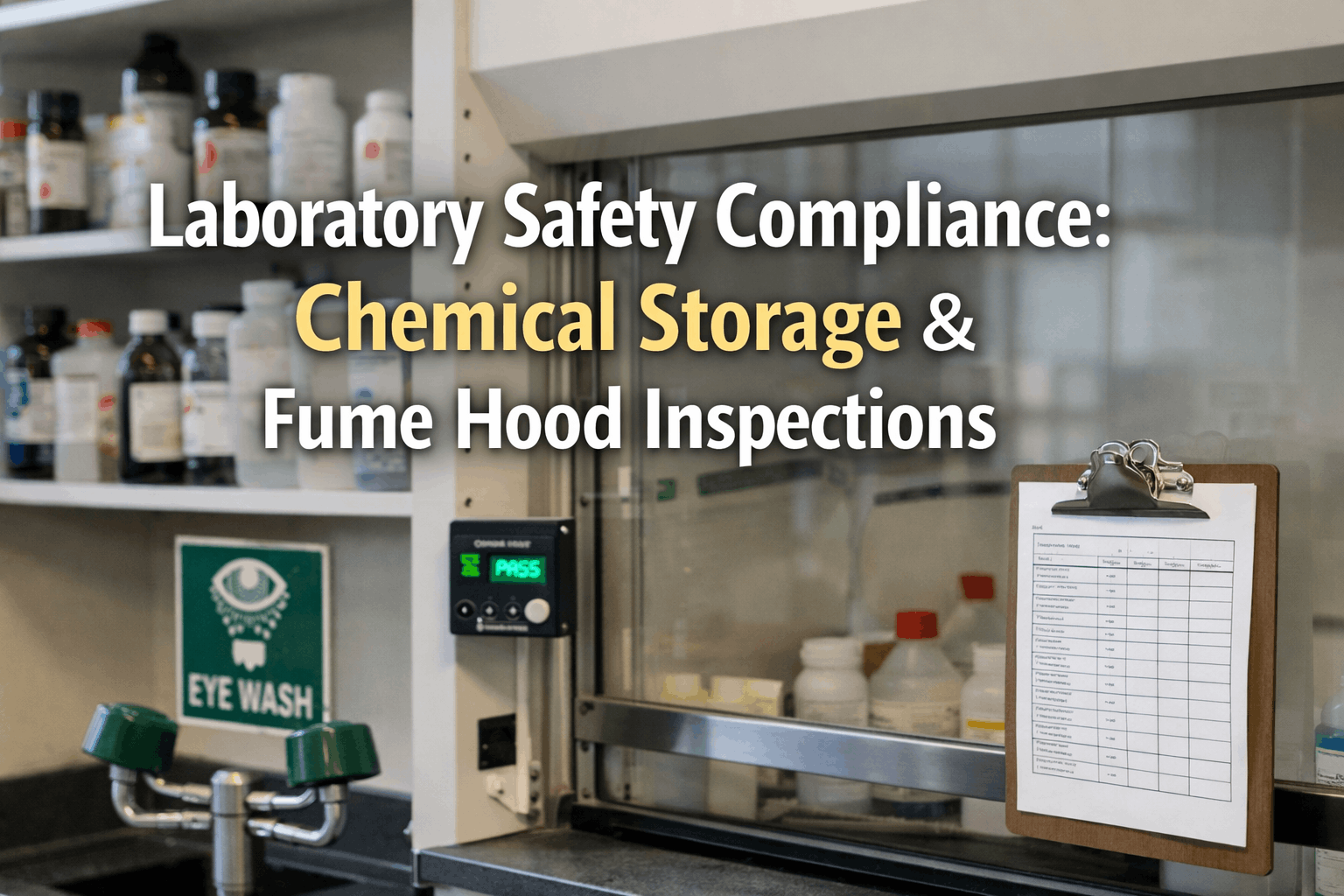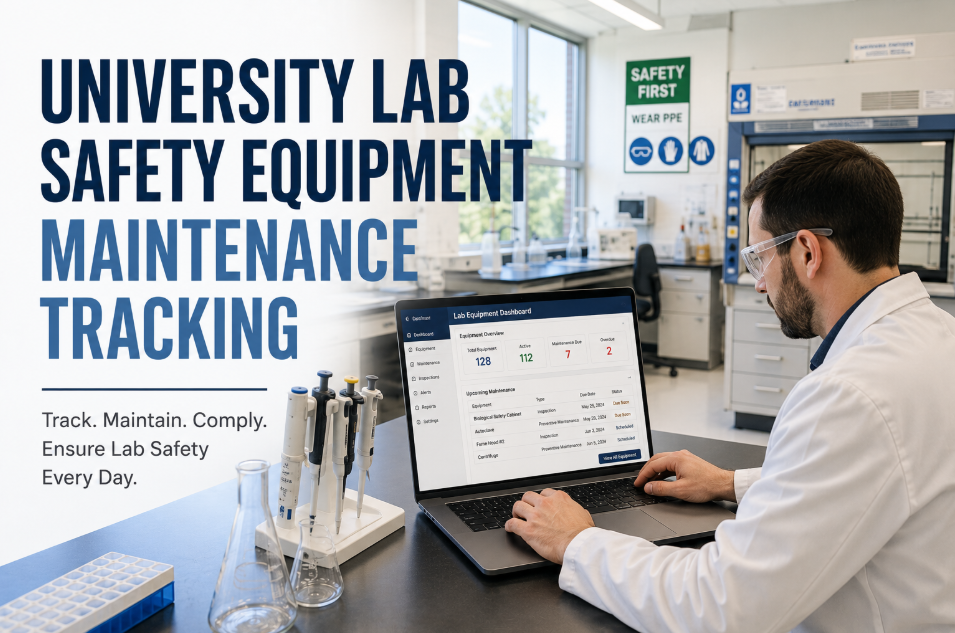
A single fume hood failure in a university chemistry lab can expose students to toxic vapor concentrations exceeding OSHA permissible exposure limits within minutes — and the liability falls directly on the institution. In 2023, OSHA cited 214 universities for laboratory safety violations, with maintenance-related equipment failures accounting for 58% of all citations. The pattern is consistent: safety showers that have not been flow-tested in months, eyewash stations with stagnant water, biosafety cabinets running below certification velocity, and emergency gas shutoffs that were never included in any preventive maintenance schedule. These are not obscure edge cases. They are the most common equipment categories in every university lab, and they require documented, recurring maintenance to remain compliant with OSHA, ANSI, and accreditation standards. Universities that have moved lab safety equipment tracking to digital CMMS platforms like OxMaint report 94% PM compliance on safety-critical assets, reduce accreditation documentation gaps to zero, and cut emergency safety equipment repairs by 41%. If your lab safety maintenance still depends on spreadsheets updated quarterly by a graduate assistant, every audit is a liability event waiting to happen. See how digital tracking protects your labs — start a free trial or book a demo with our team.
University Lab Safety Equipment Maintenance Tracking
Lab equipment failures put students at risk and trigger OSHA and accreditation scrutiny. Digital maintenance tracking keeps university lab safety equipment compliant, documented, and audit-ready — across every building on campus.
What Is Lab Safety Equipment Maintenance Tracking?
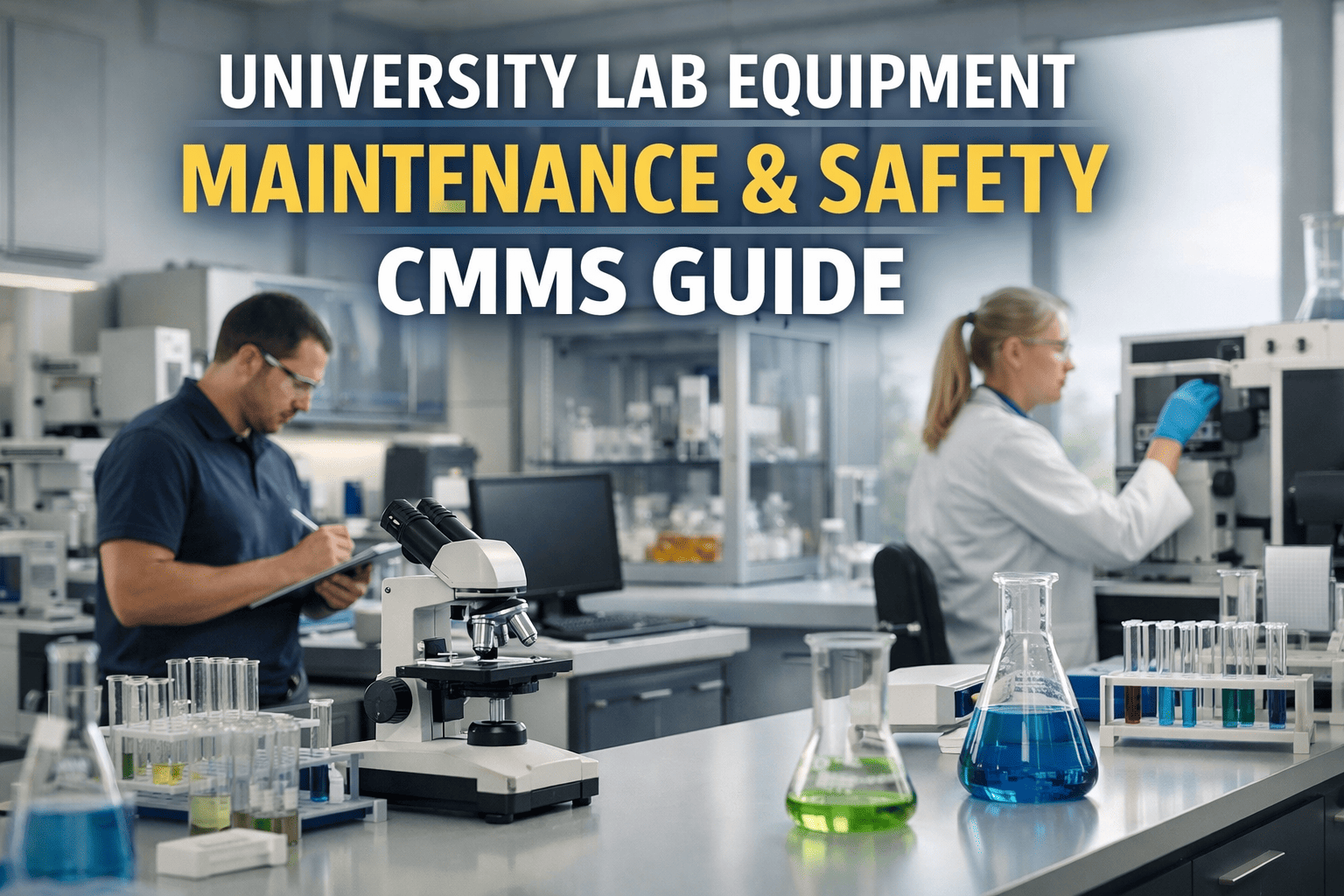
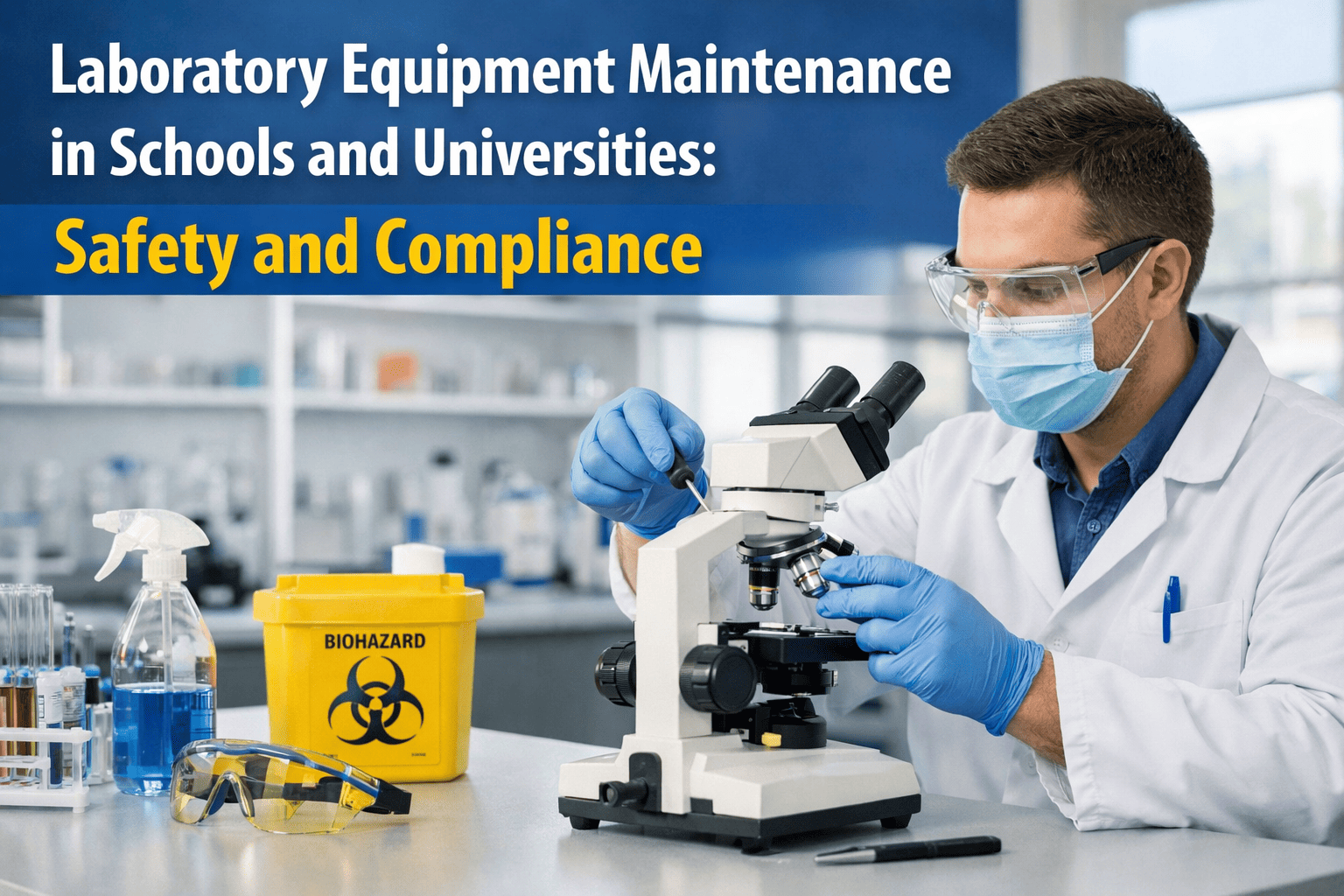
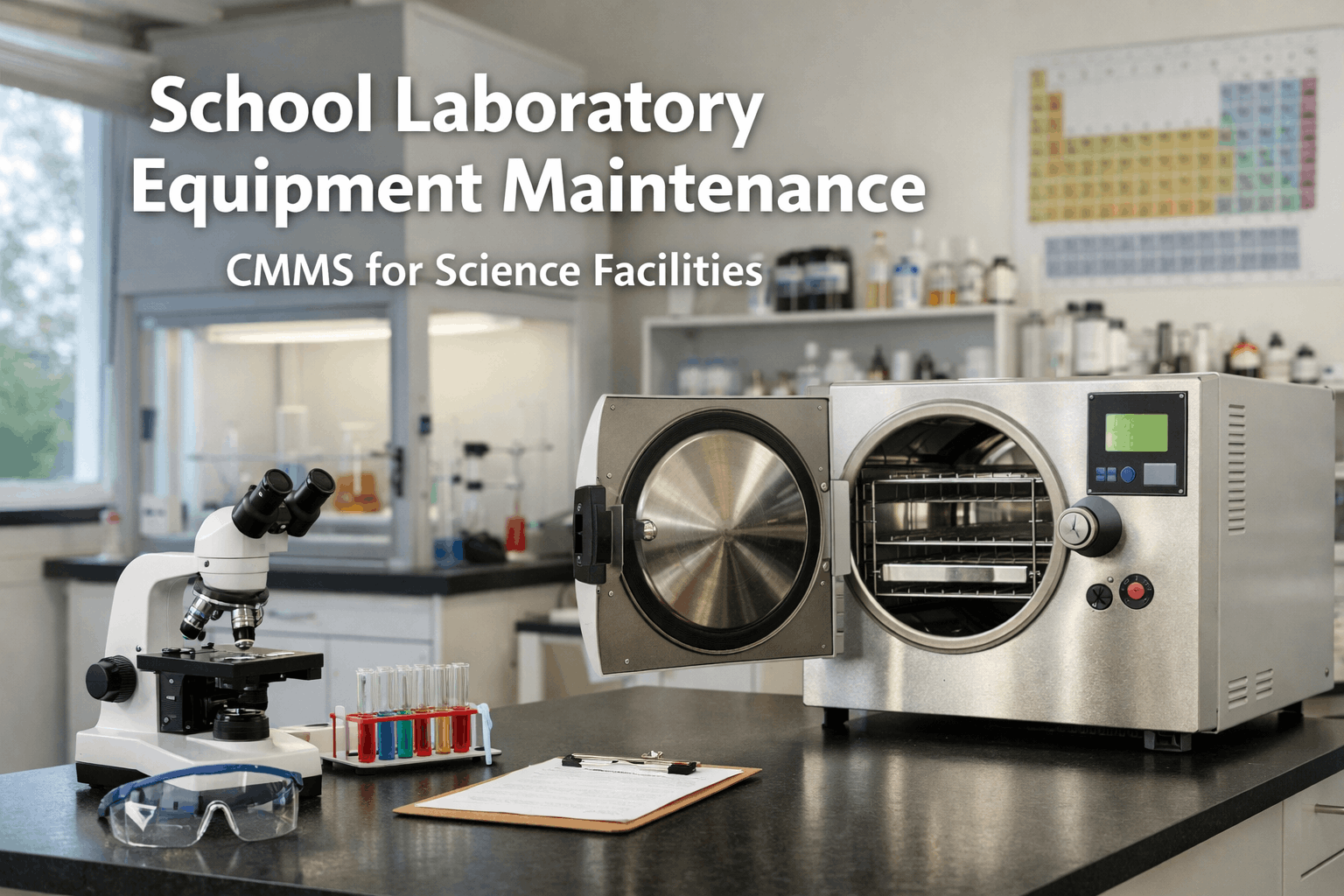
Lab safety equipment maintenance tracking is the systematic scheduling, execution, and documentation of all preventive maintenance, inspections, and certifications required for safety-critical equipment in university laboratories. This includes fume hoods, biosafety cabinets, emergency showers, eyewash stations, gas detection systems, autoclaves, and fire suppression systems specific to lab environments. Unlike general building maintenance, lab safety equipment operates under overlapping regulatory frameworks — OSHA 29 CFR 1910, ANSI Z358.1, NFPA 45, and institutional accreditation standards from bodies like ABET and AAALAC. Each framework specifies inspection frequencies, performance thresholds, and documentation requirements that must be met simultaneously. A digital asset registry paired with automated PM scheduling — the core of OxMaint's platform — transforms lab safety from a reactive checklist into a proactive compliance system where every inspection is scheduled, every result is recorded, and every audit request is answered in minutes. Universities managing 50+ labs across multiple buildings see the greatest impact, where spreadsheet tracking becomes physically impossible to maintain accurately. Discover how your campus can achieve full compliance visibility — start a free trial or book a demo with our higher education team.
Safety-Critical Lab Equipment That Requires Tracked Maintenance
Each category below has specific regulatory inspection frequencies and performance standards. Missing any of them creates both physical risk to students and institutional liability exposure.
Annual face velocity certification required (ANSI Z9.5). Sash operation, airflow monitors, and exhaust systems need quarterly checks. 32% of OSHA lab citations involve fume hood performance failures.
Annual NSF/ANSI 49 certification mandatory. HEPA filter integrity, airflow velocity, and UV lamp efficacy require documented verification. Lapsed certifications void research compliance.
ANSI Z358.1 requires weekly activation tests and annual flow rate verification. Stagnant water in untested units breeds Legionella. Only 47% of universities document weekly tests consistently.
Weekly biological indicator testing, monthly gasket and seal inspection, annual pressure vessel certification. Autoclave failures compromise biohazard waste decontamination protocols entirely.
Sensor calibration every 6 months minimum. Bump tests required monthly for combustible gas detectors. Expired calibration means the detector cannot be trusted during an actual leak event.
Chemical storage cabinet suppression systems, lab-rated extinguishers, and clean agent systems need semi-annual inspection per NFPA 45. Fire marshal violations can shut labs immediately.
Why Spreadsheet Tracking Fails at Scale
Spreadsheets work for one lab with five pieces of equipment. They collapse for a university with 120 labs, 2,400 safety-critical assets, and six different regulatory inspection schedules running simultaneously.
Spreadsheets do not send reminders. When a fume hood certification is due in April and no one remembers to schedule the vendor, it lapses silently. 62% of overdue lab certifications are discovered during audits, not before them. CMMS auto-generates work orders weeks in advance.
Multiple departments maintaining their own copies of safety equipment spreadsheets creates conflicting records. During an OSHA inspection, presenting two different maintenance histories for the same equipment destroys credibility and invites deeper investigation.
A spreadsheet row marked "completed" has no timestamp, no technician ID, no photo evidence, and no verification. Compliance auditors require documented proof of who performed the inspection, what was found, and what corrective action was taken — data spreadsheets structurally cannot capture.
With 2,400 assets across 120 labs, a spreadsheet cannot surface which 47 eyewash stations are overdue for weekly testing this week. A CMMS dashboard shows overdue, due-soon, and compliant assets in a single filtered view — across every building on campus.
OxMaint replaces spreadsheets with a unified asset registry, automated PM scheduling, and audit-ready documentation for every lab on campus. Most universities have their first building fully operational within 10 days — with zero IT infrastructure requirements.
How OxMaint Protects University Labs
OxMaint's asset registry and PM scheduling features are designed for environments where compliance is non-negotiable and asset volumes are high. Here is how each capability maps to lab safety requirements.
Every safety-critical asset gets a digital record — model, serial, location, certification status, service history, and condition score. Know exactly what is in every lab and when it was last serviced.
Configure PM frequencies to match OSHA, ANSI, and NFPA requirements per asset type. Weekly eyewash tests, quarterly fume hood checks, annual BSC certifications — all auto-scheduled with escalation for overdue tasks.
Every inspection generates a work order with technician ID, timestamp, findings, corrective actions, and photo attachments. Complete audit trail for every asset, every time.
See compliance status across every lab in every building from a single view. Filter by equipment type, building, department, or compliance status. No more building-by-building spreadsheet reviews.
Digital sign-off on completed inspections with timestamp verification. Generate compliance reports for OSHA, accreditation bodies, or institutional risk management on demand.
Safety officers complete inspections on mobile devices directly at the equipment. Photo capture, checklist completion, and corrective action logging — all without returning to a desktop.
Spreadsheet Tracking vs. Digital CMMS: Lab Safety Outcomes
| Compliance Factor | Spreadsheet Tracking | OxMaint Digital CMMS |
|---|---|---|
| PM compliance rate (safety assets) | 52–65% | 94% average |
| Overdue certification discovery | During audits | 30 days before due date |
| Audit preparation time | 40–80 hours per building | Under 30 minutes |
| Record completeness | Varies by department | 100% — auto-generated |
| Cross-building visibility | None without manual compilation | Real-time campus dashboard |
| Emergency repair rate | 3.8 per lab per year | 2.2 per lab per year |
The gap between spreadsheet tracking and digital CMMS widens with every additional lab building and every additional regulatory requirement. Universities managing 50+ labs see the most dramatic improvement in audit readiness and liability reduction. See the difference for your campus — start a free trial or book a demo to walk through it.
Frequently Asked Questions
Can different departments manage their own lab equipment while the safety office maintains oversight?
Yes. OxMaint supports role-based access where individual lab managers can view and update their own equipment records, while the campus safety office maintains a read-only dashboard across all departments. PM schedules are set centrally to ensure regulatory frequencies are enforced, but individual labs can submit work requests and log inspections through their own mobile access.
How do we track third-party vendor certifications like annual BSC testing?
Create a PM schedule in OxMaint with the annual frequency and assign it to the external vendor category. When the vendor completes certification, the lab manager uploads the certification document directly to the asset record. OxMaint tracks the next due date automatically and escalates if no completion is logged — ensuring vendor certifications never lapse unnoticed.
What if we have thousands of assets and no centralized inventory?
This is the most common starting point for universities. OxMaint's implementation support helps import existing spreadsheets, and many institutions start by registering only safety-critical equipment — fume hoods, BSCs, showers, eyewash stations — across priority buildings first. The registry builds progressively as work orders are completed and new assets are added. A partial start generates value immediately.
Does OxMaint integrate with campus EHS (Environmental Health and Safety) systems?
OxMaint provides API integration capabilities that allow maintenance records and compliance data to sync with existing EHS platforms. Completed inspection records, certification statuses, and corrective action logs can be exported or connected to institutional risk management systems — ensuring the safety office and the maintenance team work from a single source of truth.
Every Lab Audit Starts With Your Maintenance Records
OSHA inspectors, accreditation reviewers, and institutional risk managers all ask the same question: can you prove this equipment was maintained? OxMaint gives your campus automated PM scheduling, digital inspection records, and audit-ready documentation for every safety-critical asset in every lab — deployed in days, not months, with no implementation fees.