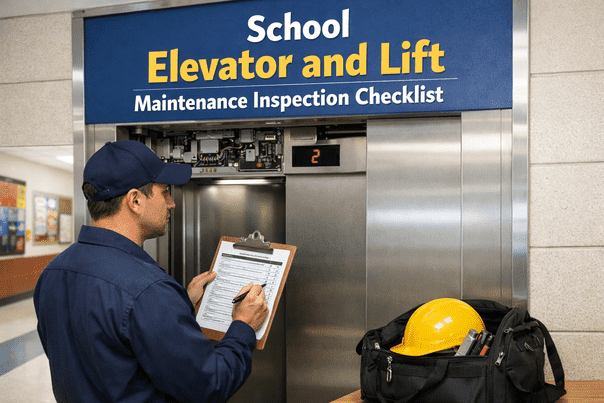
Elevator compliance in school buildings is one of the most heavily regulated and frequently violated areas of facility management — and the consequences of non-compliance are severe. In 2023, elevator-related violations accounted for $2.8 million in fines issued to K-12 school districts and municipal building operators across the United States, with the most common citation being incomplete or missing inspection records rather than actual mechanical failures. State elevator codes require periodic inspections ranging from monthly to annual depending on jurisdiction, and every inspection must be documented with specific data points: inspector credentials, test results, deficiency findings, corrective action timelines, and proof of completion. When these records live in paper files scattered across school buildings, compliance gaps are inevitable — and inspectors find them. Districts that have centralized elevator inspection records using digital platforms like OxMaint report 100% documentation completeness, reduce deficiency resolution time by 45%, and eliminate the scramble that happens when an inspector shows up unannounced. If your elevator compliance records are in a filing cabinet at each school, every building is one surprise inspection away from a violation. Take control of your elevator compliance — start a free trial or book a demo to see how digital records protect your district.
School Elevator Compliance Inspection Records Management
Elevator compliance failures carry heavy fines and liability risk for school districts. Digital inspection records eliminate documentation gaps and keep lifts legally compliant across every building in your district.
What Is Elevator Compliance Inspection Records Management?
Elevator compliance inspection records management is the organized system for scheduling, documenting, and tracking all required elevator inspections, tests, maintenance activities, and corrective actions for lift equipment in school buildings. Every state in the U.S. adopts some version of the ASME A17.1/CSA B44 Safety Code for Elevators, which specifies inspection categories (Category 1 periodic inspections, Category 5 periodic tests), testing frequencies, and documentation requirements. School districts typically operate passenger elevators, wheelchair lifts, and dumbwaiters — all of which fall under these code requirements. The challenge is not the inspection itself, which is usually performed by a state-licensed inspector or third-party contractor, but the record-keeping that surrounds it. Each inspection generates a report with findings, deficiencies, corrective action requirements, and follow-up deadlines. Paper-based districts lose track of which buildings have current certificates, which deficiencies are still open, and when the next inspection is due — until a code enforcement officer arrives. OxMaint's digital inspection and audit documentation features replace this fragmented system with a centralized, searchable, date-tracked compliance record for every elevator in every school building. Bring your elevator records into one system — start a free trial or book a demo with our facilities team.
Elevator Compliance Requirements for School Buildings
School elevator compliance involves multiple overlapping requirements. Each one must be tracked independently — and failure to meet any single requirement can result in a violation, a shutdown order, or both.
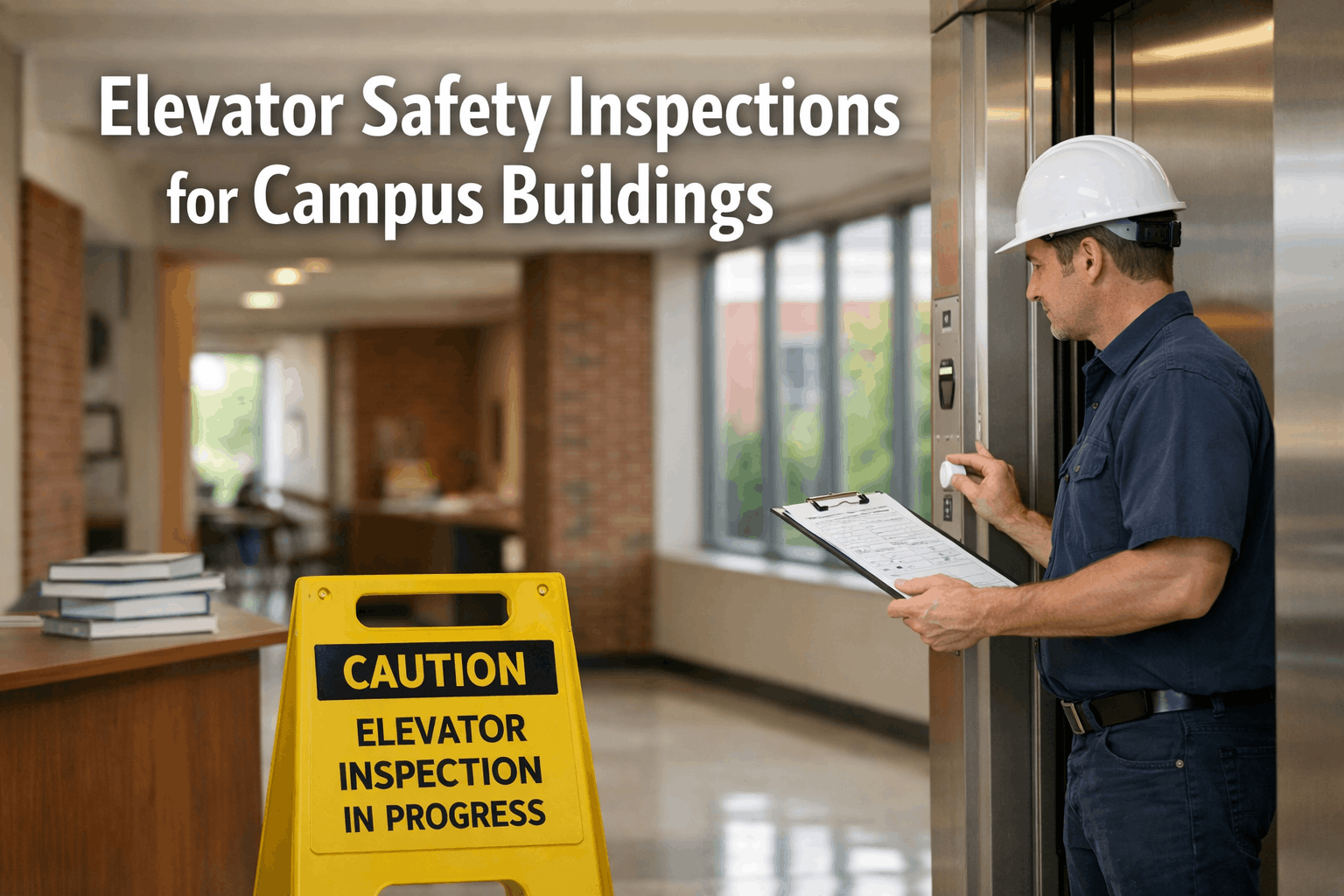
Required annually in most states. Covers visual inspection and functional testing of safety devices, door operations, emergency communications, and car/hoistway condition. Must be performed by a qualified elevator inspector (QEI).
Required every 3–5 years depending on equipment type. Full-load safety tests, governor trip tests, and buffer tests verify that emergency stopping devices function under load. Requires scheduling coordination and documentation of test results.
Elevator service contracts typically include monthly maintenance visits. Each visit must be logged with tasks performed, parts replaced, and any deficiencies noted. Inspectors review these logs to verify the elevator has been continuously maintained.
Inspection findings often include deficiencies requiring correction within 30–90 days. Each deficiency must be tracked to resolution with proof of repair. Open deficiencies at the next inspection result in escalated violations.
Most states require a current operating permit or certificate of compliance displayed in each elevator car. Expired certificates can be spotted by anyone — parents, staff, or inspectors — and are an immediate violation trigger.
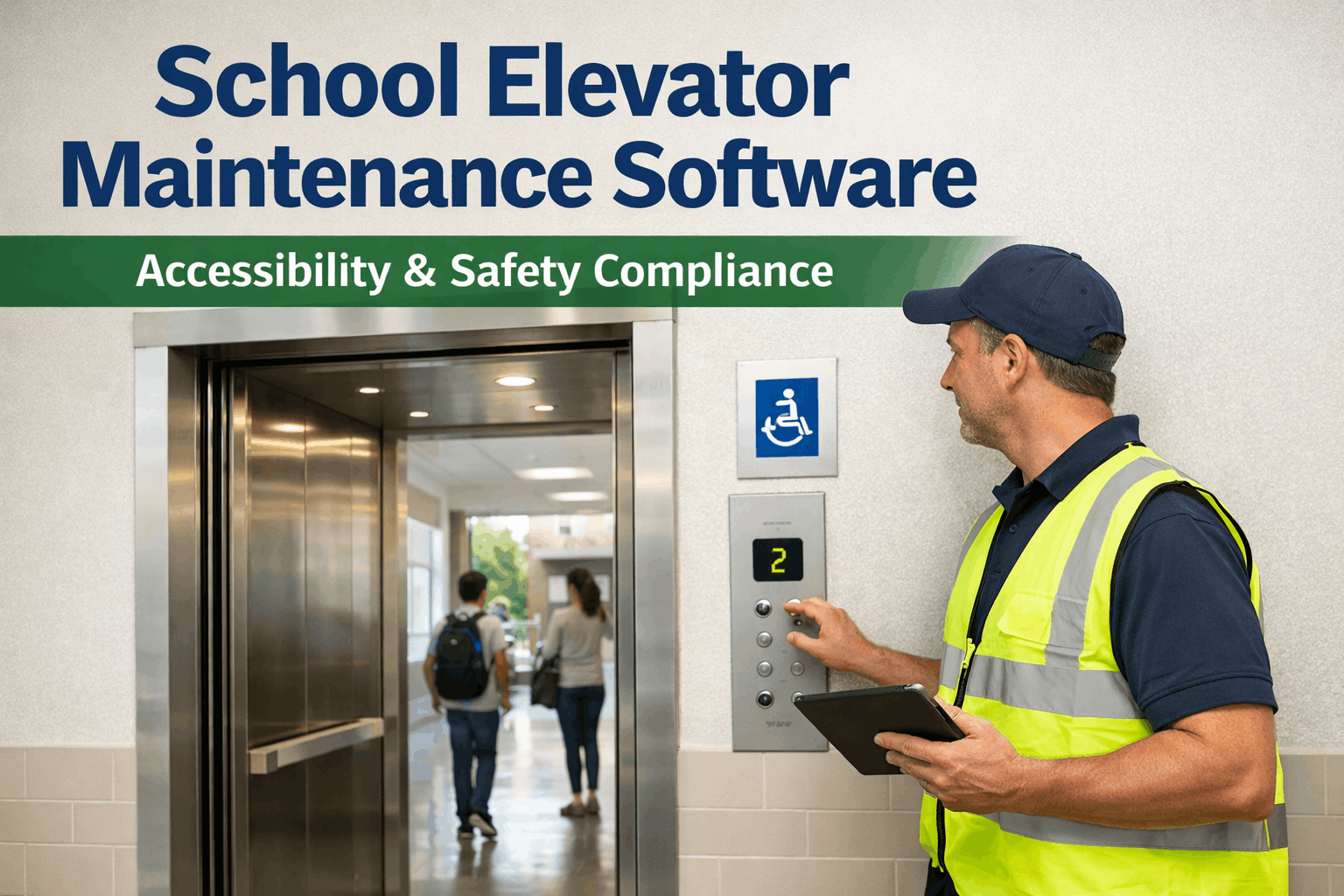
Wheelchair lifts, platform lifts, and ADA-required elevator features (braille signage, audible floor indicators, door hold times) must be maintained and documented. ADA accessibility complaints trigger federal investigation alongside state elevator code review.
How Documentation Failures Create Violations
The majority of school elevator violations are record-keeping failures — not mechanical failures. These are the four documentation gaps inspectors find most often.
The elevator service contractor comes monthly, but the school has no documentation of what was done. When the inspector asks for 12 months of maintenance records and finds only 6, the elevator is cited for inadequate maintenance documentation — regardless of the actual work performed. 52% of school elevator violations stem from incomplete contractor maintenance logs.
A deficiency noted in the last inspection — a worn door interlock, a malfunctioning emergency phone — was never tracked to completion. At the next inspection, the same deficiency is still open. This escalates from a routine finding to a willful non-compliance citation, which carries significantly higher penalties.
The permit renewal was due three months ago, but no one at the district office tracked the expiration date. The elevator has been operating without a valid certificate — a violation in every jurisdiction. In some states, operating an elevator without a current certificate is a misdemeanor offense for the building owner.
A district with 25 schools and 40 elevators has records scattered across 25 buildings. No one at the district level knows which elevators have current certificates, which have open deficiencies, or when the next Category 5 test is due. This lack of centralized visibility is the root cause of most multi-building compliance failures.
How OxMaint Manages Elevator Compliance
OxMaint's digital inspection and audit documentation features provide a complete compliance management system for every elevator in your district — from monthly maintenance logs to Category 5 test tracking.
Every elevator and lift gets a digital record: manufacturer, model, capacity, installation date, last inspection date, certificate expiration, and contractor assignment. See the compliance status of every unit instantly.
Set annual Category 1 inspections, 3-year or 5-year Category 5 tests, and monthly maintenance schedules. OxMaint auto-generates work orders and alerts 30 days before each due date — no more expired certificates.
Build code-aligned checklists for monthly maintenance visits and annual inspections. Contractor or staff complete them on mobile with photo documentation. Every response is timestamped and permanently stored.
Inspection deficiencies are logged as work orders with assigned owners, deadlines, and escalation rules. Nothing stays unresolved because it was forgotten — the system tracks every open item until it is closed with documentation.
Pull complete inspection history, maintenance logs, deficiency resolution records, and certificate status for any elevator in under two minutes. Digital signatures and timestamps satisfy state code documentation requirements.
See certificate expiration dates, upcoming inspections, open deficiencies, and overdue maintenance for every elevator across every school building — all from one dashboard. No more building-by-building record hunting.
Paper Files vs. Digital Records: Elevator Compliance Outcomes
| Compliance Factor | Paper-Based Records | OxMaint Digital Records |
|---|---|---|
| Record completeness | 55–70% documented | 100% auto-documented |
| Certificate expiration tracking | Manual calendar tracking, often missed | Automated 30-day advance alerts |
| Open deficiency visibility | Buried in inspection reports | Real-time dashboard with deadlines |
| Inspector record request response | Hours to days | Under 2 minutes |
| Violation rate (documentation-related) | 3.1 per district per year | 0.4 per district per year |
| Deficiency resolution time | Average 68 days | Average 37 days |
Documentation-related elevator violations are entirely preventable. The difference between a clean inspection and a citation is almost always whether the record can be produced — not whether the work was done. See how digital records protect your district — start a free trial or book a demo for a walkthrough.
Frequently Asked Questions
Can OxMaint track both passenger elevators and wheelchair lifts in the same system?
Yes. OxMaint's asset registry handles any vertical transportation equipment — passenger elevators, freight elevators, wheelchair lifts, platform lifts, and dumbwaiters. Each unit gets its own PM schedule, inspection checklist, and compliance timeline based on its specific code requirements. The district dashboard shows all equipment types in a single compliance view.
How do we log third-party inspector reports in OxMaint?
When a state-licensed inspector completes an inspection, the facility manager uploads the inspection report directly to the elevator's asset record in OxMaint. Any deficiencies noted in the report are created as work orders with assigned owners and deadlines. The next inspection due date is automatically updated, and the system begins the countdown to the next compliance milestone.
What if our elevator contractor provides maintenance reports on paper?
Many elevator contractors still provide paper-based service reports. With OxMaint, the building custodian or facility manager photographs the contractor's report and uploads it to the elevator's asset record immediately after the visit. Alternatively, you can create a digital checklist in OxMaint that mirrors the contractor's service items and have the contractor or your staff complete it on a tablet during the visit — generating a fully digital, searchable record.
How does OxMaint handle different inspection frequencies across different states?
PM schedules in OxMaint are fully configurable per asset. If your district operates in a state requiring semi-annual inspections, you set a 6-month frequency. If another jurisdiction requires annual, you set 12 months. Category 5 test cycles — whether 3-year or 5-year — are configured independently. Each elevator follows its own jurisdiction-specific schedule within the same platform.
Every Elevator Violation Is a Documentation Failure
Elevator compliance in schools is not about mechanical complexity — it is about record-keeping discipline. OxMaint gives your district automated inspection calendars, digital deficiency tracking, certificate expiration alerts, and audit-ready documentation for every elevator in every building. Deploy across your district in days, not months, with zero implementation fees.