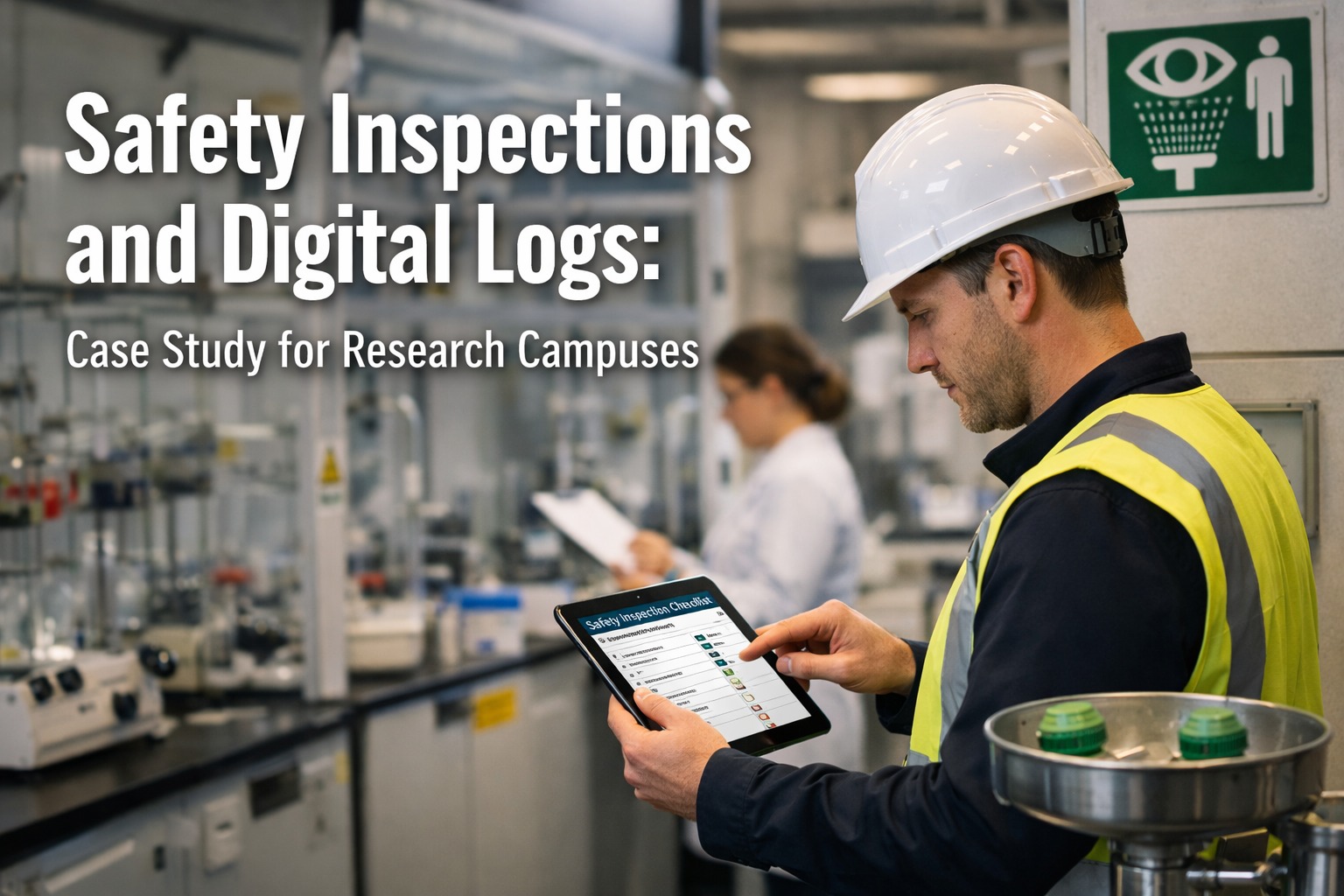
A chemistry graduate student suffered severe burns when a routine experiment went wrong. The investigation revealed a troubling pattern: the fume hood hadn't been inspected in 47 days, the safety shower test was three weeks overdue, and no documented risk assessment existed for the procedure. Research shows that 2.5 accidents occur weekly in academic laboratories, with 27% of researchers never conducting risk assessments before experiments. This case study examines how a major research university transformed its safety inspection program from paper chaos to digital precision, reducing compliance gaps by 89% and creating audit-ready documentation that satisfied OSHA investigators within minutes.
Case Study
How One Research University Eliminated 89% of Compliance Gaps
Multi-Campus Research Institution | 127 Labs | 2,400+ Researchers
Before
47 days
After
7 days
Average inspection gap
Before
3+ hours
After
4 min
Record retrieval time
Before
23%
After
94%
On-time compliance rate
The Challenge: Paper-Based Inspection Systems Fail at Scale
Research universities face inspection challenges that standard facilities never encounter. A single chemistry building might contain 40+ fume hoods requiring monthly testing, dozens of eyewash stations needing weekly verification, biosafety cabinets demanding annual certification, and hundreds of chemical storage locations requiring regular audits. When institutions need help managing multi-building inspection programs, they discover that paper systems simply cannot track the 150+ compliance touchpoints per building that OSHA and institutional policies require.
1
Scattered Documentation
Inspection logs stored in filing cabinets across 127 labs. Finding a specific record requires physical searches through multiple buildings.
2
Missed Deadlines
No automated reminders means inspections slip. Monthly fume hood tests become quarterly. Weekly eyewash checks become monthly.
3
Inconsistent Standards
Each lab develops its own inspection checklist. Critical items get overlooked. Compliance becomes subjective rather than standardized.
4
No Audit Trail
Paper forms can be backdated. Signatures are unverifiable. When OSHA arrives, proving compliance becomes impossible.
The Solution: Digital Inspection Platform with Risk Scoring
The university deployed a comprehensive CMMS with mobile inspection capabilities across all research facilities. Every safety asset received a QR code linking to its complete inspection history, maintenance records, and compliance requirements. Technicians now complete inspections on tablets with GPS-stamped, time-verified digital signatures that create an unalterable audit trail.
1
Automated Scheduling
System generates inspection tasks based on asset type, regulatory requirements, and risk level
2
Mobile Assignment
Technicians receive push notifications with route optimization across buildings
3
QR Code Scan
Scanning confirms location, loads asset history, and opens standardized checklist
4
Digital Documentation
Photos, readings, and notes captured with timestamp and GPS verification
5
Instant Compliance Update
Dashboard reflects completion immediately; deficiencies trigger automatic work orders
The implementation included a risk scoring system that prioritizes inspections based on hazard level, research activity type, and historical compliance patterns. High-risk labs conducting work with flammable solvents, biological agents, or radioactive materials receive more frequent inspections and enhanced oversight. Universities that want to see how risk-based scheduling works discover that the approach reduces overall inspection burden while increasing coverage of critical safety points.
High Risk
Score 8-10
BSL-2/3 Labs, Radioisotope Labs, High-Hazard Chemistry
Weekly inspections + Daily spot checks + Monthly comprehensive audit
Medium Risk
Score 4-7
General Chemistry, Biology Teaching Labs, Engineering Shops
Bi-weekly inspections + Monthly comprehensive audit
Low Risk
Score 1-3
Computer Labs, Physics Theory, Administrative Spaces
Monthly inspections + Quarterly comprehensive audit
Results: Measurable Compliance Improvement
Within six months of implementation, the university documented dramatic improvements across every compliance metric. The EHS department now operates with complete visibility into inspection status across all 127 research laboratories, with real-time dashboards showing compliance percentages, overdue tasks, and trending deficiency categories.
89%
Reduction in compliance gaps
From 340+ overdue inspections to under 40
98%
Fume hood test completion rate
Up from 71% with paper tracking
4 min
Average audit response time
Previously 3+ hours searching files
$127K
Annual labor savings
Reduced administrative overhead
Ready to Transform Your Campus Safety Inspections?
See how digital inspection management can eliminate compliance gaps and create audit-ready documentation for your research facilities.
Expert Perspective: What Made the Difference
"The game-changer wasn't just digitizing our forms—it was creating accountability through automation. When an inspection is due, the system notifies the technician. When it's overdue, it escalates to the supervisor. When OSHA arrives, we pull seven years of timestamped records in seconds. Paper could never do that."
— Environmental Health & Safety Director, R1 Research University
Standardization Drives Consistency
Digital checklists ensure every inspector evaluates the same criteria. No more subjective interpretations or missed items.
Automation Prevents Lapses
Push notifications and escalation workflows eliminate the "I forgot" excuse. Overdue inspections become management exceptions, not hidden problems.
Data Enables Improvement
Trend analysis reveals which labs struggle with compliance, which equipment fails most often, and where training investments should focus.
The facilities departments that get support implementing digital inspection systems find that success requires more than software deployment. Change management, technician training and integration with existing workflows determine whether the technology delivers promised results. The university in this case study invested six weeks in pilot testing with three buildings before campus-wide rollout, allowing the EHS team to refine checklists and workflows based on real-world feedback.
Implementation Roadmap for Research Campuses
Weeks 1-2
Discovery
Inventory all safety assets requiring inspection
Document current inspection frequencies and requirements
Map regulatory obligations (OSHA, EPA, institutional)
Identify high-risk laboratories for priority deployment
Weeks 3-4
Configuration
Build standardized inspection checklists by asset type
Configure risk scoring algorithms
Set up automated scheduling and notification rules
Create compliance dashboards and reporting templates
Weeks 5-6
Pilot
Deploy QR codes in 3-5 pilot buildings
Train inspection technicians on mobile app
Conduct parallel paper/digital inspections for validation
Refine workflows based on user feedback
Weeks 7-8
Rollout
Campus-wide QR code deployment
Full team training completion
Historical record migration
Go-live with real-time compliance monitoring
Research universities considering this transformation can book a demo to see the platform in action and understand how the implementation timeline applies to their specific campus configuration. The investment typically pays for itself within 8-12 months through reduced labor costs, avoided compliance penalties and decreased liability exposure from documented safety programs.
Your Next OSHA Visit Is Already Scheduled
You just don't know the date. When investigators arrive at your research campus, they'll ask to see inspection records for specific equipment in specific labs. The difference between producing those records in four minutes versus four hours determines whether your institution demonstrates compliance excellence or reveals systemic deficiencies. Digital inspection management isn't about technology—it's about creating the audit trail that protects your researchers, your institution, and your career.
Universities ready to discuss their campus inspection requirements discover that the transition from paper to digital delivers benefits beyond compliance. Real-time visibility into safety status across all facilities enables proactive risk management that prevents incidents before they occur. That's the transformation from reactive documentation to predictive safety culture.
Build Your Audit-Ready Research Campus
Oxmaint gives EHS teams instant access to every inspection record, compliance log, and safety audit. Join research universities nationwide who pass regulatory reviews with complete confidence.
Frequently Asked Questions
What safety inspections are required for university research laboratories?
OSHA's Laboratory Standard (29 CFR 1910.1450) requires regular inspections of chemical hygiene practices, emergency equipment, and ventilation systems. Specific requirements include weekly eyewash station tests, monthly fume hood face velocity checks, annual biosafety cabinet certification, and regular chemical inventory audits. Additionally, fire extinguisher monthly visual inspections, emergency shower tests, and safety shower/eyewash combination unit functionality checks are mandated. Each institution may have additional requirements based on research activities, grant conditions, and state regulations.
How does digital inspection software create a compliant audit trail?
Digital inspection platforms capture GPS coordinates, timestamps, and electronic signatures for every inspection completed. This creates an unalterable record proving when and where inspections occurred, who performed them, and what was documented. Photos and notes are automatically linked to specific assets. Unlike paper forms that can be backdated or lost, digital records are stored in secure cloud databases with complete version history. When OSHA or institutional auditors request documentation, the system generates comprehensive reports in seconds rather than hours.
What is risk-based inspection scheduling for research facilities?
Risk-based scheduling assigns inspection frequencies based on the hazard level of each laboratory or asset. High-risk environments like BSL-2/3 labs, radioisotope facilities, or labs using highly reactive chemicals receive more frequent inspections than low-risk spaces like computer labs or administrative areas. Risk scores typically incorporate factors including chemical hazard classes present, biological agents used, equipment complexity, historical incident data, and research activity type. This approach focuses inspection resources where they matter most while maintaining baseline compliance across all facilities.
How long does it take to implement digital inspection management campus-wide?
Most research universities achieve full implementation within 6-8 weeks using a phased approach. Weeks 1-2 focus on asset inventory and requirements documentation. Weeks 3-4 involve system configuration and checklist development. Weeks 5-6 conduct pilot testing in 3-5 buildings with parallel paper/digital inspections. Weeks 7-8 complete campus-wide rollout with full team training. The exact timeline varies based on campus size, number of research buildings, and complexity of existing inspection programs. Universities with strong EHS leadership and IT support often complete implementation faster.
What ROI can universities expect from digital safety inspection systems?
Universities typically see positive ROI within 8-12 months through multiple channels. Labor savings from eliminated paperwork and reduced record search time often exceed $100,000 annually for large research campuses. Avoided OSHA penalties (up to $16,550 per serious violation in 2025) provide additional savings. Reduced liability exposure from documented compliance programs lowers insurance costs. Beyond financial returns, institutions report 25-40% reduction in safety incidents when inspection completion rates improve from 70% to 95%+, protecting researchers, and institutional reputation.