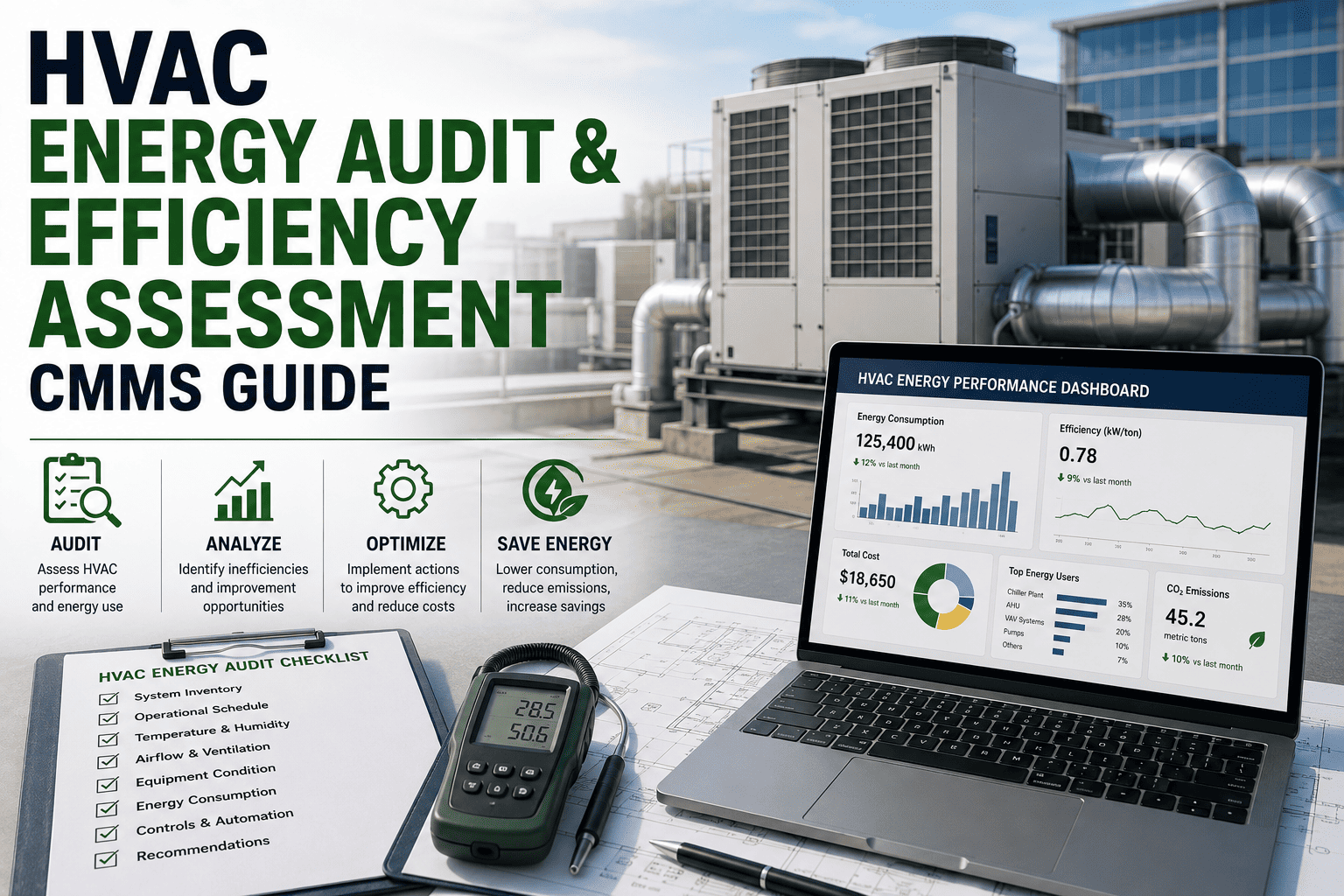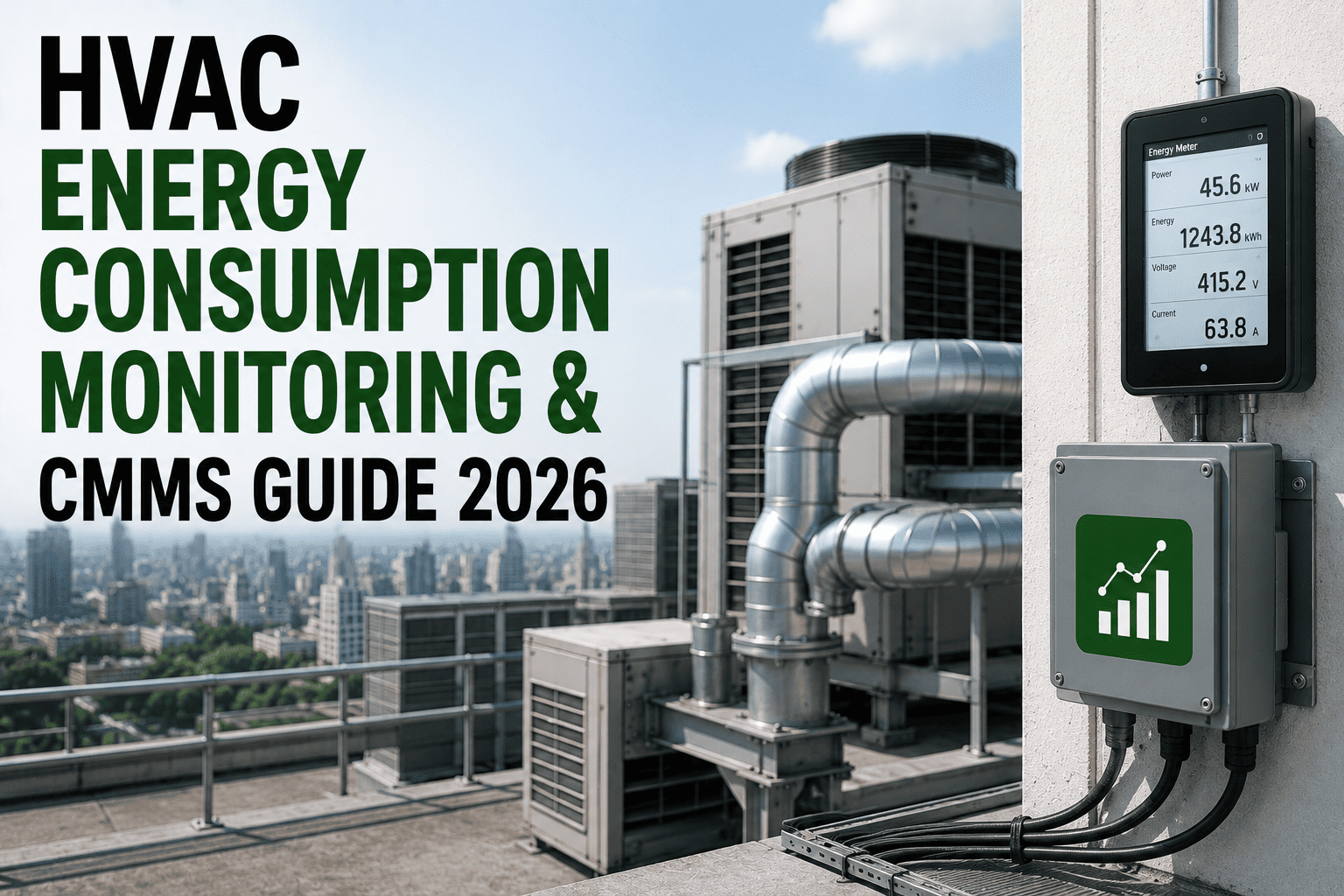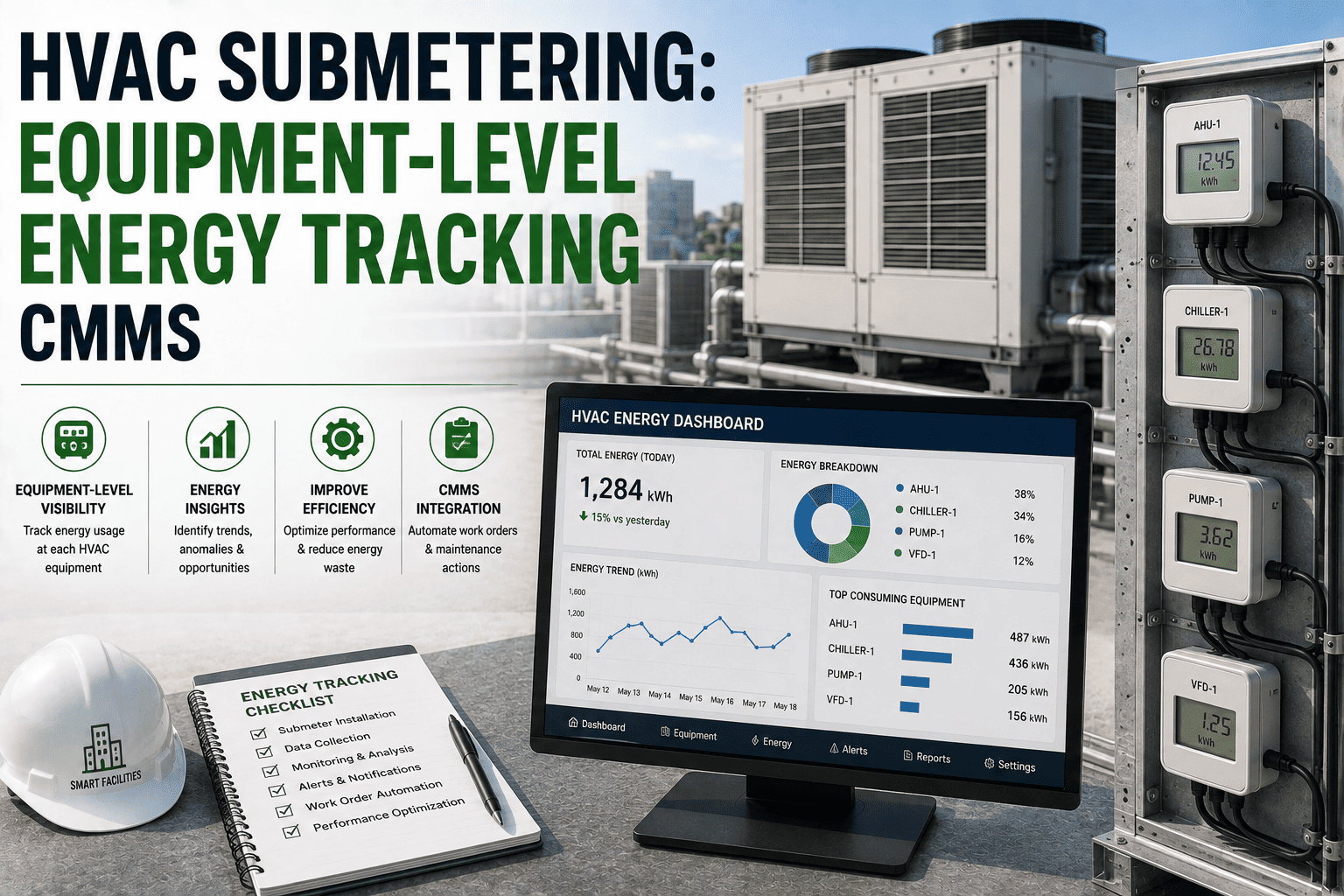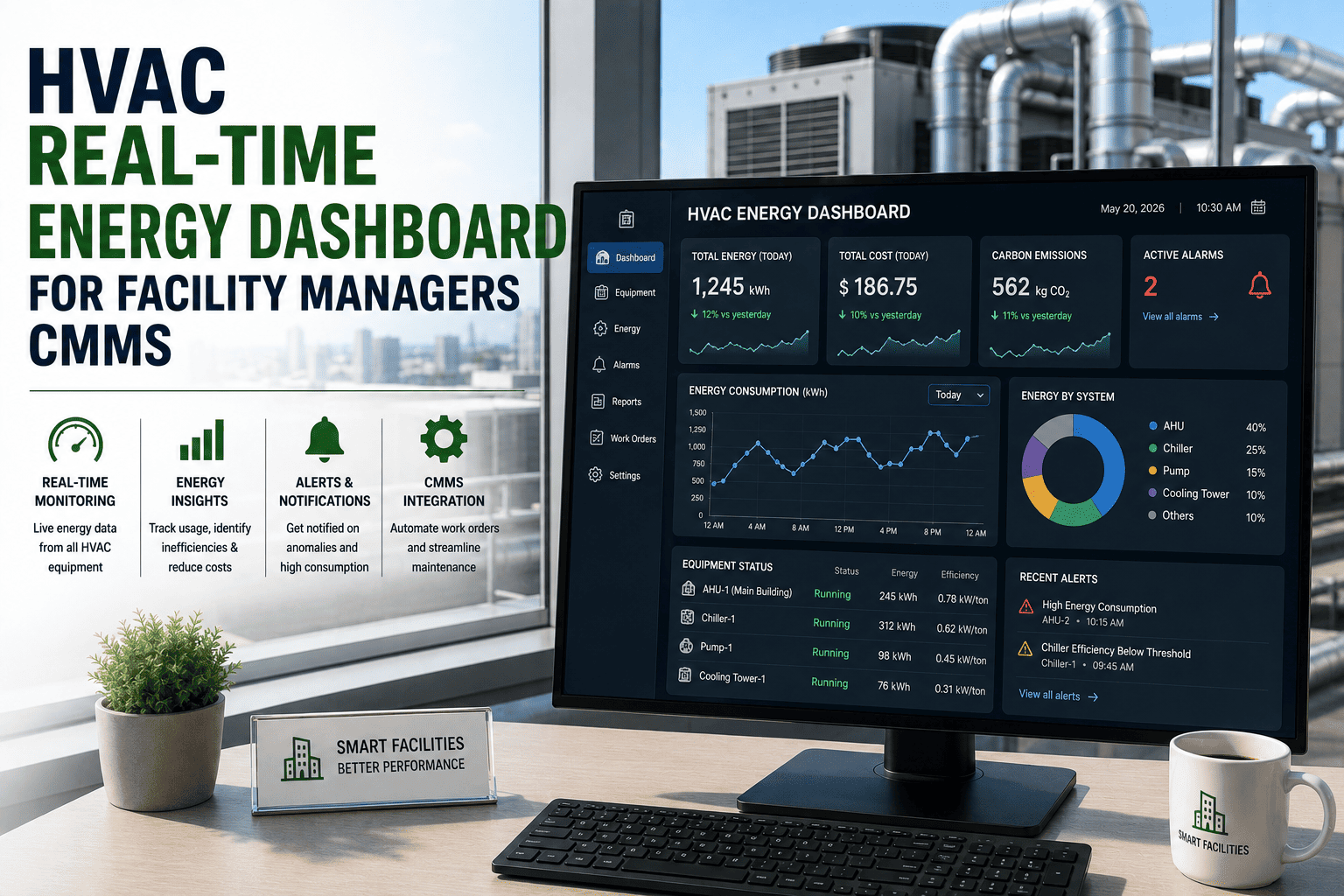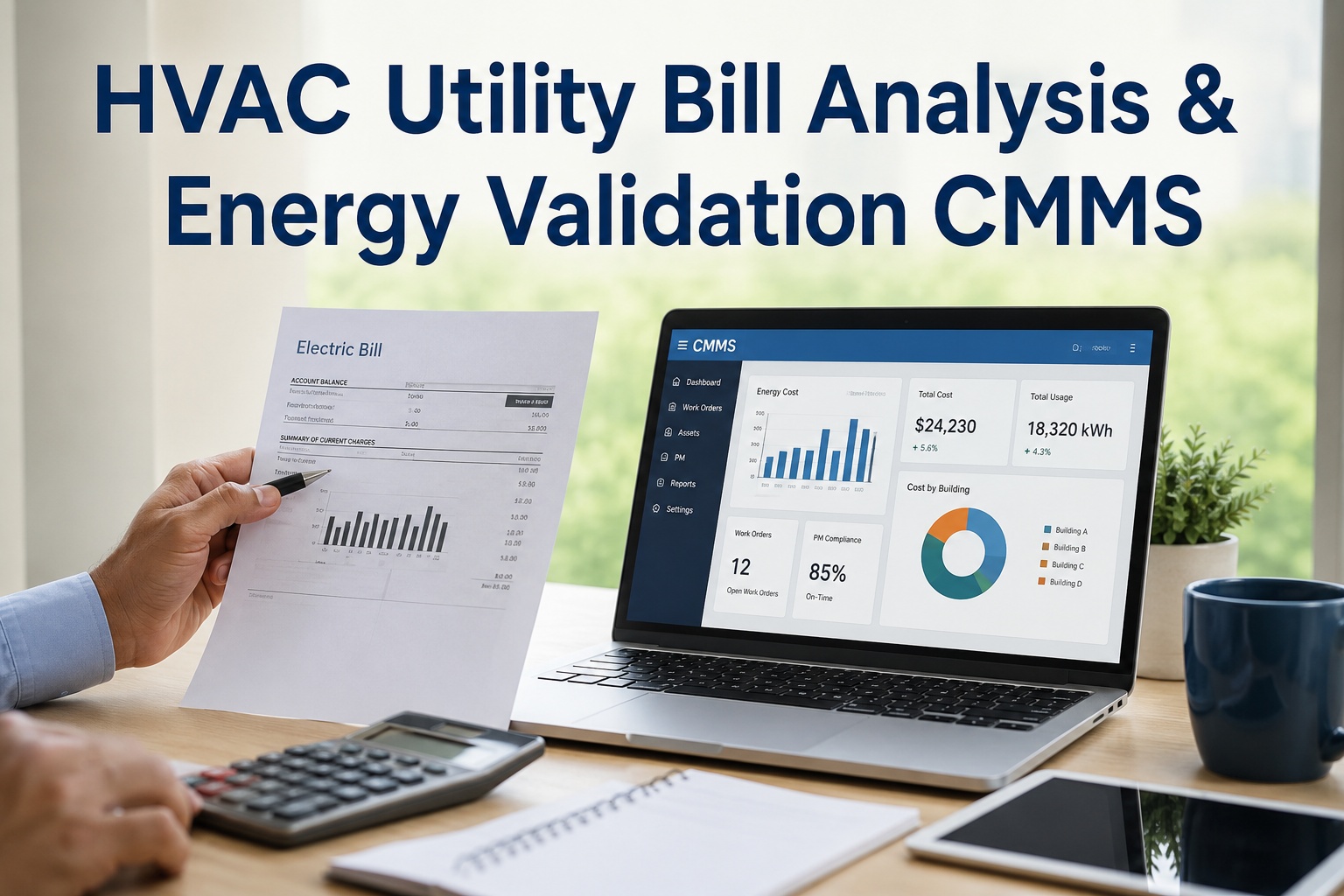
HVAC utility bill analysis is the process of reconciling monthly energy invoices against submeter data, equipment runtime logs, and tariff structures to uncover billing errors, hidden consumption drift, and efficiency losses in commercial heating and cooling systems. A dedicated utility bill CMMS bridges the gap between financial accounting and facilities operations by automatically validating charges, flagging anomalies, and tying every kilowatt-hour back to specific assets. For maintenance and reliability teams, energy bill validation transforms a passive expense into a predictive maintenance trigger, catching degrading HVAC components months before catastrophic failure. By implementing a structured HVAC energy reconciliation workflow, organizations typically reduce energy waste by 10–20% and recover thousands in annual billing overcharges. See how an AI-powered platform streamlines the entire process when you Start Free Trial today.
Are you paying for HVAC inefficiency you can't see?
Up to 30% of commercial HVAC energy spend is wasted on undetected drift, compressor degradation, and billing errors that slip past accounts payable every month. Reconcile utility invoices against submeter data and asset runtime in minutes — not weeks.
How to run an HVAC utility bill reconciliation in 5 stages
A defensible energy bill validation process follows a strict monthly cadence: ingest the invoice, map consumption to assets, calculate expected cost against the tariff, flag variances, and trigger corrective work orders. Each stage below targets a specific leak in the typical commercial building's energy lifecycle.
Capture & digitize the utility invoice
Pull the monthly electric, gas, and steam bills into the CMMS automatically. OCR extracts kWh, therm, demand charges, and tariff line items. Manual data entry introduces a 2–5% error rate; automated capture eliminates it.
Reconcile submeter data with invoiced consumption
Aggregate submeter readings for every AHU, chiller, and boiler. Compare the sum of submetered kWh against the utility invoice total. Variances over 3% indicate either a meter calibration issue or an unmapped load.
Validate expected cost against tariff structure
Apply the current ratchet, time-of-use, and demand rate schedules to the metered load profile. Expected cost should match the billed amount within $50. Larger gaps signal a utility billing error worth disputing.
Identify consumption anomalies & efficiency drift
Benchmark current usage against the trailing 12-month baseline and weather-normalized CDD/HDD models. A 15% spike in chiller energy per ton-hour points to fouling, refrigerant undercharge, or a failing compressor.
Trigger CMMS work orders for corrective action
Every validated variance auto-generates a prioritized work order in the CMMS — coil cleaning, filter replacement, or a dispute filing with the utility provider. Close the loop with attached verification photos and meter recalibration records.
HVAC billing analysis formulas every reliability team should know
You cannot manage what you do not measure. These three core formulas drive the energy validation engine inside OxMaint, turning raw meter data into financial intelligence. A 180-asset plant spending $42,000 annually on HVAC energy can use these calculations to isolate waste and justify maintenance spend.
Target: under 3%. A persistent 8% gap on a 500-ton chiller plant often means a blown CT on the main meter or a parasitic load bypassing the BAS. Investigate immediately.
Benchmark: 0.50–0.60 kW/ton for modern centrifugal chillers at ARI conditions. A reading of 0.85 kW/ton indicates tube fouling or approach temperature degradation — schedule a condenser tube brush immediately.
If the gap exceeds $50 monthly, audit the bill for misapplied ratchet clauses, incorrect meter multipliers, or phantom demand charges. Utilities issue refunds within 60 days of a validated dispute.
A 180-asset plant turns a $42K energy loss into a $6,200 annual recovery
A logistics facility in Ohio noticed summer electric bills climbing 18% year-over-year despite identical production output. Their HVAC utility bill analysis revealed a 6% meter-to-invoice variance on the main feed and a chiller operating at 0.82 kW/ton — 37% worse than baseline. The billing error was disputed and recovered ($4,800), and a CMMS-generated condenser tube cleaning restored chiller efficiency, saving $1,400 in avoided peak-demand charges over the remaining cooling season.
Why manual HVAC bill reconciliation fails at scale
Most facilities teams still validate utility bills in Excel. It works for one building with two meters. It breaks down across a portfolio of 50+ assets, multiple rate structures, and overlapping fiscal calendars. The comparison below shows exactly where the spreadsheet approach leaves money on the table.
| Validation Capability | Manual Spreadsheet Process | Utility Bill CMMS (OxMaint) |
|---|---|---|
| Invoice data entry | Manual keying; 2–5% error rate | Automated OCR & API ingestion; 0% keying errors |
| Submeter reconciliation | Static columns; no real-time meter sync | Live IoT meter polling every 15 minutes |
| Tariff & rate updates | Manually updated once a year (often missed) | Rate engine auto-updates from utility tariff feeds |
| Anomaly detection | Conditional formatting; spotted after the fact | AI flags consumption drift within 24 hours |
| Corrective action | Email to maintenance; no audit trail | Auto-generates prioritized CMMS work order |
| Dispute documentation | Hours of compiling PDFs and screenshots | One-click dispute packet with meter logs & photos |
| Monthly time investment | 8–12 hours per building | Under 30 minutes per building |
How OxMaint powers HVAC energy validation & cost recovery
OxMaint unifies utility bill analysis with asset performance management in a single AI-driven platform. Instead of passing spreadsheets between accounting and maintenance, your team gets a closed-loop system that detects energy waste, pinpoints the failing asset, and dispatches the fix — automatically.
Automated Invoice Ingestion
OCR and direct utility APIs pull every billing line item into OxMaint, eliminating manual entry. Teams cut data-collection time by 90% and catch every demand ratchet or power-factor penalty the moment the bill drops.
Live Submeter Reconciliation
OxMaint ingests 15-minute interval data from BAS and IoT submeters, then auto-compares the total against the utility invoice. Variances over your defined threshold instantly trigger alerts and dispute-ready work orders.
Predictive Asset Energy Drift
AI models correlate energy consumption per ton-hour against equipment age, runtime, and maintenance history. The system predicts compressor or pump degradation 2–4 weeks before efficiency collapses, scheduling intervention during off-peak hours.
One-Click Dispute Packets
When a billing error is detected, OxMaint compiles the invoice, submeter logs, tariff rules, and asset runtime reports into a formatted dispute packet ready for the utility provider — turning a 4-hour task into a 30-second export.
Stop paying for hidden HVAC energy waste
Book a 30-minute demo and see OxMaint reconcile your latest utility bills against submeter data in real time — live on your own assets.
HVAC utility bill analysis & CMMS energy validation FAQ
What is HVAC utility bill analysis and why does it matter for maintenance?
HVAC utility bill analysis is the monthly process of comparing your energy invoices against submetered asset data and tariff rates to uncover billing errors, meter inaccuracies, and equipment efficiency drift. It matters because up to 30% of commercial HVAC energy is wasted on degraded components that accounting teams pay for without question. Integrating this analysis into a CMMS turns each anomaly into an actionable maintenance trigger, reducing both energy spend and unplanned downtime.
How does a CMMS integrate utility bill validation with preventive maintenance?
A utility bill CMMS like OxMaint ingests invoice and submeter data, then automatically cross-references consumption spikes against asset runtime logs. When energy use per ton-hour exceeds baseline, the system generates a prioritized preventive maintenance work order — for coil cleaning, filter replacement, or refrigerant top-off — before the inefficiency compounds. You can Book a Demo to see this closed-loop workflow live.
How much energy cost can HVAC bill reconciliation typically recover?
Most commercial facilities recover 5–15% of their annual HVAC energy spend through a disciplined reconciliation process. This comes from three sources: direct utility billing errors (incorrect multipliers, misapplied ratchets), meter calibration issues, and corrected equipment inefficiencies that were silently inflating consumption. For a building spending $100,000 yearly on cooling, that is $5,000–$15,000 returned to the budget.
What data sources are needed for accurate HVAC energy reconciliation?
You need three core inputs: the monthly utility invoice (kWh, therms, demand kW, and total cost), 15-minute interval submeter data for major HVAC equipment, and the current tariff rate schedule including demand charges and time-of-use windows. Weather data (CDD/HDD) is also highly recommended to normalize consumption against outdoor temperature. OxMaint aggregates all of these automatically into a single validation dashboard.
How long does it take to implement energy bill validation in OxMaint?
Most teams are live within 7–14 days. OxMaint connects to your utility provider APIs and existing BAS/IoT submeters, imports asset hierarchies, and loads historical bills for baseline benchmarking. The AI variance-detection engine activates immediately once data flows in. Start your Start Free Trial to validate your first utility bill within minutes of setup.
Turn every utility bill into an HVAC maintenance advantage
Join the maintenance teams using OxMaint to recover energy overcharges, predict equipment failures, and eliminate reactive maintenance for good.
Free 14-day trial · No credit card