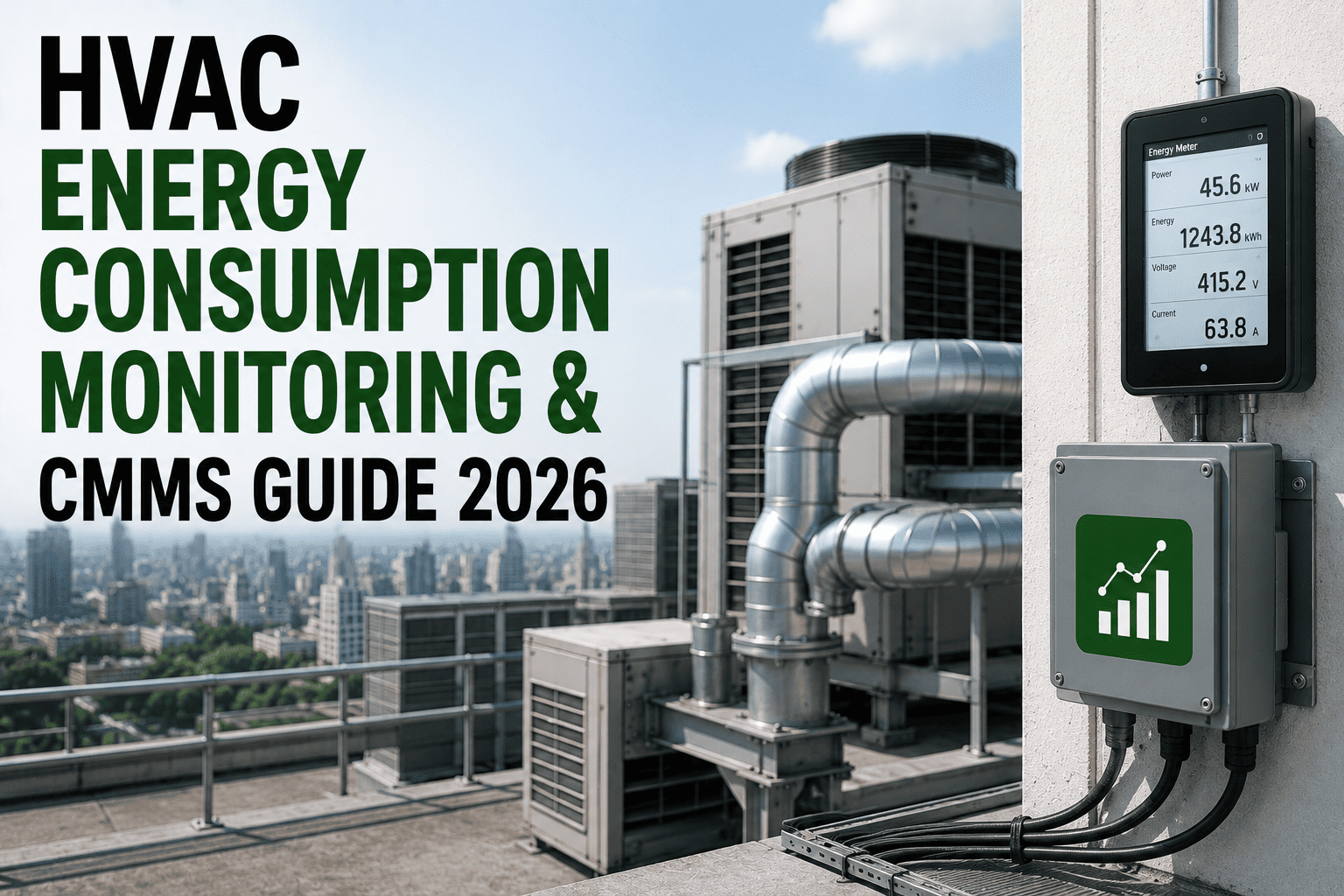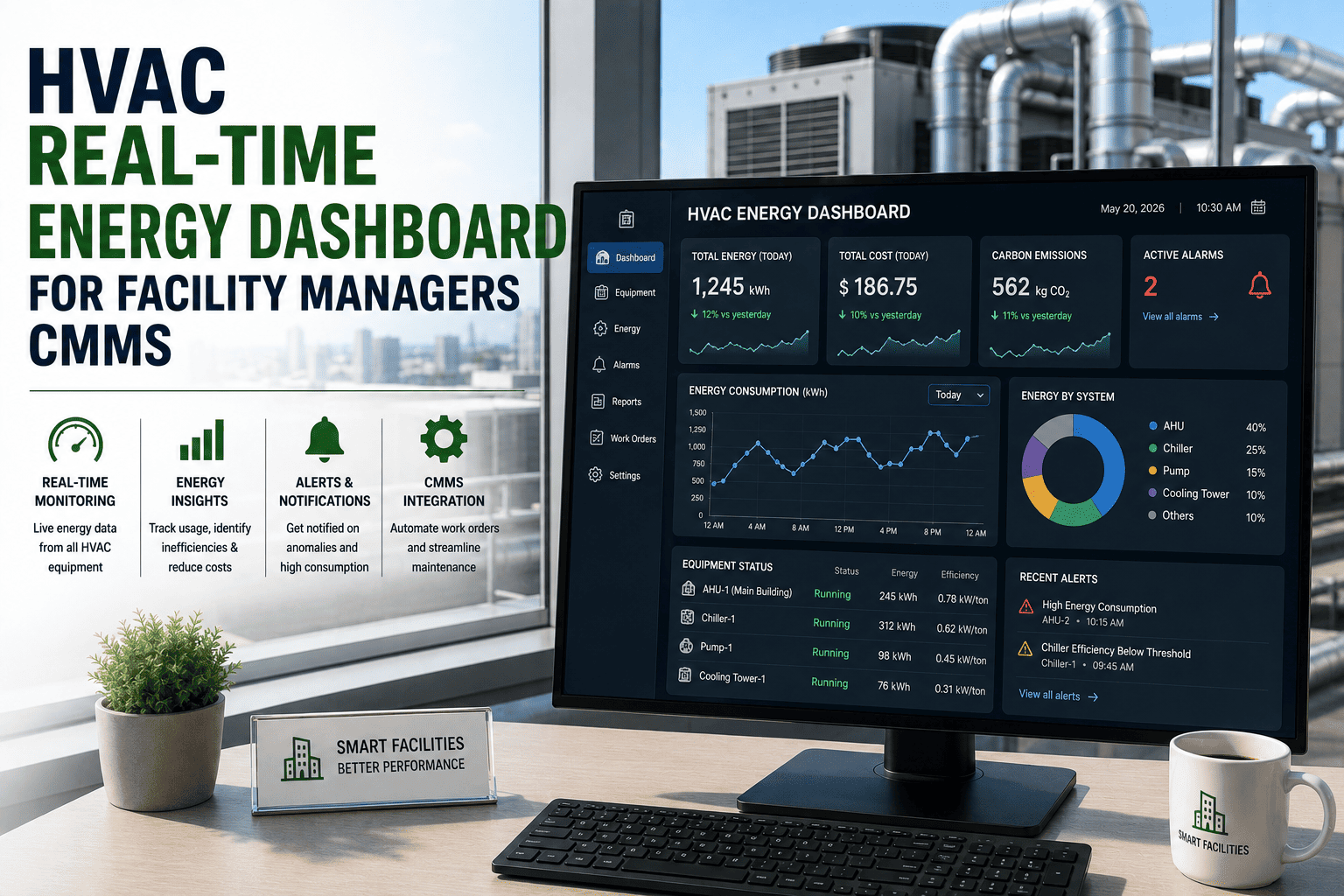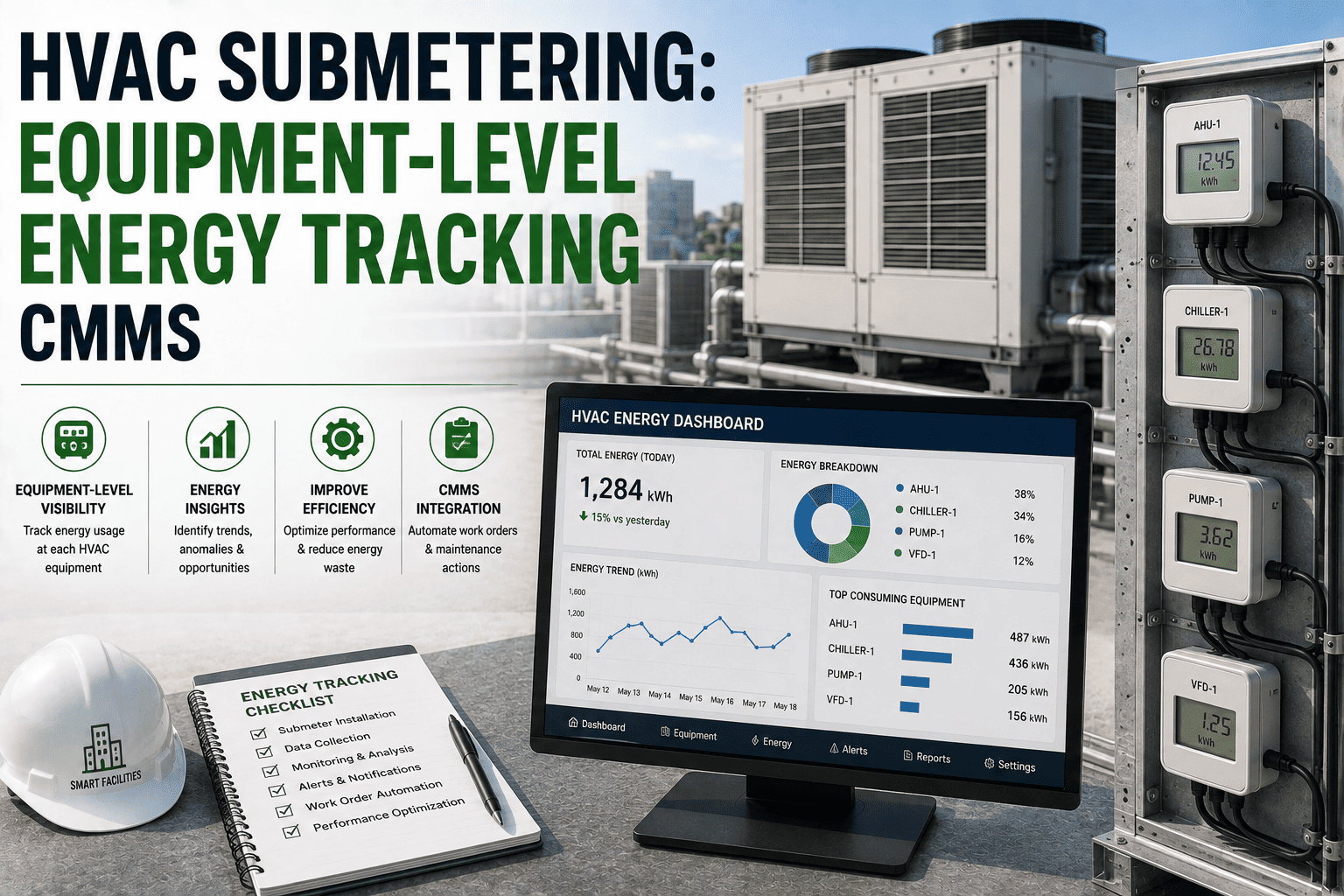
HVAC submetering is the practice of installing dedicated meters on individual pieces of cooling and heating equipment — chillers, air handlers, boilers and pumps — to measure power consumption at the asset level rather than relying on a single whole-facility utility bill. Equipment-level energy tracking exposes which assets are degrading, running off-schedule or wasting kilowatts long before a failure triggers a work order. By feeding that granular power data into a CMMS, maintenance and reliability teams can automatically generate corrective tasks, validate repair ROI and cut total HVAC energy spend by 15–30%. This guide walks through deployment strategy, submeter analytics and how to operationalize the data using OxMaint — you can Start Free Trial to test the workflows on your own assets today.
How much energy are your hidden HVAC hogs actually burning?
Whole-building utility data tells you what you spent, but not which chiller, AHU or boiler drove the cost. Equipment-level submetering paired with an AI-powered CMMS identifies underperforming assets in real time, automatically triggering corrective work orders before wasted energy drains your maintenance budget.
What HVAC equipment should you submeter first?
Not every asset needs its own meter. In a typical commercial or industrial facility, 80% of HVAC energy flows through just four equipment groups. Prioritizing these for submeter deployment maximizes ROI and gives your CMMS the most critical data for predictive maintenance analytics.
Chillers & Compressors
Accounting for 40–60% of total HVAC load, chiller submetering catches refrigerant leaks, fouled condensers and degrading compressors via rising kW/ton metrics. OxMaint flags the trend and auto-generates a cleaning work order.
Air Handling Units (AHUs)
AHU submetering isolates fan motor inefficiencies and clogged filter pressure drops. A 10% spike in AHU power consumption is often the first sign of mechanical binding before a VFD fault occurs.
Boilers & Heaters
Tracking combustion fan and circulator pump energy reveals scaling and soot buildup. Submetering boilers ensures seasonal efficiency doesn't silently drop below 80%, preventing gas overconsumption.
Pumps & Cooling Towers
HVAC power monitoring on secondary loops identifies impeller wear and cavitation. A pump drawing 15% more amperage than baseline needs maintenance immediately, not during the next scheduled inspection.
HVAC submetering ROI: The maintenance energy recovery formula
The value of submetering isn't just in the data — it's in the maintenance actions the data triggers. Use this formula to quantify how equipment-level energy tracking pays for itself when integrated with a CMMS.
| Submeter Deployment Scope | Estimated Setup Cost | Year 1 Energy Savings | Payback Period |
|---|---|---|---|
| Single Chiller (Primary Meter) | $1,500 | $14,400 | 1.2 months |
| Mechanical Room (Chiller + Pumps + AHU) | $5,200 | $38,600 | 1.6 months |
| Full Facility (10–15 Major Assets) | $18,000 | $145,000+ | 1.5 months |
Turn submeter data into automated CMMS work orders
Submetering hardware only tells you what is happening. OxMaint tells you what to do about it. By ingesting equipment-level energy data, our AI-powered CMMS automatically triggers preventive and corrective maintenance workflows, ensuring that energy waste is eliminated before it compounds.
Automated Anomaly Triggers
OxMaint ingests live submeter feeds via API. If a boiler's kW consumption deviates 12% from its historical baseline, the system instantly generates a high-priority work order — no manual monitoring required.
Asset-Level Energy Costing
Stop guessing which equipment drives your utility bill. OxMaint attaches energy consumption directly to the asset record, giving you true lifecycle cost (TLC) analytics for every chiller, pump and AHU.
Predictive Maintenance Analytics
OxMaint AI correlates rising energy consumption with vibration, temperature and runtime data to predict bearing failures and fouling weeks before they trigger a fault code.
See OxMaint on your assets — book a 30-min demo
Stop relying on whole-building utility bills to diagnose asset-level problems. Discover how submeter data inside a CMMS cuts energy costs and eliminates reactive maintenance.
How to deploy HVAC submeters with a CMMS in 90 days
A successful submetering initiative isn't just an electrical project — it requires tight integration between meters, middleware and your CMMS. Follow this 3-month rollout plan to ensure data flows seamlessly into OxMaint from day one.
Audit & Hardware Selection
Identify the top 10 energy-consuming assets via nameplate data. Select split-core CT submeters that support Modbus or BACnet for easy integration. Map assets in OxMaint to prepare for data ingestion.
Installation & Baseline
Deploy meters on chillers, AHUs and boilers. Connect the gateway to OxMaint via API. Let the system run for 14–21 days to establish a clean baseline kW profile under normal operating conditions.
Thresholds & Automation
Set anomaly alerts in OxMaint (e.g., 10% over baseline for 48 hours). Configure automated work order generation. Begin weekly energy review meetings using OxMaint analytics dashboards.
HVAC submetering & CMMS integration FAQs
Whole-building metering measures total utility consumption at the main service entrance, while HVAC submetering installs dedicated meters on individual assets like chillers, boilers and AHUs. Equipment-level energy tracking allows facility teams to isolate inefficiencies to specific machines, enabling targeted maintenance and accurate lifecycle costing.
By feeding submeter data into a CMMS like OxMaint, rising energy consumption automatically triggers work orders before mechanical failure occurs. This shifts teams from reactive to predictive maintenance, cutting unplanned downtime by 30–50% and extending asset lifespan. You can Start Free Trial to test these automated workflows.
A typical commercial submeter with split-core CTs costs $300–$800 per asset, plus gateway and installation. Because submetering identifies 15–30% energy waste on high-load assets like chillers, most deployments achieve a payback period of under 2 months when integrated with automated CMMS maintenance workflows.
Yes. OxMaint ingests data via REST APIs from standard building automation gateways. If your BMS or SCADA system can output BACnet/Modbus data to an API layer, OxMaint can consume that equipment-level power data to update asset records and generate automated maintenance tasks.
Chillers and large air handling units provide the fastest payback. Because chillers represent 40–60% of total HVAC energy spend, even a small efficiency drop (like a fouled condenser) costs thousands in wasted electricity. Submetering these assets first ensures your highest energy consumers are continuously monitored for degradation.
Ready to track HVAC energy at the asset level?
Deploy OxMaint to connect your submeters, automate work orders and eliminate hidden energy waste across your entire facility.
Free 14-day trial · No credit card