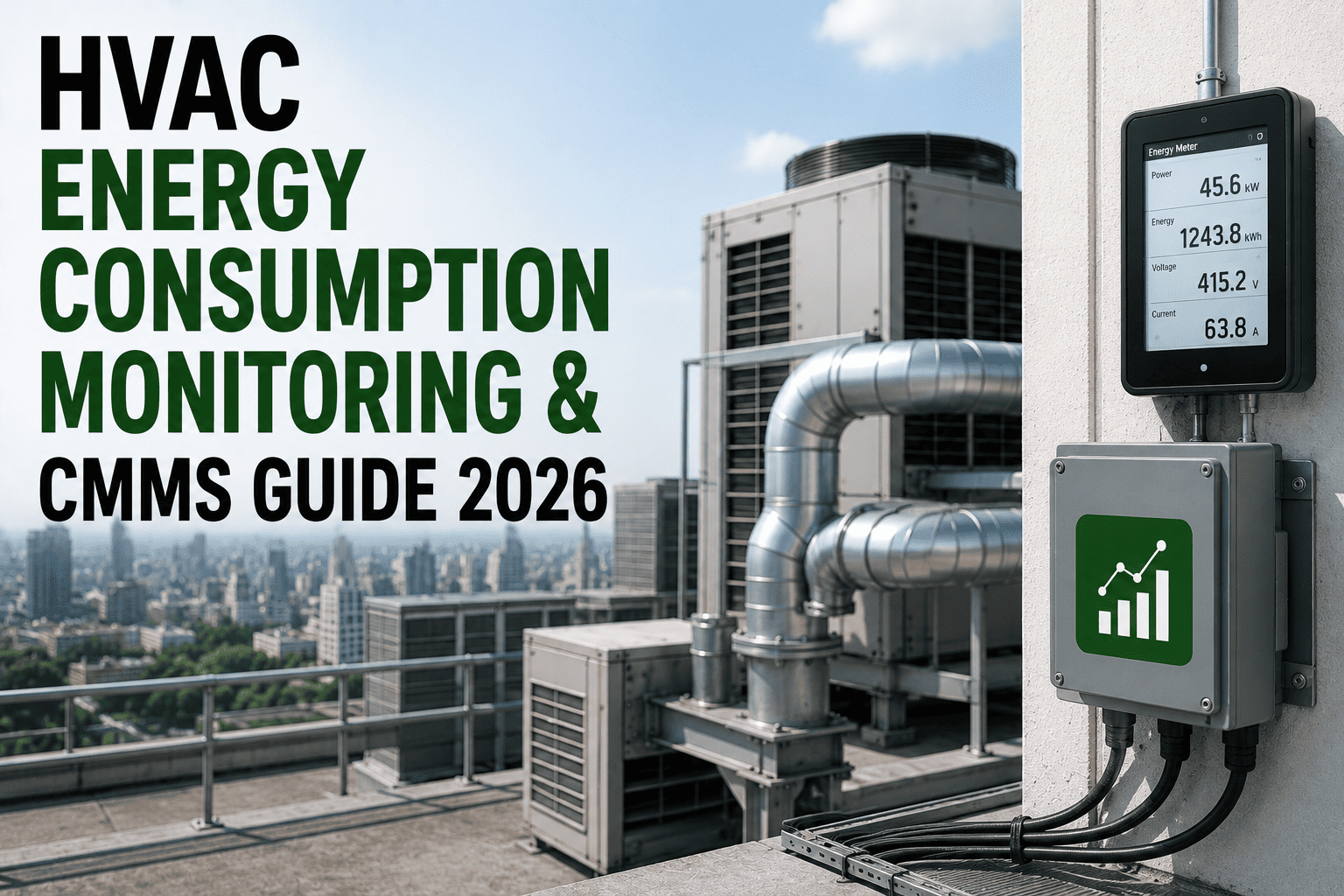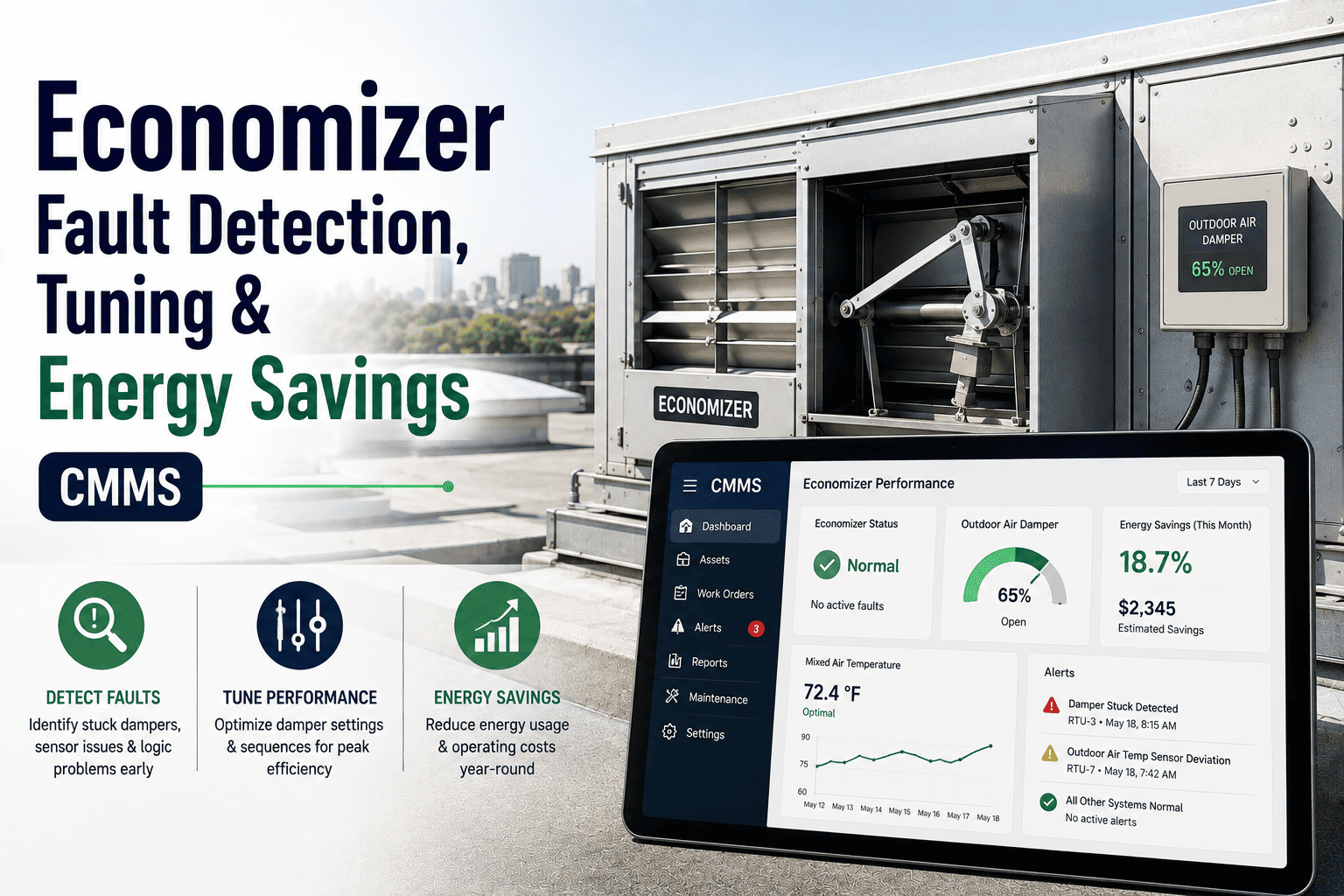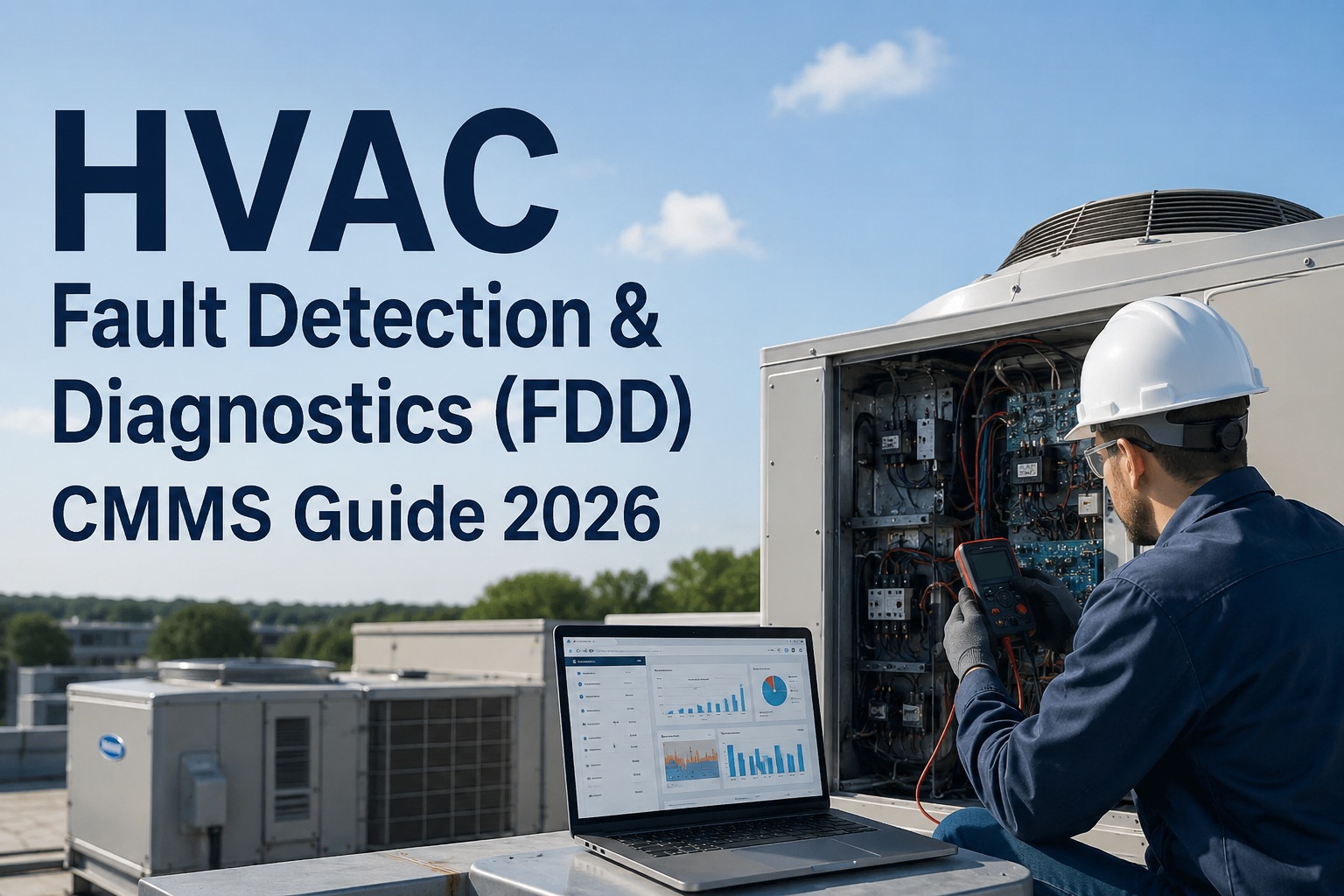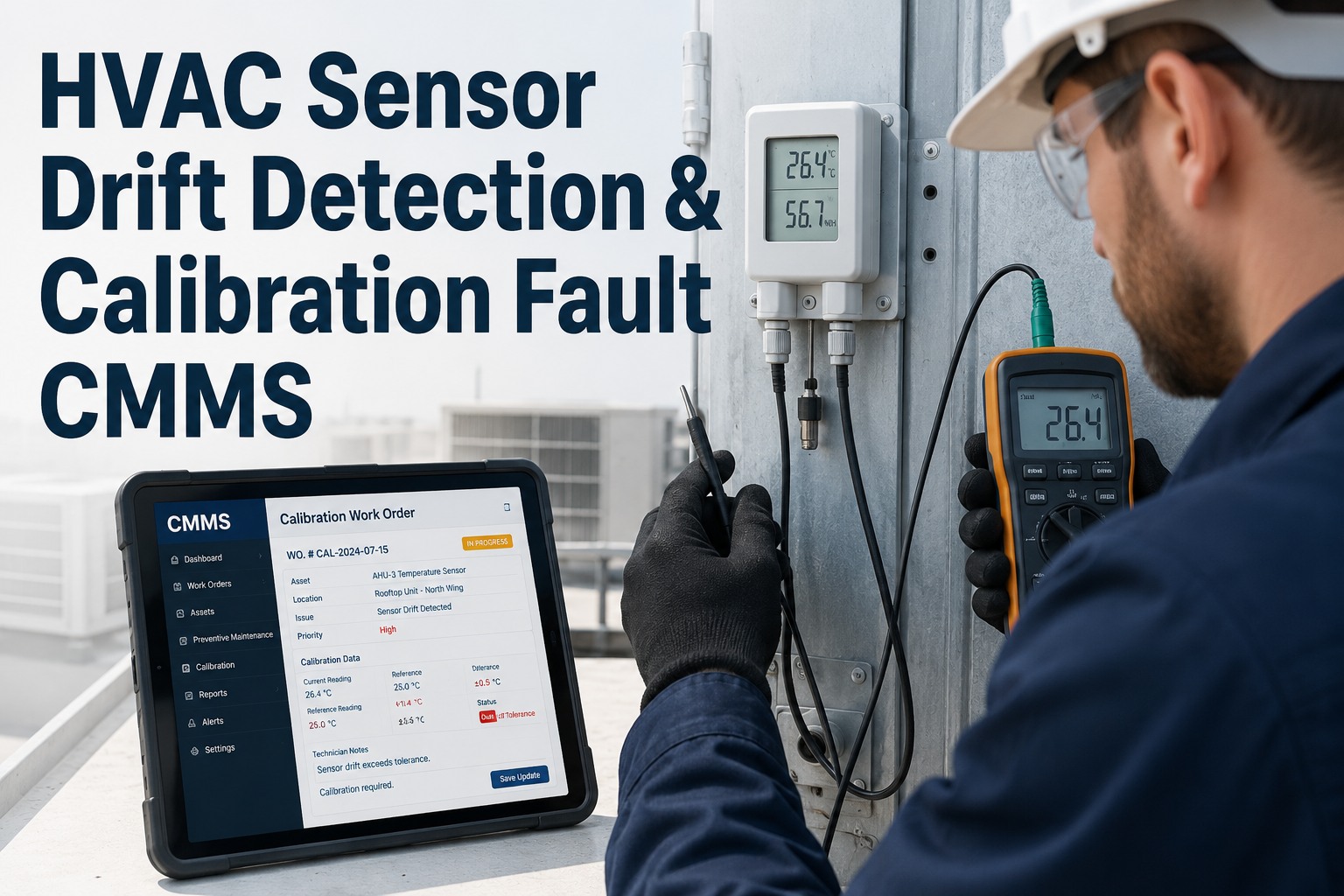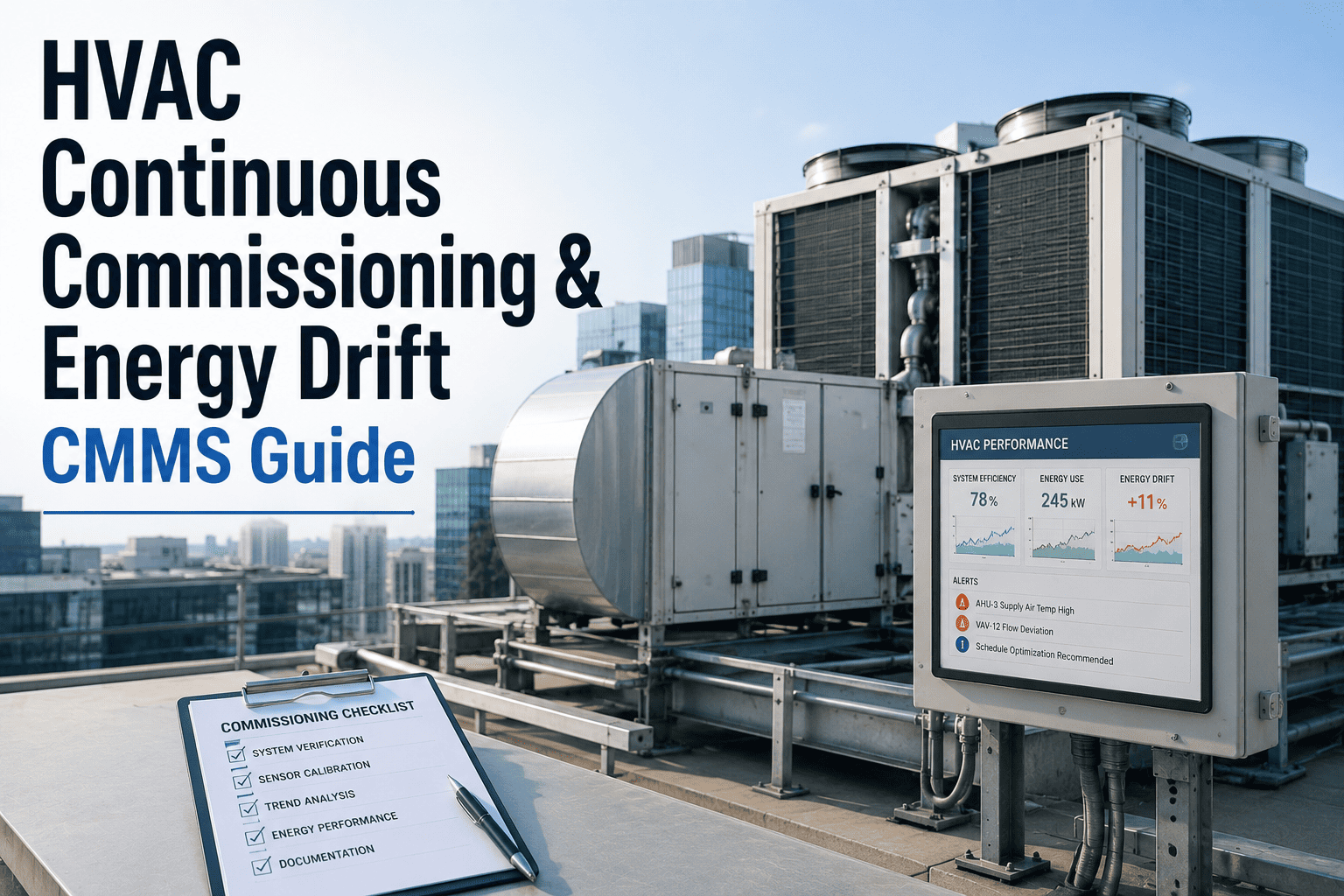
HVAC continuous commissioning is the practice of systematically monitoring building systems to detect and correct energy drift, comfort drift, and performance degradation before they escalate into costly failures — and pairing it with a modern CMMS like OxMaint turns that visibility into automated, corrective work orders. Research from Lawrence Berkeley National Lab and ASHRAE shows that buildings lose 10–30% of their HVAC energy efficiency within the first two years after initial commissioning due to sensor drift, valve wear, and uncalibrated controls. This guide walks maintenance and reliability teams through drift detection, automated fault analytics, and CMMS-driven ongoing commissioning so you can recover that loss, cut unplanned downtime, and extend asset life. Ready to stop chasing energy waste? Start Free Trial and see the difference on your own assets in days.
Is hidden HVAC drift silently burning 20% of your energy budget?
Most facilities lose a tenth to a third of their HVAC efficiency within 24 months of commissioning. OxMaint's AI-powered CMMS catches energy and comfort drift the moment it starts — and automatically dispatches corrective work before the utility bill spikes.
from unmanaged
HVAC drift
What is HVAC energy drift — and why does it cost you 10–30% every year?
Energy drift in HVAC systems is the gradual degradation of equipment efficiency caused by sensor calibration loss, fouled coils, stuck dampers, drifting setpoints, and deferred filter changes. It is the single largest preventable energy expense in commercial buildings.
Example: A 500-ton chiller plant consuming 1.2M kWh/yr at $0.12/kWh with 18% drift = $25,920 lost annually — invisible until the utility bill arrives.
A single degree of sustained comfort drift can trigger 3× more hot/cold calls and a measurable drop in tenant satisfaction scores within 14 days.
A 180-asset commercial office complex in the Midwest was spending $42,000/yr on HVAC energy above its post-commissioning baseline. A drift-detection audit revealed four AHUs with stuck economizer dampers and two chillers with 22% refrigerant charge loss. After deploying OxMaint's continuous commissioning workflow — automated drift alerts routed directly to corrective work orders — the facility recovered $38,500 in year one and cut comfort complaints by 64%. The payback period was under 90 days.
How to build a continuous commissioning workflow with your CMMS
A continuous commissioning program is only as strong as its corrective loop. Below is a five-month implementation timeline that maintenance teams can follow using OxMaint to move from reactive to data-driven HVAC performance management.
Establish performance baseline
Catalog all HVAC assets in OxMaint. Import existing commissioning reports, submeter data, and BMS trend logs. Set expected kW/ton, CFM, and setpoint tolerances per asset.
Configure automated drift alerts
Define energy and comfort drift thresholds (e.g., >5% deviation from baseline for 72 hours). OxMaint's analytics engine flags deviations and auto-generates inspection work orders.
Close the fault-to-fix loop
Every flagged drift event becomes a prioritized work order with checklists, parts availability, and technician assignment. Track mean time to repair and verify resolution against baseline.
Move from detection to prediction
OxMaint's AI models analyze 90+ days of drift patterns to predict upcoming deviations. Shift from fixing drift to preventing it — schedule proactive calibration and component replacement.
Prove ROI with commissioning analytics
Generate executive dashboards showing kWh saved, comfort complaint reduction, avoided downtime hours, and asset life extension. Refresh baselines quarterly for continuous improvement.
Key metrics every drift detection CMMS should track
Effective continuous commissioning analytics for HVAC require tracking the right leading and lagging indicators. These are the KPIs OxMaint monitors to catch performance drift before it becomes a budget line item.
Track real-time kW per ton of cooling. A 0.1 kW/ton increase signals fouling or refrigerant loss — act before it costs 8–12% more energy.
Comfort drift detection threshold. Sustained deviation beyond 1°F for 4+ hours triggers automated work orders in OxMaint.
Actual vs. design CFM per AHU. A 15% drop indicates filter loading, belt slip, or damper failure — all correctable before comfort complaints spike.
Month-over-month efficiency decline. OxMaint calculates drift rate per asset and prioritizes interventions by cost impact.
Mean time from drift detection to verified correction. Best-in-class teams achieve under 48 hours with automated CMMS workflows.
Dollar value of wasted energy per drift event. OxMaint attaches real cost to every fault — so prioritization is driven by money, not guesswork.
Manual commissioning vs. OxMaint continuous commissioning
The difference between periodic recommissioning and true continuous commissioning is automation. Here is what changes when you move from spreadsheets and annual audits to an AI-powered drift detection CMMS.
| Capability | Manual / Spreadsheet Commissioning | OxMaint Continuous Commissioning |
|---|---|---|
| Drift Detection Speed | Weeks to months — found during next audit or utility bill review | Real-time — automated alerts within hours of deviation onset |
| Work Order Generation | Manual entry from paper notes; 30% of actions never logged | Auto-generated with checklists, parts, and technician assignment |
| Energy Cost Visibility | Aggregate utility bills; no per-asset attribution | Per-asset energy waste in dollars — prioritized by financial impact |
| Comfort Drift Response | Reactive — triggered by occupant complaints | Proactive — detected and corrected before complaints occur |
| Commissioning Analytics | Static PDF reports; no trend visibility between audits | Live dashboards with drift trends, savings tracking, and ROI proof |
| Audit & Compliance Readiness | Days of preparation; gaps in documentation common | Always audit-ready — every action timestamped and searchable |
| Typical Energy Recovery | 5–10% after each recommissioning, then drift resumes | 15–30% sustained — drift corrected before it compounds |
How OxMaint powers your HVAC continuous commissioning program
OxMaint is an AI-powered CMMS and EAM platform built to close the gap between drift detection and corrective action. Here is how four core capabilities map directly to your continuous commissioning outcomes.
Automated Drift Detection
OxMaint ingests BMS trend logs, submeter data, and sensor streams to detect energy and comfort drift in real time. Thresholds are configurable per asset — when deviation exceeds your tolerance, a work order is created automatically.
Outcome: Cut drift-to-detection time from weeks to hoursAuto-Generated Corrective Work Orders
Every drift alert becomes a prioritized work order with step-by-step checklists, required spare parts, safety procedures, and technician assignment. No manual entry, no dropped actions, no paper trails to lose.
Outcome: Eliminate paper work orders and reduce MTTR by 40–60%Predictive Maintenance Analytics
After 90 days of drift data, OxMaint's AI models predict which assets are heading toward deviation — allowing you to schedule calibration, component replacement, or deep cleaning before efficiency drops.
Outcome: Prevent 30–50% of unplanned HVAC downtime eventsCommissioning Analytics & ROI Dashboards
Live dashboards show kWh saved, dollars recovered, comfort complaint trends, and asset health scores — all filterable by building, system, or asset. Perfect for executive reporting and compliance audits.
Outcome: Prove 15–30% sustained energy savings with audit-ready dataWhat maintenance teams achieve with OxMaint commissioning
"We recovered $31K in energy costs the first quarter after switching to OxMaint for continuous commissioning. The automated drift alerts caught two AHU economizer failures we never would have seen until the monthly bill came in."
"Comfort complaints dropped 58% in six months. OxMaint turned drift detection from a once-a-year audit into a daily workflow that our technicians actually trust and follow."
See OxMaint catch HVAC drift on your assets — book a 30-minute demo
We will connect your BMS data, map your HVAC assets, and show you exactly how much energy drift is costing you — and how fast OxMaint pays for itself.
Frequently asked questions about HVAC continuous commissioning
What is the difference between continuous commissioning and retrocommissioning?
Continuous commissioning is an ongoing, data-driven process that monitors HVAC performance in real time and corrects drift as it occurs. Retrocommissioning is a one-time, periodic recommissioning effort typically performed every 3–5 years. Continuous commissioning with a CMMS like OxMaint sustains the benefits of retrocommissioning indefinitely — preventing the 10–30% efficiency loss that accumulates between periodic audits.
How much energy can continuous commissioning save?
Facilities that implement continuous commissioning typically recover 15–30% of HVAC energy costs that were being lost to drift. The exact savings depend on baseline condition, building age, and how quickly corrective actions are executed. OxMaint's automated work-order workflow ensures detected drift is corrected within 48 hours, maximizing sustained savings. Book a demo to see a savings estimate for your portfolio.
How does a CMMS support HVAC commissioning?
A CMMS like OxMaint bridges the gap between drift detection and corrective action by automatically converting performance deviations into prioritized work orders with checklists, parts, and technician assignments. It also tracks completion, verifies resolution against baseline metrics, and maintains a timestamped audit trail for compliance — something spreadsheets and paper logs cannot achieve at scale.
What are the early signs of HVAC energy drift?
The most common indicators are rising kW/ton on chillers, increasing temperature deviation in zones, climbing static pressure in ductwork, more frequent comfort complaints, and unexplained utility bill increases of 5% or more. OxMaint's drift detection analytics flag these patterns automatically — often before occupants notice or the utility bill reflects the loss.
How long does it take to implement continuous commissioning with OxMaint?
Most facilities are live within 2–4 weeks. The process involves importing asset data, connecting BMS or submeter feeds, configuring drift thresholds, and training technicians on the automated work-order workflow. Many teams see their first energy recovery within the first 30 days. Start your free trial to begin today — setup takes under an hour.
Stop losing 20% of your HVAC budget to invisible drift
Join the maintenance teams recovering $25K–$50K+ per year with OxMaint's AI-powered continuous commissioning CMMS. Your assets are drifting right now — fix it before the next utility bill arrives.
Free 14-day trial · No credit card