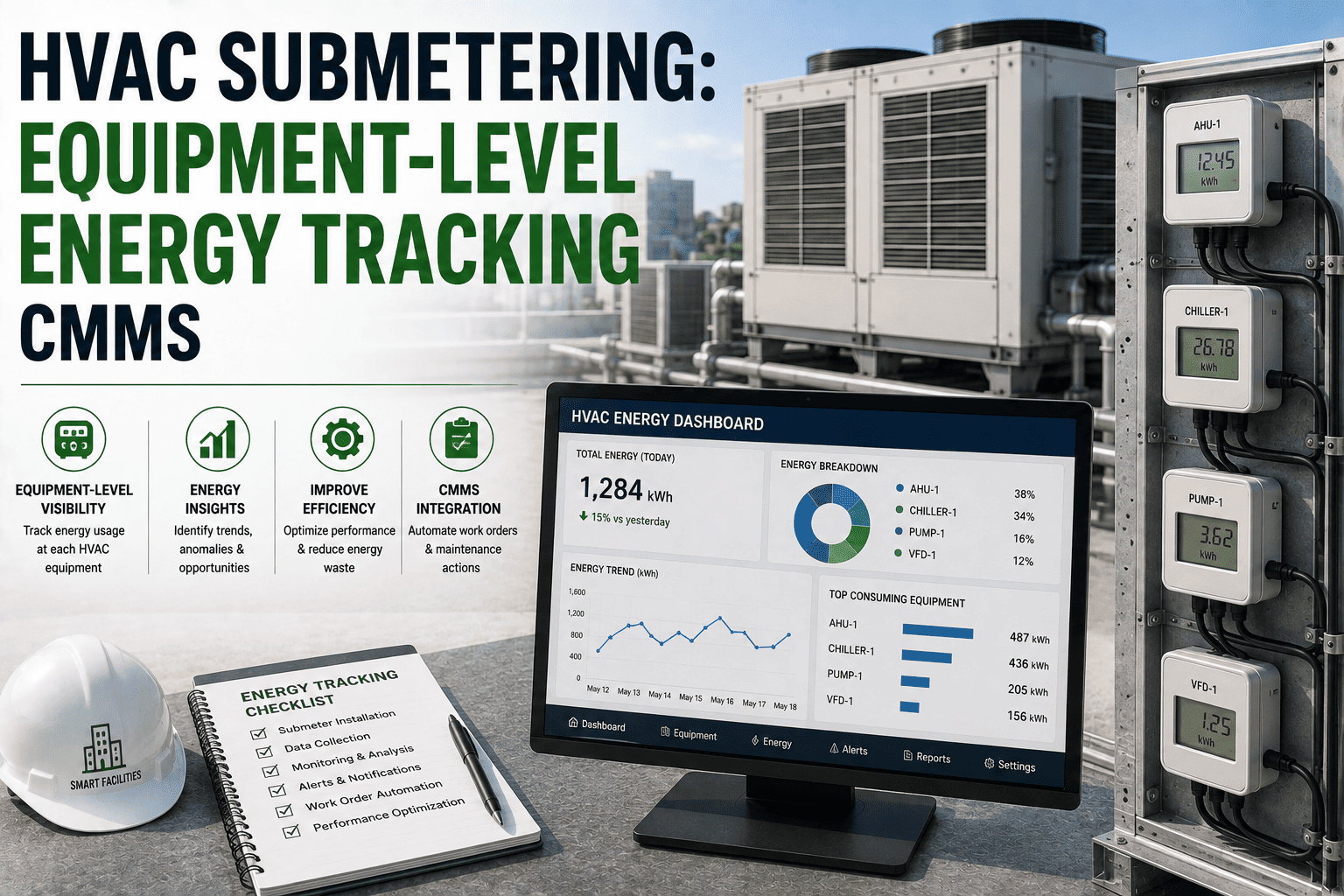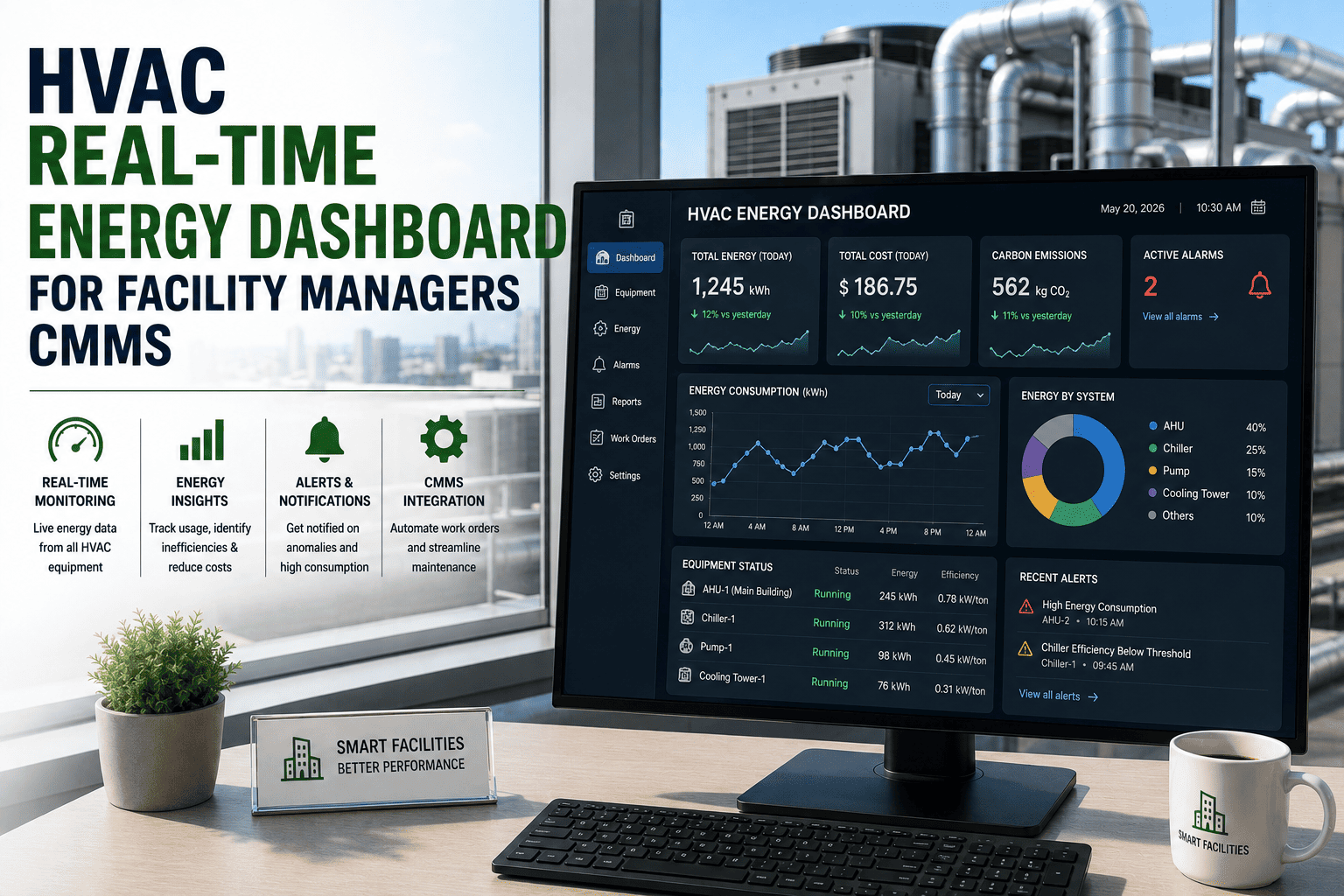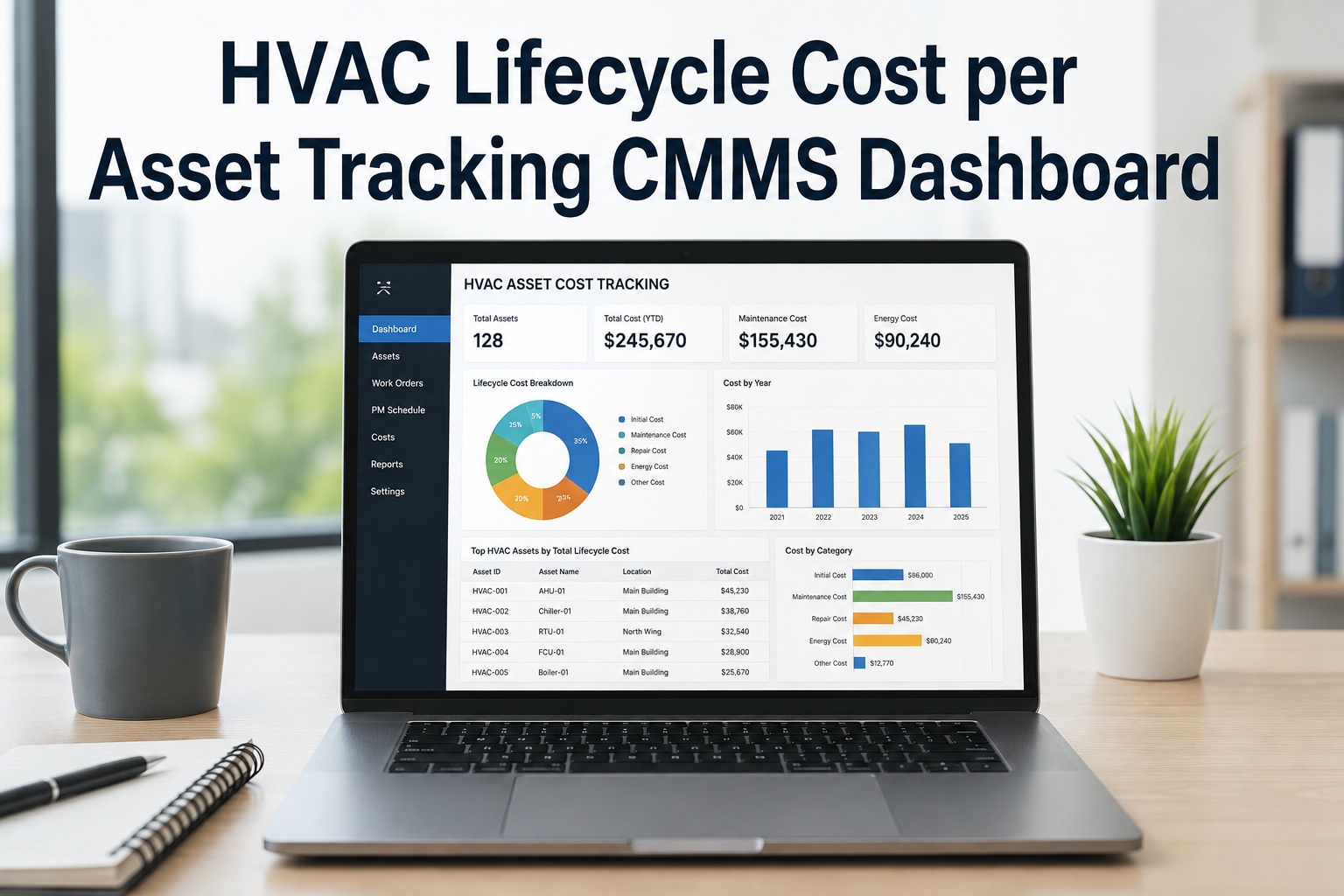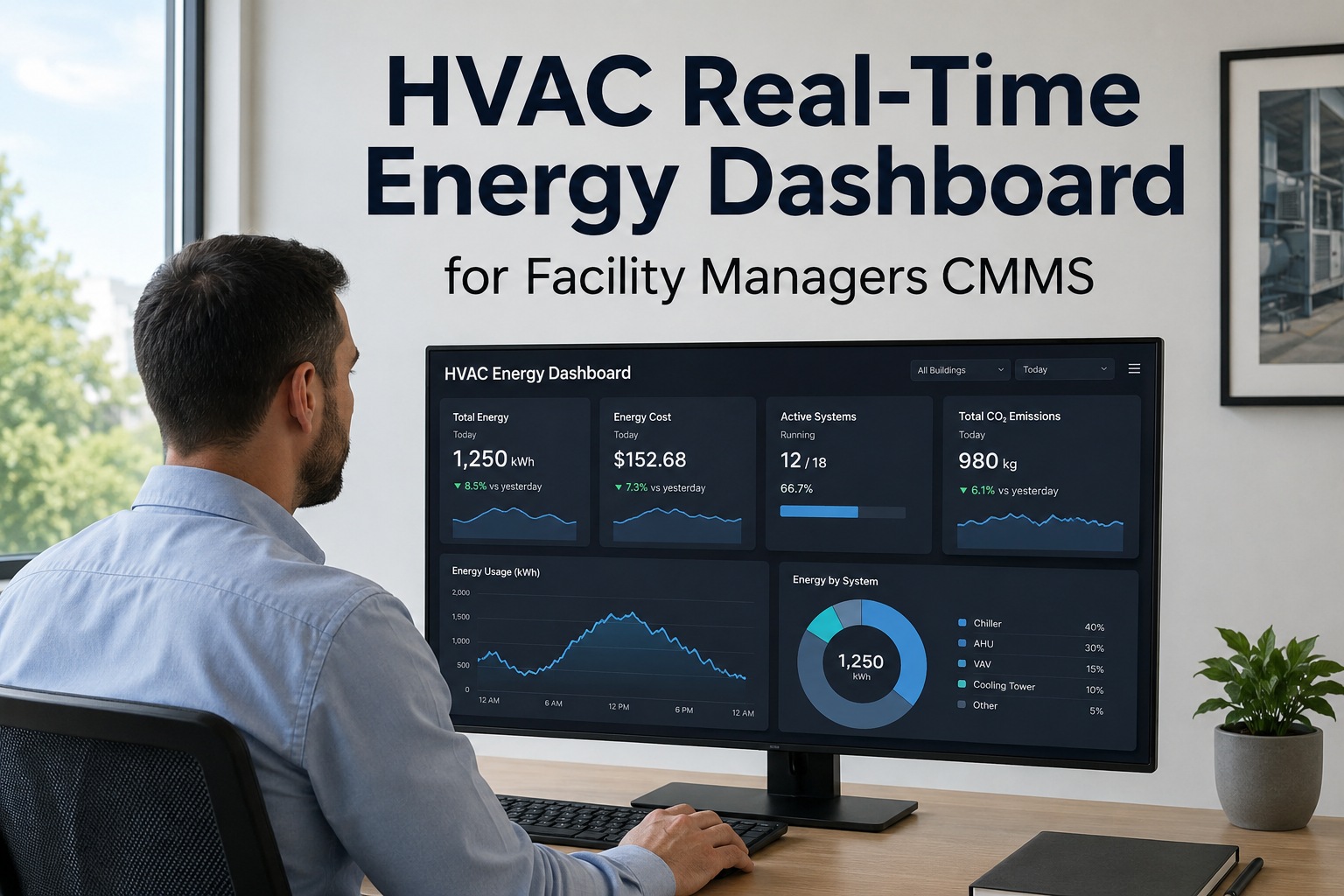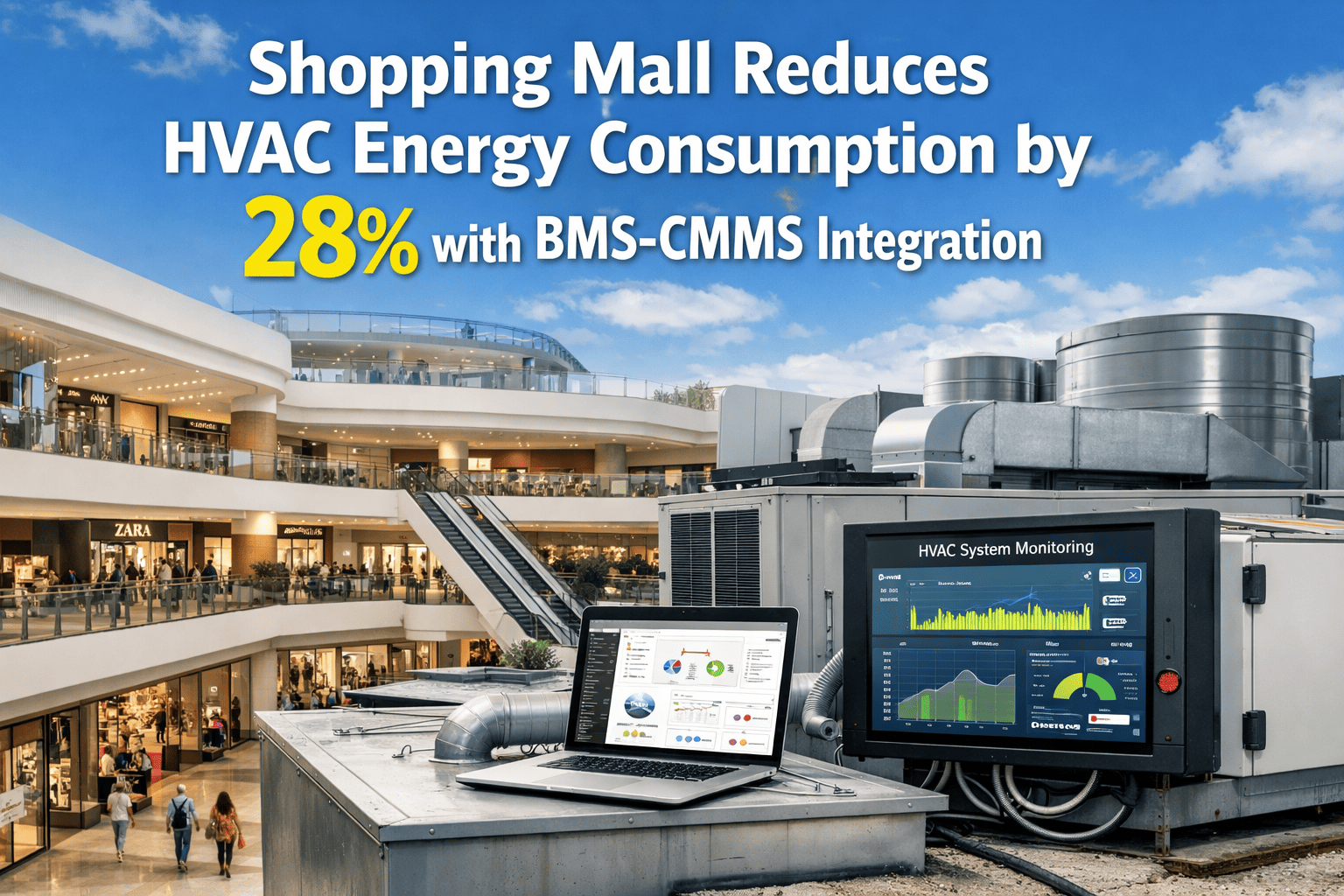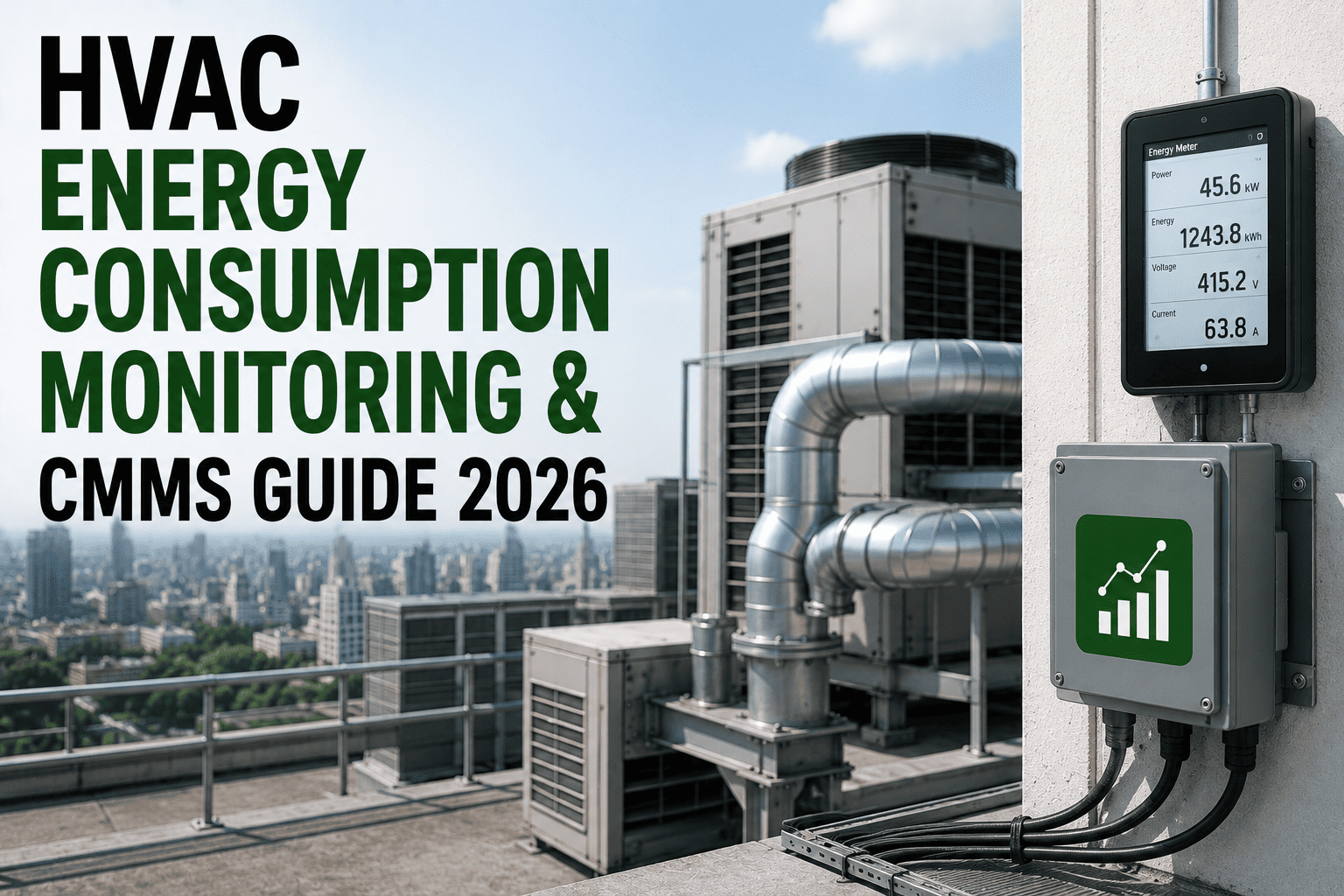
HVAC energy consumption monitoring is the process of tracking, aggregating, and analyzing how much power your heating, ventilation, and air conditioning systems use in real time—typically through submeter data aggregation, runtime-based tracking, and BACnet/Modbus integration. For maintenance and reliability teams in 2026, an HVAC energy monitoring CMMS bridges the gap between facility energy management and equipment maintenance, turning raw kilowatt data into automated work orders and preventive actions. By implementing a robust energy monitoring program, facilities can identify degrading equipment efficiency, catch clogged coils or failing bearings early, and cut HVAC energy costs by 10–30% annually. This guide breaks down how to build a modern tracking strategy and how OxMaint automates the entire workflow so you can stop wasting energy and start saving—Start Free Trial to see it live on your assets today.
HVAC ENERGY MONITORING GUIDE 2026
How much energy is your HVAC system quietly wasting right now?
HVAC accounts for up to 40% of a commercial building's total energy spend. Without real-time submeter monitoring tied to a CMMS, efficiency losses from dirty coils, stuck dampers, and degrading compressors go unnoticed for months—driving up utility bills and accelerating equipment failure.
HVAC SUBMETER MONITORING
What is HVAC energy consumption monitoring and why does it matter in 2026?
HVAC energy tracking in 2026 goes far beyond reading a monthly utility bill. Modern facilities deploy submeters at the asset level—on chillers, air handlers, rooftop units, and boiler plants—to capture granular kilowatt-hour data and runtime hours. When this data flows into a CMMS, maintenance teams gain a real-time HVAC energy dashboard that highlights performance drift before it becomes a catastrophic failure. The Department of Energy estimates that poorly maintained commercial HVAC systems consume 15–30% more energy than well-maintained ones, meaning a facility spending $500,000 annually on cooling and heating could be wasting up to $150,000 per year simply by relying on reactive maintenance.
INTEGRATION & DATA STREAMS
BACnet, Modbus, and CMMS integration for HVAC energy tracking
To build a comprehensive energy consumption guide for your facility, you need to connect building automation system (BAS) protocols directly to your maintenance software. HVAC BACnet monitoring and HVAC Modbus integration allow real-time data points—like compressor amperage, supply fan VFD speed, and chiller ton-hours—to be pushed into your CMMS via API or MQTT. When OxMaint ingests this data, it automatically compares actual runtime energy consumption against the OEM baseline. If a 50-ton RTU starts drawing 20% more power than its baseline for the same cooling load, OxMaint automatically generates a prioritized work order to inspect coil fouling or refrigerant charge—turning an invisible energy leak into an actionable maintenance task.
Submeter Data Aggregation
Interval data from electrical submeters is captured at 15-minute increments, normalized, and mapped to specific HVAC assets in the CMMS asset hierarchy.
Runtime-Based Tracking
Equipment runtime hours logged via BACnet/Modbus trigger preventive maintenance schedules automatically, ensuring filters and belts are changed based on actual usage, not arbitrary calendar dates.
Fault Detection & Diagnostics (FDD)
AI algorithms analyze energy consumption anomalies against temperature and load data, flagging issues like simultaneous heating and cooling that spike energy usage by up to 40%.
Automated Work Order Generation
When energy metrics breach predefined thresholds, the CMMS instantly generates a work order, assigns a technician, and reserves spare parts—closing the loop between detection and resolution.
ROI & SAVINGS FORMULA
How to calculate HVAC energy savings with a CMMS
Quantifying the ROI of an HVAC energy monitoring program requires comparing baseline energy costs against post-implementation consumption, factoring in maintenance labor and avoided downtime. A CMMS energy monitoring platform automates this math by tracking every kilowatt-hour saved after a repair is completed. Here is the standard formula facilities managers use to justify the investment:
| Monitoring Metric | Without CMMS | With OxMaint CMMS | Annual Savings |
|---|---|---|---|
| Filter & Coil Maintenance | Calendar-based, often delayed | Runtime-triggered, automated WO | $8,200 |
| Refrigerant Leak Detection | Manual quarterly inspection | Continuous FDD via BACnet power data | $12,500 |
| Damper & Valve Stuck Open | Found during annual audit | Simultaneous heating/cooling alert in 24h | $9,400 |
| Air Handler Belt Slippage | Detected via occupant complaint | VFD amperage spike triggers instant WO | $4,600 |
| Total Estimated Annual Savings | — | — | $34,700 |
HOW OXMAINT HELPS
How OxMaint turns HVAC energy data into maintenance action
OxMaint is an AI-powered CMMS and EAM platform designed to bridge the gap between facility energy monitoring and maintenance execution. Instead of requiring technicians to monitor a separate building automation dashboard, OxMaint ingests HVAC energy consumption data directly and translates efficiency drift into prioritized work orders, spare parts reservations, and predictive maintenance schedules. Here is how OxMaint specifically solves the HVAC energy tracking challenge:
Real-Time Energy Anomaly Detection
OxMaint connects to BACnet and Modbus gateways to monitor asset-level kWh and runtime. When energy consumption deviates more than 10% from the baseline, the system automatically generates a high-priority work order—cutting unplanned downtime by 30–50%.
Unified HVAC Energy Dashboard
Visualize energy intensity (kWh per ton-hour or per square foot) alongside maintenance history in a single pane of glass, enabling reliability teams to prove the financial impact of preventive maintenance to facility leadership.
Runtime-Based PM Scheduling
Eliminate calendar-based guesswork. OxMaint schedules filter changes, belt replacements, and coil cleanings based on actual equipment runtime hours pulled from the BAS—reducing unnecessary PM labor by 20% while extending asset lifespan.
Spare Parts & Inventory Automation
When an energy-driven work order is created, OxMaint automatically checks spare parts inventory, reserves filters or bearings, and triggers reordering if stock falls below the minimum—ensuring zero delay in energy-restoring repairs.
See OxMaint track your HVAC energy in real time
Book a 30-minute demo and we'll connect your BACnet or Modbus data to a live CMMS dashboard, showing you exactly which assets are wasting energy and how to automate the fix.
FREQUENTLY ASKED QUESTIONS
HVAC energy consumption monitoring & CMMS FAQs
What is HVAC energy consumption monitoring?
HVAC energy consumption monitoring is the continuous tracking of power usage by heating, cooling, and ventilation equipment using submeters, BACnet/Modbus integrations, and runtime sensors. When integrated with a CMMS, this data is used to automatically trigger maintenance work orders whenever energy efficiency drops, preventing both energy waste and equipment failure.
How does a CMMS improve HVAC energy tracking?
A CMMS like OxMaint bridges the gap between energy monitoring and maintenance execution by ingesting real-time kWh data and comparing it to OEM baselines. When it detects an anomaly—such as a chiller drawing 20% more power than expected—it automatically generates a work order, assigns a technician, and reserves the necessary spare parts, reducing energy waste by 10–30%. You can see this in action when you Book a Demo.
What is the ROI of HVAC submeter monitoring with a CMMS?
Most facilities see an 8–12 month payback period on submeter and CMMS deployment. A typical 180-asset plant spending $42,000 annually on HVAC energy can recover $15,000–$30,000 per year by catching efficiency-draining issues like clogged coils, refrigerant leaks, and stuck dampers early, plus additional savings from reduced unplanned downtime and optimized preventive maintenance scheduling.
Can OxMaint integrate with BACnet and Modbus building automation systems?
Yes. OxMaint connects to BACnet/IP and Modbus TCP gateways via API or MQTT, pulling interval data on compressor amperage, fan VFD speed, chiller ton-hours, and runtime directly into the CMMS. This allows the platform to create a unified HVAC energy dashboard that correlates energy consumption with maintenance history and asset health.
How do I start an HVAC energy monitoring program in 2026?
Start by installing electrical submeters on major HVAC assets (chillers, RTUs, AHUs) and connecting them to your building automation system. Then deploy a CMMS with energy monitoring capabilities—like OxMaint—to ingest that data, set baseline thresholds, and automate work order generation when consumption spikes. You can Start Free Trial today to map your assets and begin tracking within hours.
Stop wasting energy on inefficient HVAC maintenance
Join the maintenance teams using OxMaint to cut HVAC energy costs by up to 30%, eliminate paper work orders, and predict failures before they happen. Your free trial is ready—no credit card required.
Free 14-day trial · No credit card required