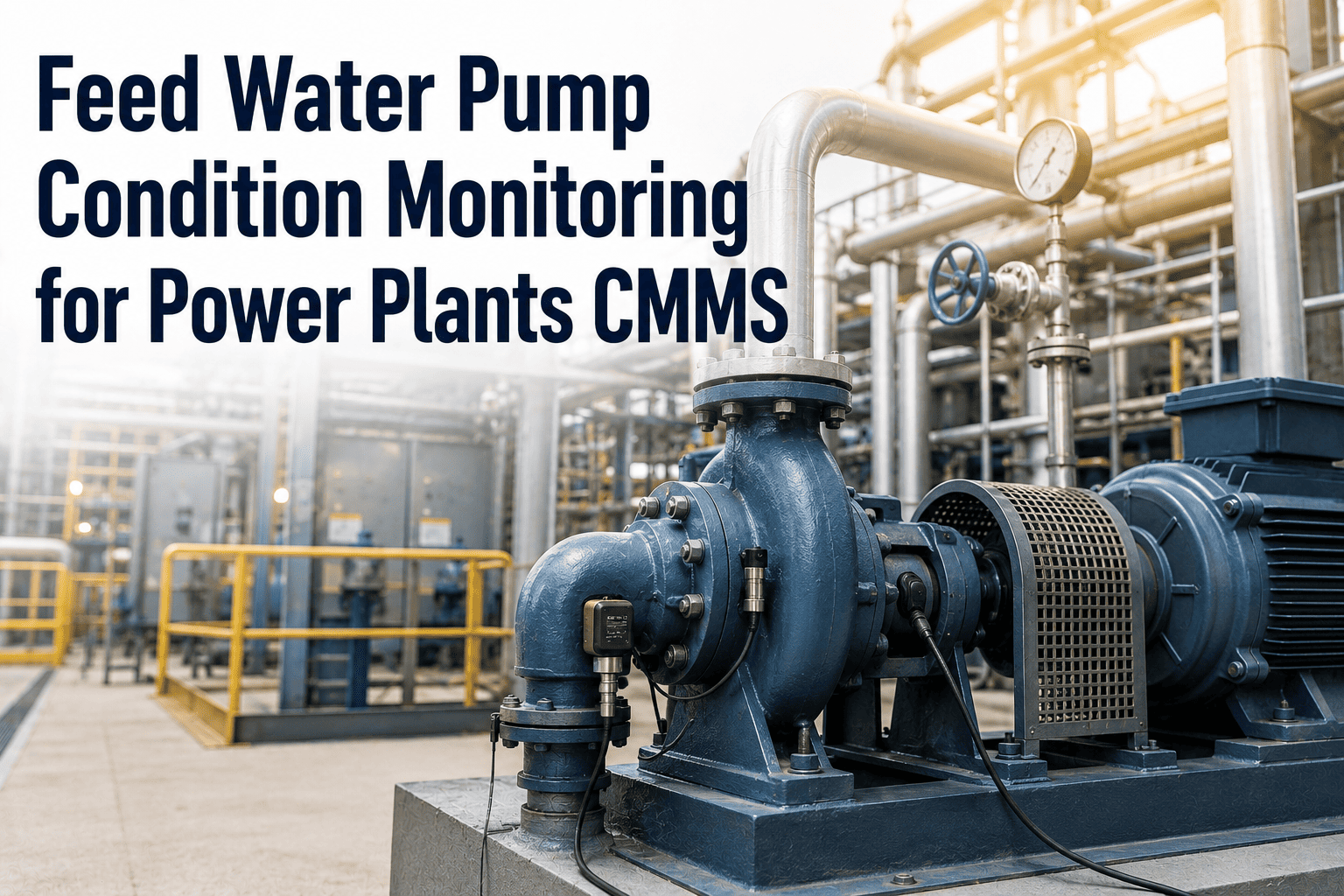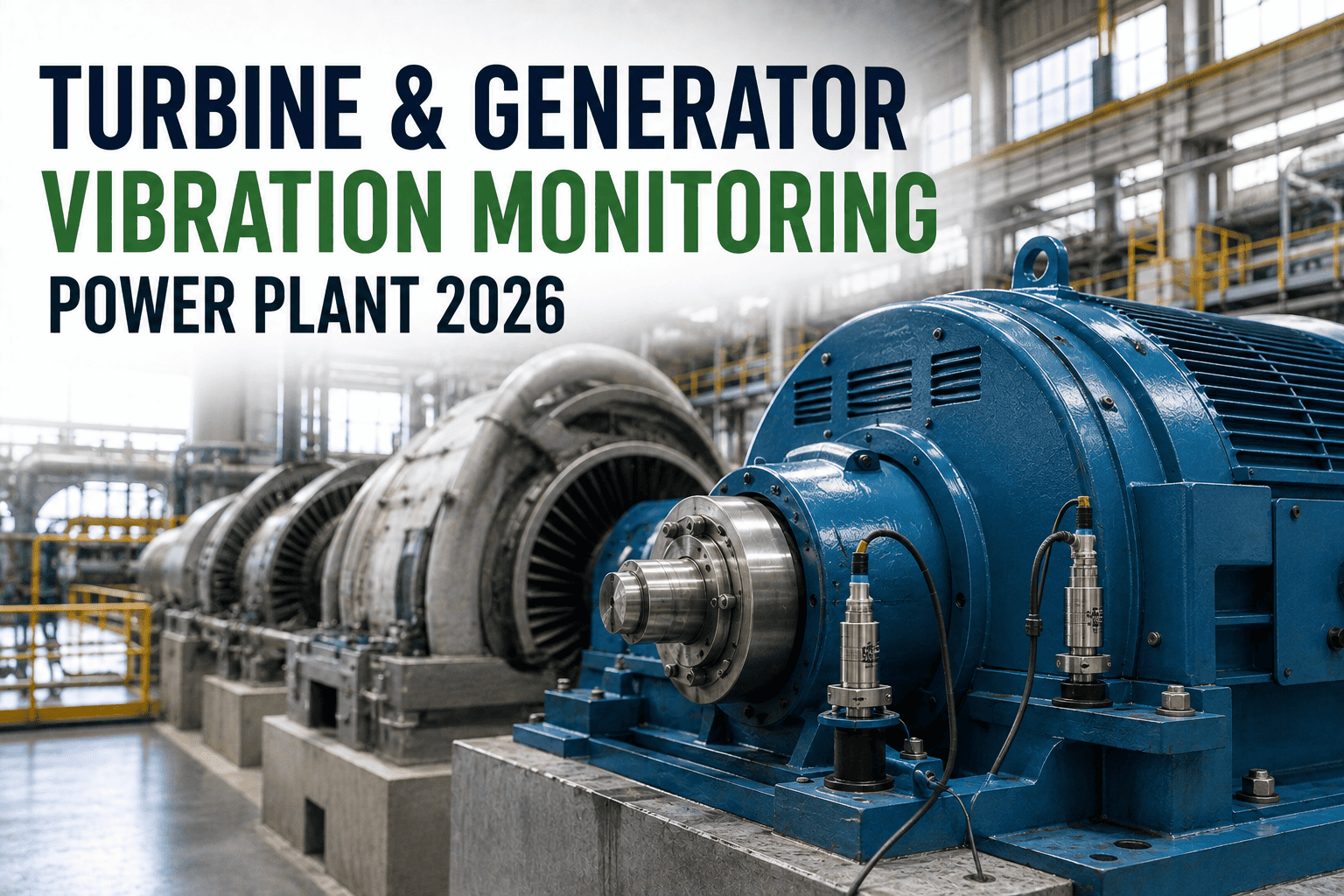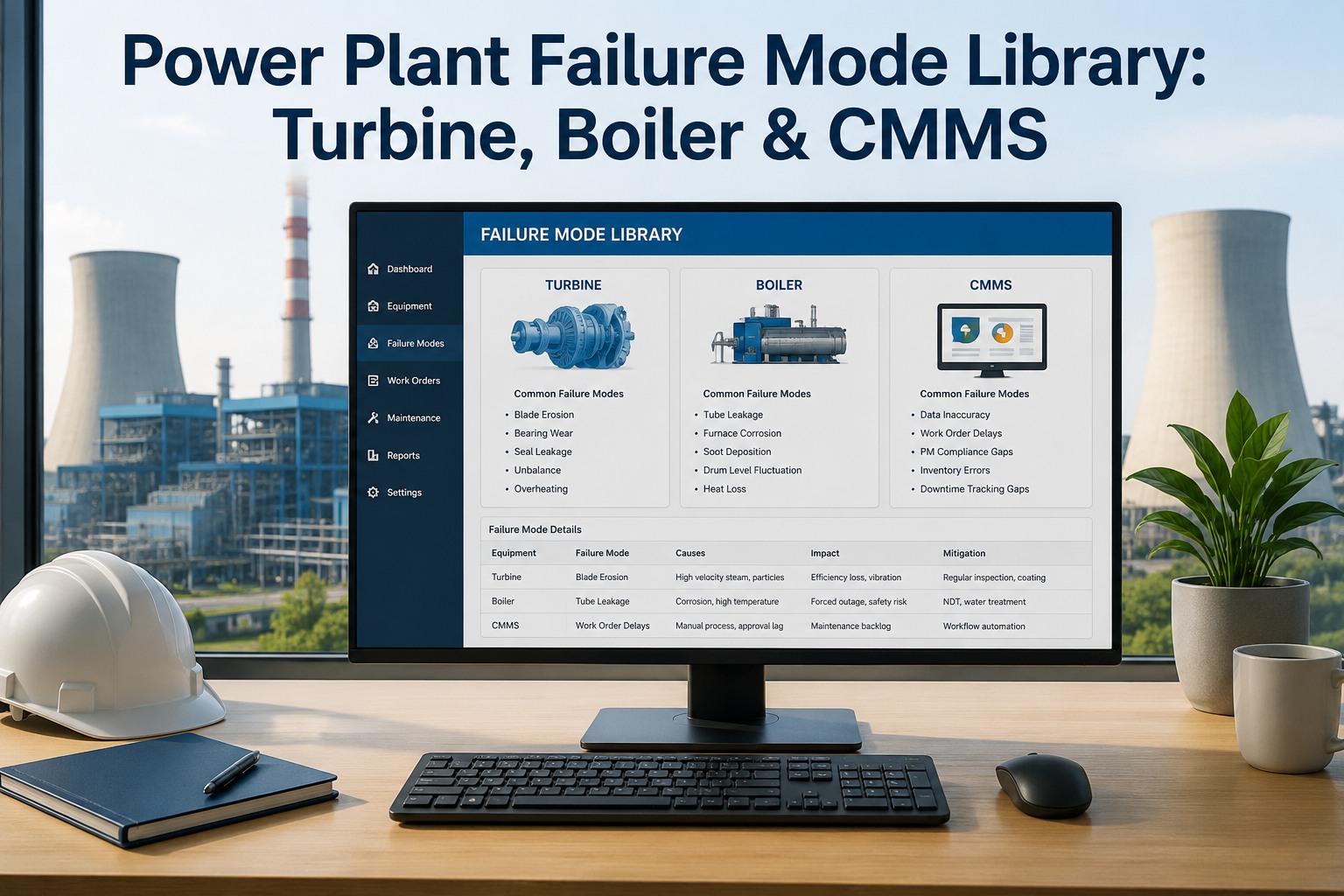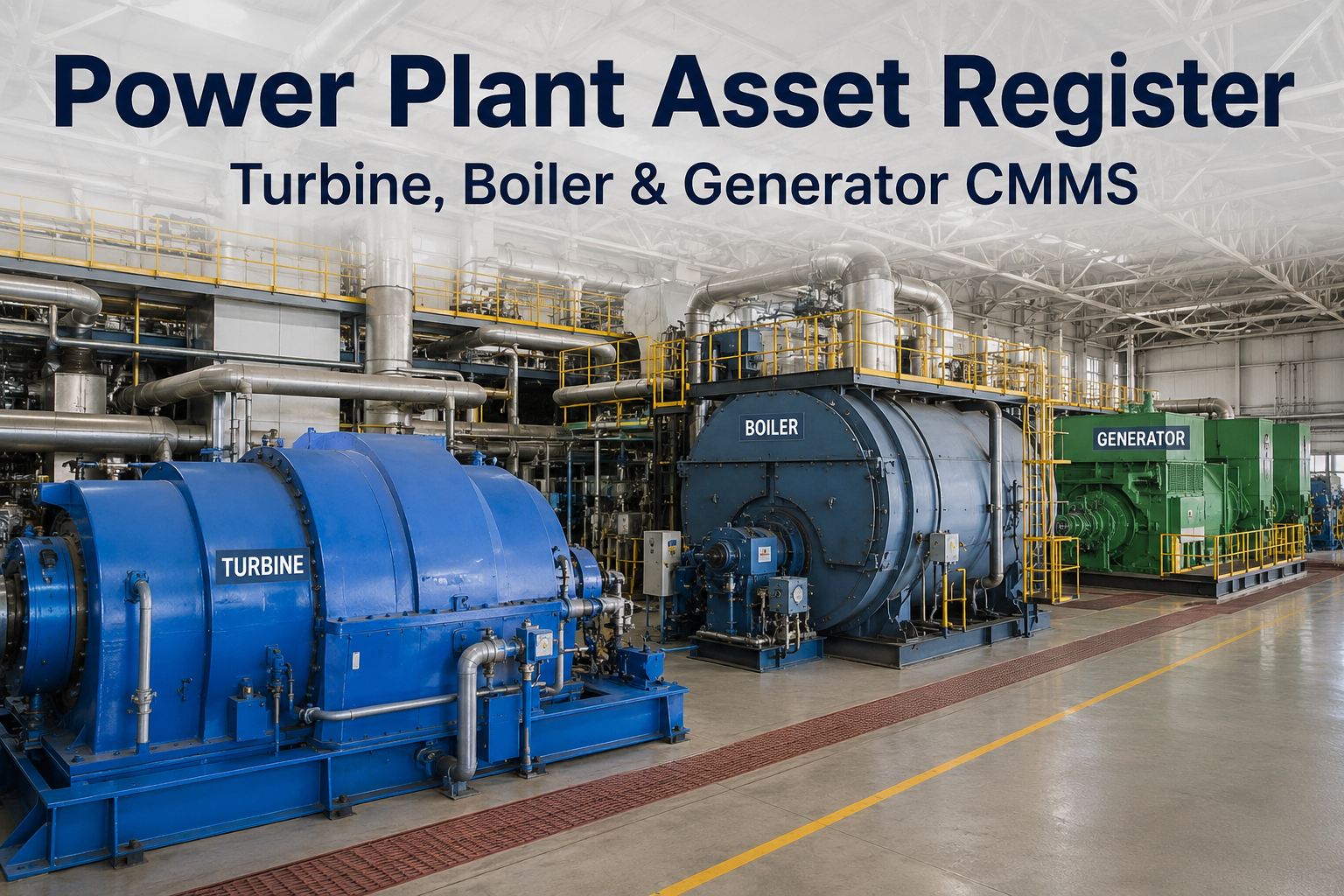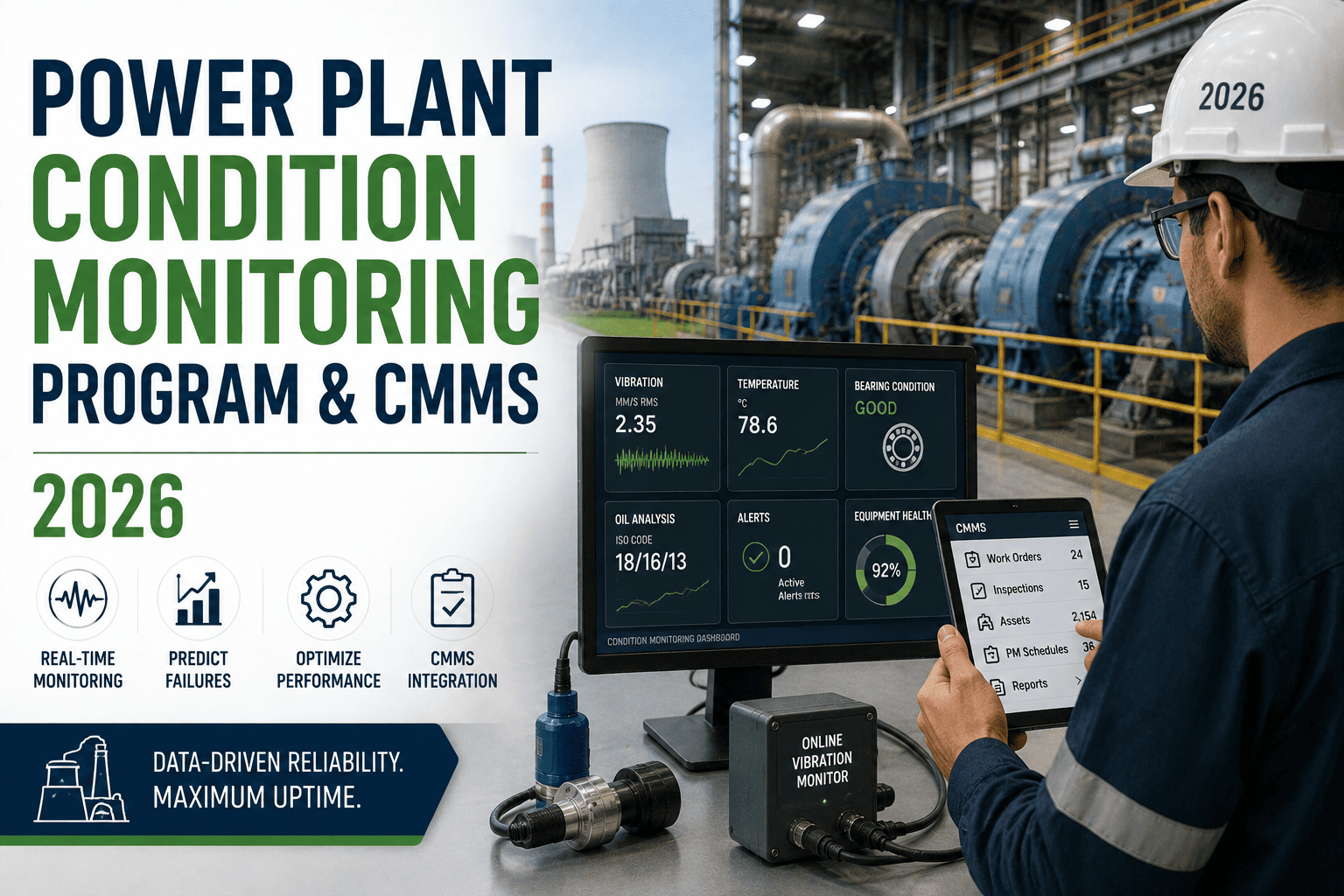
A power plant condition monitoring program is the structured process of continuously tracking critical asset health signals — turbine vibration, generator insulation, transformer oil quality, and boiler tube wall thickness — so maintenance teams can act before failures escalate into forced outages that cost $10,000–$50,000 per MW-day in lost generation revenue. For plants shifting from reactive or time-based maintenance to condition-based maintenance (CBM), a modern CMMS like OxMaint turns raw sensor data into prioritized work orders, predictive alerts, and audit-ready analytics — closing the gap between detection and action. Building a power plant condition monitoring program in 2026 means integrating IoT sensors, vibration analyzers, and oil labs directly into your CMMS workflow so every anomaly triggers a tracked, assignable, and measurable response. Start your Start Free Trial today or book a personalized walkthrough to see how OxMaint automates the full CBM loop — from threshold breach to closed work order — in one platform.
Is your condition monitoring data actually preventing outages — or just filling dashboards?
Over 60% of power plants collect vibration, oil, and thermal data but still react to failures because there's no automated link between sensor alerts and work-order execution. OxMaint closes that gap — turning every threshold breach into a tracked, prioritized, assignable corrective action within seconds.
Four critical asset areas every power plant monitoring program must cover
A complete power plant condition monitoring program spans four asset domains where 80%+ of unplanned generation losses originate. Each domain requires specific sensor technologies, alert thresholds, and CMMS response workflows — all unified in a single platform.
Turbine & Rotating Equipment Vibration
Steam and gas turbines operating at 3,000–3,600 RPM demand continuous vibration monitoring at drive-end and non-drive-end bearings. ISO 10816 velocity thresholds (typically 7.1 mm/s RMS alarm, 11.8 mm/s RMS danger for large machines) trigger automated CMMS work orders in OxMaint — so a rising trend on bearing #2 becomes a priority inspection, not a post-mortem.
Generator Insulation & Electrical
Partial discharge monitoring, megger testing, and polarization index tracking catch stator winding degradation before ground faults trip the unit. OxMaint stores every test result against the asset record and auto-schedules next-test dates based on IEEE 43 thresholds — eliminating spreadsheet-based insulation tracking that misses critical trend reversals.
Transformer Oil & Dissolved Gas Analysis
DGA sampling every 6–12 months detects incipient faults through dissolved gas ratios (Duval Triangle, Rogers ratio). When acetylene exceeds 5 ppm or total combustible gases rise 20% period-over-period, OxMaint auto-generates a transformer inspection work order with the lab report attached — turning a lab result into an actionable task in minutes.
Boiler Tube Wall Thickness & Thermography
Ultrasonic thickness monitoring at high-risk zones (waterwall, superheater, reheater) and infrared thermography of refractory identify erosion and corrosion before tube ruptures force a 5–14 day forced outage. OxMaint maps thickness readings to exact tube locations and flags any reading below 60% of nominal wall for replacement planning.
What reactive maintenance really costs a power plant
A 500 MW plant running without a structured condition monitoring program typically loses 3–7% of annual generation hours to unplanned outages. The math below shows why plants stuck in reactive mode are bleeding margin every quarter — and why a CMMS-integrated CBM program pays for itself within the first avoided trip.
| Maintenance Strategy | Avg. Forced Outage Hrs/yr (500 MW) | Annual Outage Cost | CBM Program Cost | Net Annual Savings |
|---|---|---|---|---|
| Reactive (run-to-failure) | 320–560 hrs | $10.4M – $18.2M | $0 | — (baseline loss) |
| Preventive (time-based only) | 180–280 hrs | $5.8M – $9.1M | $55K – $80K | $5.7M – $9.0M |
| CBM + OxMaint CMMS | 60–120 hrs | $1.9M – $3.9M | $120K – $160K | $8.4M – $14.1M |
| Predictive (AI-enhanced CBM) | 30–70 hrs | $0.9M – $2.2M | $140K – $200K | $9.2M – $15.8M |
How to build a power plant condition monitoring program in 6 months
A phased rollout prevents sensor-data overload and ensures each stage delivers measurable reliability gains. Here's the timeline reliability teams follow when deploying OxMaint as the CBM backbone — from asset criticality ranking to AI-driven predictive alerts.
Asset criticality ranking & CMMS baseline
Identify the top 15–20% of assets driving 80% of outage risk (typically turbine bearings, generator windings, boiler feed pumps, main transformers). Load all asset hierarchies, maintenance history, and spare parts into OxMaint so every monitored asset has a complete digital record from day one.
Sensor deployment & threshold configuration
Install vibration accelerometers on critical bearings, connect existing DCS/SCADA tags via OPC-UA or MQTT, and set ISO 10816 / API 678 alert thresholds in OxMaint. Configure two-tier alarms: "advisory" (trend up 15%) generates a planned inspection, "critical" (limit exceeded) generates an emergency work order.
Oil & thermography route integration
Schedule DGA sampling, oil analysis, and IR thermography routes as recurring work orders in OxMaint. Lab results feed back into the asset record automatically; out-of-spec values trigger corrective work orders with the lab report attached — no email chains, no lost spreadsheets.
Automated work-order triggers & RACI
Map every CBM alert type to a pre-built work-order template with assigned technicians, required spare parts, safety permits, and estimated duration. OxMaint's workflow engine auto-creates and routes the work order — cutting alert-to-action time from 24+ hours to under 15 minutes.
Predictive AI models & KPI dashboards
OxMaint's AI engine analyzes 3+ months of trend data to build failure-prediction models per asset class — projecting remaining useful life and flagging assets approaching failure 2–6 weeks before threshold alarms fire. Reliability dashboards show MTBF, MTTR, planned-vs-forced outage ratio, and CBM-originated work-order completion rate.
How a 180-asset plant cut forced outages 40% in one year
"We had vibration sensors on the turbine for years, but alerts went to an email inbox nobody checked. Within 3 months of deploying OxMaint, a bearing-wear trend auto-created a work order, parts were staged, and we planned the repair during a scheduled outage — avoiding a forced trip that would've cost us $1.2M in lost generation and spot-market purchases."
See OxMaint condition monitoring on your assets — book a 30-minute demo
We'll connect your existing sensors and show exactly how a turbine vibration alert becomes a closed, documented work order in OxMaint — no spreadsheet exports, no email handoffs, no missed signals.
How OxMaint's CMMS powers your condition monitoring program
OxMaint isn't just a work-order tool — it's the connective tissue between your sensors, your reliability engineers, and your maintenance technicians. Here's how specific OxMaint capabilities map directly to the four CBM domains and deliver measurable outcomes.
Sensor-to-Work-Order Automation
Connect vibration, temperature, pressure, and oil-analysis sensors via OPC-UA, MQTT, or REST API. When any value crosses your configured threshold, OxMaint auto-generates a prioritized work order with asset history, required parts, and safety permits attached.
Predictive Failure Forecasting
OxMaint's AI engine analyzes trend data from all connected assets to predict remaining useful life and flag approaching failures 2–6 weeks before threshold alarms fire — shifting your team from detection to prevention.
Asset Health Registry & Trend Vault
Every sensor reading, lab result, inspection note, and work-order history lives permanently in the asset record. Compare bearing vibration trends year-over-year, track insulation resistance across megger tests, and prove compliance with NERC PRC-019 and ISO 55000 audit requirements in seconds.
Reliability Analytics & KPI Dashboards
Real-time dashboards track MTBF, MTTR, planned-vs-forced outage ratio, CBM-originated work-order completion rate, and cost-per-MWh for maintenance. Drill from a red KPI tile to the specific asset, sensor trend, and work-order history in 3 clicks.
Power plant condition monitoring & CMMS: top questions
What is a power plant condition monitoring program?
A power plant condition monitoring program is a structured system for continuously tracking the health of critical generation assets — turbines, generators, transformers, boilers — using sensors (vibration, temperature, oil analysis, thermography) and automatically converting threshold breaches into maintenance actions. The program is most effective when integrated with a CMMS like OxMaint, which turns each alert into a tracked work order with assigned technicians, required parts, and documented closure — closing the loop between detection and repair.
How does CBM differ from preventive maintenance in a power plant?
Preventive maintenance (PM) follows a fixed time or runtime schedule — for example, inspecting a turbine bearing every 4,000 operating hours regardless of its actual condition. Condition-based maintenance (CBM) triggers work only when sensor data shows degradation trending toward failure — so you repair the bearing at 3,200 hours if vibration is rising, or safely extend to 5,000 hours if it's still within baseline. CBM typically reduces unnecessary maintenance by 25–40% while cutting unplanned downtime 30–50% compared to time-based PM alone.
Which assets should be monitored first in a power plant CBM program?
Start with the top 15–20% of assets that drive 80% of outage risk and repair cost: turbine bearings and blades, generator stator windings, main step-up transformers, boiler feed pumps, and condensate extraction pumps. These assets have high criticality scores (production impact + failure frequency + repair lead time) and are the fastest path to ROI. You can see this prioritization in action — Book a Demo and we'll map your asset hierarchy live.
How much does a power plant condition monitoring program cost?
A typical mid-size plant (200–500 MW) investing in CBM for the first time spends $120K–$200K per year — covering CMMS software licenses ($12K–$25K), vibration and oil sensors ($30K–$60K), integration engineering ($20K–$40K), and reliability engineer time ($60K–$90K). This investment typically pays back within one avoided forced outage, which saves $400K–$2M depending on unit size and wholesale power prices. Most plants achieve full ROI in 4–8 months.
Can OxMaint integrate with our existing SCADA, DCS, or vibration sensors?
Yes — OxMaint connects to existing SCADA and DCS systems via OPC-UA, MQTT, or REST API, and accepts data from all major vibration monitoring vendors (Bently Nevada, SKF, Emerson CSI, Pruftechnik), oil analysis labs, and portable data collectors. No rip-and-replace required. You can start with a Start Free Trial to test sensor ingestion and work-order automation on a pilot asset group, then scale across the plant.
Stop collecting data. Start preventing outages.
Join the power plants using OxMaint to turn sensor alerts into closed work orders — cutting forced outages 30–50% and passing every audit with one click.
Free 14-day trial · No credit card