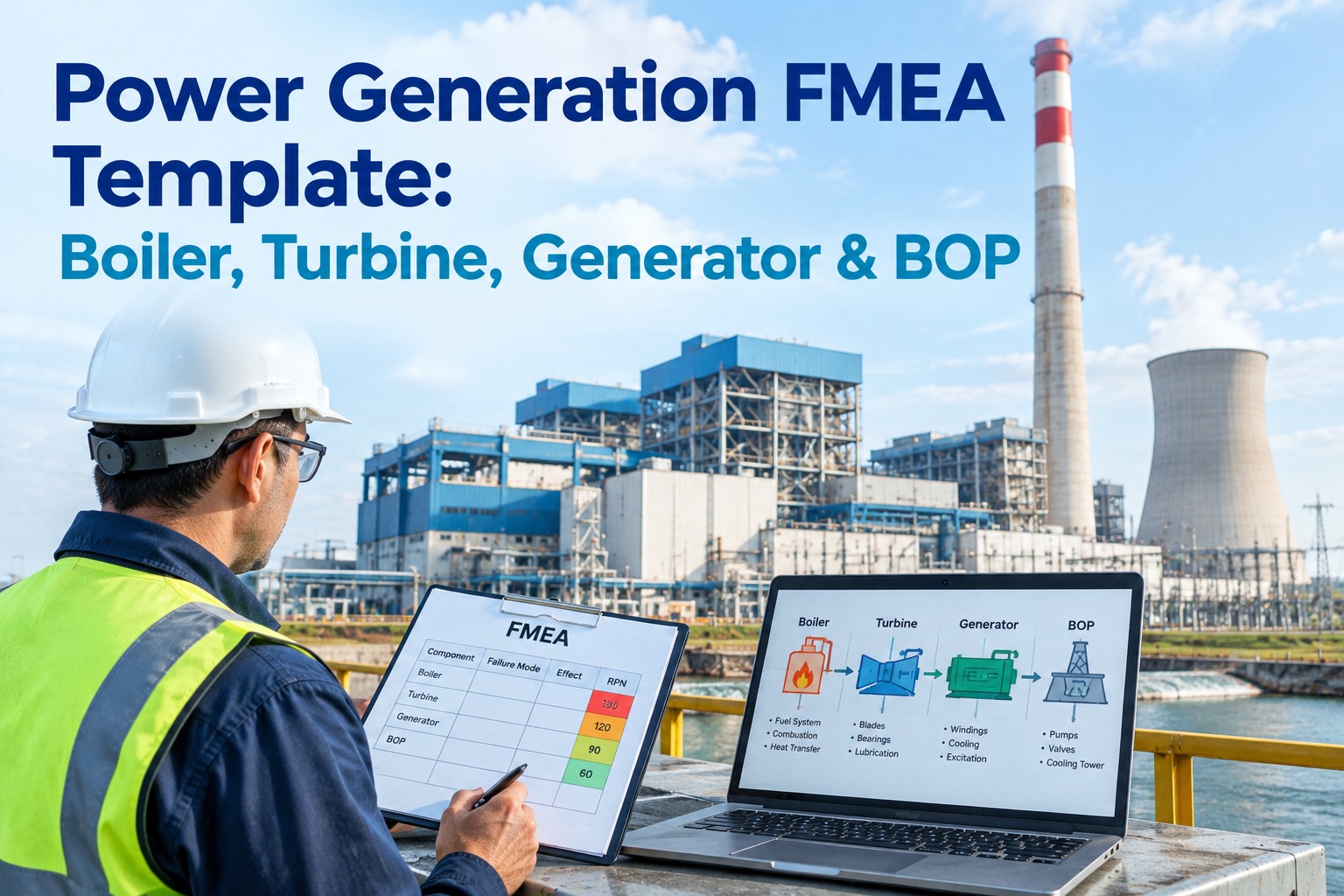
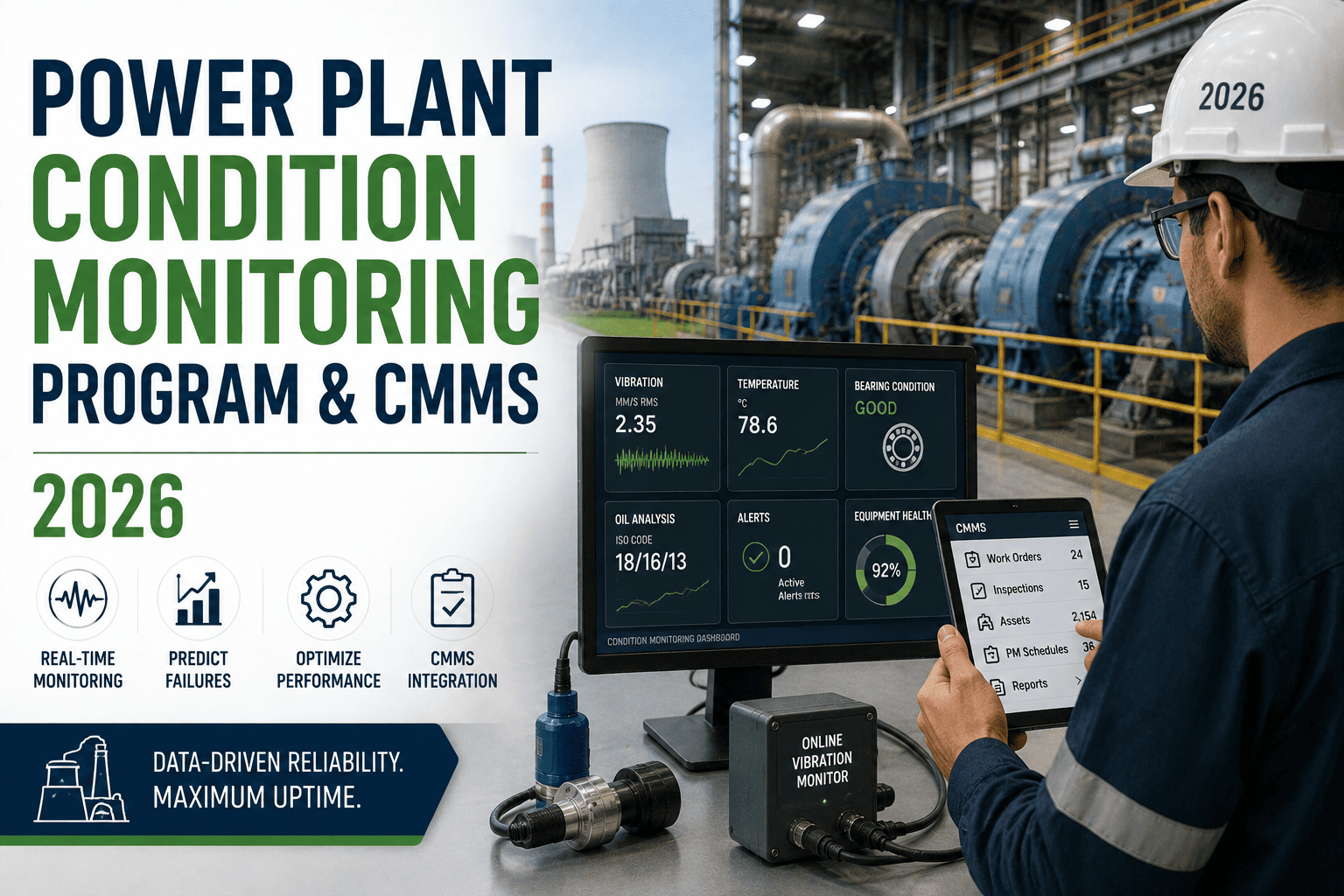
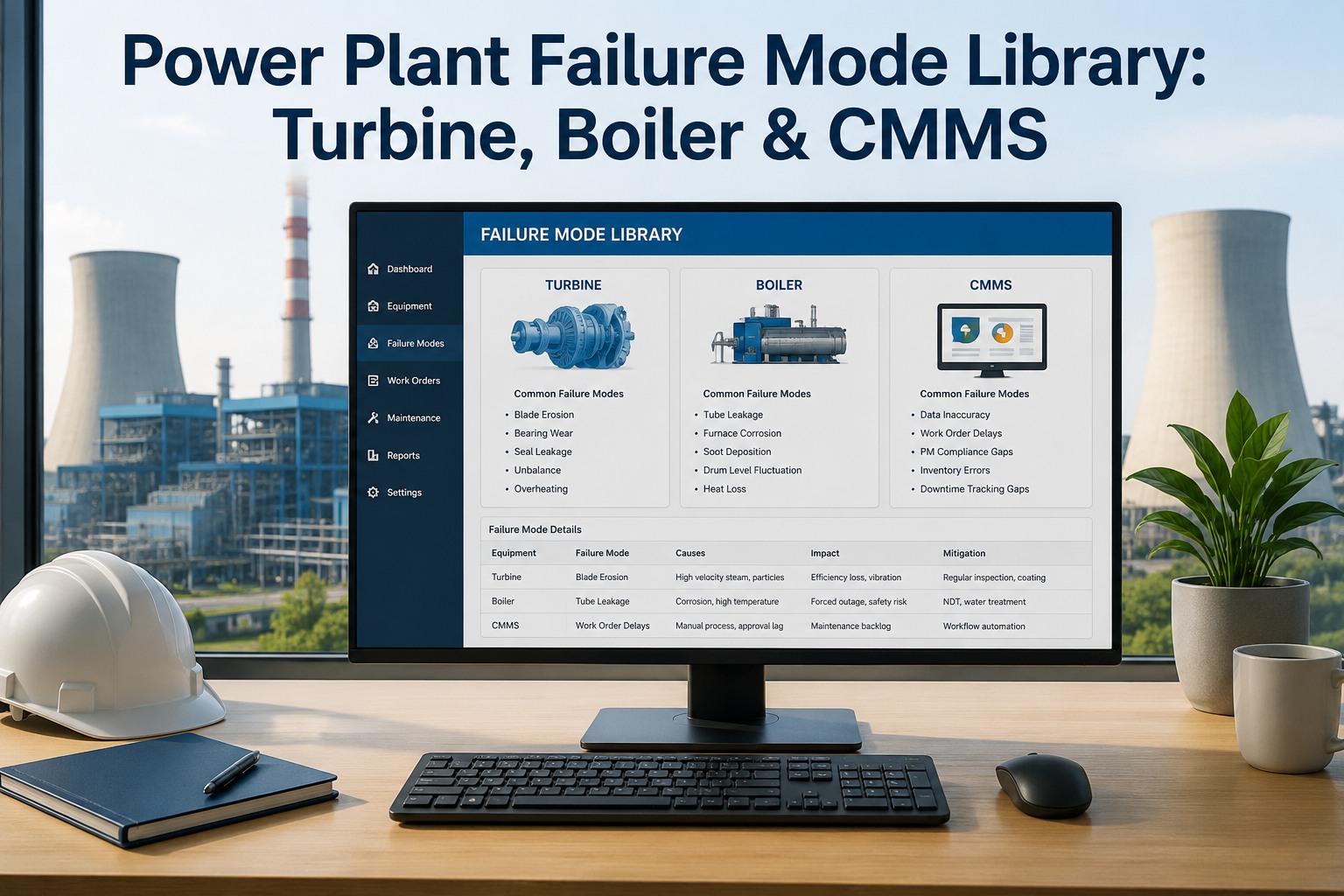
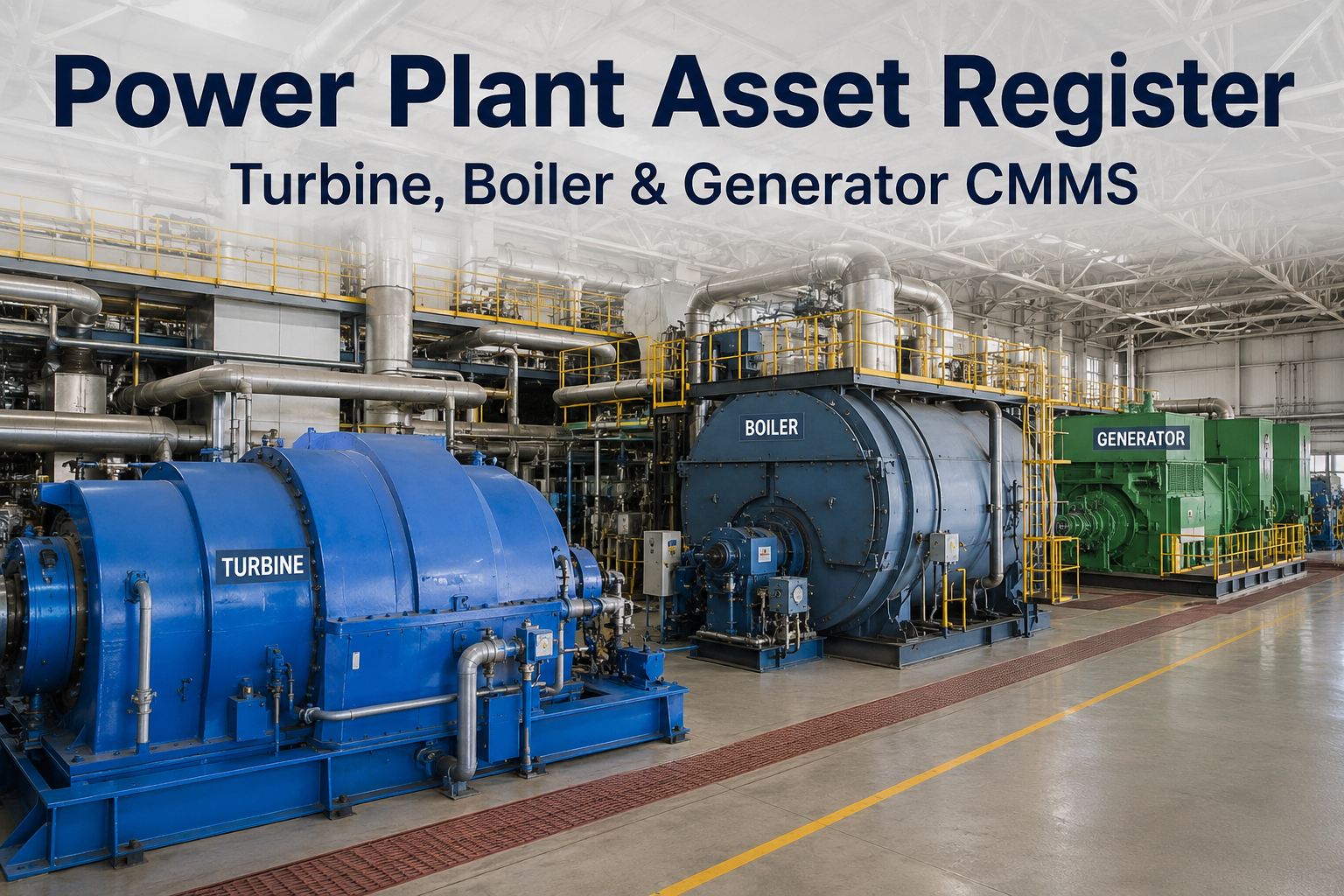
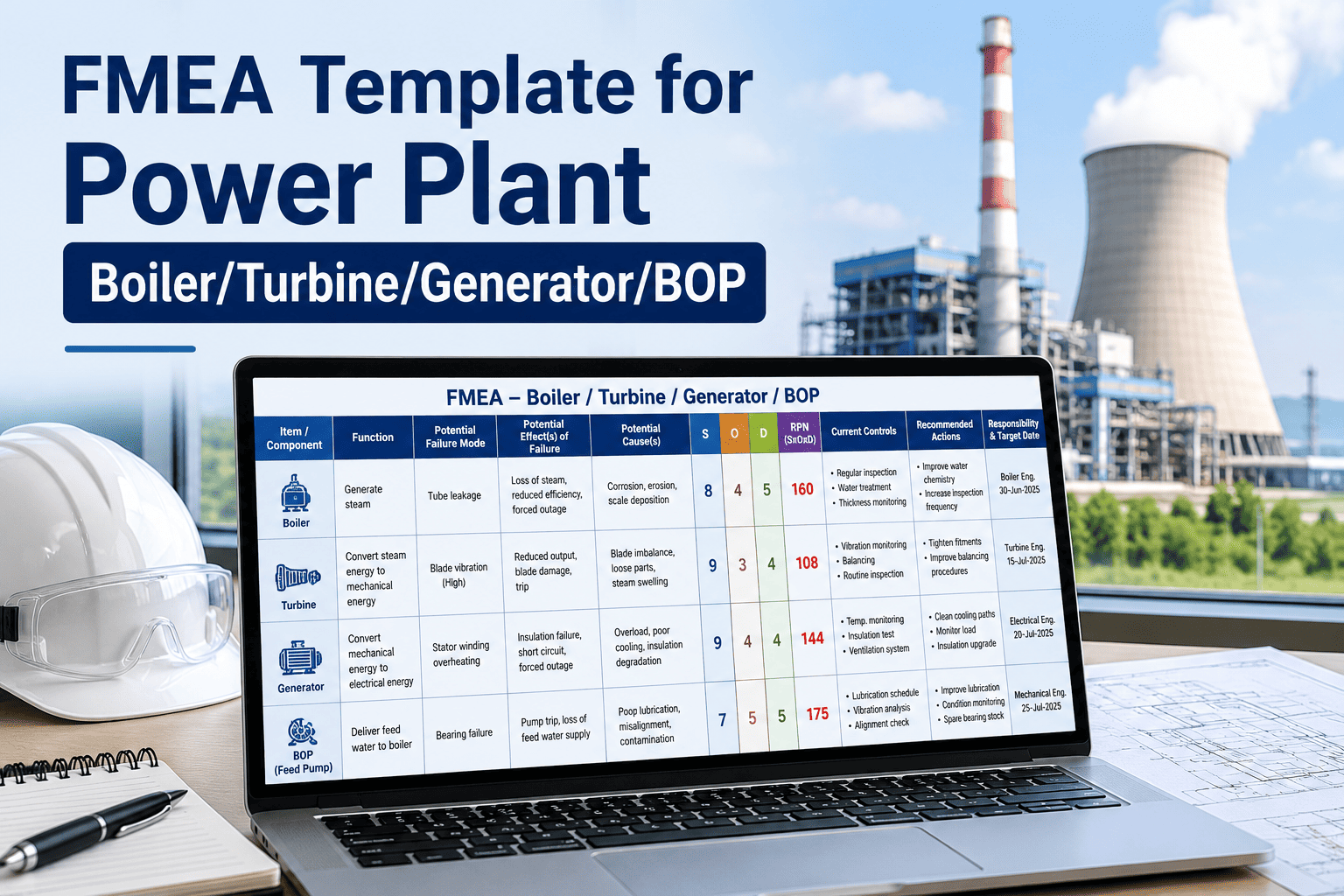
A single missed failure mode in a steam turbine bearing — undetected for three months — can cascade into a forced outage costing $2M in lost generation, emergency parts, and scrambled manpower. Power plant FMEA (Failure Mode and Effects Analysis) exists precisely to stop that cascade before it starts: by systematically mapping every failure mode across your boiler, turbine, generator, and BOP assets, scoring each by Severity, Occurrence, and Detection, and routing the highest-RPN items straight into your CMMS as prioritized work orders. OxMaint digitizes and automates your entire FMEA programme — from initial worksheet population to RPN-triggered PM scheduling — so your reliability team spends time fixing risks, not filing paperwork. Start your free trial to see how FMEA-driven maintenance works in practice, or book a demo to walk through a live RPN dashboard for a real power plant asset.
Power Plant Reliability Intelligence
FMEA for Power Plants:
Find Failures Before They Find You
Boiler · Turbine · Generator · Balance of Plant — one systematic framework, every critical failure mode ranked and routed to action.
RPN 315
Highest recorded boiler tube RPN
$2M+
Avg. forced outage cost per event
38%
Of failures preventable with FMEA
7 Steps
To a complete FMEA programme
What Is Power Plant FMEA — And Why Most Teams Get It Wrong
FMEA is a structured, team-based method for identifying every way an asset can fail, quantifying that risk, and translating it into a maintenance action before failure occurs. The three inputs — Severity (S), Occurrence (O), and Detection (D) — are each scored 1–10. Multiply them to get the Risk Priority Number (RPN). High RPN items get engineered controls or PM tasks. Low RPN items get monitored. It sounds simple. The failure is almost always in execution: paper worksheets that go stale, RPN scores set by one person in a room, and findings that never reach the CMMS.
FMEA by Asset Class: Boiler, Turbine, Generator, BOP
Each major asset group in a thermal power plant carries its own failure profile. The table below maps the highest-criticality failure modes by asset, with indicative RPN ranges from field studies and recommended CMMS-routed mitigation actions.
| Asset |
Failure Mode |
Cause |
Effect |
S |
O |
D |
RPN |
Mitigation |
| Boiler |
Boiler tube failure |
Overheating, low ash fusion temperature coal |
Forced shutdown, steam loss |
9 |
5 |
7 |
315 |
Wall temp monitoring, tube thickness UT |
| Boiler |
Attemperator corrosion |
Water chemistry drift, thermal cycling |
Steam temperature excursion, turbine damage |
8 |
4 |
6 |
192 |
Quarterly UT inspection, chemistry control |
| Boiler |
Steam drum abnormal level |
Human error, level transmitter fault |
Carryover / dry-out, trip |
9 |
6 |
8 |
432 |
Redundant level transmitters, SIS interlock |
| Turbine |
Blade erosion / FOD |
Sand ingestion, steam quality, foreign material |
Efficiency loss, blade fracture |
9 |
4 |
7 |
252 |
FME programme, inlet filtration, borescope inspection |
| Turbine |
Bearing damage |
Lube oil contamination, misalignment |
Shaft seizure, forced outage |
9 |
3 |
6 |
162 |
Vibration monitoring, oil analysis every 500 hrs |
| Turbine |
Rotor vibration / unbalance |
Deposit build-up, rotor bow, misalignment |
Bearing failure, trip, structural damage |
8 |
5 |
5 |
200 |
Online vibration monitoring, shaft alignment checks |
| Generator |
Stator winding insulation degradation |
Thermal ageing, partial discharge, moisture |
Ground fault, catastrophic winding failure |
10 |
2 |
7 |
140 |
Annual PD testing, winding resistance checks |
| Generator |
Hydrogen cooling leak |
Seal degradation, flange failure |
Fire/explosion risk, load rejection |
10 |
2 |
6 |
120 |
H2 purity / pressure monitoring, seal oil DP checks |
| BOP |
Cooling water pump failure |
Bearing wear, cavitation, impeller erosion |
Condenser overtemperature, turbine trip |
8 |
4 |
5 |
160 |
Vibration monitoring, current signature analysis |
| BOP |
Coal handling conveyor fire |
Coal dust accumulation, friction, hot work |
Production loss, asset damage, safety event |
9 |
3 |
7 |
189 |
IR thermal scanning, housekeeping PM, fire detection |
CMMS-Integrated FMEA
Every High-RPN Finding Becomes a Work Order — Automatically
OxMaint connects your FMEA worksheet directly to your PM schedule. When RPN crosses your threshold, a work order is created, assigned, and tracked — no spreadsheet handoffs, no lost action items.
The 7-Step FMEA Process for Power Plants
A rigorous FMEA programme follows a defined sequence. Skipping or shortcutting any step produces an analysis that looks complete on paper but fails to prevent real failures — which is precisely the most dangerous outcome.
01
Define Scope and Asset Boundaries
Identify which systems are in scope — boiler, turbine, generator, BOP subsystems — and define system boundaries. A clear scope prevents overlap and gaps between FMEA worksheets.
02
Assemble the Cross-Functional Team
FMEA quality depends entirely on team diversity. Include operations, maintenance, reliability engineering, and instrument/control disciplines. Single-discipline FMEAs consistently miss 30–50% of failure modes.
03
List Functions and Functional Failures
For each asset, define what it must do (function) and in what ways it can fail to perform that function. A boiler's function is "deliver steam at 540°C and 160 bar." Failure modes include tube rupture, pressure excursion, and level loss.
04
Identify Failure Modes, Causes, and Effects
For each functional failure, identify the specific physical failure mode (e.g., "tube wall thinning due to overheating"), its root cause, and its effect on the system and plant output. This is the most time-intensive step — and the most valuable.
05
Score Severity, Occurrence, Detection — Calculate RPN
Each failure mode is scored 1–10 on all three dimensions by the team using historical data, OEM documentation, and operational experience. The RPN (S × O × D) ranks all failure modes for action priority.
06
Define Mitigation Actions and Route to CMMS
For every failure mode above the RPN threshold, a specific mitigation action is defined — inspection task, PM interval, design change, or predictive technology addition. Actions are entered into the CMMS as recurring work orders with assigned owners.
07
Review, Update, and Audit
FMEA is a living document. It must be updated after every significant failure event, design change, or operating condition change. Most audit failures trace to FMEA worksheets that were accurate on day one but ignored for three years.
RPN Threshold Zones — What Each Score Demands
Not every failure mode requires the same response. RPN threshold zones give your team a clear, defensible decision framework for allocating maintenance resources across hundreds of identified failure modes.
RPN 200 – 1000
Critical — Immediate Action
Engineering controls, redundancy, or design change required. PM task alone is insufficient. Escalate to plant manager and reliability engineer. Work order raised immediately in CMMS.
Example: Steam drum abnormal level (RPN 432)
RPN 125 – 199
High — Planned PM Required
Scheduled preventive or predictive maintenance task required. Interval and method defined and tracked in CMMS. Reviewed at each outage planning cycle.
Example: Turbine bearing damage (RPN 162)
RPN 50 – 124
Medium — Monitor and Schedule
Condition monitoring or periodic inspection adequate. Findings tracked in CMMS. RPN reviewed annually or after relevant failure events elsewhere in fleet.
Example: Generator H2 cooling leak (RPN 120)
RPN 1 – 49
Low — Accept or Observe
Risk is acceptable with current controls. Document and retain for FMEA audit records. Review if operating context changes or if a similar failure occurs on a peer unit.
Example: Non-critical instrumentation drift
FMEA Audit Readiness: What Regulators and Insurers Expect
Regulatory bodies and plant insurers increasingly require evidence that FMEA findings are not just documented but actively managed. Four records are consistently requested during power plant reliability audits.
01
Current FMEA Worksheet with Dates
Every FMEA record must carry the last revision date, the team members who participated, and the data sources used for S, O, and D scoring. Undated worksheets are treated as non-compliant.
02
CMMS Work Order Linkage
Auditors will trace FMEA action items to CMMS work orders and verify they were completed on schedule. Missing linkage is the most common audit finding in power plant reliability programmes.
03
Failure Event Update Log
Every significant failure event must trigger a review of the relevant FMEA worksheet — and the revision must be documented. A static FMEA that has never been updated is a regulatory liability.
04
Corrective Action Close-Out Records
For every high-RPN finding that required a design change or engineering control, auditors expect evidence that the change was implemented, the RPN was recalculated, and the revised score was approved by a qualified engineer.
Frequently Asked Questions
What RPN threshold should a power plant use to trigger CMMS work orders?
Most thermal power plant programmes set the action threshold at RPN 100–125. Any failure mode scoring above this level requires a defined PM task, predictive monitoring programme, or engineering control entered into the CMMS. Your specific threshold should reflect unit criticality, fleet age, and insurance requirements — OxMaint allows you to configure this threshold per asset class.
Set up your thresholds in OxMaint.
How often should power plant FMEA worksheets be reviewed and updated?
At minimum, FMEA worksheets should be reviewed annually and immediately following any significant failure event, major overhaul, operating mode change, or fuel type change. Regulatory audits in most jurisdictions treat FMEAs older than 24 months without updates as non-compliant unless the facility can demonstrate no operating context changes occurred.
Can OxMaint integrate FMEA findings directly into a CMMS work order queue?
Yes. OxMaint's FMEA module links each high-RPN failure mode to a recurring PM task or condition-monitoring trigger. When an asset's RPN crosses the configured threshold, a work order is automatically created, assigned to the relevant trade, and tracked through to close-out — with the FMEA record updated to reflect mitigation status.
Book a demo to see it in action.
What is the difference between FMEA and FMECA for power plants?
FMECA (Failure Mode, Effects, and Criticality Analysis) adds a formal criticality matrix to the standard FMEA, categorising failure modes by both severity and probability into criticality classes. For power plants with complex safety-critical systems, FMECA provides a more defensible prioritisation structure — particularly for assets covered by NERC reliability standards or insurer requirements.
How long does an initial FMEA take for a single power plant asset like a steam turbine?
A thorough FMEA for a steam turbine typically requires 3–5 structured team sessions of 2–3 hours each, covering all major subsystems (blading, bearings, seals, control valves, lube oil). OxMaint provides pre-populated failure mode libraries for common power plant assets to reduce initial workshop time by 40–60% without compromising analysis quality.
OxMaint Reliability Platform
Turn Your FMEA Worksheets Into a Living, CMMS-Driven Reliability Programme
Auto
CMMS work order creation on RPN breach
100%
Audit-ready records at all times
4 Assets
Boiler · Turbine · Generator · BOP