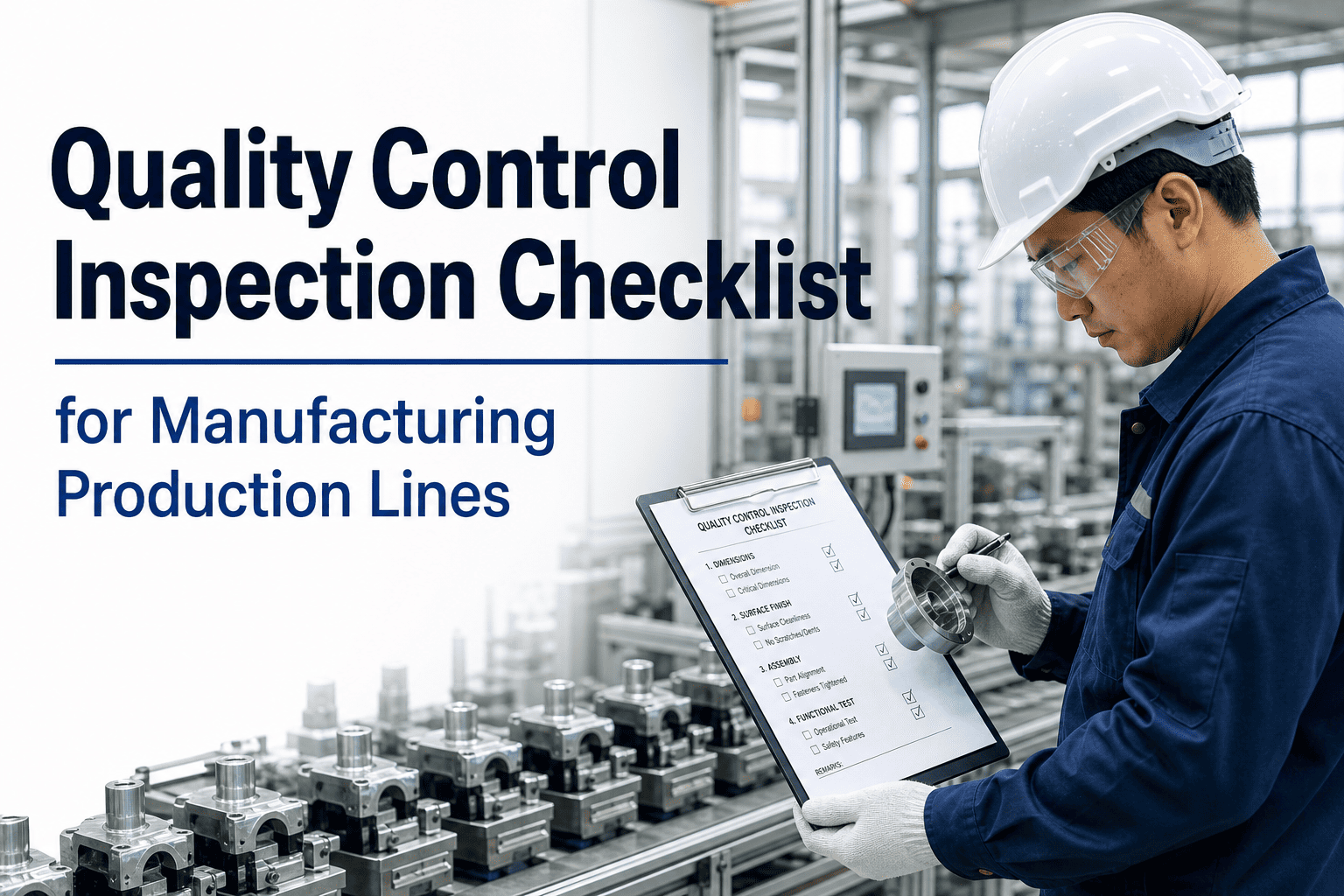
Industrial water treatment systems are critical infrastructure in manufacturing facilities — supplying process water, cooling water, and demineralized water that meet strict quality specifications for production operations. Without systematic maintenance, filtration membranes clog, softener resins degrade, reverse osmosis systems lose rejection rates, and water quality drifts out of specification — causing production shutdowns, equipment damage, and regulatory non-compliance. A comprehensive water treatment maintenance checklist ensures filtration systems are cleaned on schedule, softeners are regenerated properly, RO membranes are inspected regularly, and water quality monitoring is continuous. AI-driven maintenance platforms like Oxmaint automate water treatment PM schedules, track chemical consumption, monitor water quality parameters in real time, and alert operators when regeneration cycles or membrane replacements are due — preventing water quality failures before they impact production. Book a free demo to see automated water treatment maintenance in action.
Checklist · Water Treatment · Manufacturing · 2026
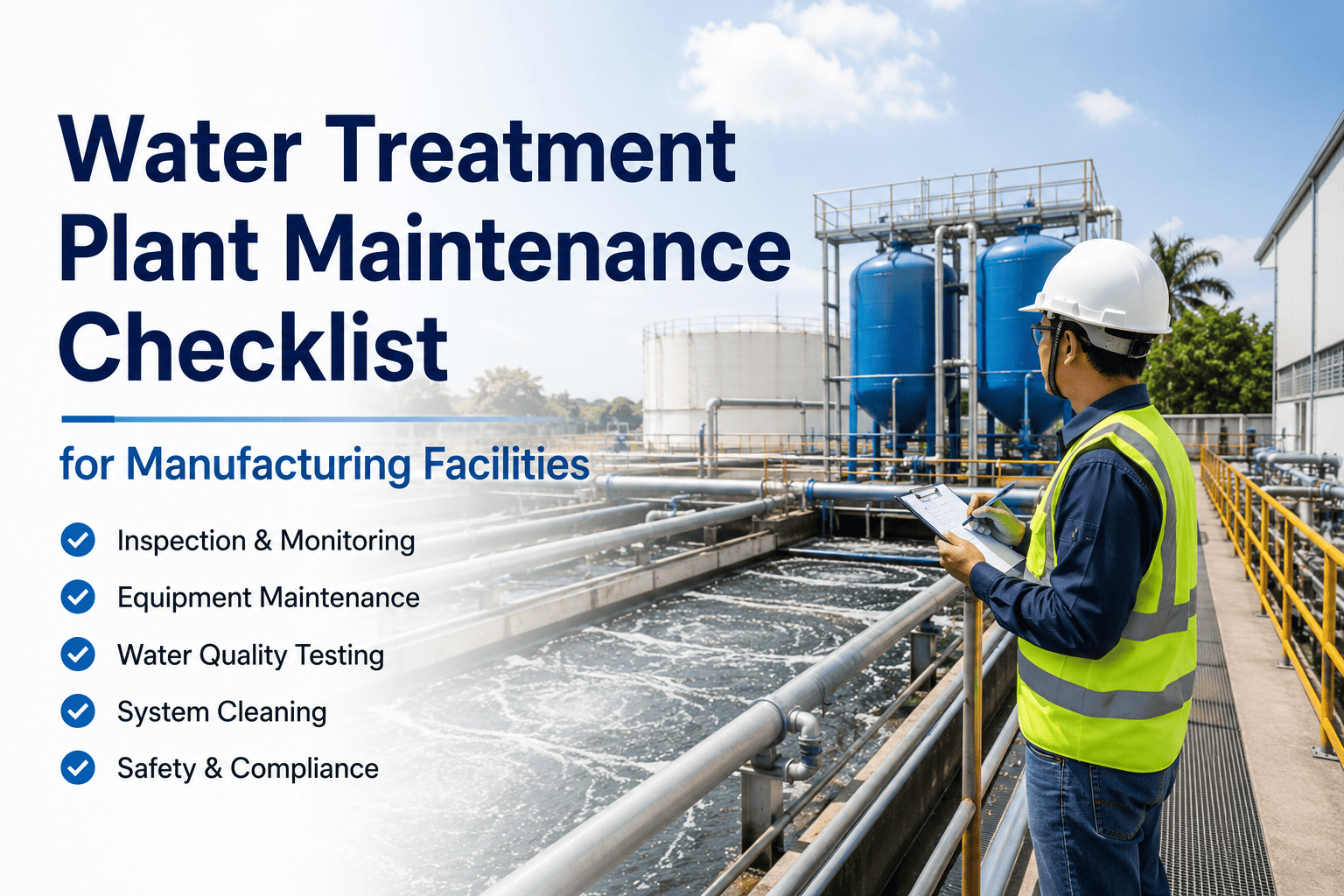
Water Treatment Plant Maintenance Checklist for Manufacturing Facilities
A systematic maintenance checklist covering filtration systems, water softeners, reverse osmosis units, demineralization plants, and water quality monitoring — ensuring compliant, reliable process water supply for manufacturing operations.
8
critical water treatment systems requiring scheduled maintenance in manufacturing facilities
75%
reduction in unplanned water system failures when AI schedules predictive maintenance
100%
water quality compliance when continuous monitoring alerts operators to parameter drift
Zero
production shutdowns from water quality failures with automated PM execution
The 8 Critical Water Treatment Systems Requiring Regular Maintenance
Manufacturing water treatment plants contain multiple interconnected systems — each requiring specific maintenance procedures, inspection frequencies, and performance monitoring. Filtration removes suspended solids, softening eliminates hardness minerals, reverse osmosis produces high-purity water, and demineralization delivers ultra-pure water for critical processes. Neglecting any system degrades water quality, increases chemical costs, and risks production contamination. This checklist covers all eight critical subsystems that must be maintained to ensure continuous, compliant water supply.
01
Pre-Filtration Systems
Multimedia filters, sand filters, and bag filters removing particulates before treatment processes.
02
Water Softening Units
Ion exchange softeners removing calcium and magnesium to prevent scaling in downstream equipment.
03
Activated Carbon Filters
Chlorine removal and organic compound reduction protecting membrane systems from oxidation damage.
04
Reverse Osmosis Systems
High-pressure membrane filtration producing demineralized water for process applications and boiler feed.
05
Demineralization Plants
Mixed-bed or two-bed DM systems delivering ultra-pure water with conductivity below 1 microsiemens.
06
Chemical Dosing Systems
Automated chemical feed pumps for pH control, coagulation, antiscalant, and biocide dosing.
07
Storage and Distribution
Process water tanks, transfer pumps, and distribution piping delivering treated water to production lines.
08
Water Quality Monitoring
Online analyzers for pH, conductivity, turbidity, chlorine, and total dissolved solids measurement.
Daily Water Treatment Inspection Checklist
Daily inspections catch early warning signs of water treatment system degradation — pressure buildup indicating filter clogging, flow rate reduction signaling membrane fouling, or chemical tank levels approaching empty. Operators perform visual checks, record meter readings, and verify alarm systems are functional. AI platforms like Oxmaint digitize daily inspection rounds, auto-populate checklists with real-time sensor data, and flag abnormal readings automatically — eliminating manual log sheets and ensuring no inspection is skipped.
Weekly Water Treatment Maintenance Checklist
Weekly maintenance tasks go deeper than daily inspections — cleaning filter housings, testing chemical dosing pump accuracy, calibrating online analyzers, and inspecting pumps for leaks or bearing noise. These preventive tasks keep water treatment equipment operating reliably between major overhauls. Oxmaint schedules weekly tasks automatically, assigns them to qualified technicians, and verifies completion with photo evidence and digital sign-off — ensuring no PM task is deferred or forgotten.
Automate Water Treatment PM Scheduling and Execution
Oxmaint generates daily, weekly, and monthly water treatment maintenance tasks automatically — assigning work orders to qualified technicians, tracking completion with digital checklists and photo evidence, and escalating overdue tasks to supervisors without manual follow-up.
Monthly Water Treatment Maintenance Checklist
Monthly maintenance includes more intensive servicing — replacing cartridge filters, cleaning RO membranes chemically, regenerating DM plant resins, and testing safety systems. These tasks require specialized skills, chemical handling procedures, and extended system downtime. AI platforms schedule monthly tasks during planned production shutdowns, prepare chemical inventory and safety equipment in advance, and guide technicians through complex procedures with step-by-step digital work instructions.
Quarterly and Annual Water Treatment Maintenance
Quarterly and annual maintenance addresses major equipment overhauls — RO membrane replacement, softener resin changeout, pump rebuild, and control valve servicing. These tasks require extended downtime, external contractors, and significant spare parts inventory. Oxmaint tracks equipment runtime, predicts remaining useful life based on performance trends, and schedules major overhauls during planned production shutdowns — minimizing emergency downtime and maximizing equipment availability.
Q
RO membrane integrity testing and element replacement
Individual RO elements tested for salt passage — failed elements replaced to maintain system rejection performance above 98%.
Q
Softener control valve inspection and rebuild kit installation
Control valve disassembled, seals and pistons inspected for wear, and rebuild kits installed to prevent regeneration cycle failures.
Q
Chemical feed system full service and calibration
Dosing pumps disassembled, diaphragms and check valves replaced, and complete recalibration performed across all dosing points.
A
Complete RO system shutdown, inspection, and membrane replacement
Full RO system drained, all pressure vessels opened, membranes inspected for damage, and complete membrane set replaced based on performance history.
A
DM plant resin replacement and column repacking
Exhausted ion exchange resins removed, columns cleaned and inspected, and fresh resins installed with proper bed depth and distribution.
A
Transfer pump seal replacement and bearing lubrication
Pump mechanical seals replaced, bearings relubricated or replaced, and complete pump performance testing conducted before return to service.
A
Control system calibration and software updates
PLC control systems calibrated, sensor calibration verified, control logic reviewed, and software updates installed to improve automation reliability.
Water Quality Monitoring and Compliance Tracking
Continuous water quality monitoring ensures process water meets manufacturing specifications and regulatory requirements. Online analyzers measure pH, conductivity, turbidity, total dissolved solids, and chlorine continuously — alerting operators when parameters drift outside acceptable ranges. Laboratory testing verifies analyzer accuracy and detects contaminants not measured online. Oxmaint integrates with water quality monitoring systems to log data automatically and generate compliance reports.
pH Monitoring
Target: 6.5 - 7.5
Continuous pH measurement with automatic alert when pH exceeds acceptable range — preventing corrosion or scaling in process equipment.
Conductivity
Target: Below 1 µS/cm (DM water)
Real-time conductivity monitoring indicating ionic contamination — automatic regeneration triggered when conductivity rises above setpoint.
Turbidity
Target: Below 0.5 NTU
Turbidity measurement detecting suspended solids — filter breakthrough detected immediately before particulates reach process lines.
Chlorine Residual
Target: Below 0.05 ppm
Residual chlorine monitoring protecting RO membranes from oxidation — carbon filter replacement triggered when chlorine breakthrough occurs.
Total Hardness
Target: Below 1 ppm CaCO3
Hardness testing after softener confirming calcium and magnesium removal — softener regeneration initiated when hardness leakage detected.
Microbiological Testing
Target: Below 100 CFU/mL
Weekly bacterial count analysis detecting biofilm growth — tank disinfection and biocide dosing adjusted to maintain microbiological control.
Deploy Comprehensive Water Treatment Maintenance Across Your Manufacturing Facility
Oxmaint automates water treatment preventive maintenance from daily operator rounds to annual equipment overhauls — scheduling tasks based on runtime and performance data, assigning work to qualified technicians, tracking completion with digital checklists, and integrating with water quality monitoring systems to trigger corrective actions automatically when specifications are exceeded.
Frequently Asked Questions
What water treatment systems require regular maintenance in manufacturing facilities?
Manufacturing water treatment plants typically include pre-filtration systems, water softeners, activated carbon filters, reverse osmosis units, demineralization plants, chemical dosing systems, storage tanks, and water quality monitoring equipment. Each system requires daily inspections, weekly preventive tasks, monthly major services, and annual overhauls to maintain water quality and prevent unplanned downtime.
Oxmaint schedules all water treatment PM tasks automatically.
How often should RO membranes be cleaned or replaced?
RO membranes require chemical cleaning monthly or when permeate flow drops 10-15% below baseline, and complete replacement annually or when salt rejection falls below 95%. Cleaning frequency depends on feed water quality, operating pressure, and recovery rate. Oxmaint tracks membrane performance trends and schedules cleaning or replacement automatically based on actual operating data.
What are the most common water treatment system failures that cause production shutdowns?
The most common failures are RO membrane fouling causing low permeate flow, softener resin exhaustion allowing hardness breakthrough, filter clogging creating excessive pressure drop, and chemical dosing pump failures disrupting pH control. All of these failures are preventable with systematic maintenance and continuous water quality monitoring integrated with automated work order generation.
Book a demo to see predictive water treatment maintenance.
Can water treatment maintenance be integrated with existing CMMS or ERP systems?
Yes, Oxmaint integrates with CMMS platforms to synchronize work orders, connects to ERP systems for chemical inventory management, and interfaces with SCADA or PLC systems to receive real-time water quality data. This creates a unified maintenance ecosystem where water quality monitoring automatically triggers PM tasks and chemical reorders without manual intervention.
How does AI improve water treatment maintenance compared to fixed-interval PM schedules?
AI analyzes water quality trends, membrane performance data, and chemical consumption patterns to predict when maintenance is actually needed — not just when the calendar says it is due. This prevents unnecessary maintenance during stable operation and triggers early intervention when performance degradation is detected, reducing maintenance costs by 30% while improving water quality compliance.