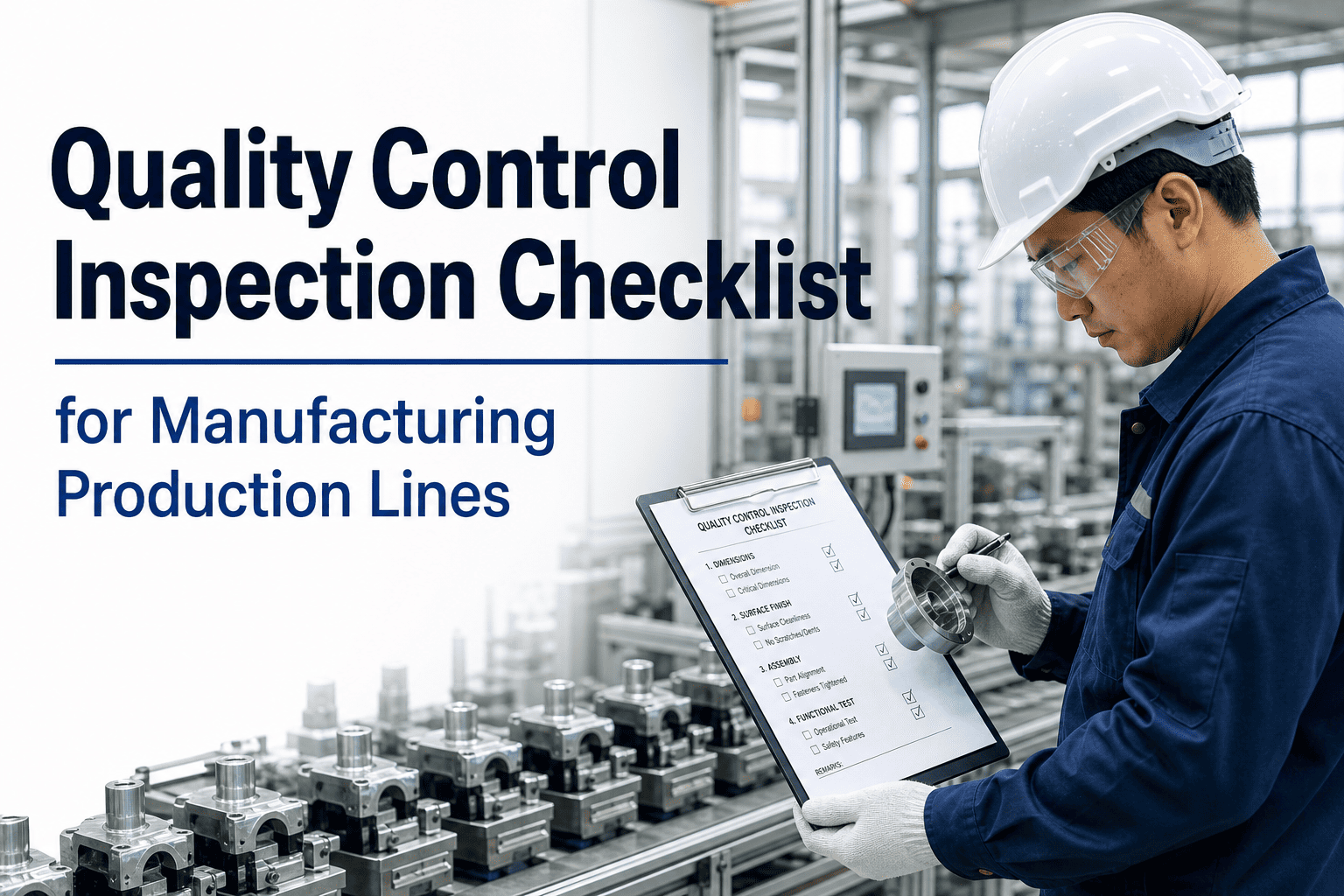
Manufacturing quality control starts at the production line — where defects are detected, dimensions are verified, and non-conforming products are removed before they reach the customer. A structured quality control inspection checklist ensures every unit is examined against defined standards, every measurement is recorded, and every hold decision is traceable. AI-driven quality inspection platforms like Oxmaint automate defect detection, dimensional verification, and SPC sampling across all production lines — reducing human error, accelerating inspection cycles, and generating compliance-ready audit trails automatically. Book a free demo to see AI-powered quality control inspection in action.
The 5 Quality Control Gates Every Production Line Needs
Effective quality control inspection is not a single checkpoint — it is a series of sequential gates that catch defects early, verify dimensional accuracy continuously, and confirm final product compliance before shipment. Each gate builds on the previous one, creating a layered defense against quality failures. When any gate fails, the production line is held immediately, defect evidence is captured automatically, and corrective action is triggered without manual intervention.
Pre-Inspection Setup: Configure Your Quality Control System
Quality control inspection begins before the first unit enters the line. Production teams must configure inspection standards per product, load dimensional tolerances into measurement systems, calibrate instruments, and activate defect detection algorithms. AI-driven platforms like Oxmaint guide teams through full quality control configuration in minutes — ensuring every product is inspected against the correct specification from day one.
Automate Quality Control Setup with AI-Driven Configuration
Oxmaint's AI platform auto-configures quality specifications, calibrates vision systems, and activates SPC control charts per product — eliminating manual setup errors and reducing configuration time from hours to minutes.
Gate 1: Raw Material Inspection Checklist
Quality control begins when raw material enters the facility. Every incoming batch must be verified against purchase specifications before it reaches the production line — preventing contamination, dimensional variance, and material property failures from propagating downstream. AI-powered material verification systems inspect incoming material at receiving speed, automatically flagging non-conforming batches and generating hold notifications without manual intervention.
Gate 2: In-Process Quality Inspection Checklist
In-process quality checks catch defects while the product is being manufactured — preventing defective work-in-progress from advancing to subsequent operations. Critical control points are inspected at defined intervals, with AI vision systems monitoring every unit at line speed. When defects exceed control limits, the line is automatically paused and operators are alerted to investigate root cause before resuming production.
Gate 3: Dimensional Verification Checklist
Dimensional accuracy is verified against engineering tolerances using calibrated measurement instruments. Every critical dimension is measured, recorded, and compared against specification limits. Out-of-tolerance units are automatically flagged and held — preventing dimensional non-conformance from reaching the customer. See how Oxmaint automates dimensional inspection and SPC analysis in real time.
Eliminate Dimensional Defects with Automated Measurement and SPC
Oxmaint connects to your measurement instruments, captures dimensional data automatically, plots SPC control charts in real time, and alerts operators when process drift is detected — preventing out-of-tolerance production before it happens.
Gate 4: Final Visual Inspection Checklist
Final visual inspection is the last defense against cosmetic defects, assembly errors, and packaging issues before the product is shipped. AI vision systems inspect every unit for surface scratches, dents, discoloration, missing components, and label accuracy — catching defects that dimensional measurement cannot detect. Only products that pass all visual inspection criteria advance to SPC sampling and shipment release.
Gate 5: SPC Sampling and Shipment Release Checklist
Statistical process control sampling confirms the production batch is stable and within control limits before shipment is authorized. Sample data is plotted on control charts, process capability indices are calculated, and out-of-control conditions trigger automatic holds. Only batches that demonstrate statistical stability and capability are released for shipment — ensuring consistent quality delivery to customers.
Quality Control Performance Metrics
Percentage of units passing all quality gates on first inspection without rework or scrap — target 98% or higher with AI-driven quality control.
Number of defects reaching the customer per million units shipped — AI vision systems reduce escape rates by 60% compared to manual sampling inspection.
Cpk values for critical dimensions and characteristics — AI-driven SPC monitoring maintains Cpk above 1.67 consistently across all production lines.
Time from production completion to quality release authorization — AI automation reduces inspection cycle time from hours to minutes per batch.
Deploy AI-Driven Quality Control Inspection Across All Production Lines
Oxmaint automates quality control inspection from raw material receiving to final shipment release — AI vision systems detect defects at line speed, dimensional measurements feed SPC charts automatically, and quality releases are issued only when all five gates are confirmed. Zero defects, zero guesswork, zero manual data entry.