The Top 12 Manufacturing Maintenance KPIs That Will Drive Results in 2026

By Johnson on March 18, 2026

top-manufacturing-maintenance-metrics-that-drive-results-2026

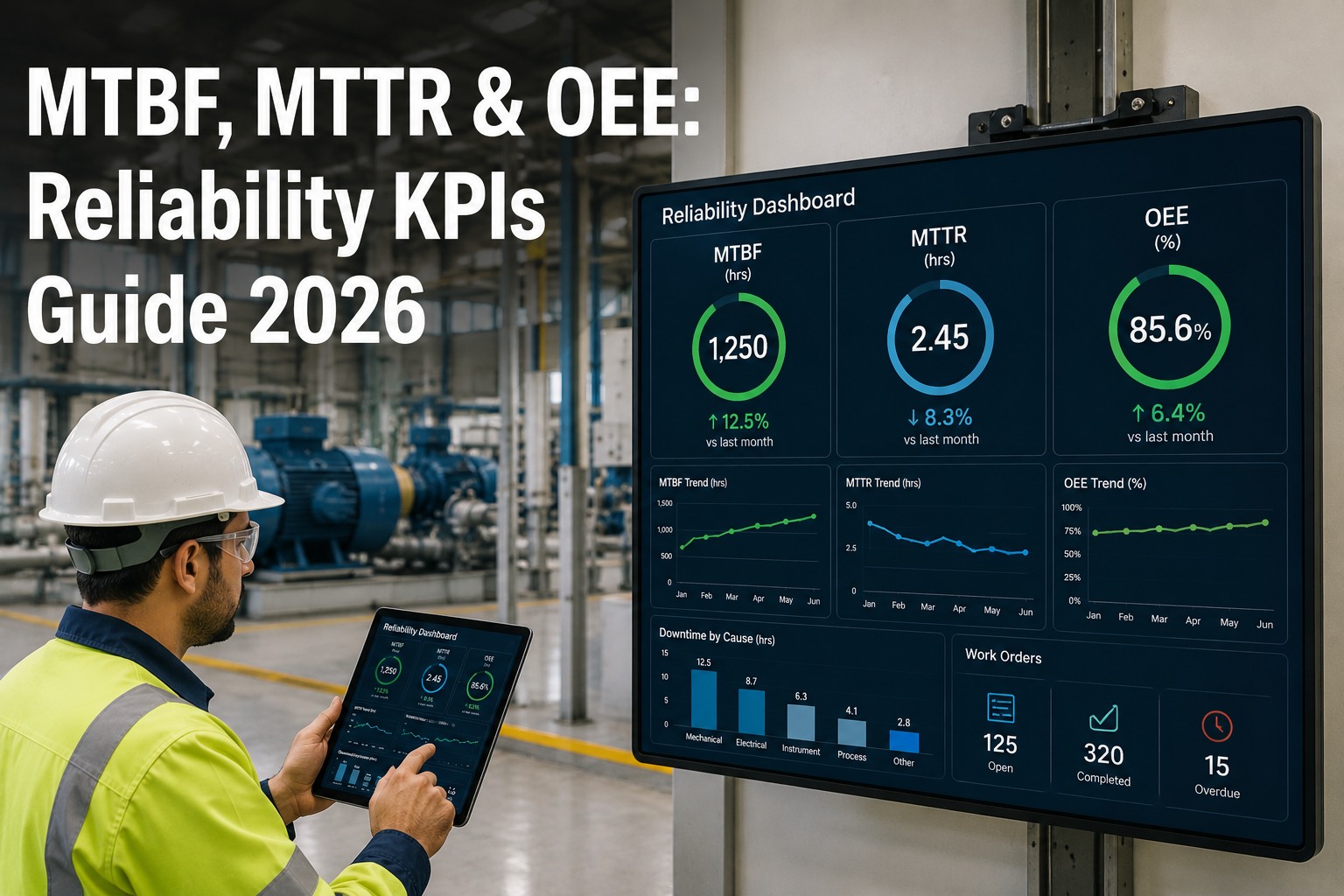
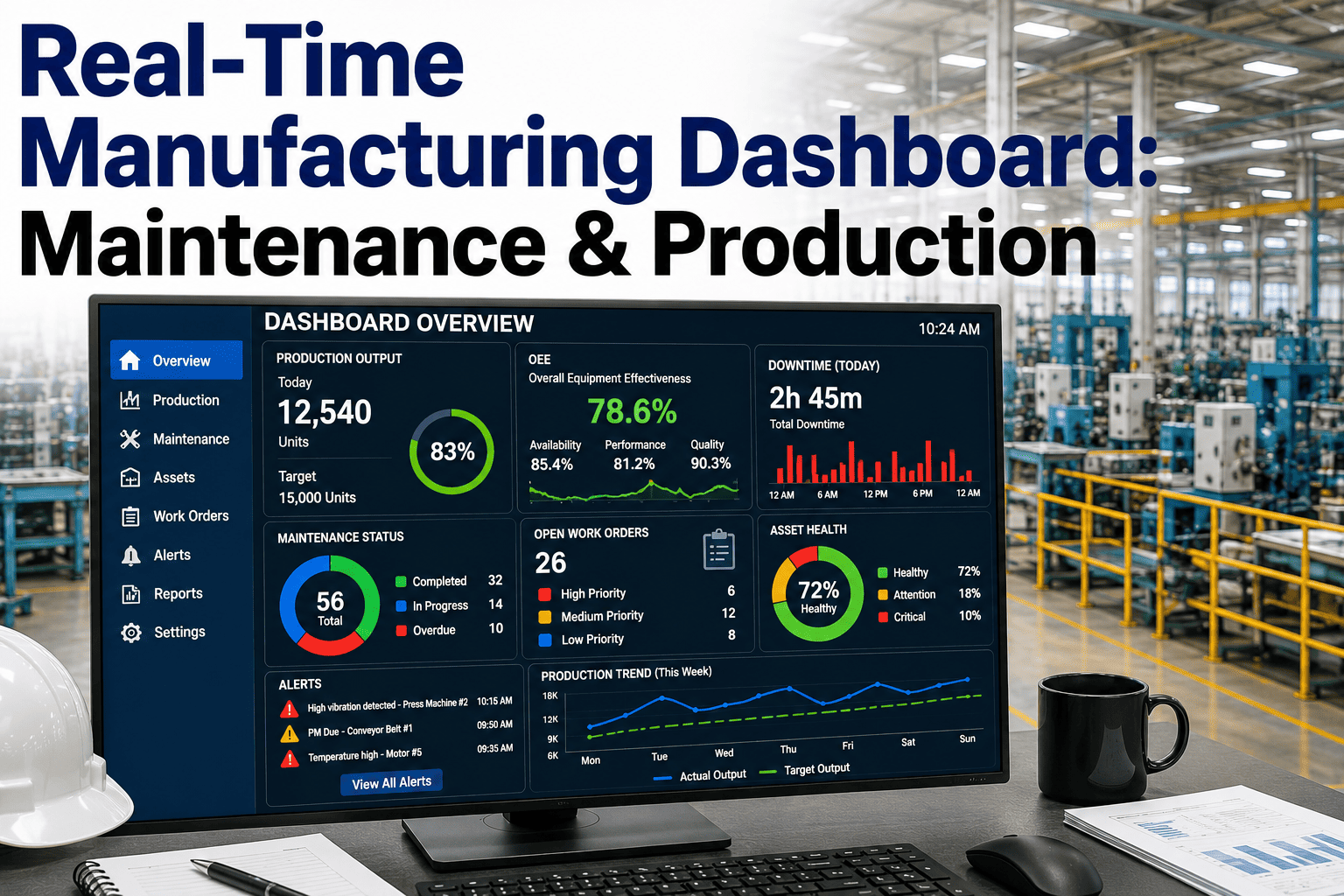
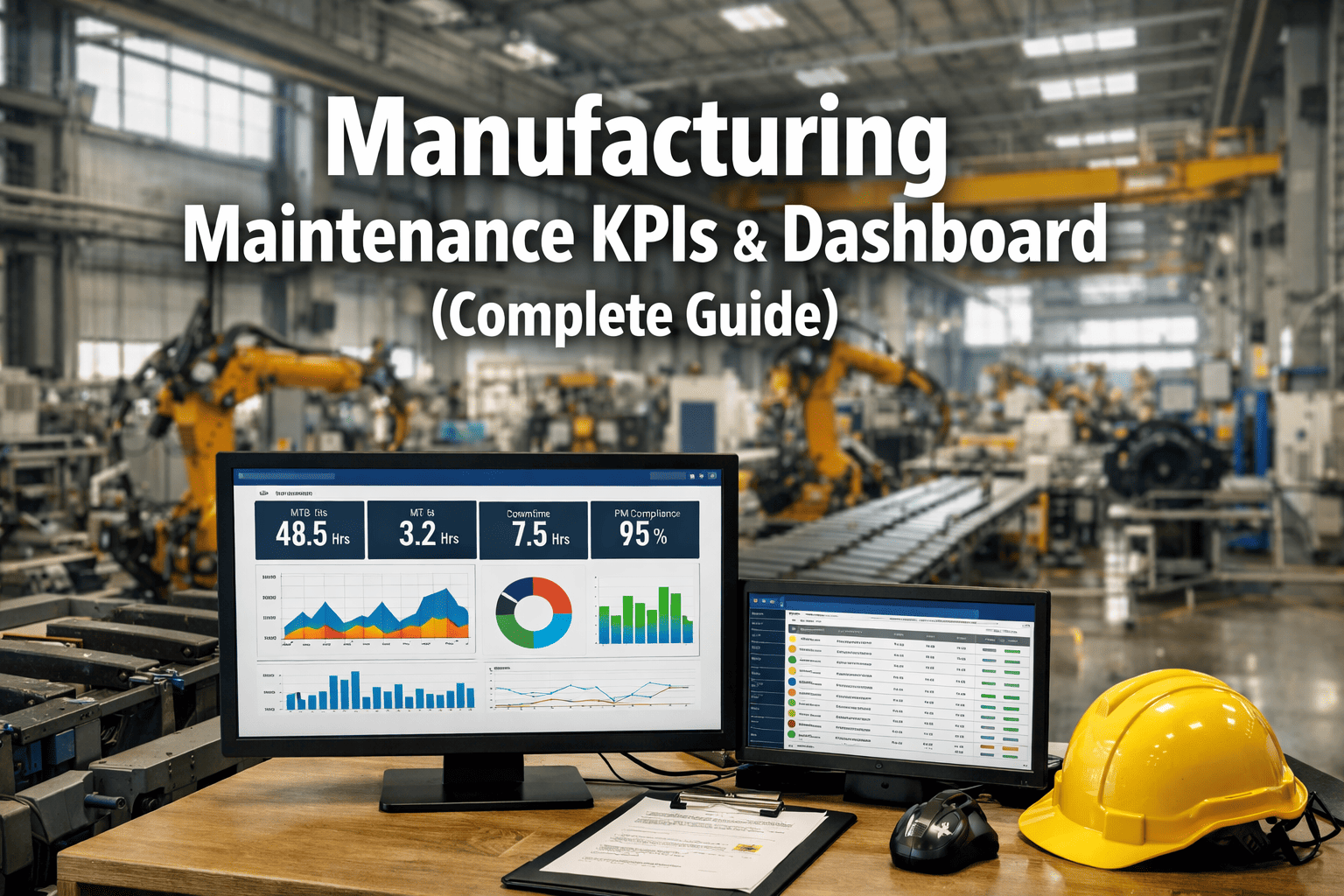
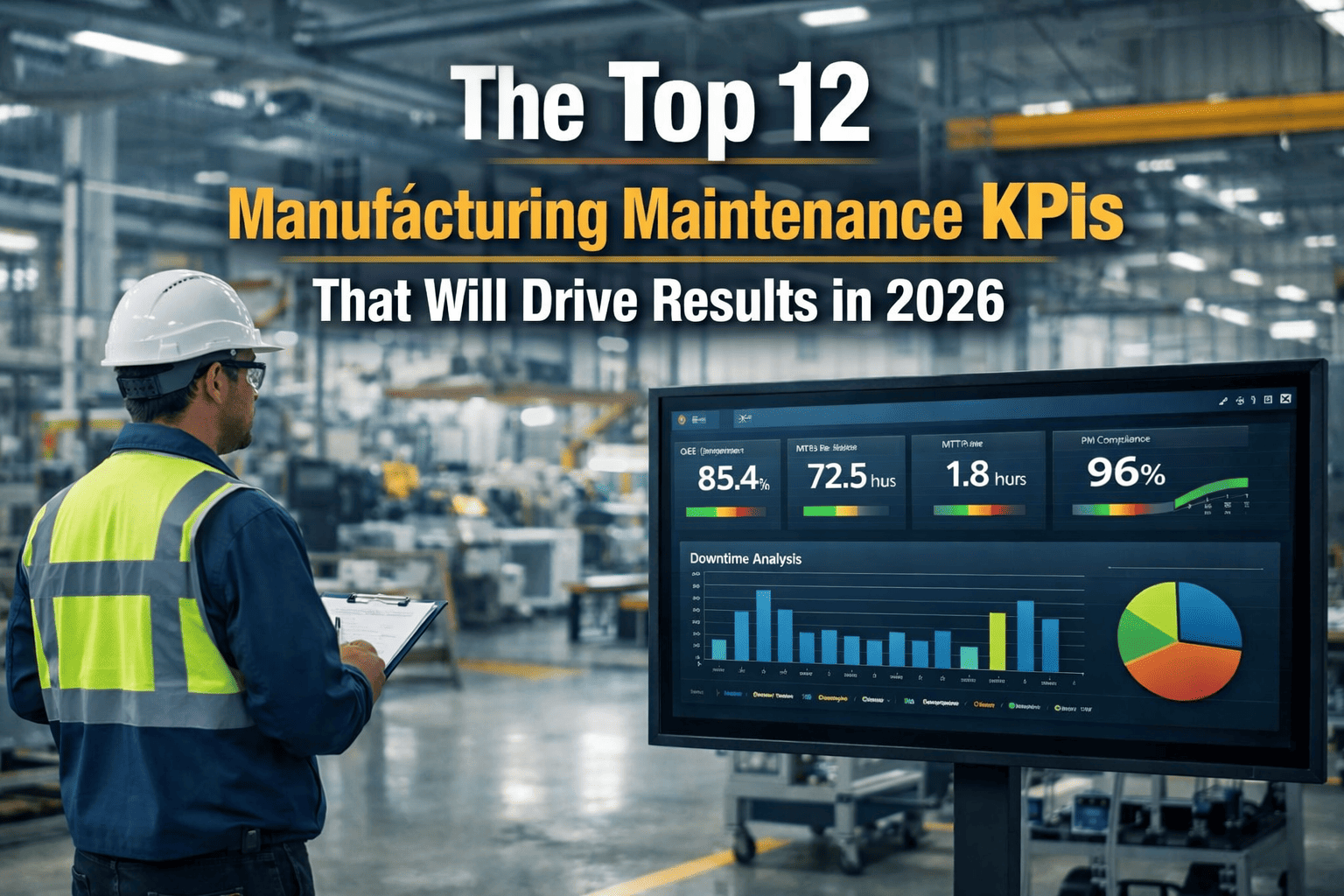
Most manufacturing maintenance teams are collecting data — very few are extracting value from it. The difference between a plant that constantly firefights breakdowns and one that runs at peak reliability often comes down to a single question: are you tracking the right numbers? According to McKinsey's 2024 operations survey, companies using standardized maintenance metrics outperform peers by up to 25% in asset uptime and 20% in cost efficiency. Yet the majority of facilities still rely on manual spreadsheets, inconsistent definitions, and gut instinct to make decisions that affect millions of dollars in production value. This page breaks down the 12 maintenance KPIs that actually move the needle in 2026 — what each one measures, the benchmark you should be hitting, and the formula to calculate it. If you're ready to stop guessing and start tracking, sign up free on Oxmaint and get your KPI dashboards running from day one.

Manufacturing KPI Guide 2026

The 12 Maintenance KPIs That Actually Drive Results

Most plants track vanity metrics. The best plants track the right ones — and act on them weekly. Here are the 12 performance indicators separating world-class maintenance from reactive chaos.

25%
Higher asset uptime at companies using standardized maintenance metrics vs. those that don't (McKinsey, 2024)
8–12 hrs
Saved per week when a CMMS automates KPI tracking instead of manual spreadsheet reporting
70%
Cut in reporting time when Nestlé unified KPI dashboards across 400 factories — with a 12% gain in equipment reliability within one year
60%
Average OEE at most manufacturing plants — world-class is 85%+. The gap represents untapped production capacity you already own

Not all maintenance metrics work the same way. Lagging indicators tell you what already happened. Leading indicators predict what is about to happen. The most effective programs balance both.

Lagging Indicators
Tell you what already happened — essential for trend analysis
MTBF MTTR OEE Equipment Availability Maintenance Cost / RAV Cost per Work Order
Leading Indicators
Predict future equipment performance before breakdowns occur
PM Compliance Schedule Compliance Planned Maintenance % Wrench Time Work Order Backlog MTTF

Each KPI below includes what it measures, the formula to calculate it, the benchmark to target, and why it matters to your bottom line.

01
MTBF Mean Time Between Failures
Lagging
Total Operating Time ÷ Number of Failures
World-Class 300+ days Average 120–200 days
Measures how reliably equipment runs before breaking down. A declining MTBF is an early warning that your PM program needs adjustment — either more frequent tasks or different inspection methods.
02
MTTR Mean Time To Repair
Lagging
Total Repair Time ÷ Number of Repairs
Target 2–4 hours Poor 8+ hours
Measures how fast your team gets equipment back online after failure. High MTTR usually points to spare parts shortages, training gaps, or missing repair procedures — not lazy workers.
03
OEE Overall Equipment Effectiveness
Lagging
Availability × Performance × Quality
World-Class 85%+ Industry Avg ~60%
The gold standard for manufacturing efficiency. A 5-point OEE gain can unlock production capacity equivalent to adding a full shift — without any capital investment. Even a 1% OEE improvement on a turbine yields up to $200,000 in annual savings.
04
PM Compliance Preventive Maintenance Compliance Rate
Leading
Completed PMs ÷ Scheduled PMs × 100
Target 95%+ Acceptable 85–94%
The single strongest predictor of future equipment reliability. Every missed PM task is a compounding risk. Below 85% compliance, expect a measurable rise in breakdown frequency within 60–90 days.
05
PMP Planned Maintenance Percentage
Leading
Planned Hours ÷ Total Maintenance Hours × 100
World-Class 90–95% Target 80%+
Shows how much of your maintenance is intentional vs. reactive. Planned repairs cost 3–10× less than emergency ones. A PMP below 60% means your team is in firefighting mode — not maintenance mode.
06
Schedule Compliance Schedule Adherence Rate
Leading
On-Time Work Orders ÷ Total Scheduled WOs × 100
Target 90%+ Average 70–85%
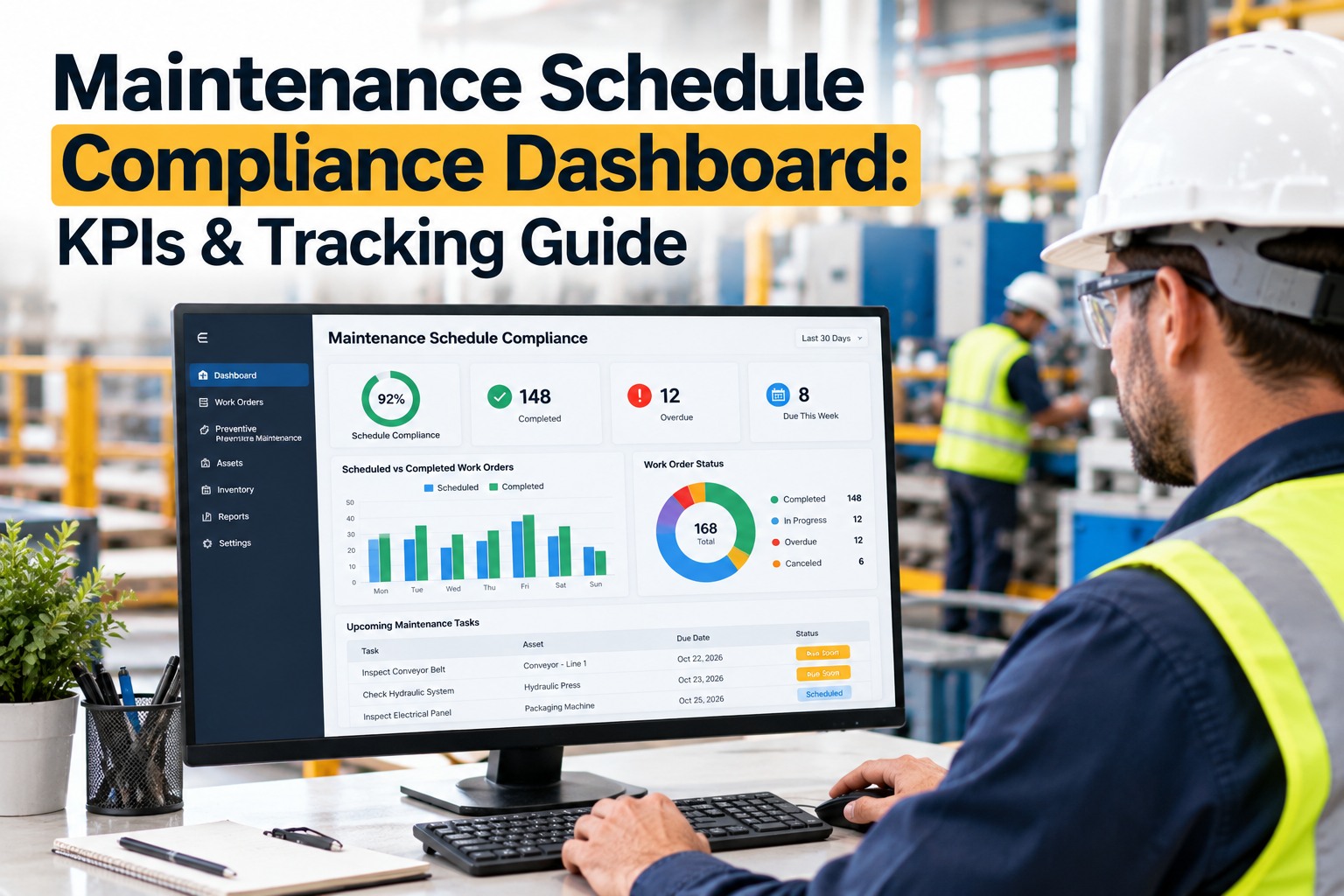
Measures whether the plan is actually being executed. Consistent adherence above 90% indicates a disciplined team with realistic workloads and effective scheduling. It is the backbone of a sustainable PM program.
07
Wrench Time Productive Technician Time
Leading
Productive Time ÷ Total Available Time × 100
Target 55–65% Industry Avg 25–35%
The percentage of a technician's shift actually spent doing maintenance work. Most plants are shocked to learn their average is 25–35%. The rest is travel, waiting, searching for parts, or paperwork — all solvable with mobile CMMS access.
08
Availability Equipment Availability Rate
Lagging
(Total Time − Downtime) ÷ Total Time × 100
Target 95%+ Average 80–90%
The percentage of scheduled time equipment is actually available to run. Direct input into your OEE score — and a direct measure of how well PM and corrective maintenance are performing together on any given asset.
09
Cost / RAV Maintenance Cost as % of Replacement Asset Value
Lagging
Annual Maintenance Cost ÷ Total Asset Replacement Value × 100
Best-in-Class 1.5–2.5% Reactive-Heavy 4–6%
The financial health check of your entire maintenance program. Spending 4–6% of RAV signals a reactive, breakdown-driven operation. Predictive maintenance-mature facilities bring this down to 1.5–2.5% while improving reliability simultaneously.
10
WO Backlog Work Order Backlog (Weeks)
Leading
Total Backlog Hours ÷ Weekly Available Craft Hours
Target 2–4 weeks Problem Zone 6+ weeks
A healthy backlog means your team is busy but not overwhelmed. Too low signals under-utilization. Too high — 6+ weeks — means deferred maintenance is building into a future breakdown wave that will overwhelm the schedule.
11
MTTF Mean Time To Failure
Leading
Total Operating Time ÷ Number of Assets Failed
Benchmark 1,000–5,000 hrs Varies by asset type
Used for non-repairable assets that are replaced upon failure. Guides smarter procurement decisions — when MTTF trends downward across a class of components, it's time to evaluate supplier quality or operating conditions.
12
Cost / WO Average Cost per Work Order
Lagging
Total Maintenance Cost ÷ Number of Work Orders
Benchmark $200–$600 Emergency WOs 3–10× higher
Tracks true maintenance cost efficiency over time. Comparing planned vs. emergency work order costs makes the business case for preventive maintenance undeniable — the data speaks louder than any argument.
Oxmaint calculates all 12 KPIs automatically from your work order data — real-time dashboards, no spreadsheets, no manual reporting effort.

Use this as your measuring stick. If your current numbers fall in the "average" or "poor" range, that gap represents a measurable improvement opportunity — and a financial case for change.

KPI World-Class Target Industry Average Review Frequency
MTBF 300+ days 120–200 days Weekly
MTTR 2–4 hours 4–8 hours Daily
OEE 85%+ ~60% Daily
PM Compliance 95%+ 70–85% Weekly
Planned Maintenance % 90–95% 50–70% Weekly
Schedule Compliance 90%+ 70–85% Weekly
Wrench Time 55–65% 25–35% Weekly
Equipment Availability 95%+ 80–90% Daily
Maintenance Cost / RAV 1.5–2.5% 3–5% Monthly
Work Order Backlog 2–4 weeks 4–6 weeks Weekly

Don't track all 12 at once. Teams that try to measure everything end up prioritizing nothing. Research consistently shows the highest ROI comes from starting with three and building from there.

Step 1
Start with the Big 3
Begin with MTBF, MTTR, and Planned Maintenance Percentage. These three give the highest insight-to-effort ratio of any KPI combination — covering equipment reliability, repair speed, and your proactive vs. reactive balance in one view.
Step 2
Layer in OEE and Schedule Compliance
Once your data quality is consistent and you're reviewing the Big 3 weekly, add OEE for a full production picture and schedule compliance to validate that your plans are actually being executed on the floor.
Step 3
Expand to the Full 12
With a solid baseline in place, add wrench time, work order backlog, cost per work order, and cost/RAV to build a complete performance picture. At this stage, review cadence should include daily dashboards, weekly team reviews, and monthly management reporting.
Your Work Orders Already Contain All This Data.

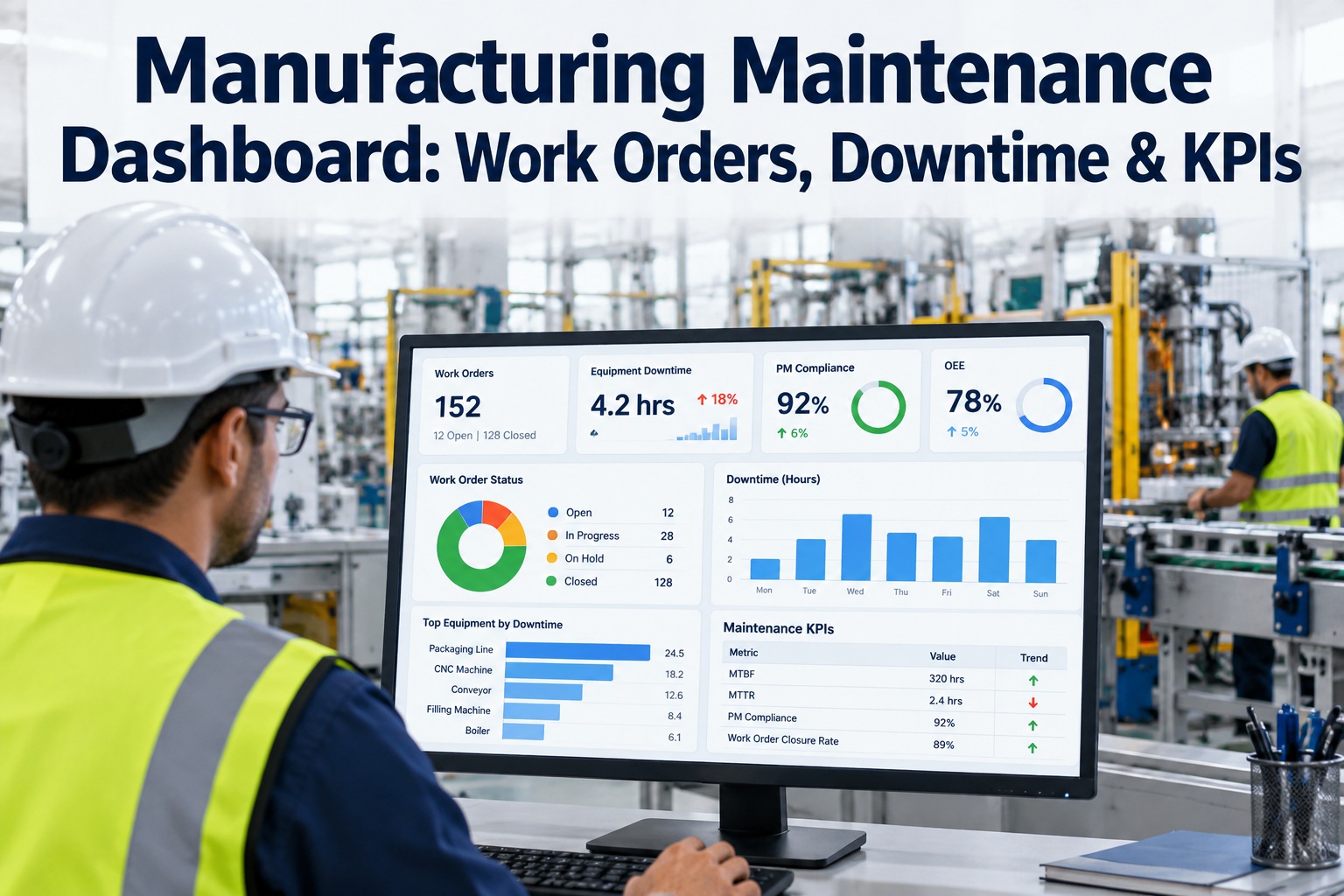
Oxmaint transforms every work order, PM task, and repair log into live KPI dashboards — MTBF, MTTR, OEE, PM compliance, and more — calculated automatically. No spreadsheets. No manual effort. No guessing.
What is the most important maintenance KPI for manufacturing?
There is no single most important KPI — but if you have to start somewhere, the combination of MTBF, MTTR, and Planned Maintenance Percentage gives the most complete picture with the least effort. MTBF shows how reliable your equipment is, MTTR shows how fast you recover when it fails, and PMP shows whether your team is being proactive or reactive. Together, these three drive the decisions that move every other metric.
What is a good OEE score for a manufacturing plant?
An OEE score of 85% or above is considered world-class for discrete manufacturing. The industry average sits around 60%. What matters more than hitting a specific number is the direction of the trend — consistent monthly improvement from your baseline is more valuable than chasing a benchmark. Even a 5-percentage-point OEE gain can unlock production capacity equivalent to adding an entire shift without capital investment.
How is MTBF different from MTTR, and which should I improve first?
MTBF (Mean Time Between Failures) measures equipment reliability — how long it runs before breaking down. Higher is better. MTTR (Mean Time To Repair) measures maintenance speed — how long it takes to get equipment running again after a failure. Lower is better. In most plants, improving MTTR delivers faster wins because the root causes — spare parts shortages, missing repair procedures, no mobile work order access — are operational fixes. Improving MTBF requires sustained PM discipline over months. Tackle both in parallel for the fastest results.
What is wrench time and why is it so low in most plants?
Wrench time is the percentage of a technician's paid shift actually spent performing maintenance work. Industry research consistently shows the average is 25–35%, meaning technicians spend 65–75% of their time on travel, waiting for parts, searching for information, or completing paper-based administrative tasks. Raising wrench time to the 55–65% target range doesn't require more staff — it requires better tools: mobile work order access, digital asset records, and pre-staged parts kits that eliminate the search and wait time that dominates most maintenance shifts.
How does a CMMS automatically track maintenance KPIs?
A CMMS like Oxmaint captures the raw data behind every KPI — timestamps on work order open and close, failure codes, technician hours, parts used, PM completion status — every time a technician interacts with a work order on their mobile device. The system then calculates MTBF, MTTR, OEE, PMP, schedule compliance, wrench time, and cost metrics automatically from that data and displays them on live dashboards. This eliminates 8–12 hours per week of manual spreadsheet reporting while delivering more accurate, more current data than any spreadsheet-based process can match.

Share This Story, Choose Your Platform!