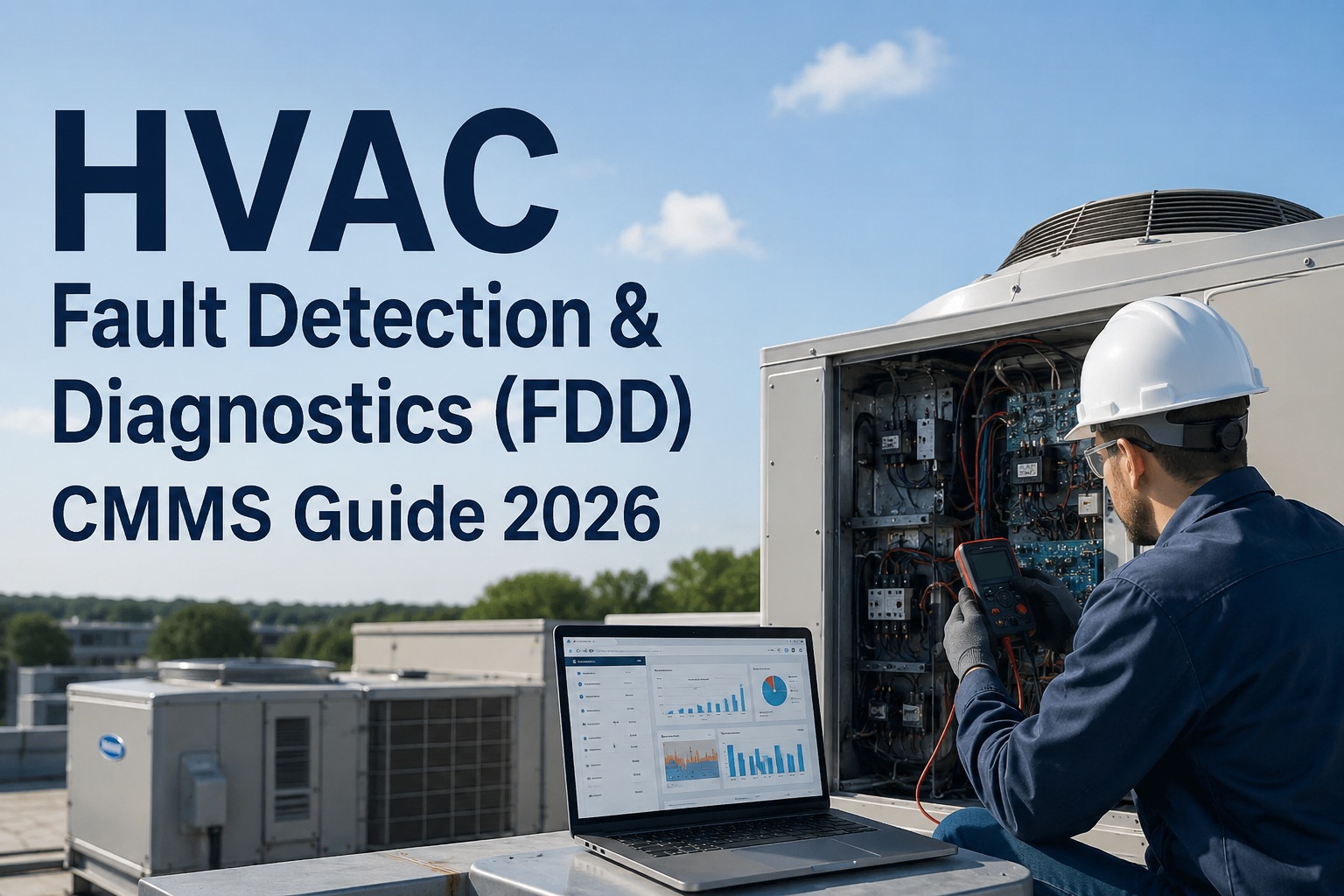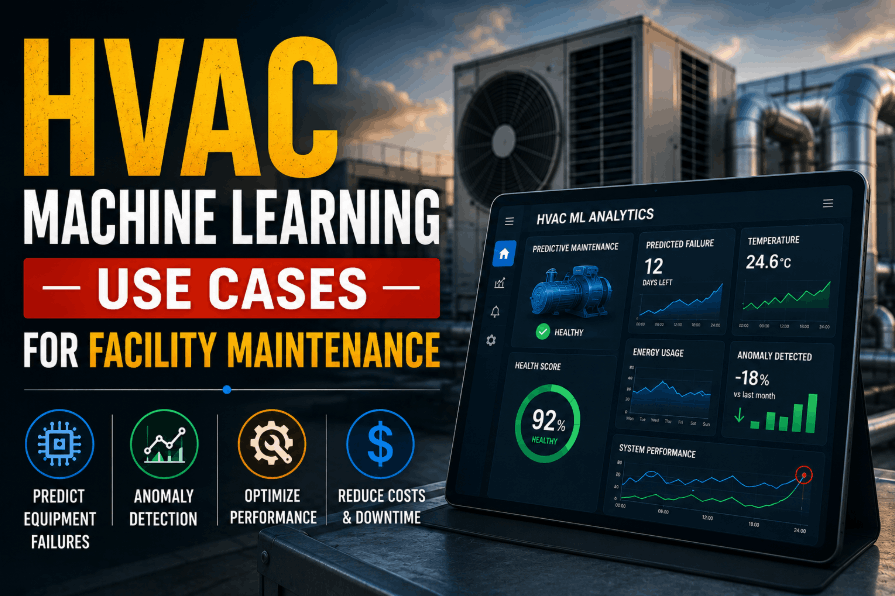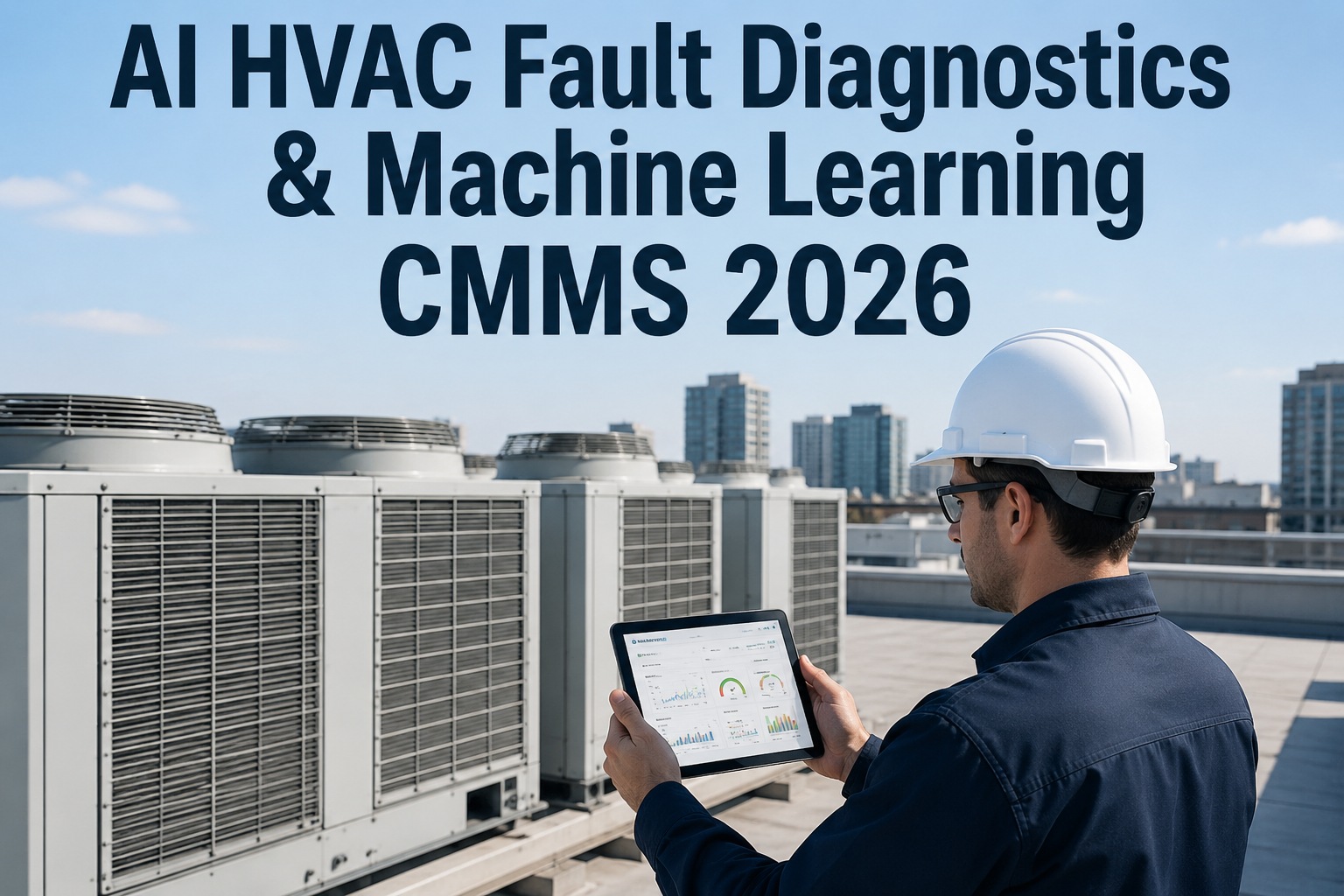
AI HVAC fault diagnostics use machine learning models to detect compressor efficiency decay, refrigerant leaks, and coil fouling weeks or months before a hard failure — cutting unplanned downtime by 30–50% and reducing energy waste by 10–25%. As rooftop units, chillers, and AHUs increasingly stream sensor data, ML HVAC fault detection has shifted from a research concept to a practical CMMS capability that reliability teams can deploy in 2026 without a data science team. This guide breaks down how AI HVAC diagnostics work, which fault classes machine learning catches earliest, false-positive reduction strategies, and how OxMaint embeds predictive diagnostics directly into work-order automation. Ready to see it on your assets? Start Free Trial or read on for the full framework.
AI HVAC Guide 2026
What if your HVAC system told you a compressor would fail in 47 days — and auto-generated the work order to prevent it?
Machine learning HVAC diagnostics analyze vibration, amperage, discharge temperature, and pressure curves in real time to flag efficiency decay long before a trip. OxMaint turns that signal into action — parts reserved, technician assigned, downtime window booked.
How It Works
How AI HVAC fault diagnostics detect failures months early
Modern HVAC AI diagnostics layer three model types over live telemetry: anomaly detection, classification, and remaining-useful-life (RUL) regression.
The Numbers
Cost of late HVAC diagnosis vs. AI predictive detection
A 180-asset commercial facility running reactive HVAC maintenance typically spends $42K–$68K per year on emergency compressor replacements, premium labor, and spoilage. Here's how that breaks down — and what shifts when ML diagnostics are in the loop.
Fault Detection
What HVAC faults can machine learning actually diagnose?
ML HVAC diagnostics don't replace your technicians — they extend their reach to hundreds of assets simultaneously. Here's the fault-class coverage a production-grade model delivers in 2026.
| Fault Class | ML Detection Method | Avg. Lead Time Before Failure | False-Positive Rate |
|---|---|---|---|
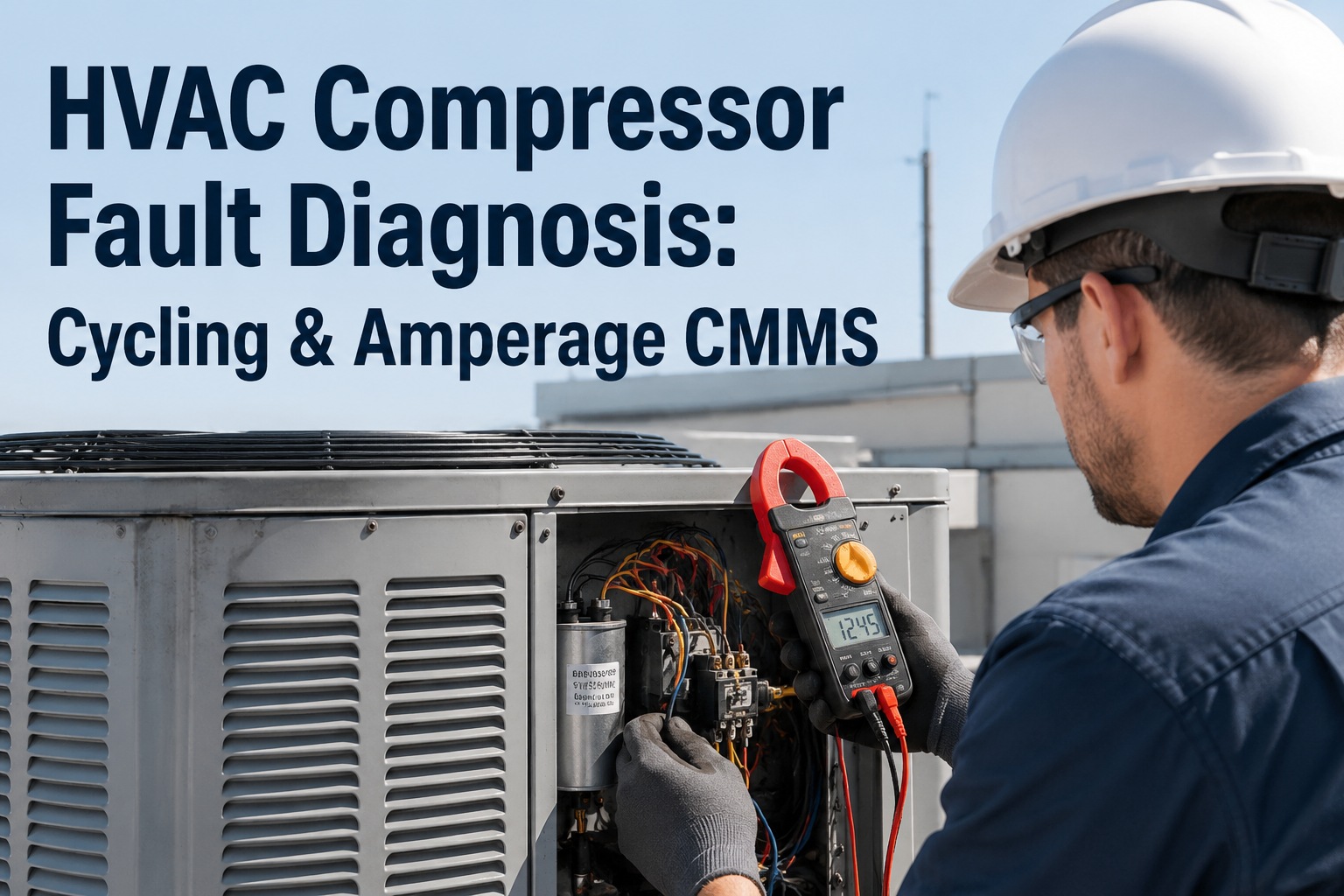
| Compressor efficiency decay | Isentropic efficiency trend + vibration anomaly | 35–60 days | 4–6% |
| Refrigerant charge loss / leak | Superheat/subcooling deviation classifier | 20–40 days | 5–8% |
| Condenser coil fouling | Approach temperature drift + head pressure trend | 25–45 days | 3–5% |
| Expansion valve stuck/oversized | Pressure-enthalpy curve anomaly detection | 15–30 days | 6–9% |
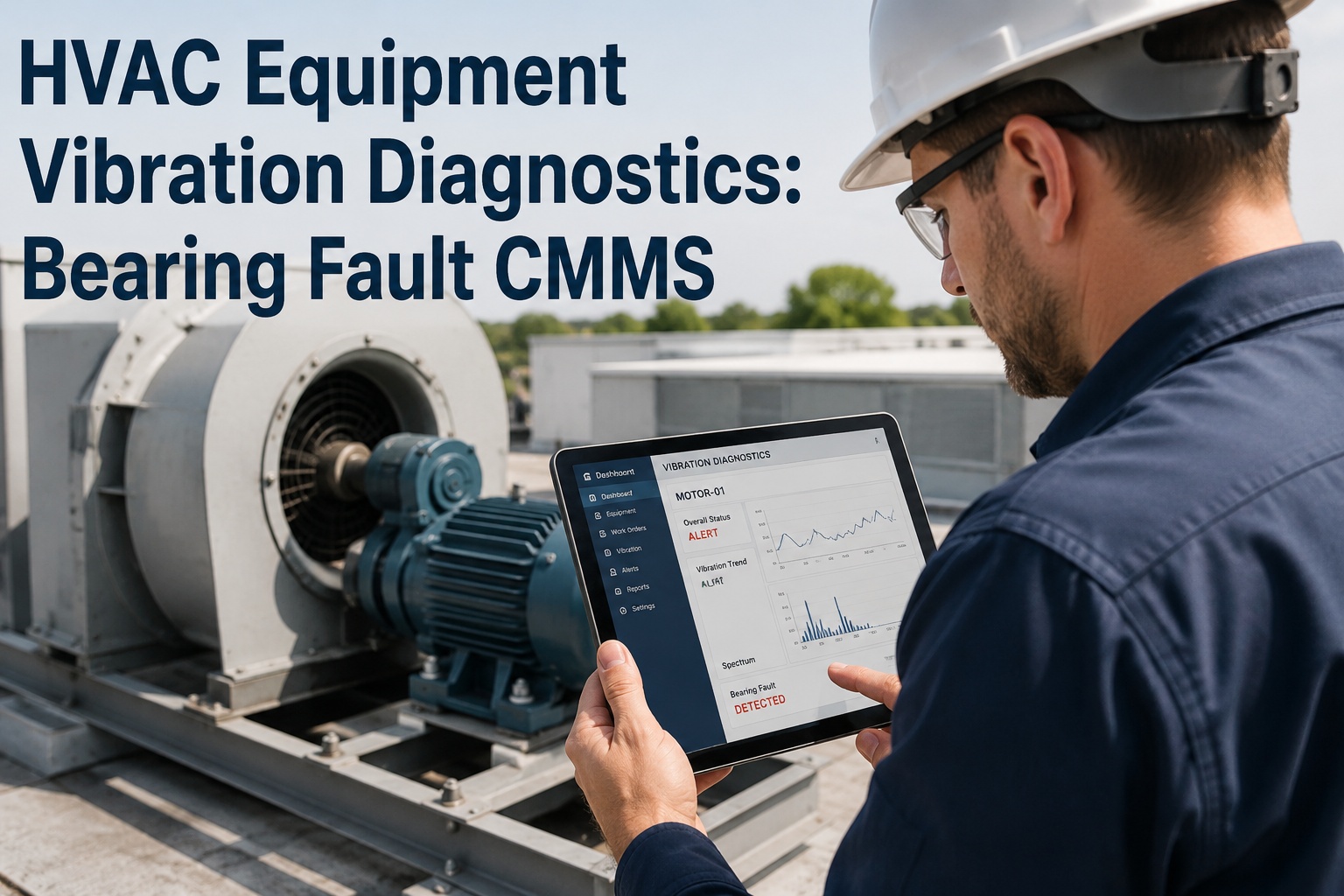
| Bearing wear (supply fan motor) | Vibration spectrum + current signature analysis | 30–50 days | 2–4% |
| Evaporator freezing risk | Coil temp rate-of-change + airflow regression | 2–6 hours | 7–10% |
The highest-value detections are the slow-decay faults — compressor efficiency, coil fouling, and charge loss — because they silently bleed energy for weeks before a trip. A 4% efficiency drop on a 100-ton chiler can add $3,800/year in wasted electricity; across a portfolio of 50 units, that's $190K in preventable energy spend.
Before vs. After
Reactive HVAC maintenance vs. AI diagnostics CMMS
The gap between spreadsheet-driven PM schedules and AI-powered fault detection isn't incremental — it's structural. Here's what changes when ML diagnostics feed directly into your CMMS work-order engine.
- Technician finds compressor failure during rounds or after tenant complaint
- Emergency parts order — 2–5 day lead time, premium pricing
- After-hours labor at 1.5–2x rate
- No trend data; same failure repeats on sister units
- Energy waste runs undetected for weeks
- Audit trail = paper work orders in a filing cabinet
- ML model flags efficiency decay 35–60 days before failure
- Auto work order generated; spare part reserved from inventory
- Repair scheduled in next planned downtime window — day rate
- Fault pattern shared across asset class for fleet-wide alerts
- Energy deviation caught in week 2, not month 4
- Full digital audit trail — sensor data, decision, work order, sign-off
How OxMaint Helps
OxMaint: AI HVAC diagnostics built into your CMMS workflow
OxMaint doesn't just show you a dashboard — it closes the loop from fault signal to completed work order. Four capabilities map directly to HVAC predictive maintenance outcomes.
Predictive fault engine
Ingests live sensor streams from BACnet, Modbus, or MQTT gateways and runs anomaly + classification models per asset. Flags compressor decay, charge loss, and fouling 20–60 days before failure.
Auto work-order generation
When the model confidence crosses your threshold, OxMaint auto-creates a predictive work order, attaches the sensor evidence, reserves the spare part, and assigns the qualified technician — zero manual triage.
Asset & parts inventory sync
Every HVAC asset carries its full maintenance history, BOM, and spare-part stock level. When a fault fires, OxMaint checks shelf availability and triggers a PO if stock is below safety minimum.
Reliability analytics dashboard
Track MTBF, MTTR, energy deviation, and fault-prediction accuracy per asset class. Drill from portfolio-level KPIs to a single compressor's efficiency curve in two clicks — exportable for ISO 55000 audit readiness.
See OxMaint flag a real HVAC fault on your assets — live
Book a 30-minute demo and we'll connect your sensor sample data, show the ML fault classification, and walk through the auto-generated work order end to end.
FAQ
AI HVAC fault diagnostics — common questions
How does AI HVAC fault diagnostics differ from a standard BMS alarm?
A BMS alarm fires after a threshold is crossed — discharge pressure too high, supply temp too low. AI diagnostics analyzes the trend and rate-of-change before the threshold is breached, classifying the specific fault (charge loss vs. valve wear vs. fouling) and estimating remaining useful life so you can plan a repair 20–60 days ahead instead of reacting to a trip.
Do I need new sensors to run machine learning HVAC diagnostics?
In most cases, no. If your rooftop units, chillers, or AHUs already report to a BMS or BAS via BACnet, Modbus, or MQTT, OxMaint can ingest that existing telemetry. The models work with standard signals — suction/discharge pressure, temperature, kW, run hours, and superheat. You only add sensors for assets where critical data points are missing.
How accurate are ML HVAC fault detection models?
Production-grade classifiers achieve 89–96% accuracy on common fault classes like compressor efficiency decay, refrigerant charge loss, and coil fouling. False-positive rates typically range from 2–9% depending on sensor quality and baseline duration. OxMaint lets you set confidence thresholds per asset so high-value chillers can trigger at 85% while smaller units wait for 95%.
Can OxMaint integrate AI diagnostics with our existing CMMS?
OxMaint is a full CMMS and EAM platform — work orders, PM scheduling, asset tracking, spare-parts inventory, and analytics in one system. If you're migrating from spreadsheets or a legacy CMMS, we import your asset registry, work-order history, and PM schedules, then layer AI diagnostics on top. You can Book a Demo to see the migration path for your data.
What's the ROI timeline for deploying AI HVAC diagnostics?
Most facilities see payback in 4–9 months. The savings come from three buckets: avoided emergency repairs ($10K+ per prevented compressor failure), energy waste recovery (10–25% reduction on flagged units), and labor efficiency (8–12 hours/week saved on dispatch and rounds). A 180-asset plant typically saves $45K–$80K in year one.
Stop reacting to HVAC failures. Start predicting them.
Deploy OxMaint's AI-powered CMMS and catch compressor faults, refrigerant leaks, and coil fouling weeks before they trip your units — with work orders, parts, and technicians auto-assigned.
Free 14-day trial · No credit card