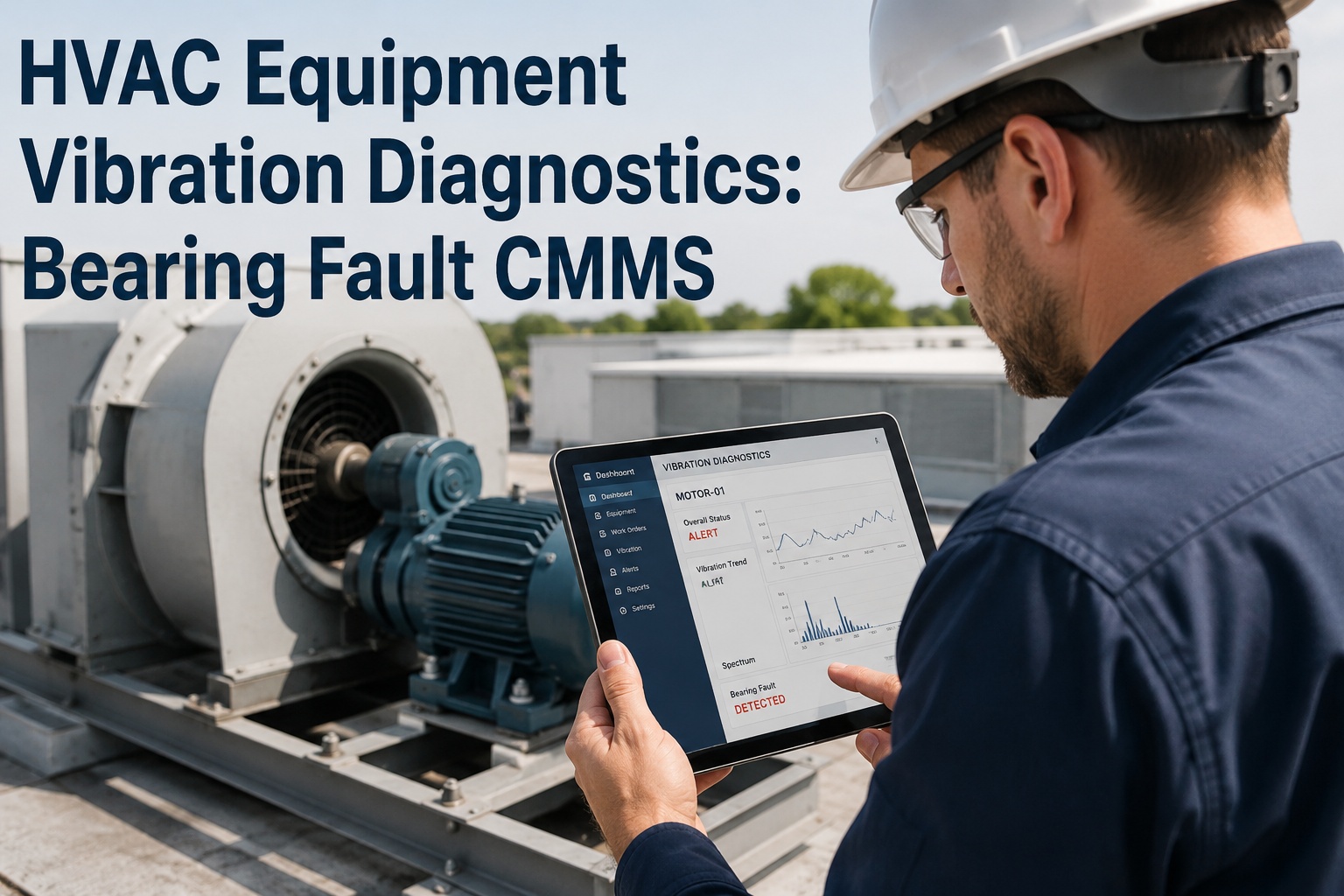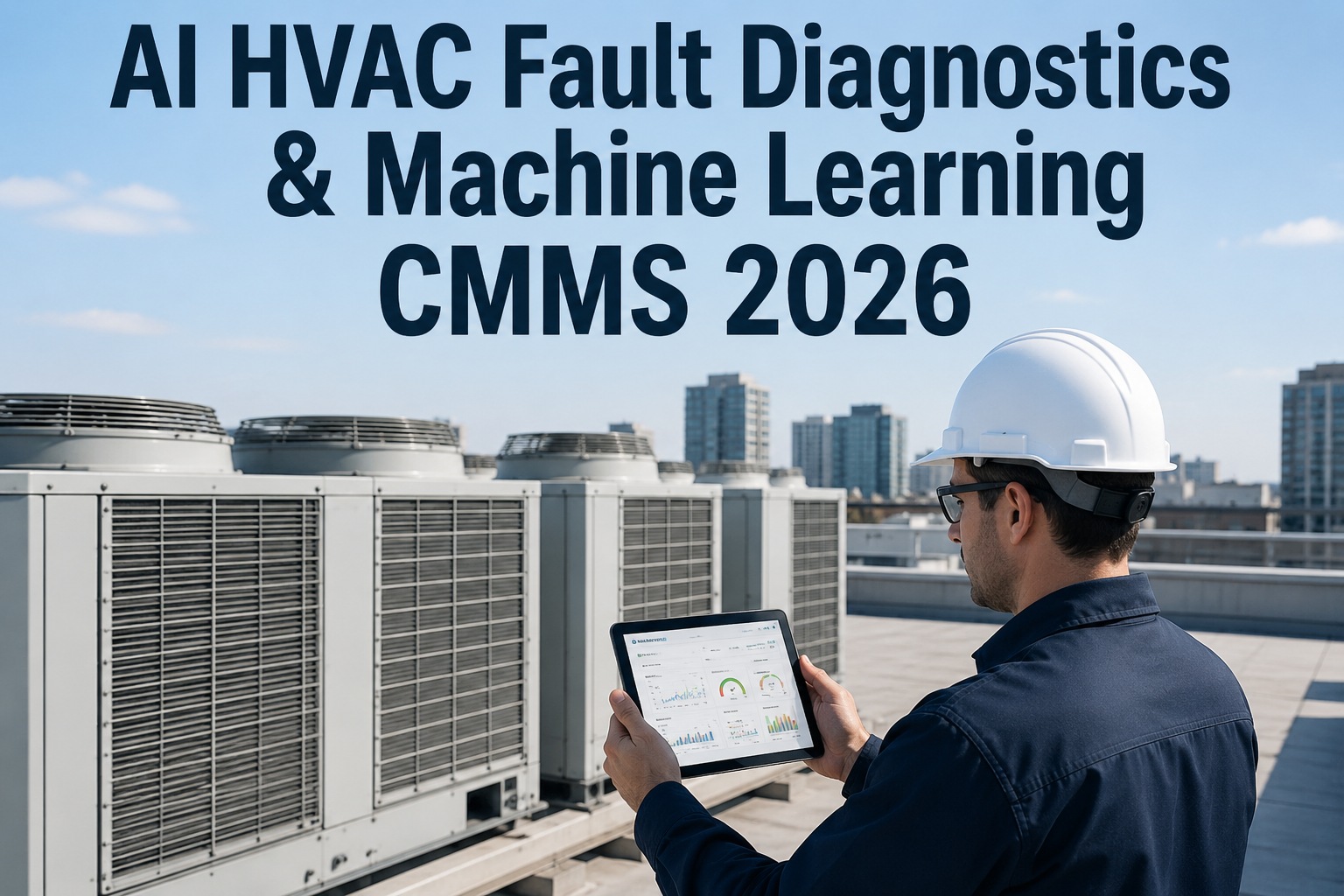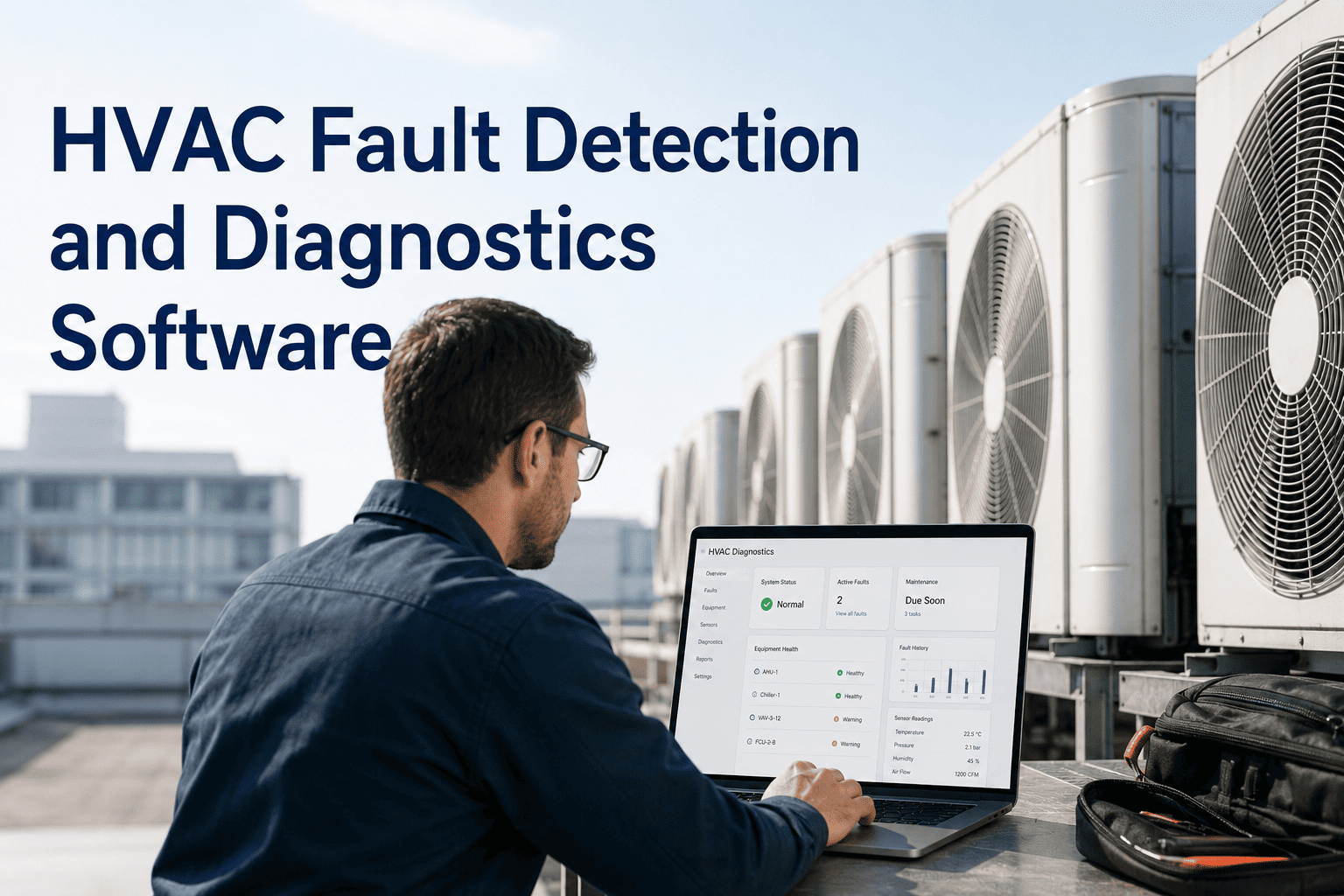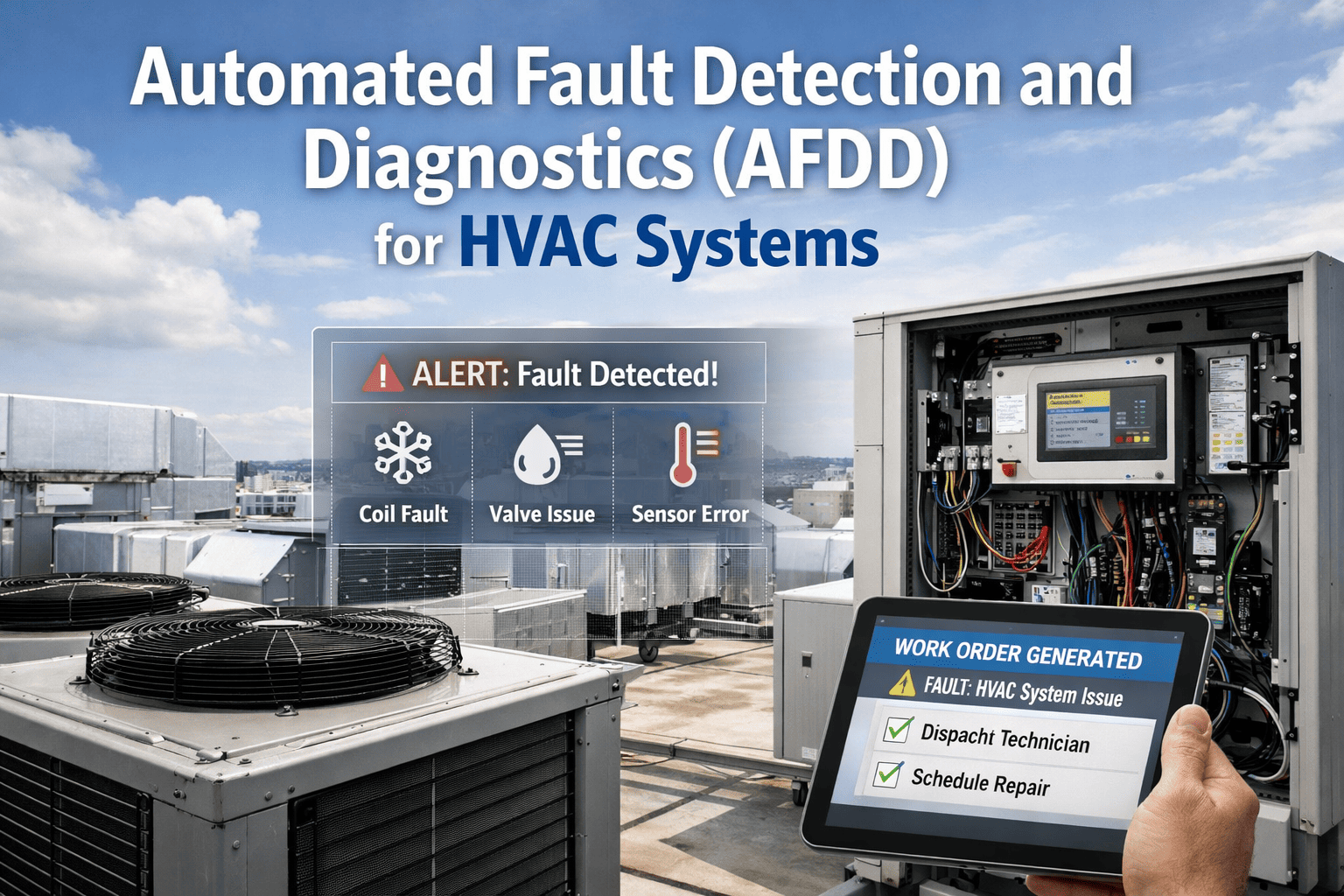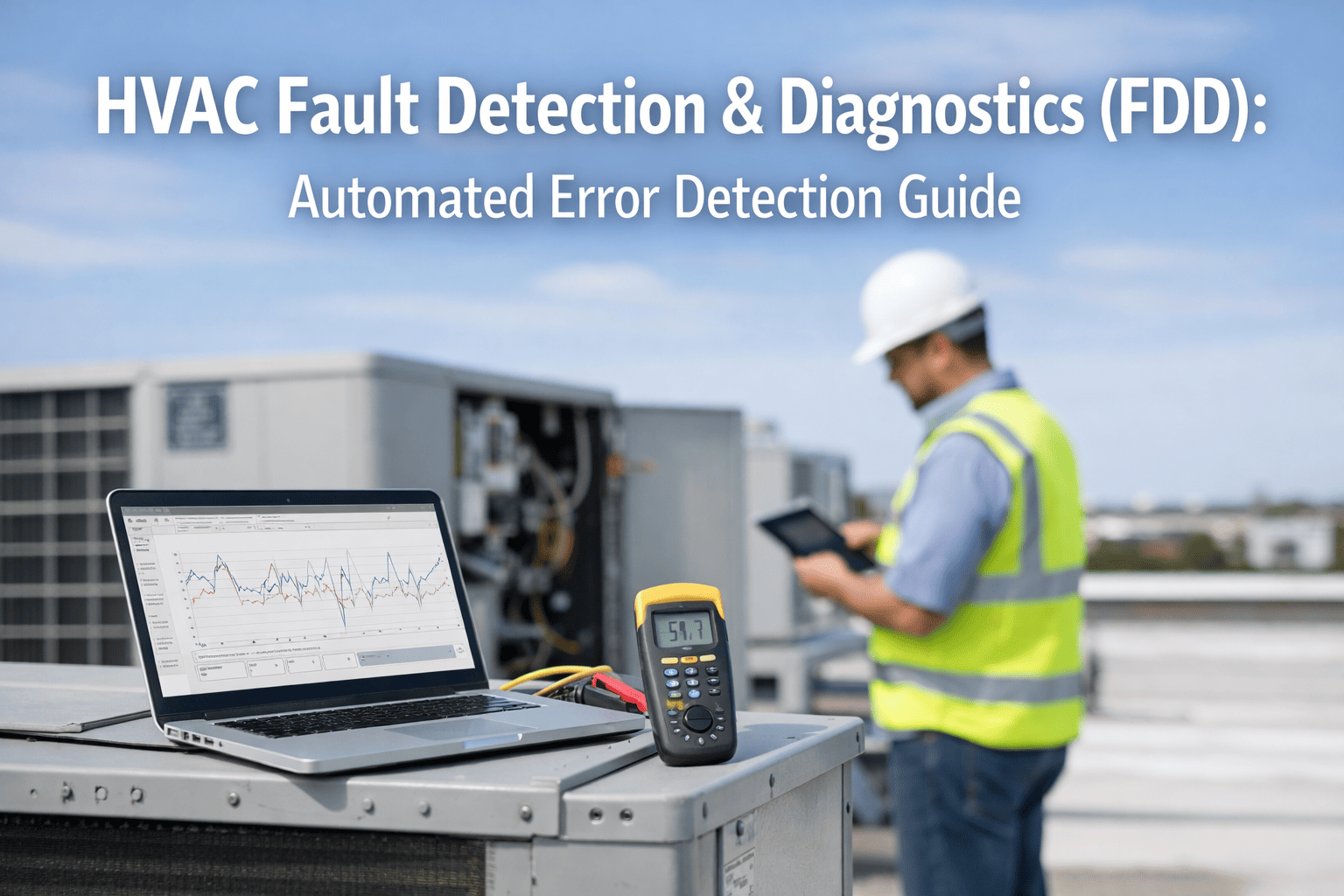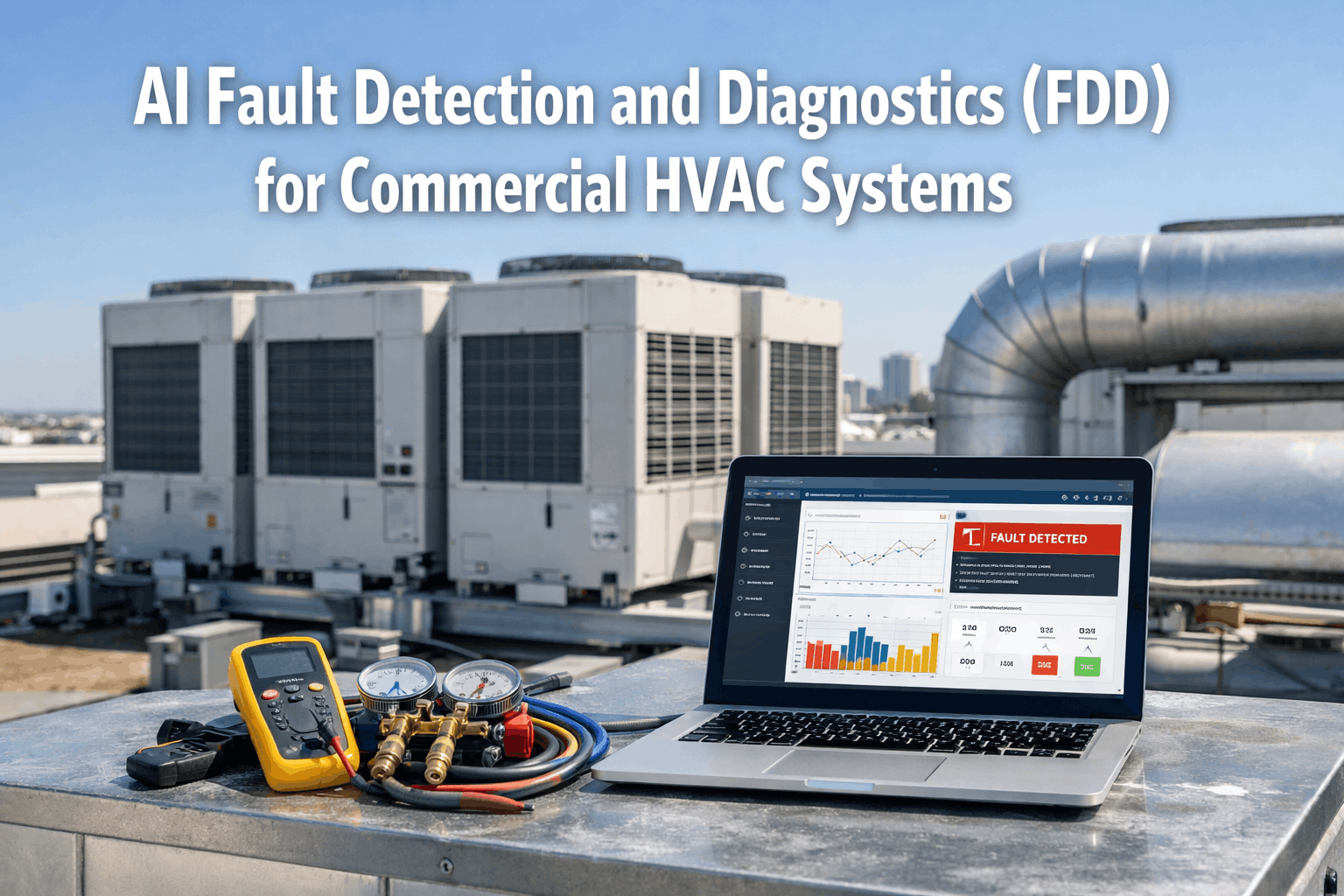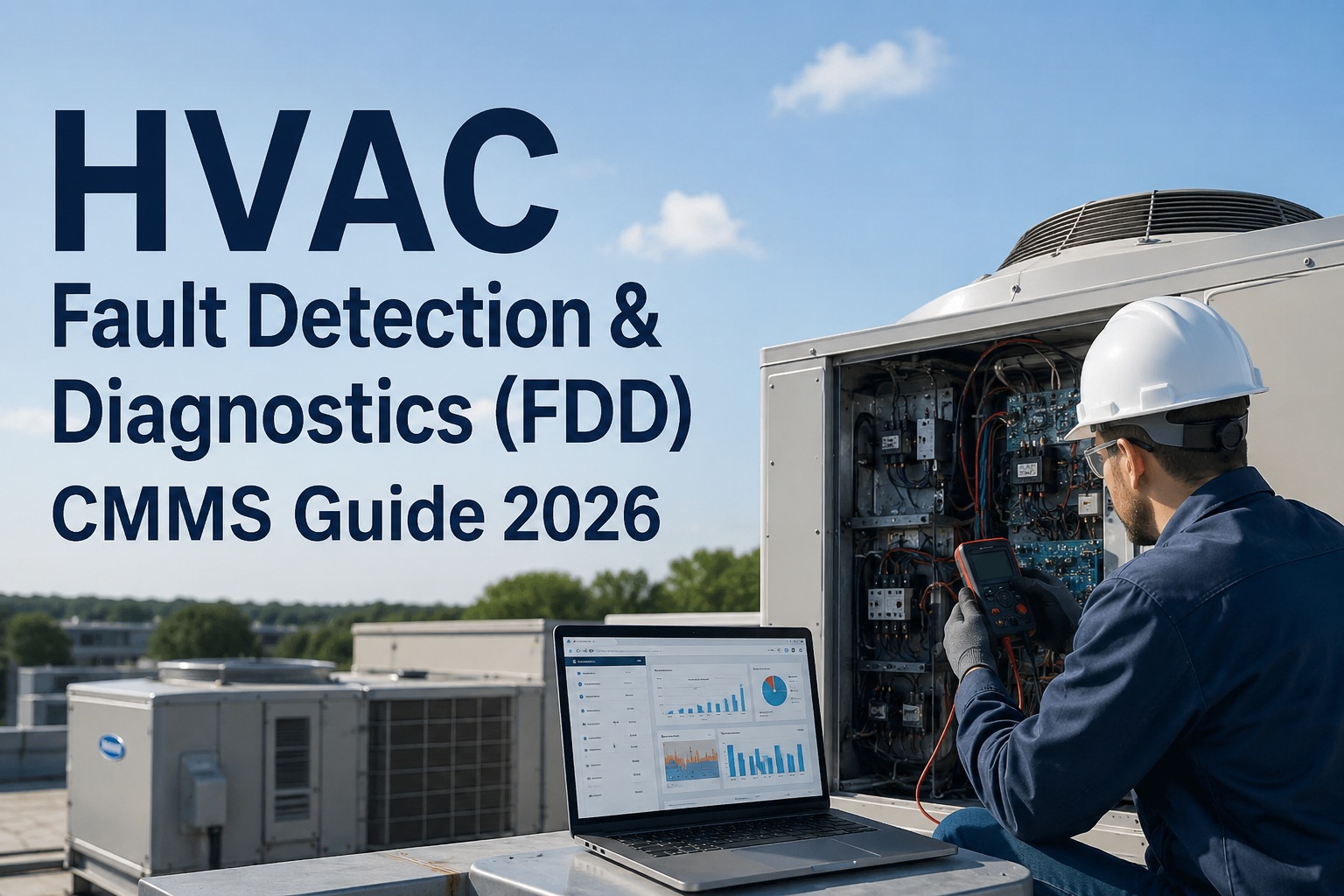
HVAC fault detection and diagnostics (FDD) is the automated process of continuously monitoring heating, ventilation, and air conditioning equipment to identify operational faults, degradations, and energy waste before they trigger costly failures. A modern HVAC FDD CMMS integrates these automated diagnostics directly into your maintenance workflows—turning raw sensor data into prioritized work orders. Facilities typically uncover 30–50 hidden faults per 100,000 sq ft in their first year of implementation, driving 15–30% energy savings and slashing reactive maintenance costs. Ready to replace reactive firefighting with predictive precision? Start Free Trial and see how OxMaint automates your HVAC diagnostics today.
HVAC FDD Guide 2026
Stop chasing HVAC failures. Start diagnosing them automatically.
Most facilities find 30–50 hidden HVAC faults per 100K sq ft in year one. OxMaint's AI-powered FDD CMMS catches degrading equipment weeks before failure, automatically generating prioritized work orders so your team fixes issues before occupants complain.
The Real Cost of Inaction
How much do undetected HVAC faults actually cost your facility?
HVAC systems account for up to 40% of commercial building energy consumption. When fault detection is manual, minor degradations—like a stuck damper or fouled coil—go unnoticed for months, compounding energy waste and accelerating equipment failure.
15-30%
Energy waste from undiagnosed HVAC faults
$42K
Average annual reactive repair cost per 180-asset facility
40%
Of commercial building energy goes to HVAC
Worked Example
A 180-asset plant spending $42K/yr on reactive HVAC repairs
Without automated FDD, a 180-asset manufacturing plant relies on occupant complaints and scheduled inspections. A single degraded centrifugal chiller runs inefficiently for 4 months, wasting $3,800/month in excess energy before a catastrophic bearing failure causes a $14,500 emergency repair and 3 days of downtime. With an HVAC FDD CMMS, the bearing degradation is flagged via vibration and current draw anomalies on day 1, automatically triggering a work order. The repair is scheduled during off-hours for $2,100, saving $15,200 in energy waste and emergency repair costs.
FDD Implementation Guide
A 4-month timeline to deploy an HVAC FDD program
Implementing fault detection and diagnostics doesn't happen overnight. It requires a structured rollout to map assets, establish rules, and integrate workflows. Here is the standard 4-month path to a fully operational HVAC FDD program.
Month 1
Asset Mapping & Data Baseline
Catalog all HVAC assets into the CMMS. Map BAS/sensor data points (temperature, pressure, flow, power) and establish normal operating baselines. Expected output: 100% asset visibility with data streaming.
Month 2
Rule Configuration & Testing
Deploy standard ASHRAE fault rules (e.g., simultaneous heating/cooling, sensor out-of-range). Test against historical data to tune sensitivity and eliminate false positives. Expected output: 15-20 active fault rules per major air handler.
Month 3
CMMS Workflow Integration
Connect FDD alerts directly to work order generation. Configure severity tiers so critical faults trigger immediate dispatch, while low-severity optimizations queue for the next PM cycle. Expected output: 90% of faults auto-generating work orders.
Month 4
Optimization & ROI Measurement
Begin closing the loop. Measure energy reduction, mean time to repair (MTTR), and avoided emergency calls. Refine rules based on technician feedback. Expected output: 15-30% reduction in HVAC energy spend and 50% fewer comfort complaints.
How OxMaint Helps
How OxMaint powers your HVAC FDD program
OxMaint bridges the gap between raw diagnostic data and actionable maintenance. Instead of just alerting you to a problem, OxMaint automatically routes the right work order to the right technician with the right parts—closing the loop from fault detection to resolution.
Automated Fault-to-Work-Order Engine
When an FDD rule triggers, OxMaint instantly generates a prioritized work order pre-loaded with asset history, fault context, and OEM manuals. Outcome: Cut mean time to repair (MTTR) by 40% and eliminate manual dispatch delays.
Predictive Analytics & Degrade Tracking
AI models trend equipment performance over time, predicting failures weeks before they happen based on vibration, temperature, and current anomalies. Outcome: Prevent 30-50% of unplanned HVAC downtime and extend asset lifecycles.
Spare Parts Inventory Sync
Fault-triggered work orders automatically check parts availability and reserve required components, ensuring technicians never arrive on-site empty-handed. Outcome: Eliminate 90% of secondary downtime trips due to missing parts.
Compliance & Audit Readiness
Every FDD-triggered action, resolution, and PM is time-stamped and logged against the specific asset, aligning with ISO 55000 and ASHRAE standards. Outcome: Pass energy and safety audits with zero manual data gathering.
ROI & Savings
HVAC FDD CMMS payback breakdown
The financial case for automated fault detection is rapid. By calculating energy savings, avoided emergency labor, and extended asset life, most facilities see a full ROI within the first 9 months. Use this standard industry formula to model your payback.
Standard FDD Payback Formula
Annual Savings = (Energy Reduction % × Annual HVAC Energy $) + (Avoided Emergency Calls × Avg Call Cost $) + (Extended Asset Life Value $)
Worked Example (100K sq ft facility)
$52,500 = (20% × $180,000) + (12 calls × $1,200) + ($8,100 extended life)
Software Cost: $14,400/yr
Net Year 1 Savings: $38,100
| Cost & Savings Category | Without FDD (Reactive) | With OxMaint FDD CMMS |
|---|---|---|
| Annual HVAC Energy Spend | $180,000 | $144,000 (-20%) |
| Emergency Repair Calls (per yr) | 25 calls ($30,000) | 8 calls ($9,600) |
| Mean Time To Repair (MTTR) | 14 hours | 6 hours (-57%) |
| Asset Lifecycle (Rooftop Units) | 12 years | 16 years (+33%) |
| Total Annual Operating Cost | $210,000+ | $153,600 |
See OxMaint's automated fault detection on your assets
Book a 30-minute demo and our reliability engineers will show you exactly how OxMaint maps your HVAC equipment, deploys ASHRAE fault rules, and auto-generates work orders—tailored to your facility.
Frequently Asked Questions
HVAC fault detection & diagnostics (FDD) FAQ
What is HVAC fault detection and diagnostics (FDD)?
HVAC FDD is an automated technology that continuously monitors building automation system (BAS) data and sensor inputs to identify operational faults in heating, ventilation, and air conditioning equipment. Using rule-based algorithms and AI, it detects issues like simultaneous heating and cooling or sensor failures, automatically alerting maintenance teams before they cause energy waste or catastrophic failure.
How does an HVAC FDD CMMS differ from a standard building automation system?
While a standard BAS controls equipment and can trigger basic alarms, an FDD CMMS analyzes the data patterns to diagnose the root cause of inefficiencies and automatically generate prioritized work orders. You can Book a Demo to see how OxMaint bridges your BAS data directly into actionable maintenance workflows.
How many faults does an HVAC FDD program typically find?
In the first year of implementation, facilities typically uncover 30 to 50 hidden faults per 100,000 square feet of building space. These include stuck dampers, degraded coils, and sensor drifts that have been silently wasting energy for months or years.
How much energy can automated fault detection save?
A properly configured FDD program integrated with a CMMS typically yields 15% to 30% energy savings on HVAC operations. By continuously identifying and prompting the repair of degrading equipment, facilities maintain peak operational efficiency and reduce overall electrical consumption.
Is it hard to switch from spreadsheets to an FDD CMMS?
No. Modern platforms like OxMaint are designed for rapid migration. You can map existing assets, import historical PM schedules, and connect your BAS data streams in weeks. You can Start Free Trial today to import your asset list and deploy standard ASHRAE fault rules without needing a dedicated IT team.
Ready to eliminate hidden HVAC faults and cut energy waste?
Join the maintenance teams using OxMaint to predict failures, automate work orders, and extend equipment lifecycles. Set up your FDD CMMS in minutes.
Free 14-day trial · No credit card