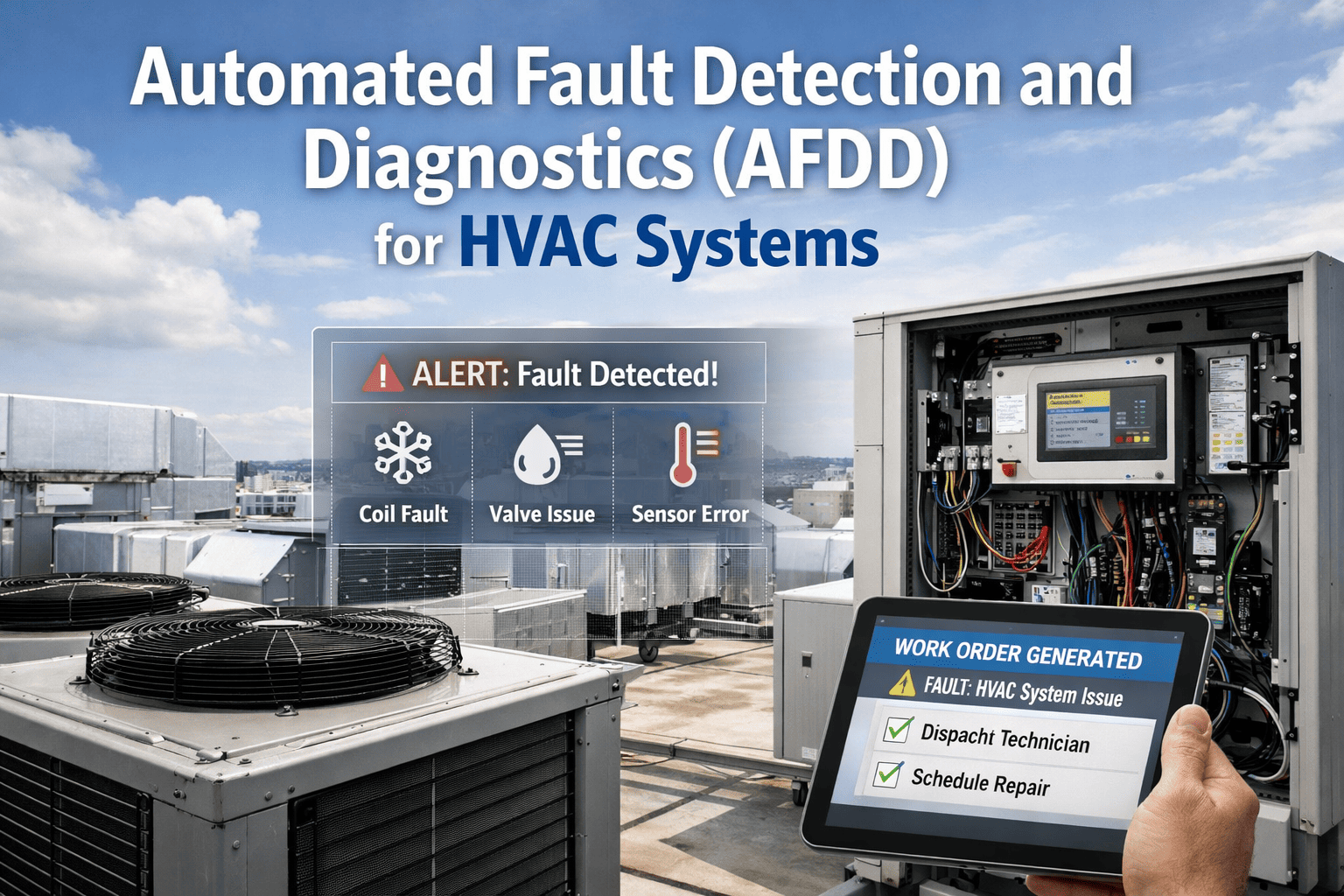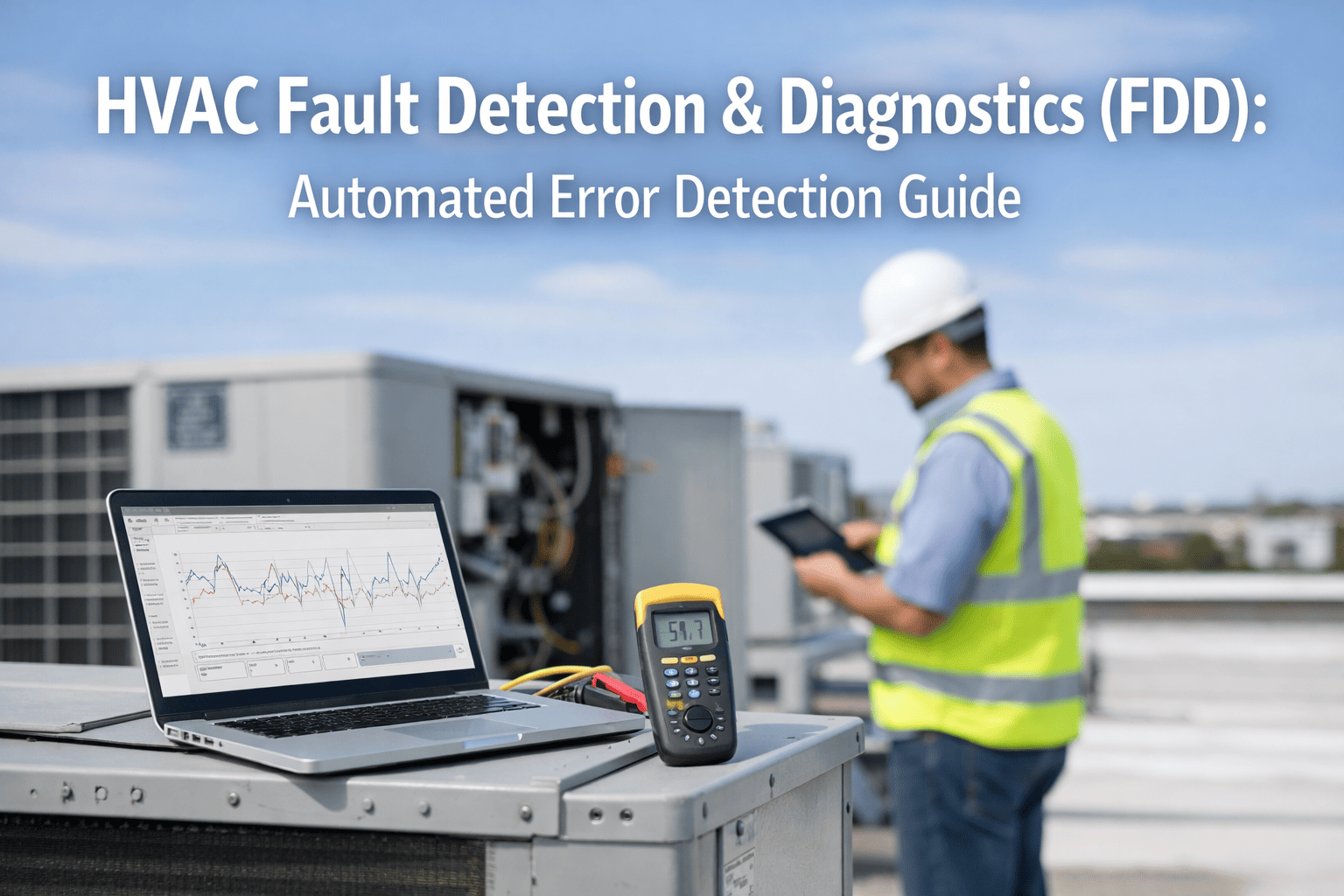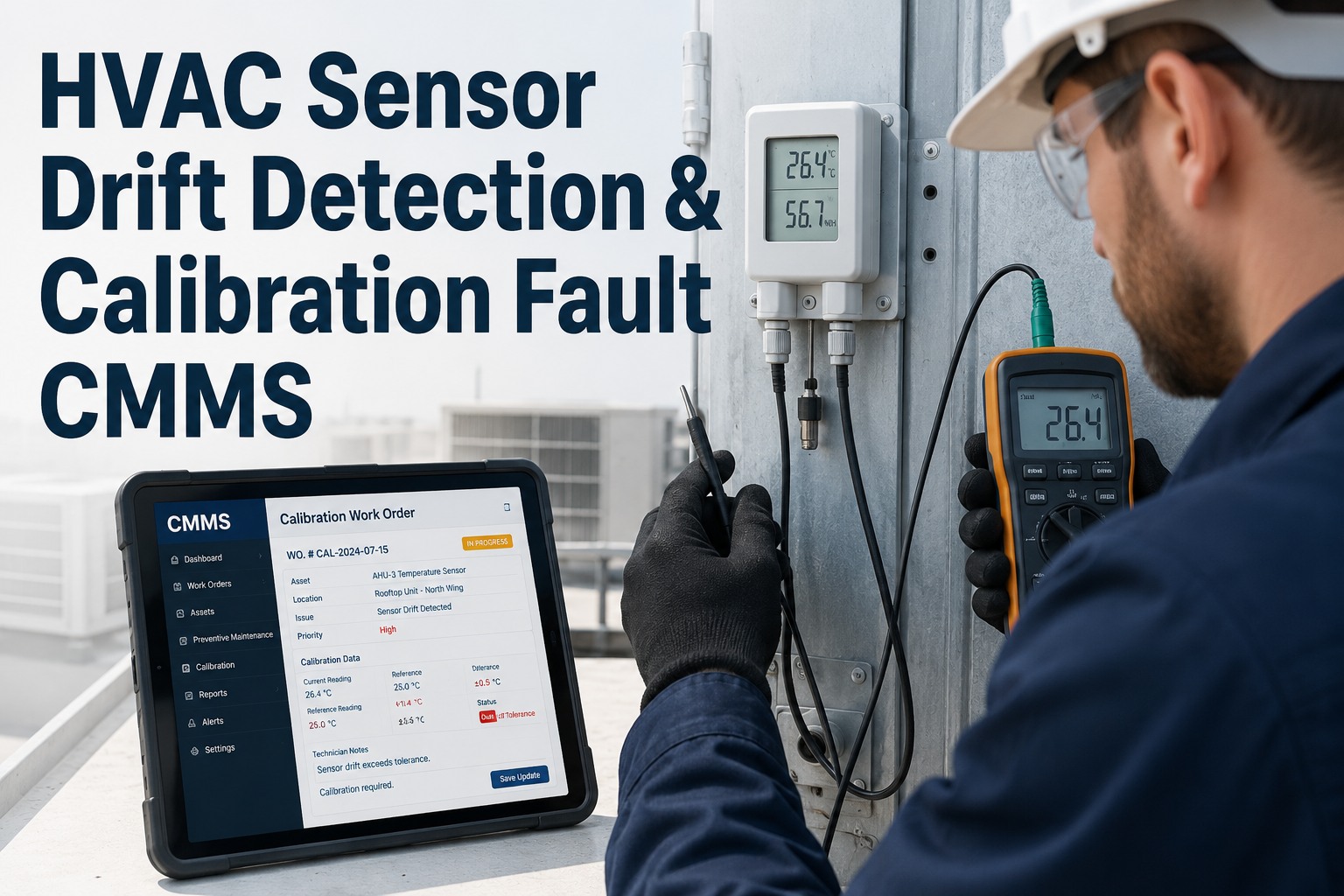
HVAC sensor drift quietly degrades equipment efficiency long before alarms trigger, often causing temperature deviations of 1-3°C that go unnoticed for months. Temperature and pressure sensor calibration faults lead to simultaneous heating-and-cooling, wasted energy, and premature compressor wear — issues that a CMMS with sensor diagnostics can catch early. This guide covers sensor drift detection, calibration verification intervals, and how connecting HVAC sensor health to work order automation cuts energy waste and unplanned downtime. Start your Start Free Trial to connect your sensor data to automated maintenance workflows today.
Is Sensor Drift Silently Inflating Your Energy Bill by 15-30%?
Undetected HVAC temperature and pressure sensor drift causes simultaneous heating-and-cooling faults, overrides VAV logic, and wastes thousands in energy annually — while your BMS reports everything is "normal." Detect, verify, and automate calibration before the drift bites.
Why HVAC Sensor Drift Goes Undetected Until It's Expensive
Most facilities discover sensor drift only when a comfort complaint, energy spike, or compressor failure forces an investigation — by then, the damage is done.
A 180-asset commercial office building in Phoenix spent $42,000 annually on HVAC energy anomalies traced to 12 drifted sensors across two AHUs and a chiller plant. Three supply-air temperature sensors had drifted +2.8°C, causing the cooling coil to overdrive while reheat valves opened simultaneously — a classic simultaneous heating-and-cooling fault. After deploying CMMS-driven calibration verification cycles, the facility cut energy waste by 23% in 60 days and recovered the software cost in under four months.
The core problem: building automation systems (BAS) trust their sensors implicitly. When a discharge air temperature sensor drifts, the BAS doesn't flag it — it simply adjusts damper and valve positions to hit a corrupted setpoint. Your maintenance team sees no alarm. Your energy bill climbs. Compressor short-cycling accelerates. By the time a technician physically verifies calibration, you've paid for the drift in wasted kWh for months. HVAC sensor diagnostics integrated into your CMMS closes this gap by scheduling verification, tracking drift trends, and auto-generating calibration work orders before the deviation exceeds tolerance.
How to Detect HVAC Sensor Drift Before It Wastes Energy
A structured sensor drift detection methodology combines data-driven analytics with scheduled physical verification — here's the five-step process reliability teams use.
Baseline Sensor Accuracy
Record each sensor's certified reference reading at installation using a NIST-traceable calibrator. Store the baseline, tolerance band (typically ±0.5°C for temperature, ±1% FS for pressure), and calibration certificate inside your CMMS asset record for every HVAC sensor.
Cross-Reference Redundant Sensors
Compare readings from paired sensors (e.g., dual supply-air probes, return vs. space temperature deltas). A divergence exceeding 1°C between redundant sensors flags drift in one or both — triggering a diagnostic work order automatically through your CMMS workflow.
Monitor for Simultaneous Heating-Cooling Faults
When heating and cooling valves are open concurrently for more than 15 minutes under non-transient conditions, a sensor calibration fault is the likely root cause. Set up analytics rules in your CMMS to catch this energy-wasting pattern and auto-generate an investigation ticket.
Schedule Calibration Verification Cycles
Temperature sensors: verify every 6-12 months. Pressure sensors: every 12 months. Humidity sensors: every 6 months. CO₂ sensors: every 12 months. Your CMMS should auto-schedule these as preventive maintenance triggers tied to each asset's sensor inventory.
Trend Drift Rate and Predict Failure
Log every calibration check result. When drift rate accelerates beyond 0.2°C per month, the sensor is approaching end-of-life. Predictive analytics in your CMMS projects the replacement date and pre-orders spare parts through inventory integration — no stockouts, no emergency procurement.
HVAC Sensor Calibration Intervals & Tolerance Benchmarks
Not all sensors drift at the same rate. Use these industry benchmarks to set calibration verification schedules — then automate them in your CMMS so nothing falls through the cracks.
| Sensor Type | Verification Interval | Tolerance Band | Drift Rate (Typical) | CMMS Trigger |
|---|---|---|---|---|
| Supply Air Temperature | 6 months | ±0.5°C | 0.1–0.3°C / month | Auto PM work order |
| Chilled Water Supply Temp | 6 months | ±0.3°C | 0.05–0.2°C / month | Auto PM work order |
| Differential Pressure (Air) | 12 months | ±1% Full Scale | 0.5–2% / year | Scheduled verification |
| Refrigerant Pressure | 12 months | ±0.5% FS | 0.3–1% / year | Scheduled verification |
| Humidity (RH) | 6 months | ±3% RH | 1–3% / year | Auto PM work order |
| CO₂ (IAQ) | 12 months | ±50 ppm | 20–60 ppm / year | Scheduled verification |
| Flow (BTU/Demand) | 12 months | ±2% reading | 0.5–1.5% / year | Scheduled verification |
Example: 12 sensors drifting +2°C on a 20,000 CFM AHU running 4,000 hrs/yr at $0.12/kWh = $27,648/year in wasted energy. Add compressor wear, reheat gas, and demand charges — the true cost often doubles.
Simultaneous Heating & Cooling Fault Prevention Checklist
Simultaneous heating-and-cooling is the most expensive symptom of undetected sensor drift. Run through this checklist quarterly to catch calibration faults before they drain your energy budget.
Valve Position Audit
Verify heating and cooling valves are not open simultaneously for >15 minutes during steady-state operation. Flag any simultaneous operation as a sensor calibration suspect — not a controls sequence issue first.
Setpoint vs. Achieved Delta
Compare BAS setpoint to actual space temperature. A persistent gap >1.5°C despite valve/damper modulation at 80%+ open strongly indicates a discharge air sensor has drifted — not that the equipment is undersized.
Redundant Sensor Divergence
Check paired or redundant sensors for reading divergence >1°C. The sensor with the larger deviation from the NIST-traceable reference is the drifted unit — schedule recalibration or replacement immediately.
Energy Use Anomaly Cross-Check
Overlay energy consumption against degree-days. A 15-25% unexplained increase during shoulder seasons (spring/fall) is a classic simultaneous heating-cooling fault signature — investigate sensor accuracy before mechanical components.
Compressor Short-Cycle Review
Pull compressor cycle data from the last 30 days. More than 6 starts/stops per hour on a chiller or RTU often points to a drifted suction or discharge pressure sensor feeding bad data to the capacity controller.
Calibration Certificate Currency
Verify every HVAC sensor's calibration certificate is current in your CMMS. Any sensor past its verification interval should be auto-flagged and assigned a work order — no manual tracking, no missed cycles.
How OxMaint's CMMS Catches Sensor Drift Before It Costs You
OxMaint turns HVAC sensor health from a reactive, spreadsheet-tracked afterthought into an automated, predictive workflow — mapping sensor diagnostics directly to work orders, spare parts, and analytics.
Automated Calibration Scheduling
Every HVAC sensor is registered as a tracked asset with its own calibration interval, tolerance band, and reference baseline. OxMaint auto-generates verification work orders on schedule — no missed cycles, no manual calendar management. Outcome: 100% calibration compliance, zero lapsed certificates.
Sensor Drift Trend Analytics
Each calibration check result is logged and trended. OxMaint's AI detects accelerating drift rates and predicts sensor end-of-life — triggering a replacement work order with the correct spare part auto-reserved from inventory. Outcome: 30-50% fewer sensor-related downtime events.
Simultaneous Heating-Cooling Fault Alerts
OxMaint ingests BAS data and flags concurrent heating-and-cooling valve operation beyond your threshold. The platform auto-creates an investigation work order with sensor readings, valve positions, and recent calibration history attached. Outcome: catch energy-wasting faults within hours, not months.
Audit-Ready Compliance Records
Every calibration verification, drift reading, and replacement is time-stamped and linked to the asset record — searchable in seconds for ISO 50001, LEED, or internal audit. Export compliance reports in one click. Outcome: cut audit prep time from days to minutes.
See OxMaint Catch Sensor Drift on Your Assets — Book a 30-Min Demo
Watch how OxMaint auto-detects simultaneous heating-cooling faults, schedules calibration verification, and predicts sensor failures before they waste energy. Bring your top 5 HVAC assets — we'll show you the drift you're missing.
HVAC Sensor Drift Detection & Calibration — Frequently Asked Questions
What is HVAC sensor drift and how does it affect energy consumption?
HVAC sensor drift is the gradual loss of calibration accuracy over time, causing a temperature, pressure, or humidity sensor to report values offset from the true reading. Even a 2°C drift can force cooling coils and reheat valves to operate simultaneously — a condition that wastes 15-30% in energy while the BAS reports normal operation. Drift is the leading non-mechanical cause of hidden HVAC energy waste.
How often should HVAC sensors be calibrated or verified?
Temperature sensors in critical HVAC applications should be verified every 6-12 months, pressure sensors every 12 months, and humidity sensors every 6 months. High-vibration or extreme-environment sensors may need quarterly checks. A CMMS like OxMaint automates these intervals by generating preventive maintenance work orders tied to each sensor's asset record — ensuring no verification cycle is missed. Book a Demo to see automated calibration scheduling in action.
What is a simultaneous heating and cooling fault in HVAC systems?
A simultaneous heating-and-cooling fault occurs when heating and cooling valves or coils operate at the same time, typically because a drifted sensor feeds incorrect data to the BAS controller. The system fights itself — cooling air that's then reheated, or vice versa — wasting significant energy. It's the most common and costly symptom of undetected sensor calibration faults in commercial HVAC systems.
Can a CMMS detect sensor drift automatically?
Yes. A CMMS with sensor diagnostics capabilities like OxMaint ingests BAS data, trends sensor readings against baselines and redundant probes, and flags divergence beyond tolerance. When drift is detected or a simultaneous heating-cooling pattern emerges, the CMMS auto-generates a calibration verification or investigation work order — turning a hidden problem into a tracked, actionable task before energy is wasted.
How much does HVAC sensor drift cost per year?
A single drifted temperature sensor on a mid-size AHU can waste $2,000-$4,000 annually in excess energy. A facility with 10-15 drifted sensors across air handlers, chillers, and VAV boxes can lose $30,000-$60,000 per year. Most facilities recover the cost of a sensor health CMMS module within 3-5 months through energy savings alone. Start your Start Free Trial to quantify your drift exposure.
Stop Paying for Sensor Drift You Can't See
Deploy OxMaint's AI-powered CMMS and turn HVAC sensor health into automated, predictive maintenance. Cut energy waste, eliminate simultaneous heating-cooling faults, and keep every calibration certificate audit-ready — all in one platform.
Free 14-day trial · No credit card