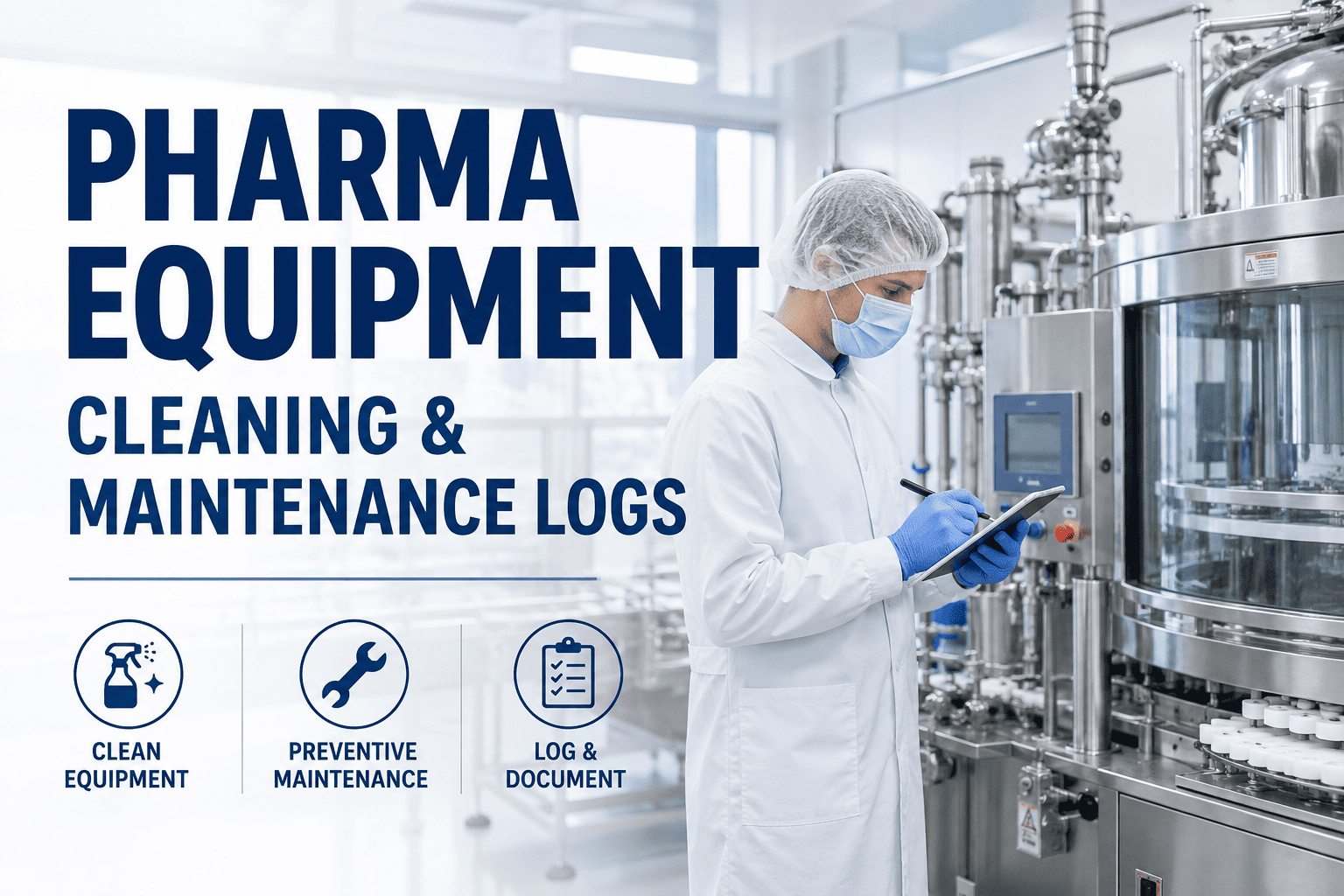
In pharmaceutical manufacturing, contamination does not announce itself — it accumulates silently through undocumented cleaning steps, missed intervals, and incomplete sanitization records. A single batch contaminated due to a cleaning or maintenance documentation gap can trigger a full recall, an FDA investigation, and years of regulatory oversight. Digital equipment cleaning and maintenance logs in OxMaint eliminate the documentation gaps that put batches, patients, and regulatory standing at risk.
Pharma Equipment Cleaning and Maintenance Logs: The Complete Compliance Guide
Everything pharma QA and maintenance teams need to know about building, maintaining, and auditing compliant equipment logs — and why digital systems eliminate the gaps that paper cannot.
What Must a GMP Equipment Cleaning Log Actually Contain?
Many pharma plants keep cleaning records — but not necessarily the right ones. A cleaning log that passes a routine internal review may still generate a 483 observation because it is missing specific data fields that the FDA considers mandatory. Here is what a complete GMP cleaning log must document for each cleaning event.
Unique equipment ID, equipment name, and the location (room or manufacturing area) where the cleaning was performed. This links the record unambiguously to a specific physical asset.
What was manufactured or processed in the equipment before this cleaning cycle. This is essential for cross-contamination risk assessment and changeover cleaning verification.
The specific cleaning agent used, its lot number, the concentration prepared, and how that concentration was verified. Generic entries like "cleaned with detergent" do not meet GMP requirements.
The validated contact time and temperature for the cleaning solution, with the actual values recorded — not just the procedural target. Deviations from validated parameters must be noted.
Confirmation that rinse water or swab samples met acceptance criteria — or that a visual inspection was completed according to the validated cleaning procedure. Method and result must both be recorded.
The name and signature of the person who performed the cleaning, and the exact date and time of completion. Electronic signatures must meet 21 CFR Part 11 requirements.
For critical equipment, a second signature confirming review of the cleaning record before the equipment is released for the next production use. OxMaint enforces review gates based on equipment criticality class.
Documentation Gaps That Commonly Generate Audit Findings
| Documentation Gap | Regulatory Impact | How OxMaint Prevents It |
|---|---|---|
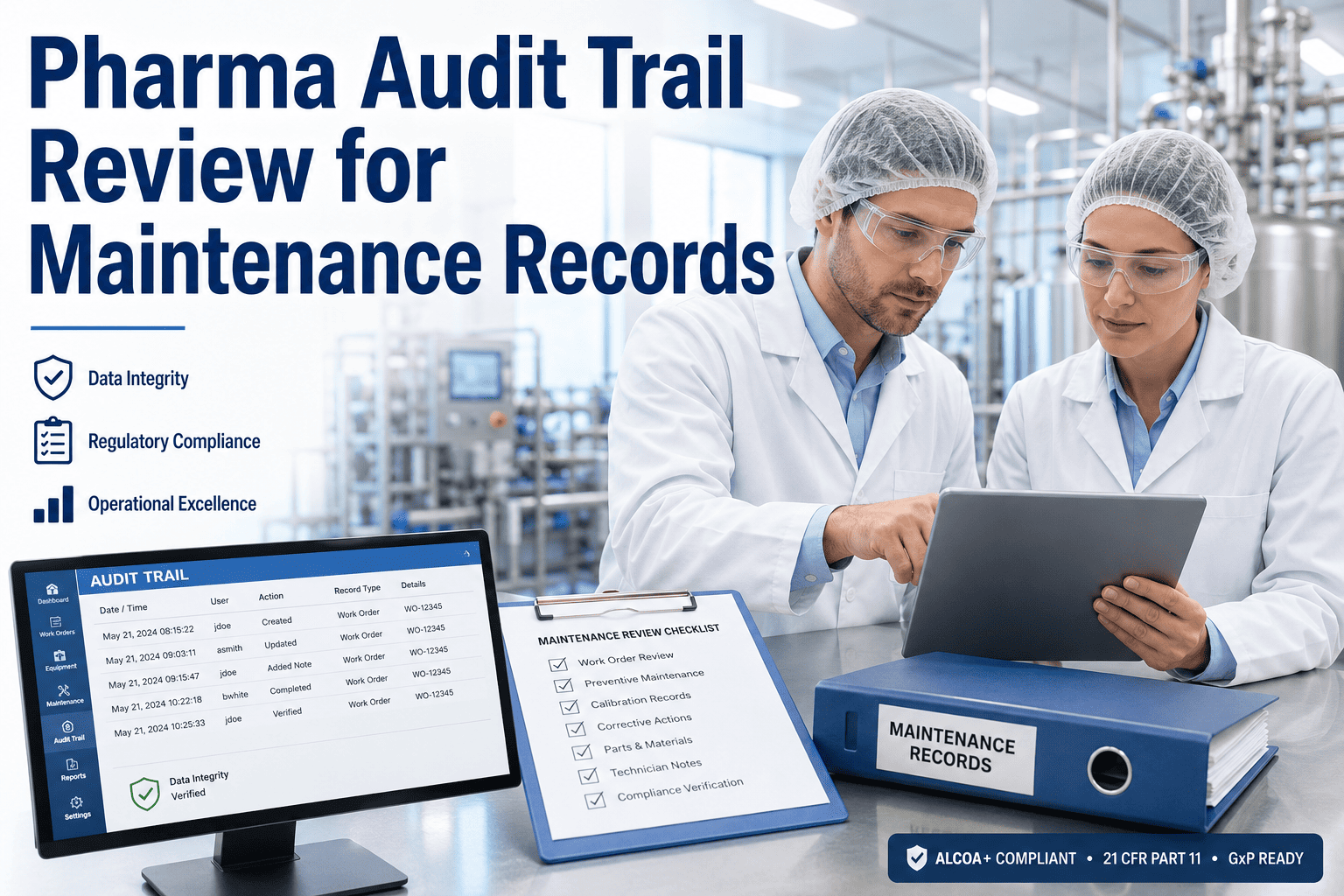
| Cleaning record completed after the fact, timestamp inconsistent with batch record | Data integrity observation — serious finding | Timestamp locked at point of execution; backdating blocked |
| Cleaning agent concentration listed as "per SOP" without actual recorded value | Incomplete record — § 211.67(b) | Mandatory numeric field — record cannot be saved blank |
| Equipment cleaning record missing for one of three campaigns run before a deviation | Gaps in batch investigation — § 211.192 | Cleaning log required before equipment release; automated gap detection |
| No record of who performed the cleaning — only the QA reviewer signed | Performer attribution missing — Part 11 issue | Performer sign-off required before QA review can be completed |
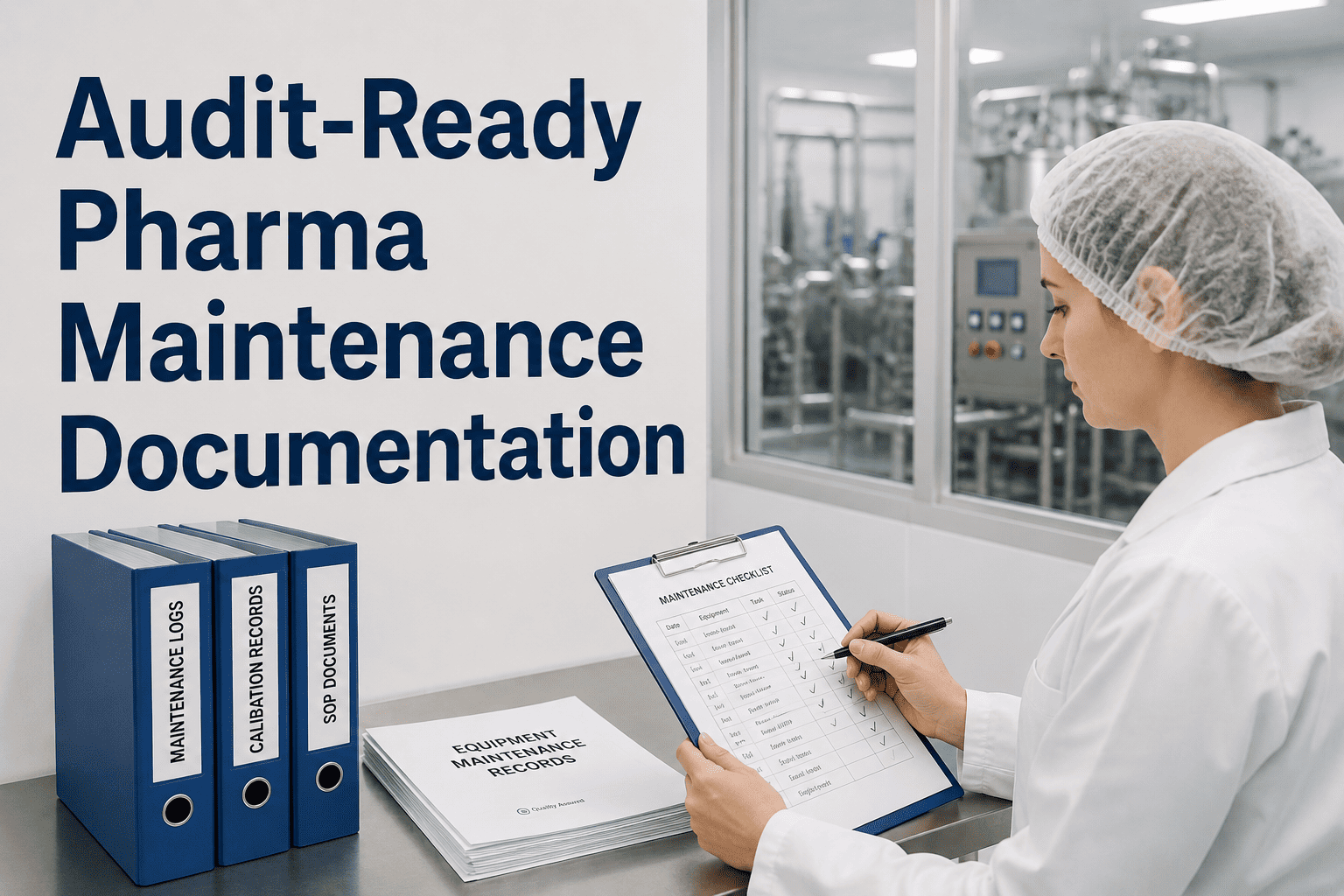
| Cleaning logs stored in a binder not associated with the equipment or batch record | Record retrieval failure during inspection | All cleaning logs linked to equipment asset profile and searchable by batch |
Paper Logs vs Digital Cleaning Records: The Compliance Gap
Replace Paper Cleaning Logs with Audit-Ready Digital Records
OxMaint digitizes equipment cleaning and maintenance logs with mandatory field enforcement, electronic signatures, and instant retrieval. See how it works for your specific equipment types and cleaning procedures — book a 30-minute demo with our pharma team.
How Cleaning Logs and Maintenance Logs Work Together in GMP
In a correctly structured GMP documentation system, cleaning logs and maintenance logs are not separate files — they are part of the same equipment record. When a maintenance event occurs — an overhaul, a parts replacement, or a bearing replacement — a cleaning cycle is typically required before the equipment is returned to production. If the cleaning record cannot be linked to the maintenance event that triggered it, both records become weaker during an investigation.
PM or breakdown work order opened and completed on a production asset.
OxMaint automatically triggers a cleaning work order linked to the maintenance event for equipment requiring post-maintenance cleaning before re-use.
Cleaning log completed with all mandatory fields. Linked in the same asset record as the triggering maintenance event.
Equipment status updated to "available for production" only after both maintenance and cleaning records are complete and reviewed.
"I have reviewed hundreds of cleaning validation failures and post-contamination investigations. In almost every case, the cleaning procedure itself was technically adequate. The problem was the record — missing a value, completed out of sequence, or impossible to retrieve when it was needed. Digital logging with mandatory field enforcement removes the human error factor from documentation. You cannot save an incomplete record. That single feature closes more audit findings than any other system change I have seen in 20 years."
— Cleaning Validation Specialist, pharmaceutical contract manufacturing, 20 years
Frequently Asked Questions
Every Cleaning Gap Is a Compliance Risk. Eliminate Them Digitally.
OxMaint digitizes cleaning and maintenance logs with the structure, mandatory field enforcement, and audit trail that GMP compliance demands. Stop discovering documentation gaps during audits and start preventing them at the point of execution. See the full cleaning log workflow in a 30-minute demo with our pharma compliance team.