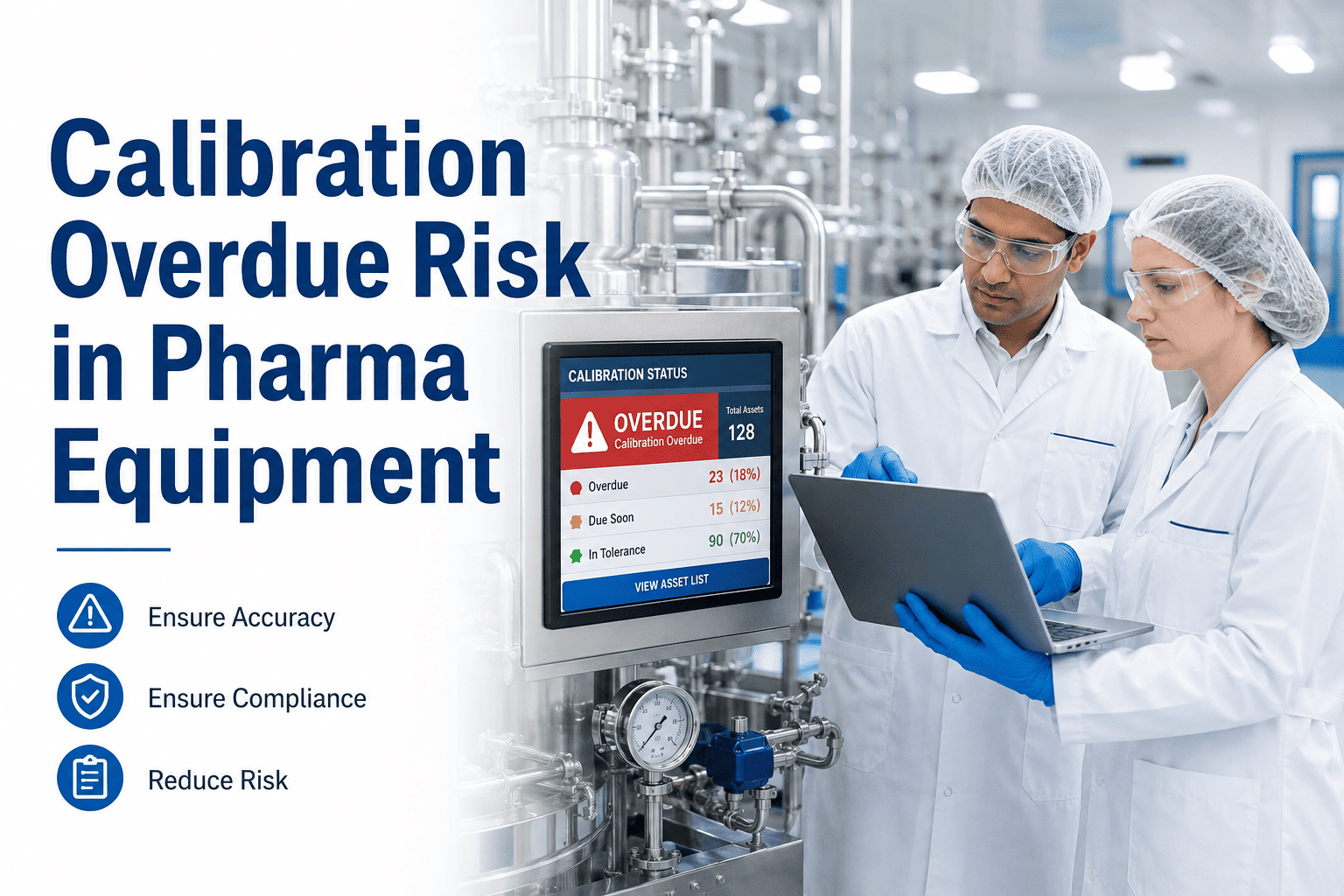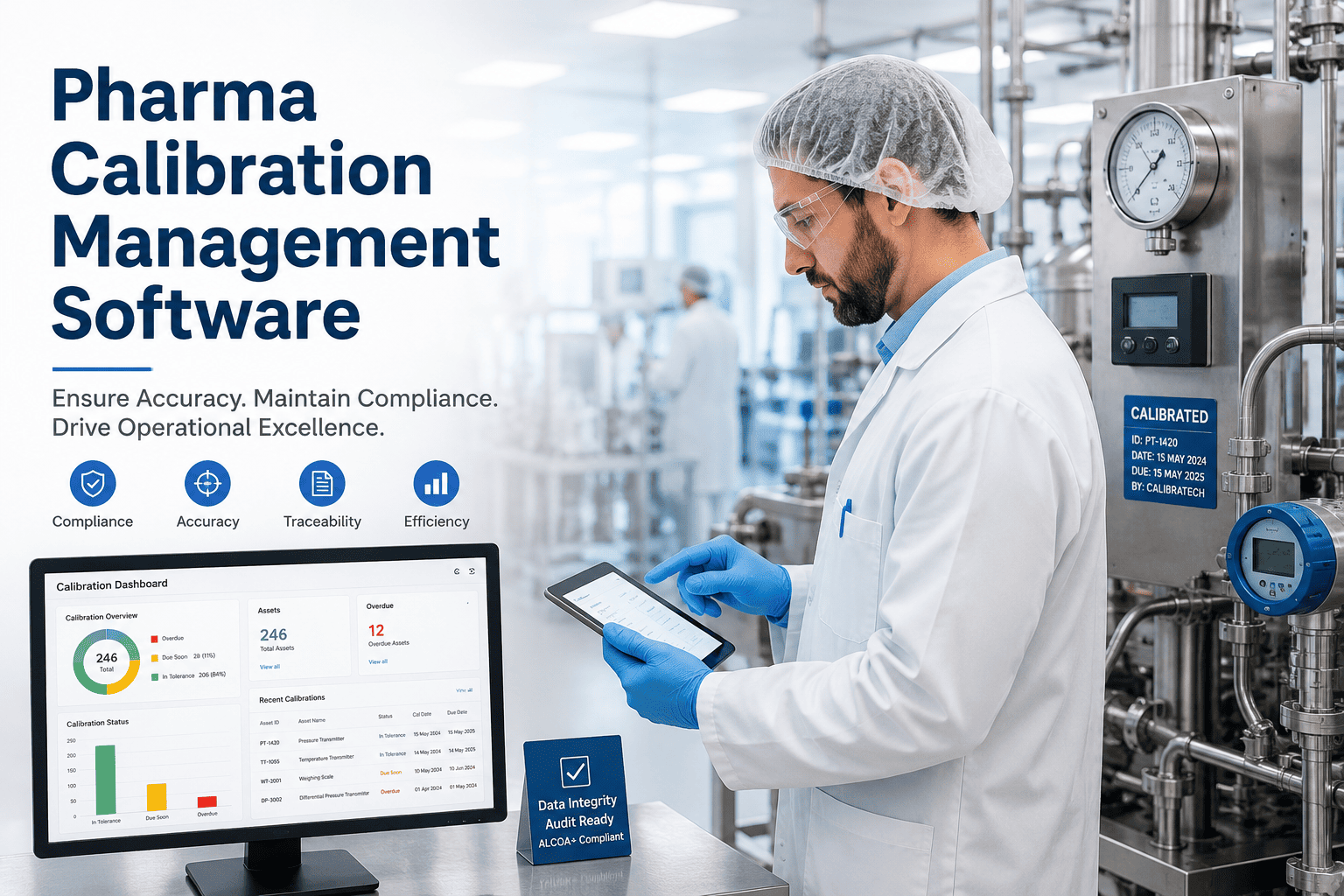
In pharmaceutical manufacturing, a single miscalibrated instrument can invalidate an entire batch, trigger an FDA investigation, and generate CAPA obligations that consume months of quality team resources. Yet calibration management in most pharma plants still relies on spreadsheets, paper binders, and calendar reminders — systems that were never designed for the volume, complexity, and regulatory scrutiny that pharmaceutical calibration actually demands. OxMaint's pharma calibration management software gives quality and maintenance teams the automated scheduling, complete records, and real-time status visibility needed to keep every GMP instrument in a verified, documented state of calibration compliance.
Pharma Calibration Management Software Built for GMP Compliance
Track every calibration due date, certificate, tolerance limit, and out-of-tolerance finding across your entire instrument and equipment fleet — automatically, with full audit trail documentation built in.
Why Pharma Calibration Management Is Uniquely Complex
A pharmaceutical plant operating at scale may have hundreds of instruments that require regular calibration — from simple thermometers and pressure gauges to HPLC systems, pH meters, dissolved oxygen probes, and environmental monitoring equipment. Managing this volume while maintaining GMP documentation standards creates challenges that general-purpose tools simply cannot address.
A mid-size pharma plant may have 200 to 800 instruments requiring calibration on cycles from weekly to annual. Tracking due dates, coordinating with production schedules, and managing certificate filing for this volume is beyond spreadsheet capacity.
When an instrument is found out of tolerance, GMP requires immediate equipment status change, investigation of potentially affected batches, CAPA initiation, and documented resolution. Each step must be traceable back to the original OOT finding.
Every calibration must reference the specific standard used — including its NIST traceability certificate, lot number, and expiration date. Failure to maintain this chain of traceability is a direct 483 observation trigger.
For pharmaceutical companies operating multiple plants, maintaining consistent calibration practices, interval schedules, and documentation standards across sites requires centralized visibility that no site-level tool can provide.
OxMaint Calibration Management: Feature-to-Requirement Mapping
| GMP Calibration Requirement | OxMaint Feature | Compliance Reference |
|---|---|---|
| Calibration due date tracking and alerts | Automated upcoming and overdue calibration alerts by instrument, class, or area | 21 CFR § 211.68(a) |
| Record of calibration standard used | Required standard reference field with NIST traceability document attachment | 21 CFR § 211.68 |
| As-found and as-left readings documented | Mandatory as-found and as-left value fields — calibration record cannot be saved incomplete | 21 CFR § 211.68 |
| Out-of-tolerance finding investigation | OOT flag triggers deviation workflow, batch impact assessment, and CAPA link | 21 CFR § 211.192 |
| Calibration certificate storage and retrieval | Certificate file attached to calibration record and retrievable by instrument ID, date, or calibration event | 21 CFR § 211.180 |
| Calibration interval management by instrument class | Configurable calibration intervals per instrument class with batch-count-based triggers available | 21 CFR § 211.68(a) |
| Equipment status during calibration | Instrument automatically flagged as "calibration in progress" — prevents use in production work orders | 21 CFR § 211.105 |
The Out-of-Tolerance Workflow: What GMP Demands, What OxMaint Does
Out-of-tolerance calibration findings are one of the highest-risk events in pharmaceutical manufacturing. They require an immediate, documented response — and the adequacy of that response is evaluated by FDA investigators using a very specific standard. The workflow below shows what a compliant OOT response looks like in OxMaint.
As-found value entered in OxMaint calibration record. System detects the value exceeds the acceptance tolerance and automatically flags the record as an OOT event. Instrument status changes to "Restricted — OOT Under Investigation."
OxMaint creates a linked deviation record with the instrument ID, the OOT magnitude, and the date range during which the instrument may have been out of specification. Quality team is notified immediately via configured alert channels.
The deviation record is linked to all batches that were measured using the affected instrument during the OOT window. Quality team can review and document the impact assessment — confirming no patient risk or initiating a market action if required.
Recalibration work order generated. As-left value confirmed within tolerance. CAPA initiated if the OOT finding indicates a systemic issue — interval reduction, environmental factor, or instrument degradation requiring replacement.
Calibration record, OOT deviation, batch impact assessment, and CAPA are all closed and linked in one instrument record. Inspection-ready documentation for the complete OOT event accessible in one click.
Manage Every Calibration Due Date, Certificate, and OOT Finding — in One System
OxMaint's calibration management module handles the full calibration lifecycle for pharma instrument fleets of any size — from due date scheduling through OOT investigation and CAPA. See a live demonstration on your instrument types and calibration volume in 30 minutes.
"Calibration compliance in pharmaceutical manufacturing is non-negotiable — and it is increasingly scrutinized. The question inspectors ask is not whether instruments are calibrated, but whether the evidence is complete, traceable, and immediately accessible. I have seen entire quality management systems called into question because a calibration record was missing the as-found reading or the traceability reference for the standard used. A calibration management system that enforces those fields at execution eliminates the finding before it exists. That is a different quality posture entirely."
— Metrology and Calibration Specialist, pharmaceutical manufacturing and contract laboratory, 17 years
Frequently Asked Questions
Your Calibration Program Is Only as Strong as Its Documentation. Strengthen It with OxMaint.
OxMaint gives pharma calibration teams automated scheduling, mandatory record fields, OOT deviation workflows, and instant certificate retrieval — all in one system designed for GMP compliance from the ground up. Stop managing calibrations in spreadsheets and start managing them in a system that produces audit-ready evidence automatically. Book a 30-minute demo today.