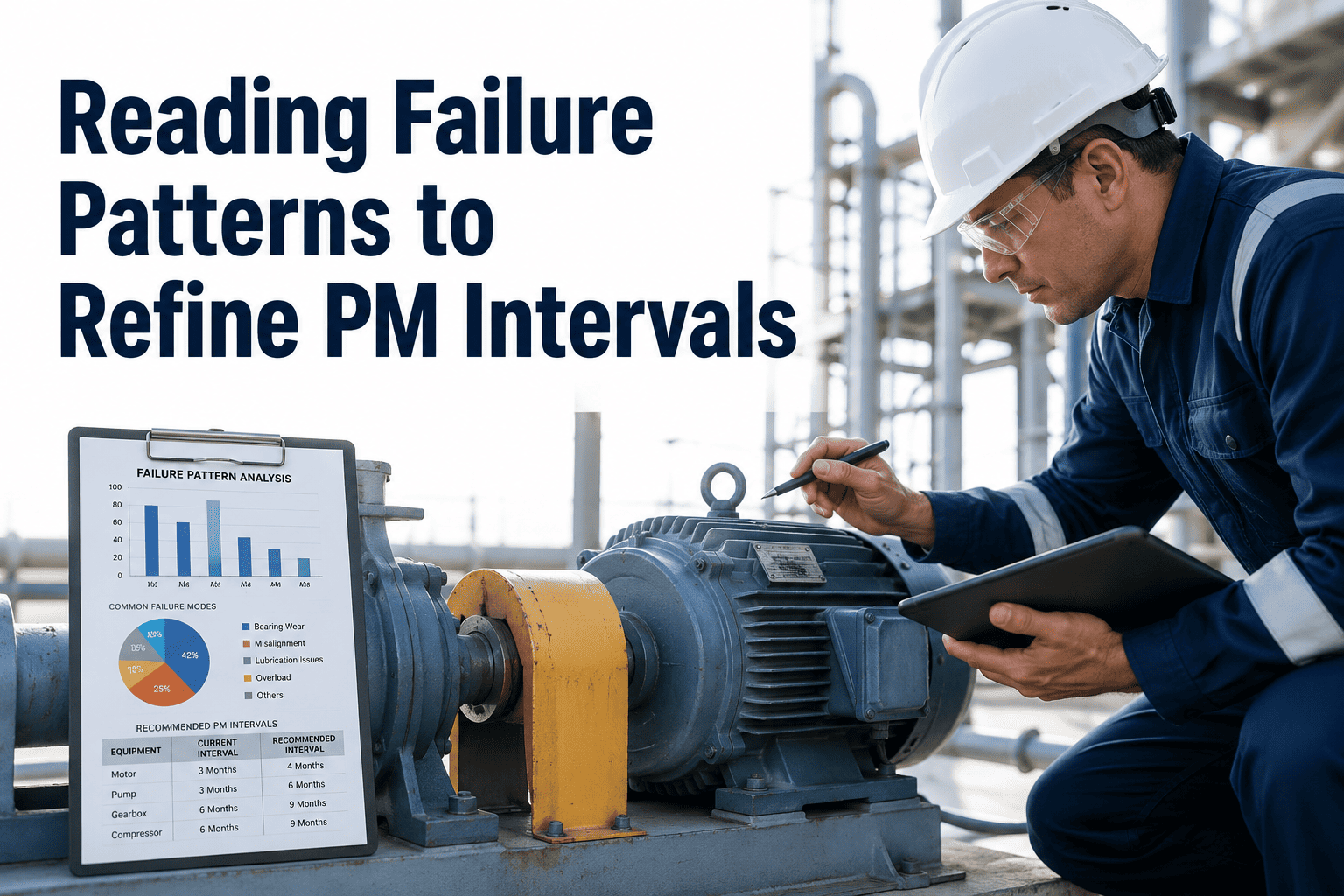
Somewhere in every food plant is a machine that fails the same way every few weeks. The filler that jams, the conveyor bearing that seizes, the seal that weeps — the crew knows the fix cold, swaps the part, and the line runs again until next time. It feels like maintenance working. It's actually the most expensive habit in the plant, because every repeat failure is a root cause that was never found. Studies across manufacturing consistently show that 40 to 70% of all corrective work orders address failures that have happened before on the same equipment — which means most maintenance effort goes into re-fixing problems that were never truly solved. Defect elimination is the reliability practice that breaks this cycle: instead of getting faster at the repair, you find the underlying defect and engineer it out for good, turning a recurring monthly incident into resolved history. This guide covers defect elimination for food plants: how to spot the recurring pattern, the root-cause discipline that finds the real defect, the engineered corrective action, and the verification step that makes it stick — all run as a CMMS-driven program. Book a free bad-actor review.
Every Repeat Failure Is a Root Cause That Was Never Found
Getting faster at the same repair isn't reliability. Engineering the defect out — so it never fails that way again — is.
40–70%
Of corrective work orders address failures seen before on that asset
80/20
A vital few bad actors drive most of the recurring downtime
6–12 mo
Verification window before a defect is marked truly eliminated
90 days
Repeat-failure window that proves the fix actually held
Chronic vs Sporadic · Know Which You're Fighting
Not every failure deserves the same response. Defect elimination targets the chronic ones — the bad actors that come back — and the first discipline is telling them apart from the random one-offs, because they demand completely different handling.
Chronic · Bad Actors
The same failure mode recurs on the same asset
Predictable, familiar — the crew "knows the fix"
Low drama, high cumulative cost over a year
The target of defect elimination and RCA
Sporadic · One-Offs
A rare, novel failure with no established pattern
Often high-drama but genuinely infrequent
Handled as a repair, monitored for recurrence
Only becomes a defect-elimination target if it repeats
The trap is treating every failure with equal urgency. Without a ranked list, limited engineering hours spread evenly across every complaint, and the vital few bad actors driving most of the downtime never get the concentrated attention that would actually fix them. A Pareto ranking of work-order history points straight at where to start.
The Defect Elimination Workflow
Defect elimination is a repeatable five-stage cycle, not a one-time investigation. Each stage moves the failure closer to permanent resolution — and the discipline is completing every stage, not stopping at the repair like traditional troubleshooting does.
1
Detect the Pattern
Surface recurring failures from work-order history, MTBF trends, and failure codes — rank the bad actors by frequency and cost so the vital few rise to the top of the list.
2
Define It Precisely
Document what failed, when, where, and under what conditions, and quantify the impact — safety, downtime, cost, quality. A vague problem statement produces a vague root cause.
3
Find the Real Root Cause
Run a cross-functional RCA with maintenance, operations, and engineering. The machine failed in one place, but the cause often lives somewhere else — a procedure, a spec, a material, an install error.
4
Engineer the Corrective Action
Deploy a fix matched to the actual cause — a design change, procedure fix, material upgrade, or maintenance-strategy shift. Not another part swap; a change that removes the failure mode.
5
Verify, Then Standardize
Track the asset's failure history for 6–12 months. Only once the failure hasn't returned is the defect closed and the fix standardized into procedures, specs, and training across every similar asset.
Rank Your Bad Actors in 30 Minutes
Working session with our reliability team — bring your work-order history. We'll build a Pareto ranking of your recurring failures, pick the highest-impact bad actor, and show how OxMaint runs it through RCA to verified elimination.
The Difference That Makes It Stick · Verification
This is the one step that separates real defect elimination from traditional root-cause analysis — and the one most programs skip. A corrective action is only a hypothesis until the asset proves it by not failing again.
A Fix Is a Hypothesis Until the Asset Confirms It
In traditional RCA, recommendations get issued and the investigation is closed — nobody tracks whether the failure actually stopped. That's how a repair that merely held for a few extra weeks gets mistaken for a genuine root-cause elimination. Defect elimination adds a verification period, typically six to twelve months, during which the asset's failure history is monitored against the specific mode that was fixed. Only after it stays clean is the defect marked closed and the corrective action standardized into procedures and training. Skipping this step is why plants with formal RCA programs still fail to reduce repeat failures — they issue recommendations they never confirm. Tracking repeat-failure rate within 90 days of closure and MTBF trend afterward is what turns a claimed fix into a proven one.
The Metrics That Prove Elimination
Defect elimination is measurable, and the numbers tell you whether the program is genuinely reducing the failure burden or just generating investigations. These four are the ones a food-plant reliability program should track.
Repeat-Failure Rate
Failures recurring within 90 days of an RCA closure — the sharpest signal of whether corrective actions are actually holding.
Corrective-Action Closure
The share of corrective actions actually completed. Open actions are just paperwork — closure is where reliability is won.
MTBF Trend
Mean time between failures for assets under active defect elimination — rising MTBF is proof the failure mode is being removed.
Downtime from Prior Modes
Total downtime hours from failure modes already investigated — trending it toward zero is the whole point of the program.
How OxMaint Runs Defect Elimination
OxMaint turns defect elimination from a whiteboard exercise into a running program — surfacing recurring patterns, holding RCA templates and failure history per asset, tracking corrective actions, and validating fixes with MTBF, from one dashboard on desktop or mobile.
Surface
Recurring-Pattern Detection
Aggregate work-order history, failure codes, and MTBF trends to surface recurring failure patterns and rank bad actors before they trigger the next incident.
Rank
Pareto Prioritization
Order the vital few by frequency and cost, so limited engineering hours land on the assets driving the most downtime — not spread thin across every complaint.
Investigate
Built-In RCA Templates
Structured RCA with failure history per asset in one place, so cross-functional teams reach the real root cause fast — and close within the 5–10 day target.
Track
Corrective-Action Management
Every engineered corrective action assigned, tracked, and closed — the execution layer where reliability gains are actually captured.
Verify
Post-Fix MTBF Validation
Track the asset's subsequent failure history over the verification window, so a fix is confirmed by data before the defect is marked closed.
Standardize
Cross-Site Corrective Templates
When one plant solves a failure mode, every similar asset gets the corrective-action template — and audit-ready CAPA records for FSMA and GFSI schemes.
Turn Recurring Failures Into Resolved History
Stop getting faster at the same repair. See how OxMaint surfaces your bad actors, drives them through RCA to an engineered fix, and verifies the failure is gone for good. Free forever plan available.
Frequently Asked Questions
What is defect elimination?
Defect elimination is a reliability practice that permanently removes the underlying causes of recurring equipment failures rather than repeatedly repairing the symptoms. Instead of getting faster at swapping the part that keeps failing, the team identifies the real defect — which may be a design flaw, a procedure gap, a material issue, or a maintenance-strategy error — engineers a corrective action that removes that failure mode, and verifies over months that the failure doesn't return. It targets chronic "bad actor" assets, because 40 to 70% of corrective work orders address failures that have happened before, meaning most maintenance effort goes into re-fixing unsolved problems.
Book a review.
What's the difference between defect elimination and RCA?
Root cause analysis is a stage within defect elimination, not the whole thing. Traditional RCA identifies a root cause and issues recommendations, then closes the investigation — but often nobody confirms the failure actually stopped. Defect elimination adds two things: an engineered corrective action deployed against the confirmed cause, and a verification period, typically six to twelve months, during which the asset's failure history is monitored before the defect is marked closed and the fix standardized. That verification step is the difference. It's why plants with formal RCA programs can still fail to reduce repeat failures — they issue recommendations they never confirm held.
How do you know which failures to target first?
Use a Pareto ranking of work-order history to find the vital few bad actors — the assets and failure modes responsible for the most downtime and cost. Not every failure deserves equal urgency: chronic, recurring failures are the defect-elimination targets, while rare one-offs are handled as repairs and only escalated if they start repeating. The ranking depends on clean data, especially failure codes on closed work orders — without them the ranking silently degrades and the wrong assets rise to the top. Even a small team gains more from fixing its worst three assets properly than spreading effort across twenty complaints.
Start free.
What metrics show a defect elimination program is working?
Four in particular. Repeat-failure rate within 90 days of an RCA closure shows whether corrective actions are holding. Corrective-action closure rate shows whether fixes are actually being executed rather than left open. MTBF trend for assets under active defect elimination shows failure modes being removed over time. And total downtime hours attributable to previously investigated failure modes — trending toward zero — shows the program reducing the real burden. In food plants, a monthly cross-functional review of these numbers, with reliability, maintenance, operations, and quality, consistently outperforms treating RCA as a one-off activity.
How does OxMaint support defect elimination?
OxMaint aggregates work-order history, failure codes, and MTBF trends to surface recurring failure patterns and rank bad actors by frequency and cost; provides built-in RCA templates with failure history per asset so cross-functional teams reach the real cause fast; tracks every engineered corrective action to closure; and validates fixes by monitoring the asset's subsequent failure history over the verification window before a defect is marked closed. When one plant solves a failure mode, the corrective-action template propagates to every similar asset, and the documented investigations generate audit-ready CAPA records for FSMA and GFSI schemes like SQF and BRC. With mobile execution and SAP and Maximo overlay, it makes defect elimination a continuous program. A free forever plan is available.