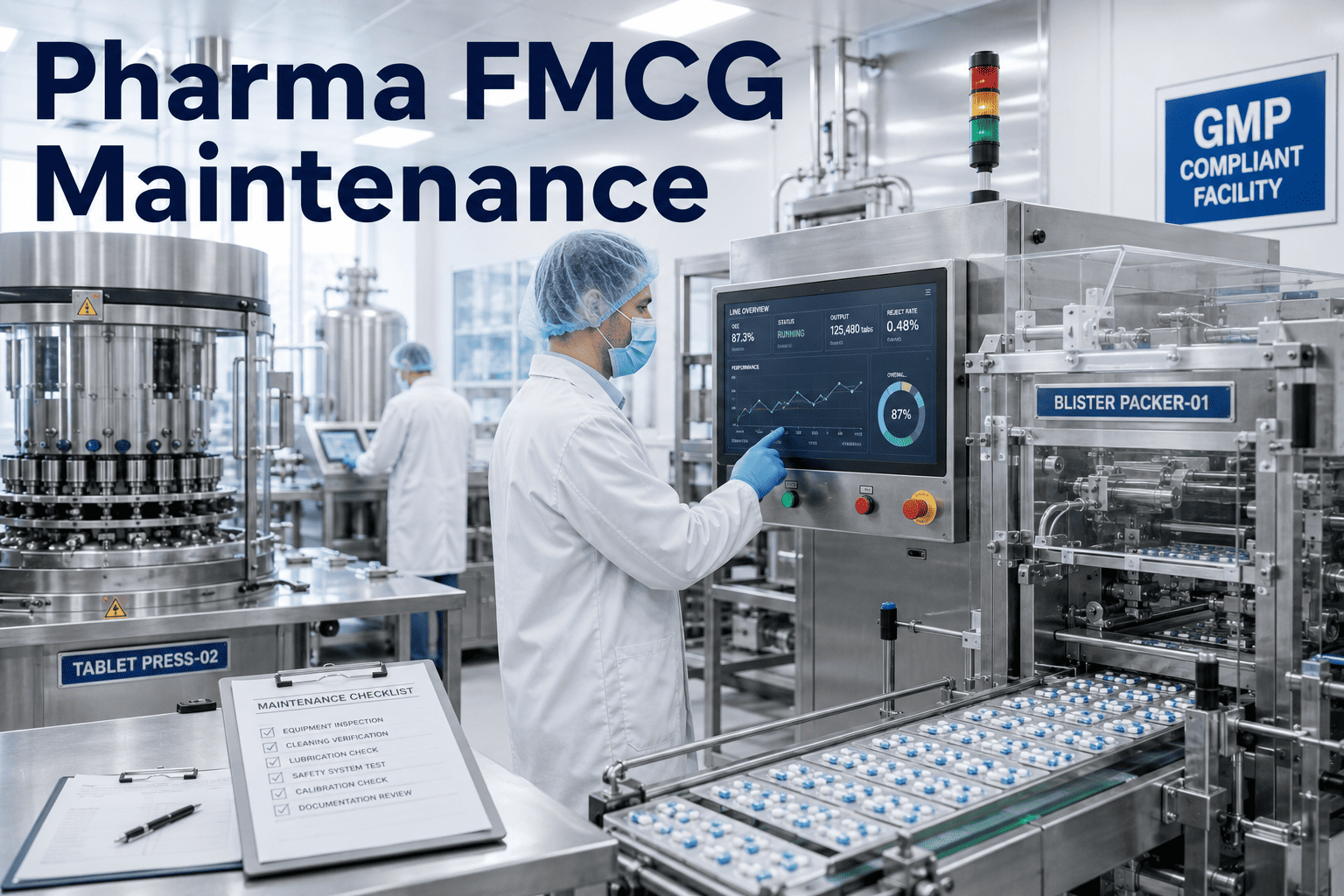
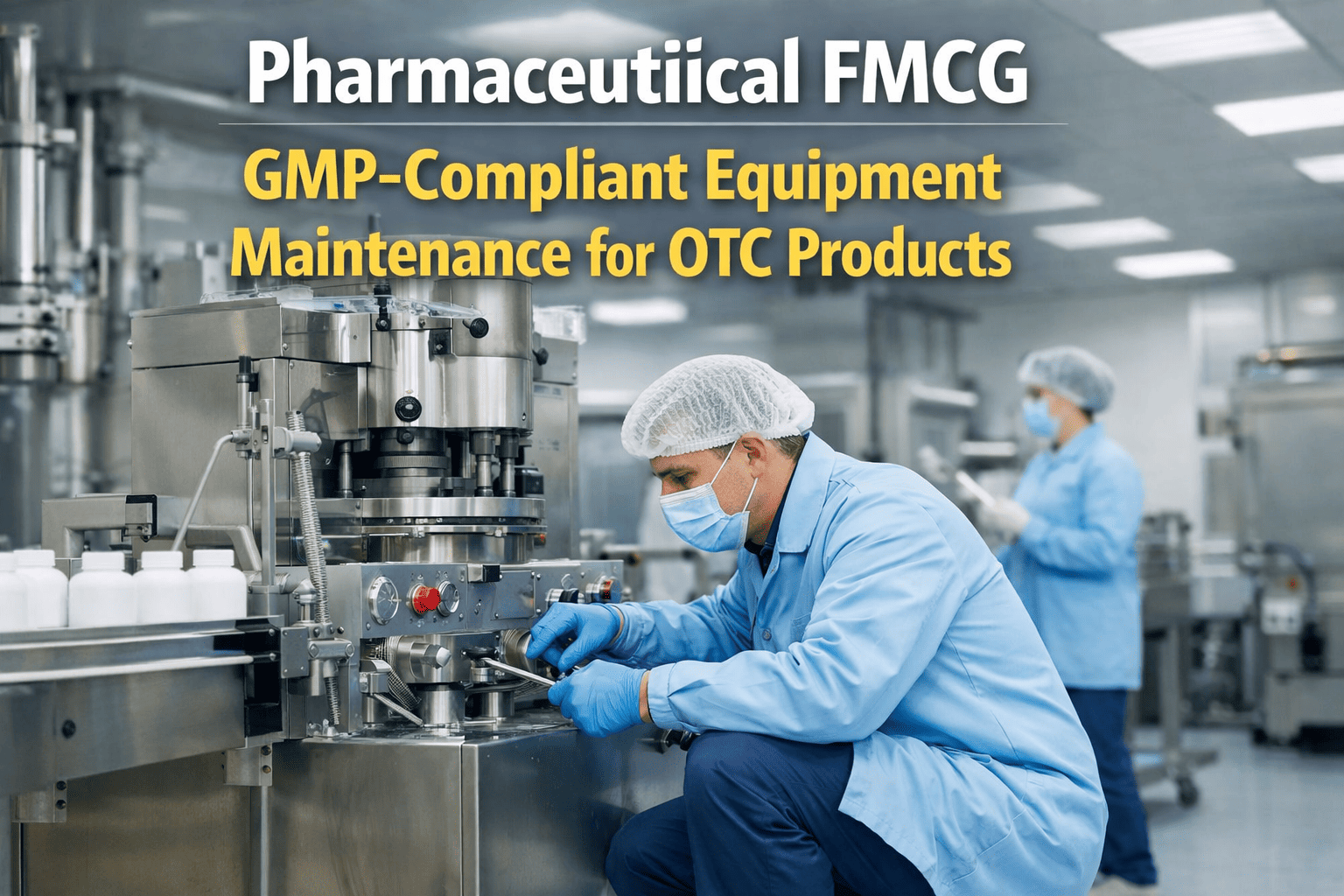
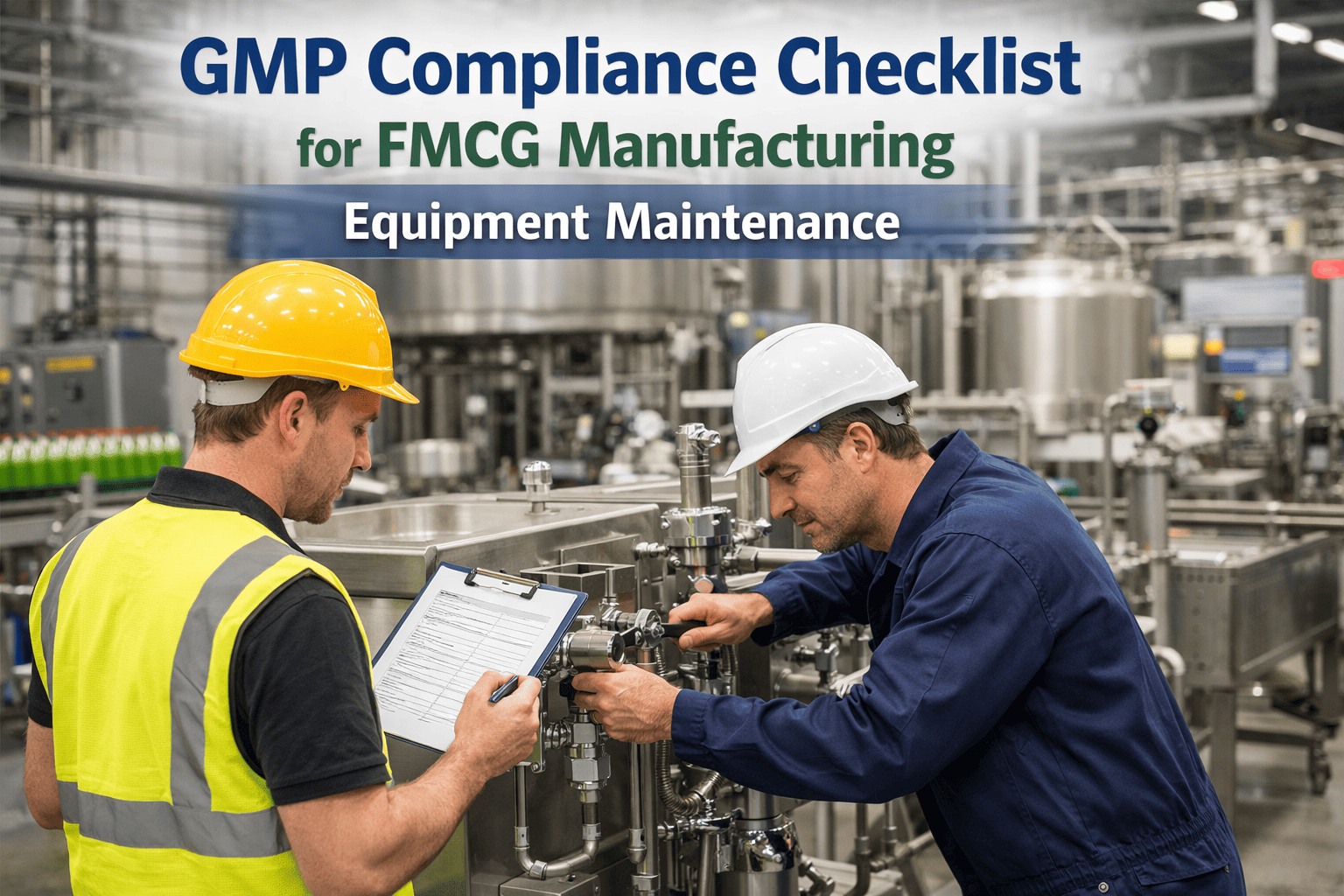
During an FDA cGMP inspection of an OTC pharmaceutical facility in New Jersey manufacturing ibuprofen tablets, the investigator found that the rotary tablet press had been operating with punch tooling 6% beyond its validated wear limit for 11 days — the CMMS PM schedule showed the monthly punch hardness and dimensional inspection was 19 days overdue, and 68 batches totaling 4.2 million tablets had been produced during the period, all requiring quarantine pending dissolution and friability testing to determine if hardness values fell outside USP specification. The facility also had three cleanroom HVAC HEPA filters with integrity tests overdue by 7 months, and the blister sealing machine heat seal temperature calibration had lapsed 14 weeks. The total FDA observation response cost $1.8 million in product quarantine, regulatory documentation, and a partial 6-week production shutdown. OxMaint tracks punch tooling wear cycles and sends escalating alerts when qualification-critical PM windows are approaching expiry — preventing FDA observations triggered by lapsed maintenance. Book a demo to see how OTC pharma equipment maintenance prevents $1.8M regulatory incidents.
Total FDA warning letter event cost at New Jersey OTC facility — product quarantine, regulatory response, 6-week partial shutdown
$187B
Global OTC pharmaceutical market size in 2025 — tablets hold 57% dosage share, making tablet press PM the highest-stakes maintenance category
21 CFR 211
FDA cGMP equipment maintenance regulation — mandates documented PM schedules, calibration records, and qualification status for all GMP-critical assets
Why OTC Pharmaceutical Equipment Maintenance Is Directly Regulated Under 21 CFR Part 211
OTC pharmaceutical manufacturing equipment maintenance is not an operational best practice — it is a direct regulatory obligation under 21 CFR Part 211.68, which requires that equipment be qualified, calibrated, and maintained within documented parameters at specified intervals, with written records available for FDA inspection. Unlike FMCG food or consumer goods manufacturing where maintenance failures cause downtime and waste, OTC pharma equipment failures outside validated parameters render entire production batches potentially out-of-specification and subject to mandatory quarantine, investigation, and potential recall. A rotary tablet press operating with punch wear beyond the validated limit produces tablets with unpredictable hardness affecting dissolution — each batch manufactured during the non-compliant period must be individually assessed before release. Cleanroom HVAC HEPA filter integrity test lapses invalidate the environmental monitoring data supporting batch release, because the cleanroom classification cannot be confirmed without current filtration integrity data. Blister sealing machine heat seal temperature calibration lapses mean that foil seal integrity for 14 weeks of production is unverified — a packaging failure creating patient exposure risk. OxMaint tracks qualification expiry dates and sends alerts before FDA-critical PM windows close, keeping every GMP-critical asset within its validated state throughout continuous OTC production.
21 CFR Part 211 Equipment Maintenance Requirements — Four GMP Obligation Categories
211.68 — Automated Equipment
Computer-controlled equipment used in pharmaceutical manufacturing must have documented calibration programs ensuring accuracy within validated specifications. Software validation records must show the system produces correct results over time.
OxMaint tracks: Calibration certificates per instrument, software version history, validation records with next-due dates
211.67 — Equipment Cleaning & Maintenance
Written SOPs for equipment cleaning, maintenance, and sanitization must be followed and documented. Records must be maintained showing when PM was performed, by whom, and what was found — not just that it was completed.
OxMaint tracks: PM work order records with technician ID, findings, parts replaced, corrective actions per asset
211.65 — Equipment Construction
Equipment that contacts pharmaceutical products must be constructed of materials that do not react with, adsorb, or absorb the product. Wear monitoring programs prove contact surfaces remain within validated material specifications.
OxMaint tracks: Contact surface wear measurements, material certification records, replacement schedules per wear threshold
211.63 — Equipment Design & Size
Equipment must operate within qualified design parameters. Preventive maintenance records must demonstrate equipment continues to perform at the validated capacity and speed for which it was qualified — deviation requires requalification.
OTC pharmaceutical manufacturing equipment PM programs must address the specific GMP qualification requirements for each equipment type — a tablet press, blister sealing machine, capsule filling line, and cleanroom HVAC system each carry distinct regulatory obligations under 21 CFR Part 211 that standard industrial maintenance templates omit. Punch tooling wear in rotary tablet presses must be measured against validated wear limits because hardness, weight uniformity, and friability specifications are qualified at specific tooling dimensions, and operation beyond those limits produces tablets outside the registered formulation. Heat seal station temperature calibration on blister packaging machines must occur weekly because seal integrity — the primary patient protection against contamination and moisture — degrades with temperature drift that accumulates over production cycles. Capsule filling machine dosator pin clearance must be verified monthly because clearance variation affects fill weight accuracy, and capsules outside ±5% fill weight specification require batch investigation. Cleanroom HVAC HEPA filter integrity testing must be completed within validated intervals because classification data supporting batch release is only valid while current filter integrity is confirmed. Start a free trial to deploy qualification-tracking pharmaceutical PM templates covering tablet presses, blister machines, capsule fillers, and cleanroom systems.
Rotary Tablet Press
Punch & die dimensional inspection monthly — hardness, thickness, weight uniformity impact at wear limit
Turret bearing vibration analysis quarterly — die misalignment from bearing wear causes weight variation
Compression force calibration per batch — validates USP hardness spec compliance
Punch removal and cleaning verification per campaign — prevents cross-contamination between API lots
Qualification Status Tracking
Punch wear limit alertCompression force certTooling material SDSOQ requalification trigger
Blister Sealing Machine
Heat seal temperature calibration weekly — foil seal integrity qualification per USP seal strength test
Forming station temperature uniformity monthly — bubble geometry affects seal integrity
Seal integrity vacuum test per batch — leak detection validates patient protection
PM due dates only — no qualification window monitoring
Qualification expiry dates per asset — alerts 30/14/7 days before window closes, prevents out-of-qualification production
Calibration certificate management
Calibration dates recorded — no certificate storage or expiry alerts
Certificate uploaded per calibration event, expiry alerts, traceable standard documentation, out-of-tolerance escalation
Batch-PM linkage
PM records separate from production batch records
Batch numbers link to equipment PM status at time of manufacture — quarantine investigation identifies affected lots immediately
FDA audit export
Manual report compilation — days to assemble during inspection
21 CFR Part 211 compliance report exportable per equipment per date range — minutes to produce during FDA walk-in inspection
Punch tooling wear tracking
Scheduled inspection only — no dimensional measurement trending
Dimensional measurements recorded per inspection, trending analysis, alert when approaching validated wear limit before overage occurs
Cleanroom PM integration
HVAC maintenance separate from environmental monitoring system
HEPA integrity test records link to environmental monitoring data — batch release evidence integrated in single CMMS audit trail
97,289
OTC drugs approved by FDA as of 2024 — each manufactured product requiring equipment qualification compliance documentation per 21 CFR 211
6.55%
Global OTC drug market CAGR through 2035 from $142B base — self-medication growth driving manufacturing capacity and compliance investment
48.1%
Tablets and capsules share of pharma packaging equipment market in 2025 — tablet press and blister PM the highest-volume GMP maintenance categories
Frequently Asked Questions
What does 21 CFR Part 211 require for OTC tablet press equipment maintenance?
21 CFR Part 211.67 requires written procedures for equipment maintenance to be established and followed, with records maintained showing when cleaning and maintenance was performed and by whom. For rotary tablet presses, this includes documented punch and die dimensional inspections at validated intervals with measurement data (not just "inspected" checkboxes), compression force calibration records with traceable standards, turret bearing condition data, and tooling replacement records. 211.68 requires that automated press control systems maintain calibration documentation proving force measurement accuracy. When punch tooling exceeds validated wear limits, all batches produced during the non-compliant period must be assessed, and the equipment requires requalification before resuming production — a process OxMaint tracks automatically with 30-day advance qualification expiry alerts.
Why does blister sealing machine calibration require weekly intervals in OTC pharma?
Blister foil seal integrity is a primary patient safety control in OTC pharmaceutical packaging — a defective seal allows moisture ingress that degrades drug stability, or contamination entry creating patient exposure risk. Seal integrity is qualified at specific heat seal station temperature ranges, and temperature drift accumulates from thermal cycling and element wear in 5–10 day operational periods. Weekly calibration catches drift before it exceeds the qualified range and produces defective seals across multiple batches. OxMaint records heat seal temperature calibration certificates weekly with traceable calibrator standards, linking each certificate to the batch production records during the corresponding period — enabling immediate scope determination when seal integrity concerns arise, rather than quarantining weeks of production pending investigation.
How does OxMaint help OTC manufacturers respond to FDA warning letters regarding equipment maintenance?
FDA warning letter responses for equipment maintenance observations require 21-day corrective action submissions including root cause analysis identifying which specific PM deferrals led to the observation, scope assessment determining which batches were manufactured during the non-compliant equipment period, enhanced PM schedules with qualification expiry tracking preventing recurrence, and retrospective calibration history reports proving current status. OxMaint generates FDA-ready equipment history reports showing every PM event, calibration certificate, qualification status change, and deviation for any asset over any date range — enabling facilities to complete scope assessments in hours rather than days, submit credible root cause analyses, and demonstrate prospective prevention through automated qualification window alerting.
What HEPA filter maintenance intervals are required for OTC manufacturing cleanrooms?
OTC pharmaceutical manufacturing cleanrooms classified ISO 7 or ISO 8 under EU GMP Annex 1 and FDA cGMP guidance require HEPA filter integrity testing (DOP or PAO smoke challenge) at validated intervals, typically semiannually for ISO 8 spaces and annually for ISO 7 spaces manufacturing non-sterile OTC solids — with more frequent testing required after any HVAC system disturbance, filter replacement, or room reconfiguration event. Air change rate verification and differential pressure monitoring must demonstrate ongoing classification maintenance between full integrity tests. OxMaint tracks HEPA integrity certificate expiry dates, generates alerts 45 days before testing is due, links certification results to environmental monitoring records supporting batch release, and triggers immediate PM escalation when differential pressure sensors indicate possible filter bypass or pressurization failure.
OTC Pharma GMP PM — OxMaint
Prevent $1.8M FDA Observations — GMP Equipment Maintenance with 21 CFR Part 211 Qualification Tracking.