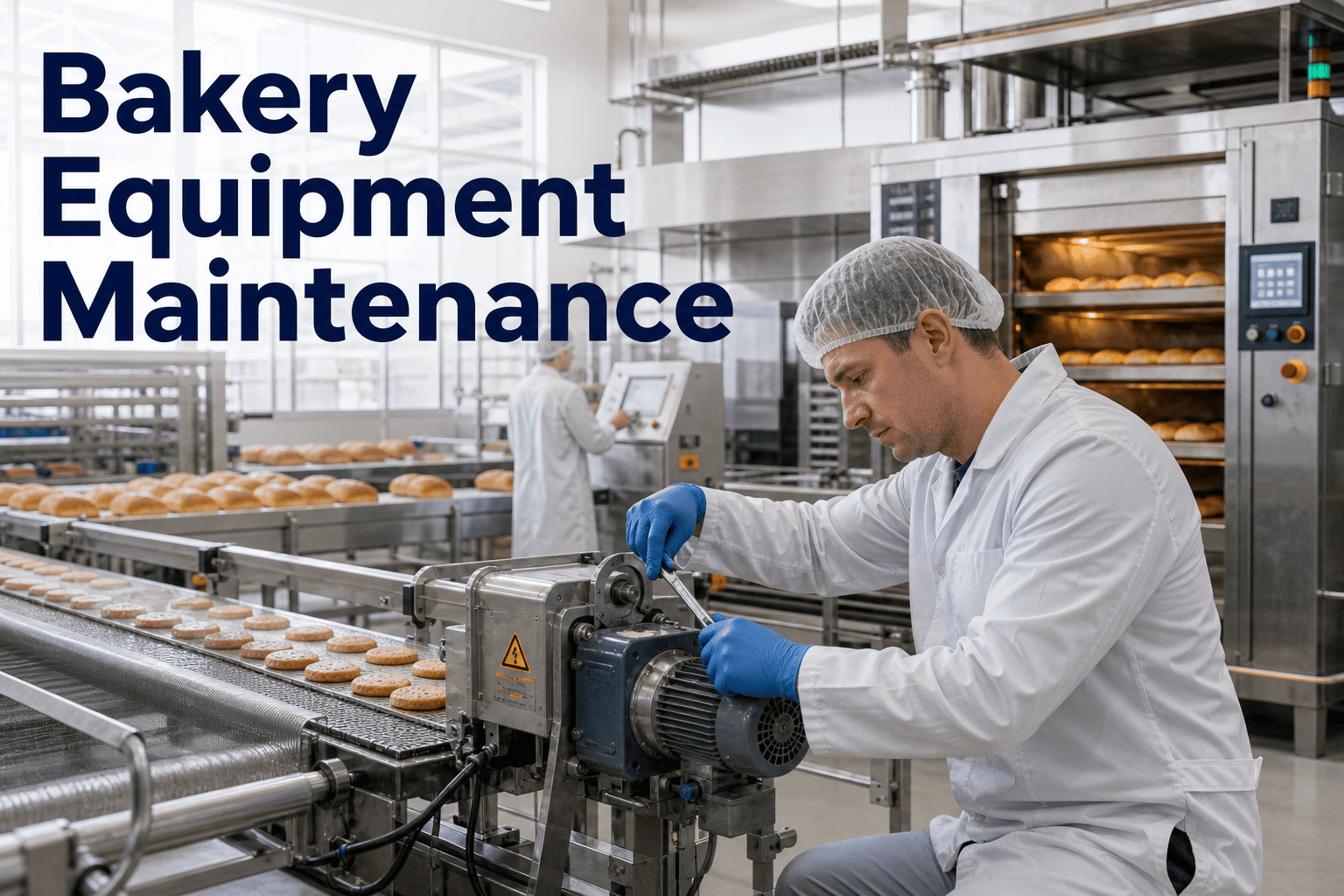
A maintenance technician at a confectionery plant in Pennsylvania walked into the coating room at 5 AM for a routine tunnel oven inspection and found the conveyor belt tracking 2 inches off-center — the belt had been drifting gradually over the past 72 hours but no one noticed because the drift was slow enough that product quality stayed within spec and no alarms triggered. By the time the technician saw it, the belt edge was rubbing against the tunnel wall and had worn through the first layer of fabric. Another 8–12 hours of operation would have caused complete belt failure mid-shift, forcing a 6-hour emergency shutdown to replace the belt, recalibrate tracking, and re-validate oven temperature uniformity across all zones. The plant lost 4 production hours to emergency belt replacement and $11,200 in dumped product from the temperature re-validation batches. OxMaint tracks conveyor belt inspection intervals and generates PM work orders before tracking drift, tension loss, or fabric wear cause mid-shift failures. Book a demo to see bakery and confectionery equipment PM scheduling that prevents emergency oven, mixer, and packaging line shutdowns.
Pennsylvania confectionery plant loss from oven conveyor belt failure — 4-hour shutdown plus temperature re-validation batch dumps
32%
Market share held by ovens and proofers in global bakery processing equipment — backbone of every production line requiring precision PM
$27.1B
Projected global bakery processing equipment market size by 2033 — predictive maintenance adoption accelerating to reduce downtime costs
What Makes Bakery and Confectionery Equipment Maintenance Different?
Bakery and confectionery equipment operates under thermal stress, moisture exposure, sugar and fat contamination, and allergen cross-contact risk that generic PM templates do not address. A tunnel oven running 20 hours per day at 220–280°C accumulates burner fouling, conveyor belt tension loss, and insulation degradation at rates that directly affect biscuit color uniformity and moisture content — failures that show up as customer complaints before they trigger equipment alarms. Coating drums handling chocolate or sugar glazes require bearing seal inspection intervals 3× more frequent than standard conveyor bearings because sugar crystallization accelerates seal degradation. Packaging lines serving fragile biscuits need jaw seal clearance calibration and crumb purge protocols that snack chip lines do not. OxMaint provides equipment-specific PM templates for bakery ovens, mixers, proofers, cooling tunnels, and confectionery coating systems — with food safety inspection fields, allergen clearance sign-offs, and CIP validation steps built into every work order.
Tunnel Oven Maintenance
Conveyor belt tracking & tension check every 500 operating hours
Steam injection nozzle flow test and descaling quarterly
Temperature uniformity validation across all shelves every 90 days
Door gasket integrity and air infiltration test every 6 months
Cooling Tunnel & Conveyor PM
Fan motor vibration analysis and bearing temperature check monthly
Air filter cleaning or replacement every 200 operating hours
Conveyor chain lubrication with NSF H1 food-grade lubricant weekly
Temperature setpoint accuracy verification quarterly
Confectionery Coating Drum
Bearing seal inspection every 400 hours — sugar accelerates seal failure
Drive belt tension and alignment check weekly for drum rotation consistency
Chocolate spray nozzle pattern test and cleaning after every product changeover
Drum surface condition and coating buildup removal monthly
Flow Wrapper & Packaging Line
Jaw seal clearance calibration and crumb purge daily for biscuit lines
Film tension roller bearing inspection and replacement every 1,000 hours
Reject mechanism accuracy test weekly — must eject within 2 units of detection
Servo motor encoder alignment check and recalibration every 500 hours
Critical Failure Modes — Equipment-Specific Risks in Bakery and Confectionery
Emergency maintenance in bakery and confectionery plants costs 4.8× more than scheduled PM — and the hidden cost is dumped product, missed delivery windows, and customer complaints from quality drift that occurs before equipment fully fails. Tunnel oven conveyor belt tracking drift causes uneven baking and product discoloration 8–12 hours before the belt fails completely, mixer gearbox oil degradation generates metal particulate contamination risk 2–4 weeks before bearing seizure, proofer humidity sensor drift produces inconsistent fermentation that shows up as customer complaints about texture and rise, and packaging jaw seal wear generates 2–5% product waste from incomplete seals before operators notice the problem. Start a free trial to schedule equipment-specific PM tasks before degradation causes quality issues or mid-shift failures.
Emergency repair cost multiplier vs scheduled PM in bakery plants — production loss and dumped product compound repair invoice costs
90–95%
Target uptime for bakery production lines with structured preventive maintenance — vs 68–75% for reactive-only operations
53,500
Projected unfilled positions in US baking industry by 2030 including production, maintenance, and engineering — making predictive maintenance critical
2–8 wk
Advance warning period when equipment failures show detectable degradation signals — structured PM captures these before breakdowns
Frequently Asked Questions
How often should tunnel oven conveyor belts be inspected in bakery production?
Tunnel oven conveyor belt tracking and tension should be checked every 500 operating hours because thermal cycling at 220–280°C causes gradual belt elongation and tracking drift that produces uneven baking 8–12 hours before complete belt failure. Generic 6-month PM intervals miss high-utilization drift — a tunnel oven running 20 hours per day reaches 500 hours in 25 days, requiring monthly inspection vs biannual checking that allows tracking problems to degrade product quality before PM catches them.
Why do confectionery coating drum bearings need more frequent PM than standard conveyor bearings?
Coating drum bearing seals require inspection every 400 hours — 3× more frequent than standard 1,200-hour bearing intervals — because sugar and chocolate residue crystallize around seal faces and accelerate degradation. When seals fail, sugar contamination reaches bearing races causing seizure within 8–12 hours instead of the gradual wear pattern seen in dry environments. Standard bearing PM intervals allow sugar damage to progress undetected until emergency failure forces 6–8 hour drum rebuilds.
What food safety fields should be included in bakery equipment PM work orders?
BRC and FSSAI-compliant PM work orders require NSF H1 food-grade lubricant verification with registration numbers, allergen changeover clearance sign-off with swab test results, foreign body risk assessment for any maintenance introducing materials into product zones, safety interlock functional test results (not just test schedules), and CIP system validation records. Verbal confirmation is not acceptable — auditors require documented evidence in CMMS showing these fields were completed per work order, not maintained separately from maintenance records.
How does OxMaint handle different PM requirements for biscuit vs snack vs confectionery packaging?
OxMaint provides product-type-specific packaging templates because failure modes differ — biscuit lines require daily jaw seal crumb purge and fragile product handling calibration (guide rail clearance per SKU weight), snack lines need film static management and high-speed electrostatic seal monitoring, confectionery lines require temperature-sensitive product controls and twist-wrap mechanical timing validation. Generic packaging PM templates miss product-specific wear patterns — a jaw seal serving biscuits accumulates crumb contamination causing incomplete seals within 1 shift, while the same seal on non-crumb products runs 3–5 days before equivalent wear.
Bakery & Confectionery PM — OxMaint
Stop Dumping Product Because Equipment PM Was 3 Months Overdue.