Beverage Production Maintenance (Reduce Downtime 25%)
By Jack Edwards on May 6, 2026
A maintenance supervisor at a craft brewery in Portland walked into the brewhouse at 4:30 AM on a Thursday and found the heat exchanger that cools wort after boiling had developed a pinhole leak overnight — 180-degree wort was dripping onto the floor, the chiller had auto-shut down on high-temperature alarm, and the morning brew scheduled for 6 AM was going to miss its fermentation window unless the heat exchanger was back online in 90 minutes. The supervisor called the equipment vendor. The vendor said a replacement plate pack would arrive in 3–5 business days. The supervisor did not have a heat exchanger plate pack in spare parts inventory because the preventive maintenance schedule — which was supposed to flag gasket degradation before it caused leaks — was three months overdue. The brewery lost $8,400 in dumped wort, missed a customer delivery deadline, and paid $2,100 for emergency same-day courier delivery of the replacement part. OxMaint tracks heat exchanger PM schedules and alerts you when gasket inspections are due — before pinhole leaks shut down your brew day. Book a demo to see how beverage production PM scheduling prevents emergency shutdowns.
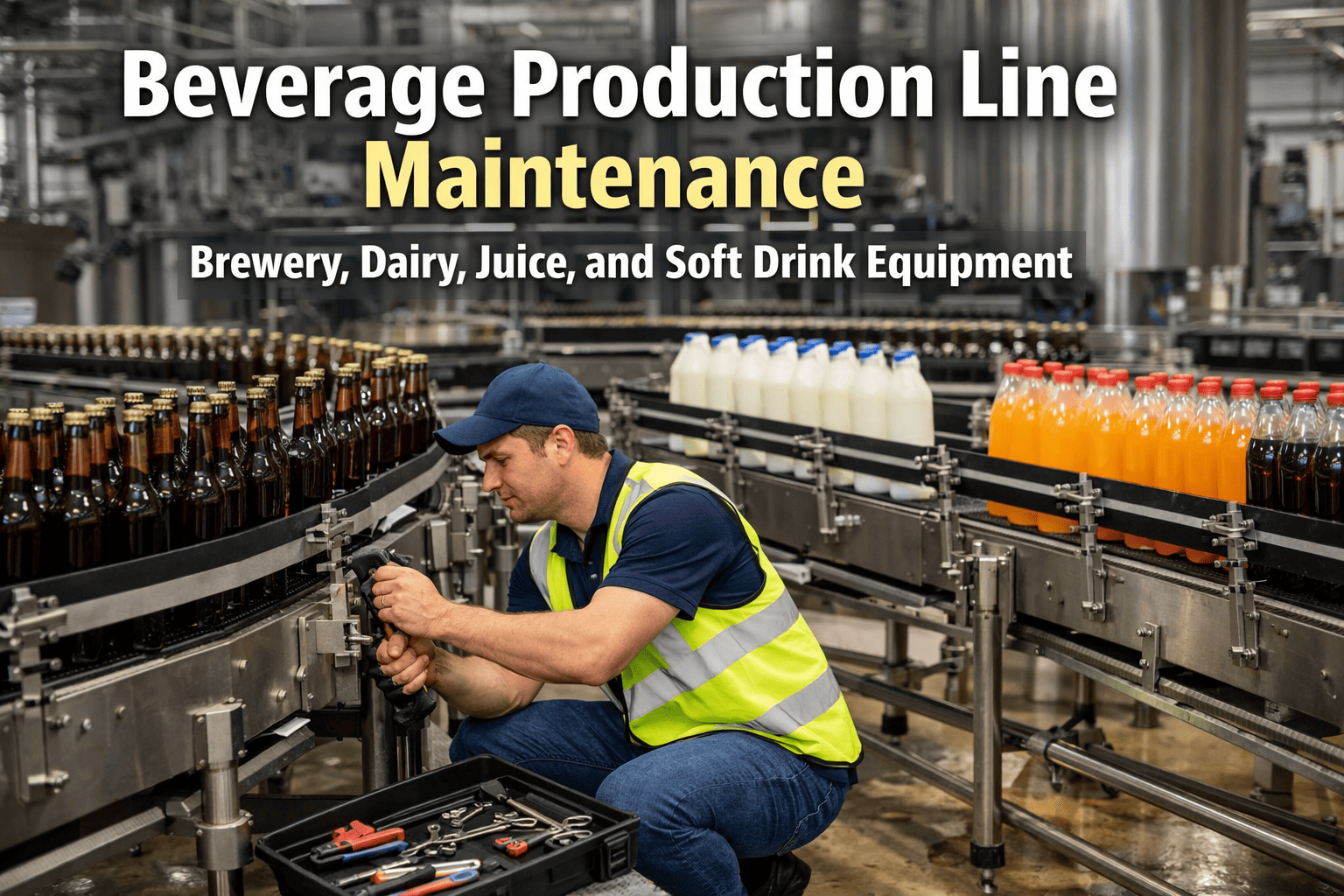
Beverage Line PM Scheduling — Brewery & Dairy Equipment Maintenance
CIP systems · Pasteurizers · Heat exchangers · Fillers · Fermentation tanks — prevent downtime with structured PM
Portland brewery loss from dumped wort when heat exchanger failed during overnight shift — preventable with on-schedule PM
3–7×
Weekly CIP frequency at beverage plants — clean-in-place system maintenance prevents contamination and extends equipment life
$42.8B
Global beverage processing equipment market size projected for 2030 — automation and predictive maintenance driving industry growth
What Is Beverage Production Line Maintenance and Why Does It Matter?
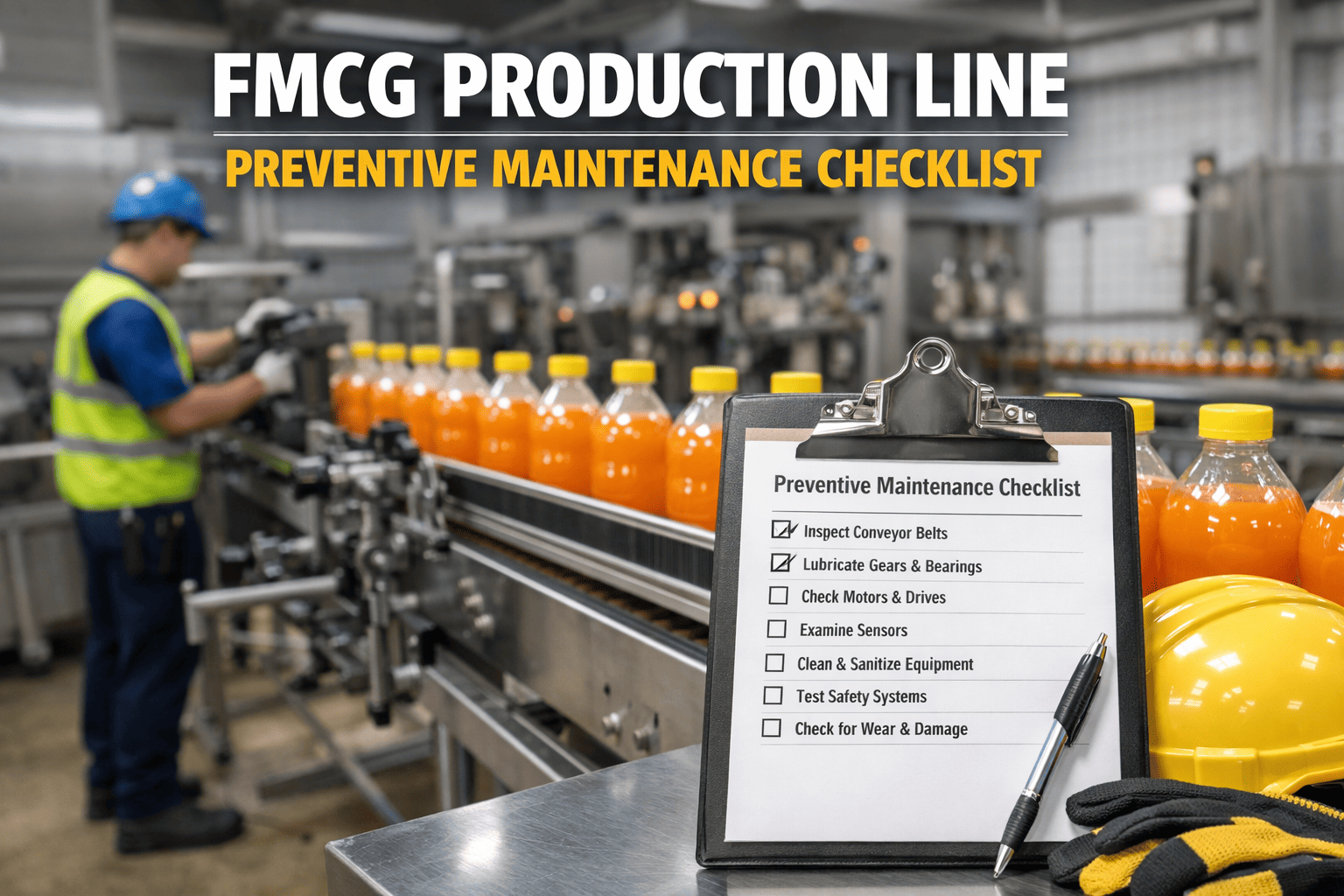
Beverage production line maintenance covers all scheduled preventive maintenance tasks, cleaning protocols, calibration procedures, and emergency repair workflows required to keep brewery equipment, dairy processing lines, juice fillers, and soft drink bottling systems running at target uptime and product quality standards. The difference between a beverage plant that achieves 92% OEE and one stuck at 68% is not the age of the equipment — it is whether PM tasks like CIP validation, pasteurizer temperature calibration, filler nozzle inspection, and heat exchanger gasket replacement happen on schedule or get deferred until failure forces an emergency shutdown. OxMaint schedules beverage equipment PM by asset type and usage hours — ensuring heat exchanger inspections, CIP cycle validation, and filler maintenance happen before failures disrupt production.
01
Heat Exchanger Maintenance
Plate pack gasket inspection every 2,000 operating hours — detecting degradation before pinhole leaks develop prevents emergency shutdowns and wort loss.
02
CIP System Validation
Clean-in-place effectiveness testing 3–7× per week ensures microbial safety without disassembling tanks or piping — reducing water and chemical consumption.
03
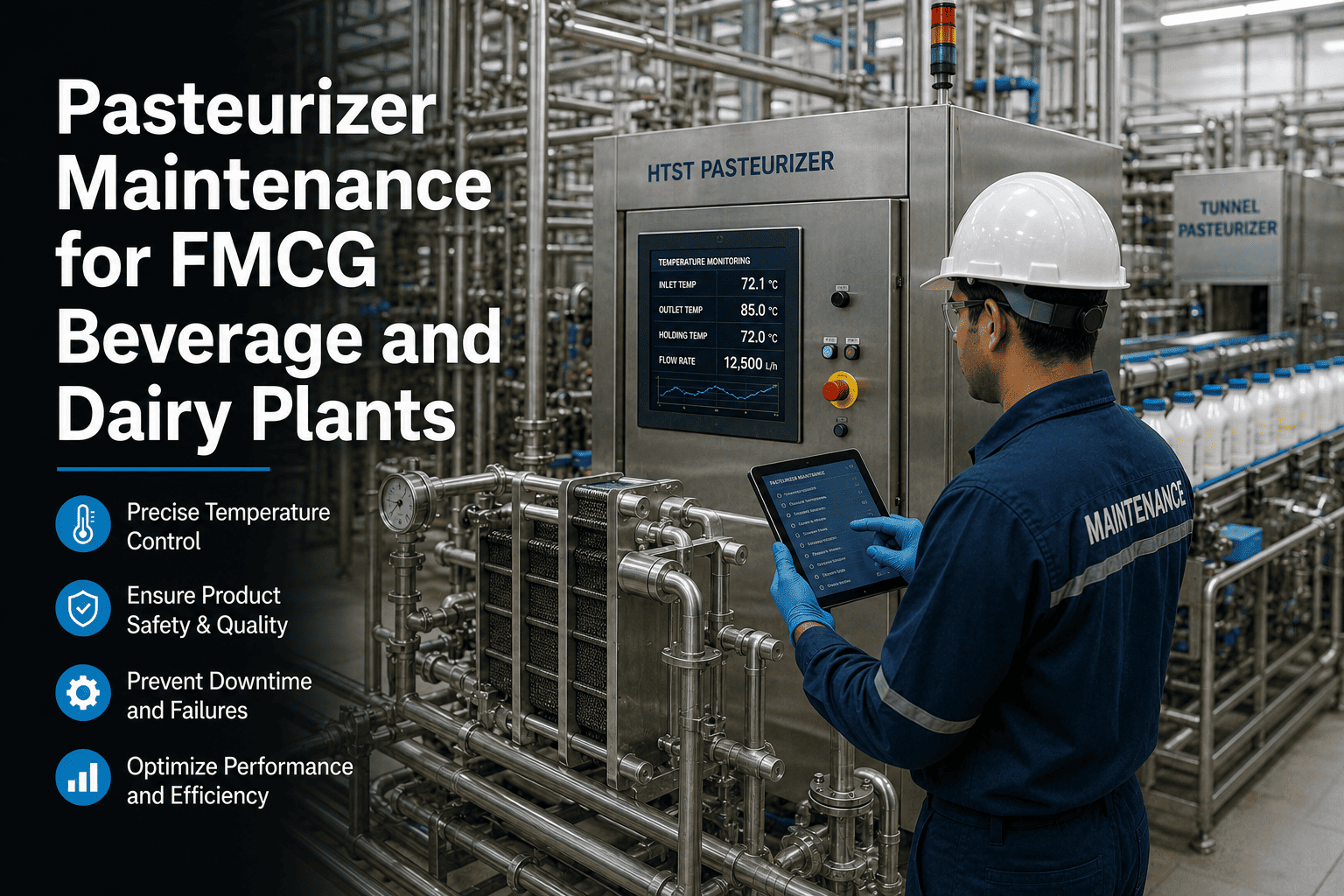
Pasteurizer Calibration
Temperature sensor verification monthly and tunnel pasteurizer conveyor speed calibration quarterly — guaranteeing microbial kill targets without thermal damage.
04
Filler Nozzle Inspection
Volumetric fill accuracy check weekly and nozzle seal replacement every 500K fills — preventing underfill rejects and product contamination at bottling.
05
Fermentation Tank Integrity
Pressure vessel inspection annually and cooling jacket leak test quarterly — protecting batch quality and meeting ASME code compliance for breweries.
06
Centrifuge & Separator PM
Bowl inspection every 1,000 hours and vibration analysis monthly — dairy and brewery separators require precision maintenance to prevent product loss.
Critical Beverage Equipment PM — Failure Modes That Cause Production Loss
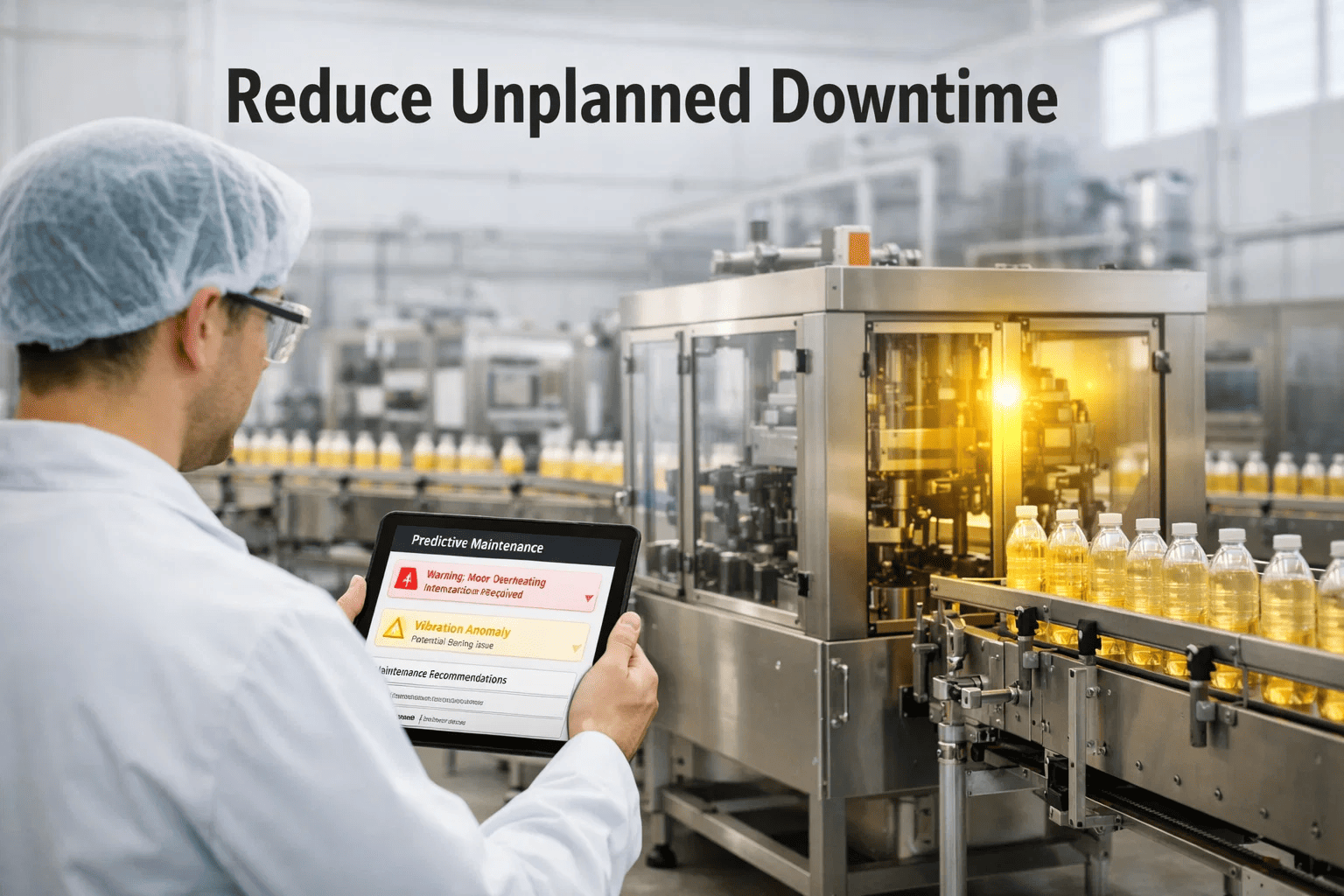
Emergency maintenance in beverage production costs 4.8× more than scheduled PM — and the real cost is not the repair invoice, it is the production downtime, dumped product, and missed delivery windows. Heat exchanger pinhole leaks waste batches at $6K–$12K per incident, CIP system failures trigger microbial contamination that can shut down an entire line for 48–72 hours of deep cleaning and retesting, pasteurizer temperature drift causes underkill (product recall risk) or overkill (flavor degradation and customer complaints), and filler valve leaks generate 2–5% product loss on high-speed lines running 400–600 bottles per minute. Start a free trial to set PM intervals by asset type, usage hours, and manufacturer recommendations — replacing reactive failures with predictable maintenance schedules.
Heat Exchanger Gasket Failure — Wort & Product Loss
Plate heat exchanger gaskets degrade from thermal cycling and chemical exposure — failing without warning at 2,200–2,800 operating hours when PM inspection intervals are missed. Breweries lose $6K–$12K per leak incident from dumped batches, emergency part procurement, and production delays.
CIP System Ineffectiveness — Microbial Contamination Risk
Clean-in-place systems fail when spray ball nozzles clog, chemical dosing pumps drift out of calibration, or return lines develop biofilm — causing contamination that requires 48–72 hour line shutdowns for deep cleaning, ATP testing, and regulatory notification.
Pasteurizer Temperature Drift — Recall Risk or Flavor Loss
Tunnel pasteurizer temperature sensors drift ±3–5°F over 6–12 months when calibration is deferred — causing microbial underkill (product recall exposure) or thermal overkill (cooked flavor complaints and customer returns).
Filler Nozzle Wear — Underfill Rejects and Waste
Volumetric filler nozzle seals wear after 400K–600K fill cycles — generating 2–5% product loss from drips, underfills, and bottle rejects on lines running 400–600 bottles per minute. Waste compounds to $18K–$35K monthly on high-speed dairy or juice lines.
How OxMaint Schedules Beverage Equipment PM by Asset Type and Usage
Beverage equipment PM cannot follow a universal calendar schedule — a heat exchanger operating 16 hours per day needs gasket inspection every 125 days, while the same model running 8 hours per day can extend to 250 days. A CIP system serving a single fermentation tank needs validation monthly, but a shared CIP skid cleaning 12 tanks needs weekly validation because failure exposure is 12× higher. OxMaint tracks PM intervals by operating hours, CIP cycles completed, fill volume processed, or calendar days — whichever threshold is reached first — and book a demo to see how usage-based scheduling prevents premature maintenance and catches failures before they cause downtime.
Spray ball flow test & chemical concentration check
Every 50 CIP cycles or weekly
Cycle count or calendar
Tunnel Pasteurizer
Temperature sensor calibration & conveyor speed verification
Every 720 operating hours or monthly
Operating hours tracked
Volumetric Filler (Bottle)
Nozzle seal replacement & fill accuracy calibration
Every 500K fills or quarterly
Fill count or calendar
Fermentation Tank (Brewery)
Cooling jacket leak test & pressure relief valve certification
Every 2,000 BBL processed or quarterly
Batch volume or calendar
Centrifuge (Dairy Separator)
Bowl inspection & vibration analysis
Every 1,000 operating hours or 60 days
Operating hours or calendar
OxMaint tracks multiple trigger conditions per asset — PM generates when any threshold is reached, preventing calendar-only schedules from missing high-utilization failures
Maintenance Approach
Calendar-Only PM Schedule
OxMaint Usage-Based PM
Heat exchanger gasket inspection
Every 6 months regardless of usage
Every 2,000 operating hours or 6 months — whichever first
Result for 16hr/day operation
Gasket fails at 125 days — PM still 55 days away
PM triggers at 125 days based on 2,000hr threshold
CIP system spray ball inspection
Monthly regardless of CIP frequency
Every 50 CIP cycles or weekly — whichever first
Result for high-volume tank farm
Spray ball clogs after 80 cycles in 3 weeks — PM not due for 9 more days
PM triggers after 50 cycles (15 days) — prevents contamination
Filler nozzle seal replacement
Quarterly calendar regardless of throughput
Every 500K fills or quarterly — whichever first
Result for high-speed line (600 BPM)
Seal fails after 42 days (450K fills) — PM still 48 days away
Fixed intervals — cannot adapt to seasonality or volume changes
Automatically adjusts to actual usage — high volume triggers PM faster
92%
Target OEE for beverage lines with structured usage-based PM — vs 68% for calendar-only reactive maintenance
4.8×
Cost multiplier for emergency beverage equipment repairs vs scheduled PM — heat exchanger failures average $8,400 per incident
48–72hr
Line shutdown duration for CIP system contamination — requiring deep cleaning, ATP testing, and regulatory notification
2–5%
Product loss from worn filler nozzles on high-speed beverage lines — compounds to $18K–$35K monthly waste on dairy and juice operations
Frequently Asked Questions
How often should CIP systems be validated in beverage production facilities?
CIP system validation frequency depends on equipment criticality and usage intensity. Single-asset CIP systems serving one fermentation tank require monthly validation, while shared CIP skids cleaning 8–12 tanks need weekly spray ball flow tests and chemical concentration verification because contamination risk exposure is proportionally higher. OxMaint tracks CIP cycles completed and triggers validation PM when cycle thresholds are reached — preventing calendar-only schedules from missing high-frequency failures.
What causes heat exchanger failures in brewery and dairy operations?
Plate heat exchanger gaskets degrade from thermal cycling stress and chemical exposure during CIP — failing without warning at 2,200–2,800 operating hours when preventive inspection intervals are deferred. Gasket failure causes pinhole leaks that contaminate product batches, force emergency shutdowns, and generate $6K–$12K losses per incident from dumped wort or milk, emergency part procurement, and missed production windows. Scheduled gasket inspection every 2,000 operating hours detects degradation before leaks develop.
How does OxMaint track PM intervals by usage hours instead of calendar days?
OxMaint records operating hours, CIP cycles completed, fill volume processed, or batch count per asset — tracking whichever usage metric is most relevant for that equipment type. PM tasks are configured with multiple trigger conditions (example: every 2,000 operating hours OR 6 months, whichever comes first) and OxMaint generates work orders automatically when any threshold is reached. This prevents high-utilization equipment from running past safe intervals while avoiding unnecessary PM on low-use assets still within calendar windows.
What are the consequences of pasteurizer temperature calibration drift in beverage production?
Tunnel pasteurizer temperature sensors drift ±3–5°F over 6–12 months when monthly calibration is deferred. Temperature undershoot causes microbial underkill — creating product recall exposure and regulatory non-compliance. Temperature overshoot causes thermal flavor damage (cooked taste in beer, scalded notes in dairy) that generates customer complaints and product returns. Monthly temperature sensor verification and quarterly conveyor speed calibration maintain microbial safety targets without flavor degradation.
Beverage Equipment PM — OxMaint
Stop Losing Batches to Preventable Equipment Failures.