A quality manager at a personal care manufacturing facility in New Jersey received an FDA warning letter on a Wednesday morning citing inadequate cleaning validation records for emulsifier tanks used in both facial moisturizer and body lotion production — the manufacturing equipment PM logs showed monthly CIP cycles were completed, but the batch records lacked ATP swab test results proving microbial reduction targets were achieved post-cleaning, and the CMMS did not track which specific product formulations had contacted each tank between CIP cycles, making allergen cross-contamination risk assessment impossible to reconstruct. The facility faced a 21-day response deadline to provide corrective action documentation including retroactive cleaning validation for the previous 90 days of production, enhanced CMMS allergen tracking fields, and revised SOPs linking equipment maintenance records to GMP compliance requirements. The compliance remediation cost $47,000 in consulting fees, production holds, and additional validation testing. OxMaint tracks CIP validation records and allergen product history per asset — linking cleaning cycles to batch production records for ISO 22716 and FDA GMP compliance. Book a demo to see how cosmetics manufacturing equipment maintenance integrates with quality and regulatory documentation requirements.
Cosmetics & Personal Care Manufacturing Maintenance — GMP Compliance Integration
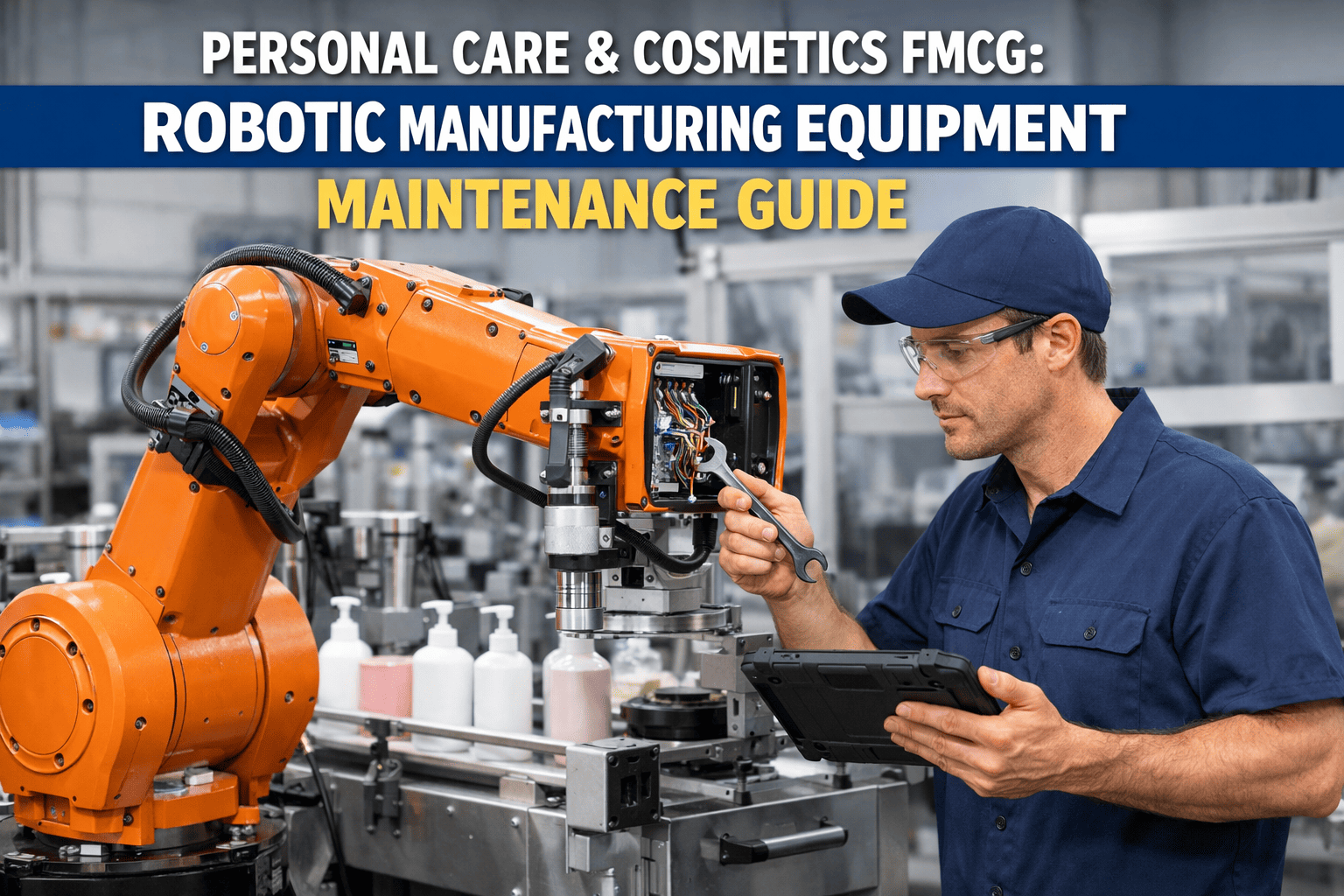
Mixers · Emulsifiers · Filling lines · Packaging · CIP systems — maintain equipment with ISO 22716 validation & allergen tracking
New Jersey facility cost for FDA warning letter remediation — consultant fees, production holds, retroactive cleaning validation testing
$712B
Global beauty and personal care market size in 2025 — manufacturing automation and GMP compliance driving equipment investment
21 days
FDA response deadline for cosmetics GMP warning letters — requires documented corrective action with CMMS validation evidence
What Makes Personal Care Equipment Maintenance Different from General Manufacturing?
Personal care and cosmetics manufacturing equipment operates under ISO 22716 GMP requirements that demand documented cleaning validation, allergen cross-contact prevention, microbial contamination control, and batch traceability that generic industrial PM programs do not address. An emulsifier tank producing facial moisturizer one shift and body lotion the next requires allergen changeover documentation proving the tank was cleaned to remove fragrance allergens, preservatives, and colorants between batches — a compliance requirement that standard CMMS PM checklists omit entirely. Filling line maintenance must include CIP cycle validation with ATP swab results, not just "cleaning completed" checkboxes, because FDA inspectors require quantitative microbial reduction evidence. Mixer blade calibration intervals must account for emulsion viscosity variations across skincare, haircare, and color cosmetics formulations because blade wear affects product homogeneity and batch consistency. OxMaint provides GMP-compliant equipment maintenance templates with allergen tracking fields, CIP validation result entry, microbial test integration, and batch production linkage built into every cosmetics manufacturing PM work order.
ISO 22716 Equipment Calibration
Mixer blade clearance, filling pump flow rates, and temperature probe accuracy require documented calibration with traceable standards — PM work orders must include calibration certificate numbers and next-due dates for GMP audit compliance.
Required: Calibration frequency per equipment type, traceable standards, documented results
CIP Validation & ATP Testing
Clean-in-place cycles require quantitative validation — ATP swab test results proving <100 RLU microbial load reduction must be recorded in CMMS per tank per CIP event, not just "cleaning completed" checkboxes.
Required: ATP test results, RLU threshold verification, pre/post-cleaning data
Allergen Cross-Contact Prevention
Equipment PM records must track which product formulations contacted each asset between cleaning cycles — enabling allergen risk assessment when fragrance oils, nut derivatives, or preservatives change between batches requiring changeover validation.
Required: Product history per asset, allergen matrix, changeover validation sign-off
Batch Traceability Linkage
PM work orders must reference batch production records showing which cosmetic batches were manufactured using equipment during the PM interval — enabling retroactive contamination investigation when product complaints or stability failures occur.
Required: Batch number linkage, production date range, product SKU tracking
Personal care manufacturing equipment failures do not just cause production downtime — they trigger FDA warning letters, batch recalls, and GMP non-compliance findings during audits. An emulsifier tank seal leak that allows product contamination between batches creates allergen cross-contact risk requiring batch holds and customer notification, mixer blade wear that changes emulsion particle size causes product consistency complaints and stability test failures requiring reformulation investigation, filling pump calibration drift generates overfill waste or underfill customer complaints plus FDA labeling compliance violations, and CIP spray ball clogging produces incomplete cleaning that shows up as microbial contamination in finished product testing requiring production shutdowns and deep cleaning validation. Start a free trial to schedule GMP-compliant equipment PM with allergen tracking, CIP validation, and batch traceability integrated into cosmetics manufacturing maintenance workflows.
High-Shear Mixer / Emulsifier
PM Requirements:
Blade clearance calibration every 500 batches — particle size consistency
Shaft seal inspection monthly — prevents batch cross-contamination
Motor vibration analysis quarterly — detects bearing wear before failure
CIP spray pattern validation after seal replacement — ensures full coverage
GMP Compliance Fields
Calibration cert #ATP test resultsAllergen product historyBatch traceability
Volumetric Filling Machine (Lotion/Cream)
PM Requirements:
Pump flow rate calibration weekly — net content labeling compliance
Nozzle seal replacement every 200K fills — prevents drip contamination
Check valve inspection daily — maintains fill accuracy ±0.5%
Product contact surface CIP validation after changeover — ATP <100 RLU
GMP Compliance Fields
Fill weight verificationCIP ATP resultsProduct changeover logCalibration due date
CIP System (Tanks & Vessels)
PM Requirements:
Spray ball flow test monthly — ensures cleaning coverage all zones
Chemical concentration verification weekly — detox dosing accuracy
Pump seal condition check monthly — prevents dilution contamination
ATP swab testing post-CIP — quantitative microbial reduction proof
GMP Compliance Fields
Pre/post ATP valuesChemical batch numbersCleaning cycle timeValidation signature
Packaging Line (Tube/Bottle/Jar)
PM Requirements:
Capping torque calibration daily — seal integrity for stability testing
Label applicator alignment check per SKU — regulatory labeling compliance
Reject mechanism accuracy test weekly — removes defective units ≥99%
Not included — equipment maintenance separate from allergen control
Product history per asset, allergen matrix, changeover validation, swab test results
Batch traceability linkage
PM work orders not linked to production batches
Batch numbers, production date ranges, SKU tracking — enables contamination investigation
Microbial contamination prevention
Visual inspection only — no quantitative testing
ATP test integration, microbial load thresholds, environmental monitoring results
FDA audit readiness
Separate PM system — auditors cannot verify GMP compliance from CMMS
All ISO 22716 evidence in CMMS — 21-day warning letter response data export ready
99.8%
Audit pass rate for cosmetics manufacturers with GMP-integrated CMMS vs 76% for those using separate maintenance and quality systems
$35B
Global personal care contract manufacturing market size projected for 2030 — GMP compliance and automation driving industry consolidation
3–7 days
Production hold duration for FDA warning letter remediation when CMMS lacks allergen tracking and CIP validation documentation
Frequently Asked Questions
What GMP compliance fields must be included in cosmetics equipment PM work orders?
ISO 22716-compliant PM work orders require calibration certificate numbers with traceable standards and next-due dates, ATP swab test results with RLU values proving <100 RLU microbial reduction post-CIP, allergen product history showing which formulations contacted equipment between cleaning cycles, batch traceability linking PM intervals to production batch numbers and SKUs, and validation signatures confirming cleaning effectiveness. Generic CMMS "cleaning completed" checkboxes without quantitative test results do not satisfy FDA GMP audit requirements for documented cleaning validation.
How does OxMaint track allergen cross-contact risk between product batches?
OxMaint records which cosmetic formulations contacted each piece of equipment between CIP cycles — capturing product SKU, allergen matrix data, batch production dates, and cleaning validation results per asset. When a facial moisturizer containing fragrance allergens is produced on the same filling line as a fragrance-free body lotion, OxMaint documents the changeover cleaning with ATP test results and allergen swab data, enabling risk assessment and validation that cross-contact thresholds were met. This product history per asset is required for ISO 22716 compliance and FDA warning letter responses.
Why do cosmetics filling machines need more frequent calibration than general manufacturing?
Personal care filling pump flow rates require weekly calibration because net content labeling regulations demand ±0.5% fill accuracy and viscosity variations across skincare formulations (serums, creams, lotions) cause pump wear rates 3–5× faster than single-product lines. A filling pump serving 8 different moisturizer viscosities accumulates calibration drift in 5–7 days vs 30–60 days for pumps handling uniform products. FDA inspectors verify fill weight compliance by auditing CMMS calibration records — weekly calibration intervals with documented traceable standards prevent underfill violations and overfill waste.
What documentation is required for FDA warning letter responses regarding equipment maintenance?
FDA cosmetics GMP warning letters require 21-day corrective action responses including retroactive cleaning validation for 90 days of production (ATP test results per CIP cycle per asset), equipment calibration records with certificate numbers and traceable standards, allergen changeover validation showing cross-contact prevention procedures, batch traceability demonstrating which product batches were manufactured using specific equipment during PM intervals, and revised SOPs linking CMMS maintenance records to quality system GMP requirements. Facilities using separate maintenance and quality systems cannot export this integrated documentation within 21-day deadlines.
Cosmetics Manufacturing PM — OxMaint
Prevent FDA Warning Letters — Integrate Equipment Maintenance with GMP Compliance.