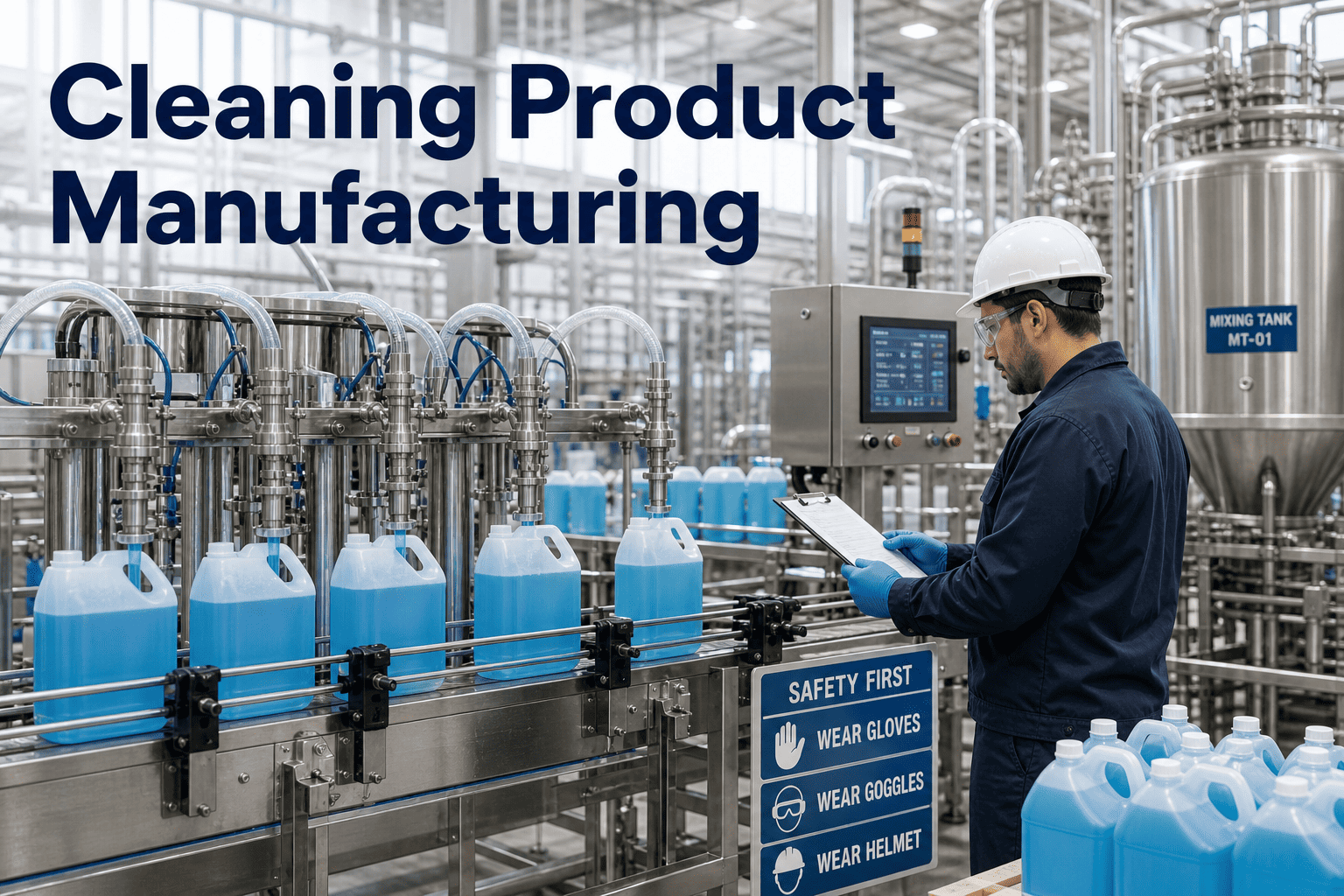
A production supervisor at a household cleaning products plant in Ohio walked into the chemical blending area at 6:15 AM and discovered the sodium hypochlorite dosing pump had been running 8% over target concentration for the previous 11 hours — the automatic pH monitoring system had flagged the deviation at 7:30 PM the night before, but the alert went to a maintenance tech who had already left for the day and the backup notification protocol was not configured in the CMMS, so no corrective action was taken until morning shift arrival. The overnight production run generated 14,000 bottles of bathroom cleaner with bleach concentrations exceeding label claims by 0.6%, requiring batch quarantine pending stability testing, EPA notification for off-spec hypochlorite disposal, and customer notification if any units had already shipped. The compliance incident cost $38,400 in dumped product, regulatory reporting, and QC revalidation testing. OxMaint tracks chemical dosing equipment PM and sends multi-level alerts when deviations occur — preventing off-spec batches from continuing overnight when first-shift maintenance is unavailable. Book a demo to see how cleaning product manufacturing equipment maintenance prevents chemical handling compliance violations.
Global cleaning products market size projected for 2032 — sustainable formulations and automated dosing driving equipment modernization
86%
Chemical-based products market share in 2025 — requiring precise dosing equipment calibration and hazardous material handling compliance
What Makes Cleaning Products Manufacturing Equipment Maintenance Safety-Critical?
Household cleaning products manufacturing involves concentrated acids, alkalis, oxidizers, and volatile organic compounds that require equipment PM protocols addressing chemical compatibility, corrosion monitoring, ventilation system integrity, and emergency shutdown validation — compliance requirements that general industrial maintenance templates do not cover. A chemical dosing pump serving sodium hypochlorite bleach formulations requires elastomer seal inspection every 200 operating hours because hypochlorite accelerates seal degradation 4× faster than water-based fluids, and seal failure causes chemical leaks triggering EPA reportable quantity thresholds and OSHA exposure violations. Mixing tank pH probe calibration must occur weekly because drift beyond ±0.2 pH units generates batches failing label claim specifications and triggering consumer product safety investigations when complaints arise. Filling line check valves handling corrosive formulations need quarterly disassembly inspection because internal pitting invisible during external inspection causes drip contamination between SKUs and allergen cross-contact when fragrance or dye additives vary by product. OxMaint provides chemical manufacturing equipment PM templates with corrosion inspection protocols, EPA notification escalation, and hazardous material incident documentation integrated into cleaning product production maintenance workflows.
Acid/Alkali Handling Equipment
Citric acid dosing pumps, caustic soda transfer systems, pH control loops
Seal corrosion → chemical leaks → EPA reportable quantities
Critical PM Tasks — EPA and OSHA Compliance for Cleaning Products Manufacturing
Equipment failures in cleaning products plants do not just cause production downtime — they trigger EPA reportable spills, OSHA exposure investigations, and consumer product safety recalls. A sodium hypochlorite dosing pump seal leak that releases 10 gallons of 12% bleach solution exceeds EPA reportable quantity thresholds requiring notification within 24 hours and hazmat cleanup documentation, a caustic soda transfer line corrosion perforation that exposes operators to pH 13 liquid triggers OSHA PEL violation investigations and facility-wide chemical handling audits, a VOC formulation tank ventilation fan failure that allows operator exposure above 50 ppm solvent vapor generates air quality noncompliance citations and mandatory corrective action plans, and a fragrance dosing manifold check valve failure that allows allergen cross-contamination between unscented and scented products causes consumer complaint investigations and potential product recalls. Start a free trial to schedule chemical equipment PM with EPA notification workflows, OSHA compliance documentation, and hazardous material incident tracking integrated into cleaning product manufacturing maintenance.
Chemical Dosing Pump Maintenance — Hypochlorite & Acid Systems
PM Task
Elastomer seal inspection and replacement every 200 operating hours
Pump head calibration weekly — verify ±2% dosing accuracy
Chemical compatibility verification quarterly — seal material vs formulation
Leak detection test monthly — secondary containment integrity
Compliance Documentation
EPA spill prevention plan — seal replacement schedule documented
Calibration certificates — traceable standards per batch
Material safety verification — SDS compatibility matrix
Leak test results — secondary containment capacity verified
pH Control System PM — Acid/Alkali Batch Formulation
Separate PM and EHS systems — auditors cannot verify equipment compliance from CMMS
EPA notification records, OSHA PEL monitoring, and chemical compatibility documentation integrated in CMMS per asset
24hr
EPA notification deadline for reportable quantity chemical spills from equipment failures — integrated CMMS workflows prevent missed deadlines
4×
Faster seal degradation rate for hypochlorite pumps vs water service — requiring 200-hour vs standard 800-hour inspection intervals
$317B
Global cleaning products market projected for 2031 — chemical safety compliance and automated dosing driving equipment modernization
Frequently Asked Questions
Why do hypochlorite dosing pumps need more frequent seal replacement than standard pumps?
Sodium hypochlorite bleach solutions (10–15% concentration) cause elastomer seal degradation 4× faster than neutral pH fluids because hypochlorite oxidizes seal materials through chemical attack on polymer chains. Standard industrial pump seals rated for 800-hour service life degrade to failure in 200 hours when handling bleach formulations, making quarterly replacement intervals inadequate. OxMaint tracks operating hours per chemical formulation and schedules hypochlorite pump seal replacement every 200 hours to prevent leaks that exceed EPA reportable quantity thresholds (10 gallons at 12% concentration) requiring 24-hour notification and hazmat cleanup documentation.
What EPA compliance documentation is required for cleaning product manufacturing equipment PM?
Cleaning products plants handling hazardous chemicals require spill prevention plans documenting equipment PM schedules for pumps, valves, and tanks containing reportable quantities, secondary containment capacity verification records showing leak detection system integrity, chemical compatibility matrices proving seal materials match formulations (citric acid requires different elastomers than caustic soda), and incident response protocols triggering EPA notification workflows when equipment failures cause spills exceeding reportable thresholds. OxMaint integrates these compliance fields into PM work orders so equipment maintenance records serve as EPA audit evidence without requiring separate environmental management systems.
How does OxMaint prevent off-spec batches from chemical dosing equipment drift?
OxMaint schedules pH probe calibration weekly with three-point buffer verification and chemical dosing pump flow rate calibration weekly using traceable standards — intervals tight enough to catch drift before ±0.2 pH unit or ±2% concentration deviations generate batches failing label claims. When calibration results show out-of-tolerance conditions, OxMaint automatically generates corrective action work orders and sends multi-level alerts to maintenance, quality, and production supervisors — preventing equipment operating in degraded states overnight or over weekends when first-shift personnel are unavailable. Batch production records link to equipment calibration certificates so off-spec investigations can trace root cause to specific PM deferrals.
What ventilation system PM is required for VOC formulation compliance?
OSHA requires cleaning products plants formulating VOC-containing products (solvents, fragrances, aerosol propellants) to maintain local exhaust ventilation systems at ≥100 FPM face velocity to keep operator exposure below permissible exposure limits (typically 50 ppm for common solvents). OxMaint schedules monthly airflow velocity testing with anemometer verification, weekly filter differential pressure checks triggering replacement at 1.5" water column to prevent airflow reduction, quarterly fan motor vibration analysis detecting bearing wear before failure, and semiannual emergency shutdown functional testing validating operator safety protocols. Compliance documentation includes OSHA PEL monitoring results linked to ventilation system PM records proving exposure control effectiveness.
Chemical Manufacturing PM — OxMaint
Prevent EPA Violations — Integrate Equipment Maintenance with Chemical Safety Compliance.