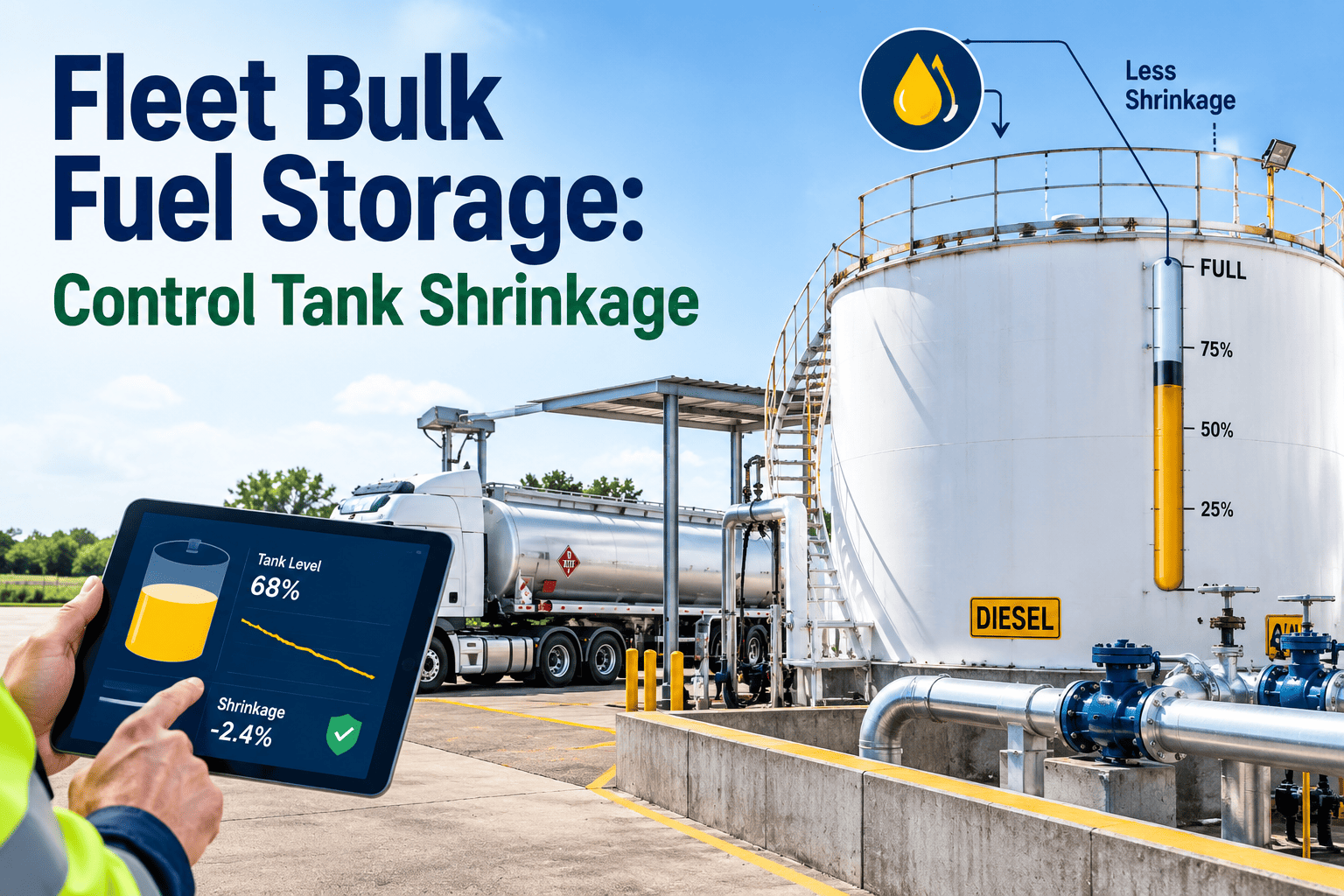
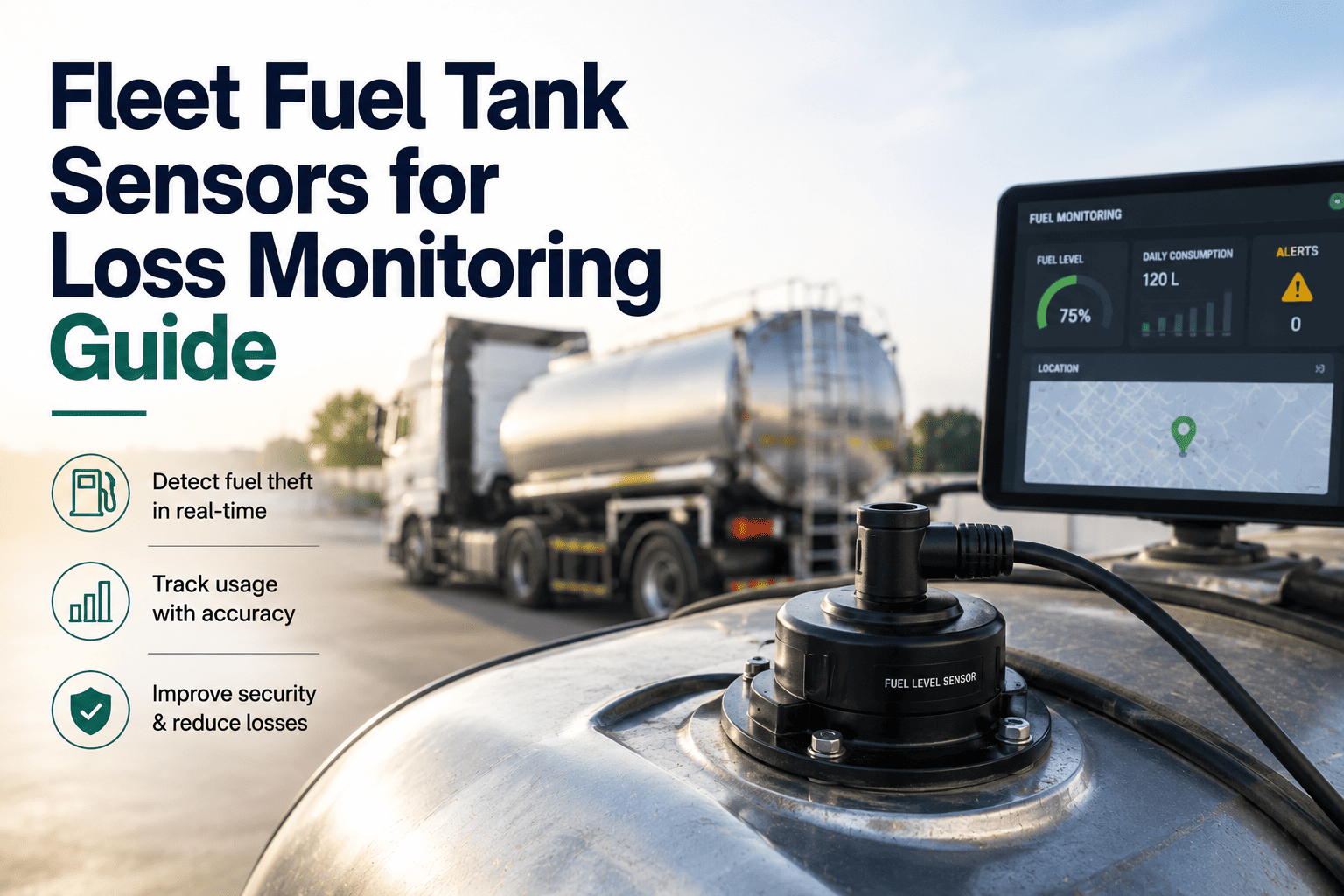
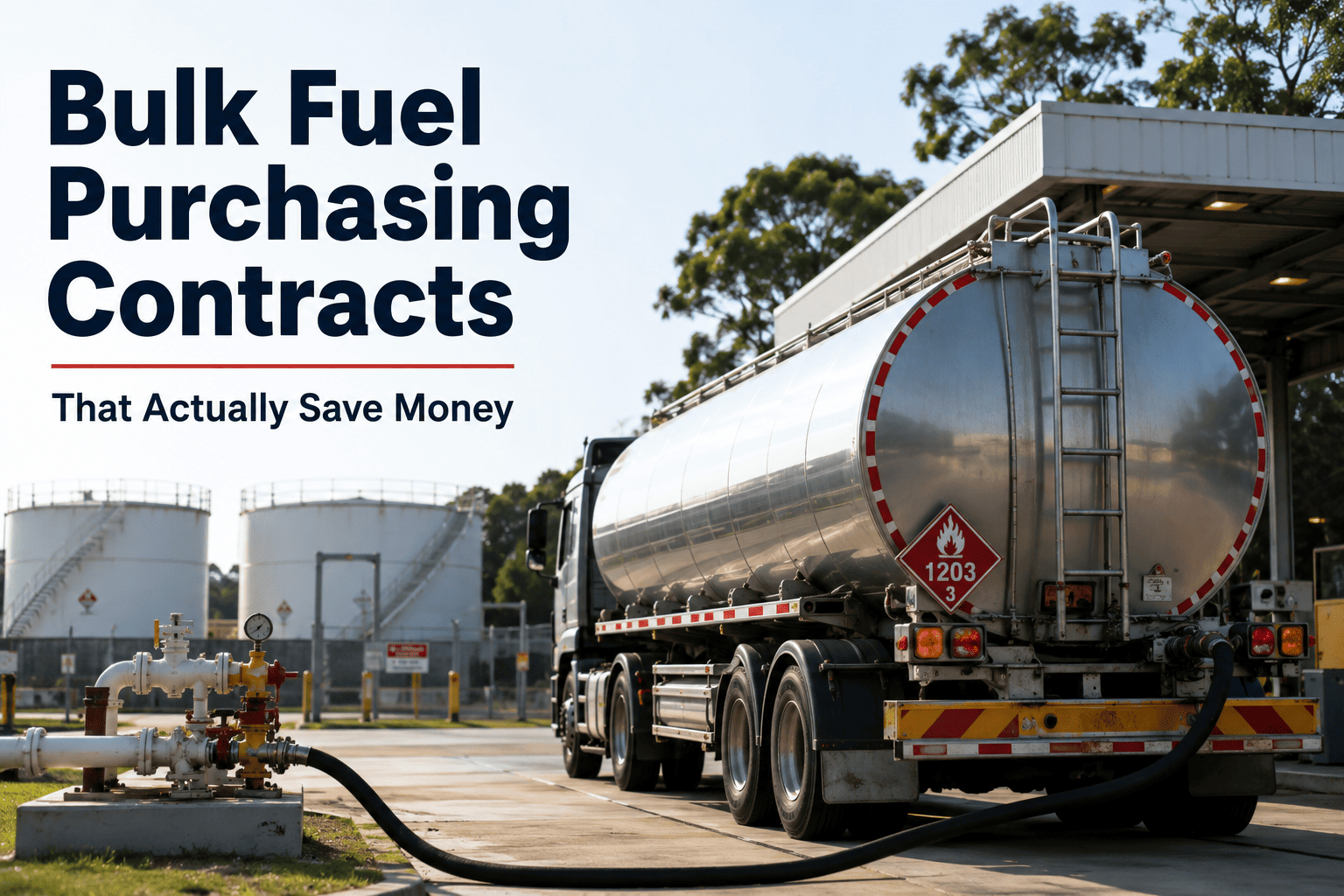
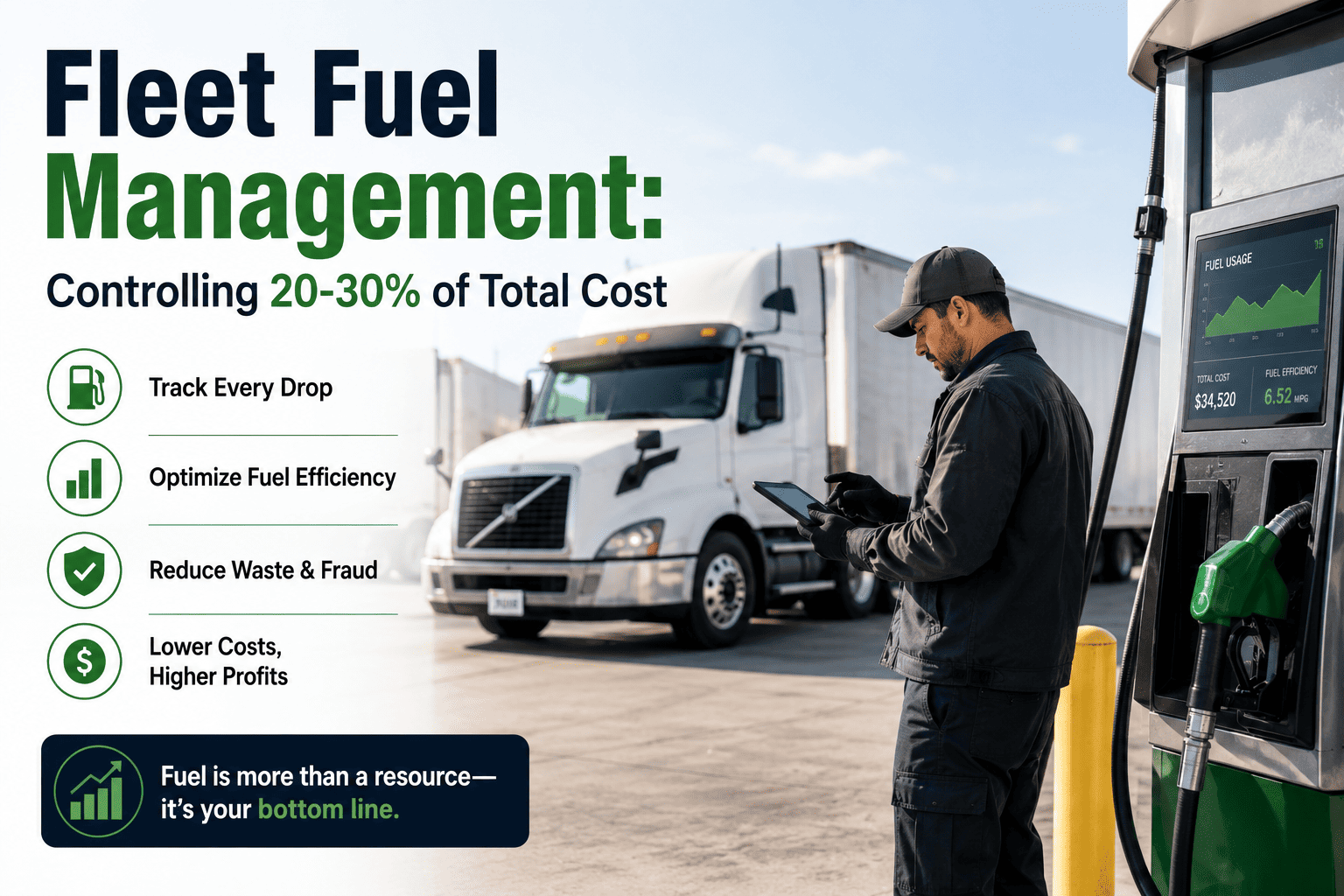
Bulk fuel storage sitting in the yard feels like control — no more waiting on retail prices, no card-lock fraud at public pumps. But every gallon in an on-site tank is also a gallon nobody outside your own operation is metering or watching. Evaporation, meter drift, short deliveries, and unlogged draws chip away at inventory quietly, and most fleets only notice at month-end. That reconciliation discipline is exactly what OxMaint is built to run for fleet and facility teams.
Bulk Fuel Storage · Shrinkage Control · Fleet Operations
Your Bulk Fuel Tank Is Losing Gallons You Are Not Accounting For
Every yard tank leaks value in five predictable ways — evaporation, thermal expansion, meter drift, short deliveries, and unlogged draws. Here is how to meter, reconcile, and lock down bulk fuel storage so shrinkage shows up in a report instead of a budget shortfall.
1-3%
Typical monthly volume shrinkage in yard tanks with no reconciliation process
$700+
Estimated monthly loss on a 10,000-gallon diesel tank at 2% unexplained shrinkage
48 hrs
Average time before an unmetered short delivery is discovered without automated reconciliation
90%
Of shrinkage cases traced to one of five recurring causes once tracked systematically
Where The Gallons Go
The Five Ways Bulk Fuel Tanks Lose Volume Without Anyone Noticing
Shrinkage is rarely one dramatic event. It is five small, ordinary mechanisms operating quietly at the same time, each contributing a fraction of a percent until the combined total shows up as a real dollar figure nobody can explain. Naming each mechanism is the first step toward controlling it.
Physical Loss
Evaporation and Venting
Vapor loss through tank vents increases with ambient temperature swings and vent design. Gasoline evaporates faster than diesel, and older atmospheric vents lose more vapor than pressure-vacuum vents rated for the fuel class.
Measurement Drift
Thermal Expansion and Contraction
Fuel volume changes with temperature — a tank read at midday versus early morning can show a apparent variance of 1% or more purely from thermal expansion, which gets misread as loss if readings are not temperature-compensated.
Equipment Error
Dispensing Meter Drift
Mechanical and electronic dispensing meters drift out of calibration over time, typically under-registering dispensed volume, which means the tank empties faster than the logged dispensing totals suggest it should.
Supply Chain
Short and Unverified Deliveries
Delivery volumes confirmed by driver paperwork alone, without an independent before-and-after tank reading, leave the door open to short deliveries that are never caught against the invoiced quantity.
Access Risk
Unauthorized or Unlogged Draws
Any dispensing point without per-user authentication allows fuel to leave the tank with no record of who took it, how much, or for what vehicle — the single largest recoverable shrinkage category in most audits.
Sediment
Water Intrusion and Bottom Sediment
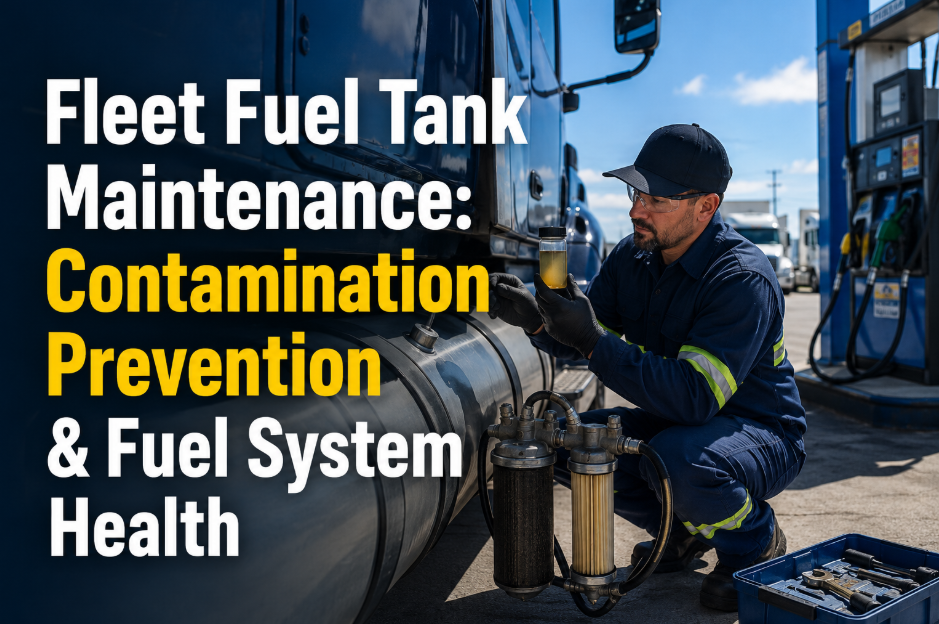
Condensation and water intrusion settle at the tank bottom, displacing usable fuel volume and, if drawn into a vehicle, causing separate mechanical damage that compounds the original loss.
Reconciliation Workflow
How Metering and Reconciliation Turns Shrinkage From a Mystery Into a Number
A tank that is metered but never reconciled is still a black box. Reconciliation is the discipline of comparing three numbers every cycle — what was delivered, what was dispensed, and what remains — and flagging the variance the moment it exceeds a defined tolerance.
01
Independent Delivery Verification
Every delivery is confirmed against a tank stick or probe reading taken before and after the fill, not against the delivery ticket alone. The variance between invoiced and measured delivery is logged against the supplier record automatically.
02
Per-Dispense Authentication and Logging
Every draw is tied to a driver ID or vehicle credential at the point of dispensing, with volume, timestamp, and odometer captured automatically rather than written on a clipboard that may or may not get filed.
03
Daily Book-to-Physical Reconciliation
The book balance — opening inventory plus deliveries minus logged dispenses — is compared against the physical tank reading daily. A variance beyond the set tolerance band generates an alert the same day, not at month-end audit.
04
Root-Cause Assignment and Corrective Action
Each flagged variance is assigned a cause category — evaporation, thermal, meter drift, delivery, or unauthorized draw — and tracked to a corrective action, so recurring variance patterns are visible instead of resetting to zero every cycle.
Yard Fuel · Metering · OxMaint
Reconciliation Should Run Itself, Not Wait for a Manual Audit
OxMaint connects tank telemetry and dispenser data into one reconciliation workflow, so book-to-physical variance is flagged the day it happens instead of discovered at quarterly audit. Set the tolerance band once and let variance alerts do the watching.
Access Control Comparison
Padlock, Card Reader, or Telemetry-Integrated Access — What Actually Stops Unlogged Draws
Access control methods vary widely in how much protection they actually provide against unlogged draws. A padlock stops casual access but produces no record. Only systems that log the transaction close the accountability gap.
Shrinkage Reduction By Control
What Each Control Measure Actually Recovers
Per-Dispense Authentication
Up to 1.4% recovered
Independent Delivery Verification
Up to 0.6% recovered
Daily Reconciliation Alerts
Up to 0.4% recovered
Meter Calibration Program
Up to 0.3% recovered
Combined Recoverable Shrinkage With Full Control Stack
Up to 2.7% of tank volume recovered annually
On a 10,000-gallon diesel tank at $3.50 per gallon, 2.7% recovery represents roughly 945 dollars per month, or over 11,000 dollars annually, in fuel that was previously unaccounted for.
Operational Impact
What Fleets Report After Six Months of Metered Reconciliation
2.7%
Average Recovered Volume
Fleets running full metering, authentication, and daily reconciliation typically recover this share of prior unexplained shrinkage.
Same Day
Variance Detection Window
Book-to-physical variance beyond tolerance is flagged within the same operating day rather than at a quarterly audit.
100%
Dispense Attribution
Every gallon dispensed is tied to a driver, vehicle, and timestamp — eliminating the unattributed draw category entirely.
$11,000+
Annual Recovery (10K gal tank)
Based on 2.7% recovered volume on a 10,000-gallon diesel tank at 3.50 dollars per gallon average price.
Fleet Manager Questions
Bulk Fuel Tank Shrinkage — Common Questions Before Setting Up Controls
How much bulk fuel shrinkage is considered normal versus a sign of a problem?
+
A small margin under roughly 0.5% per cycle from evaporation and thermal variance is generally considered normal and expected. Anything consistently above 1% across multiple cycles points to an unaddressed cause — usually meter drift, unlogged draws, or short deliveries — worth investigating with a
free trial reconciliation setup.
Do small fleets with a single yard tank need automated reconciliation?
+
Even a single 5,000 to 10,000-gallon tank can lose several hundred dollars monthly to unmonitored shrinkage, which usually exceeds the cost of a lightweight metering and reconciliation setup. Scale matters less than whether draws are currently logged at all.
How often should tank meters be calibrated to avoid measurement drift?
+
Most dispensing meters should be checked against a certified test measure at least annually, with more frequent checks for high-throughput tanks. A tracked calibration schedule inside a CMMS keeps this from slipping past due, which is when drift compounds unnoticed.
What is the fastest way to catch a short delivery from a fuel supplier?
+
Take an independent tank stick or probe reading immediately before and after every delivery and compare it to the invoiced quantity the same day, rather than trusting the delivery ticket alone. Persistent shortfalls from one supplier are a pattern worth raising directly with them.
Can unauthorized draws really account for most of the shrinkage in a yard tank?
+
In audits where every other variable is controlled, unlogged and unauthorized draws consistently show up as the largest single recoverable category. Per-user authentication at the dispenser, discussed in a
demo walkthrough, closes this gap directly.
OxMaint · Bulk Fuel Storage · Shrinkage Control
Stop Guessing Where Your Fuel Inventory Went
OxMaint connects tank telemetry, dispenser authentication, and delivery verification into one reconciliation workflow — so shrinkage is flagged the day it happens instead of discovered at month-end. Build the yard fuel control stack that pays for itself in recovered gallons.