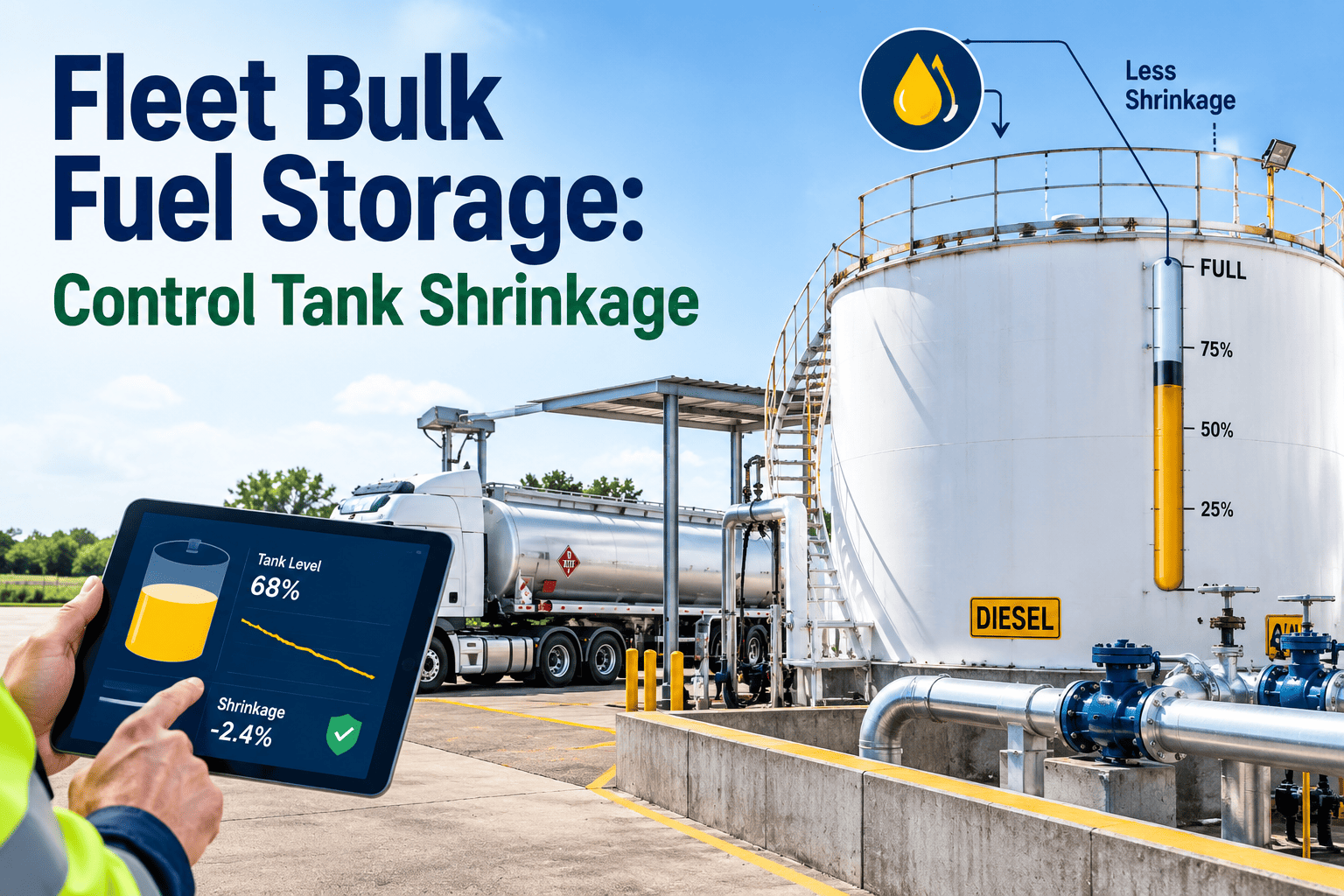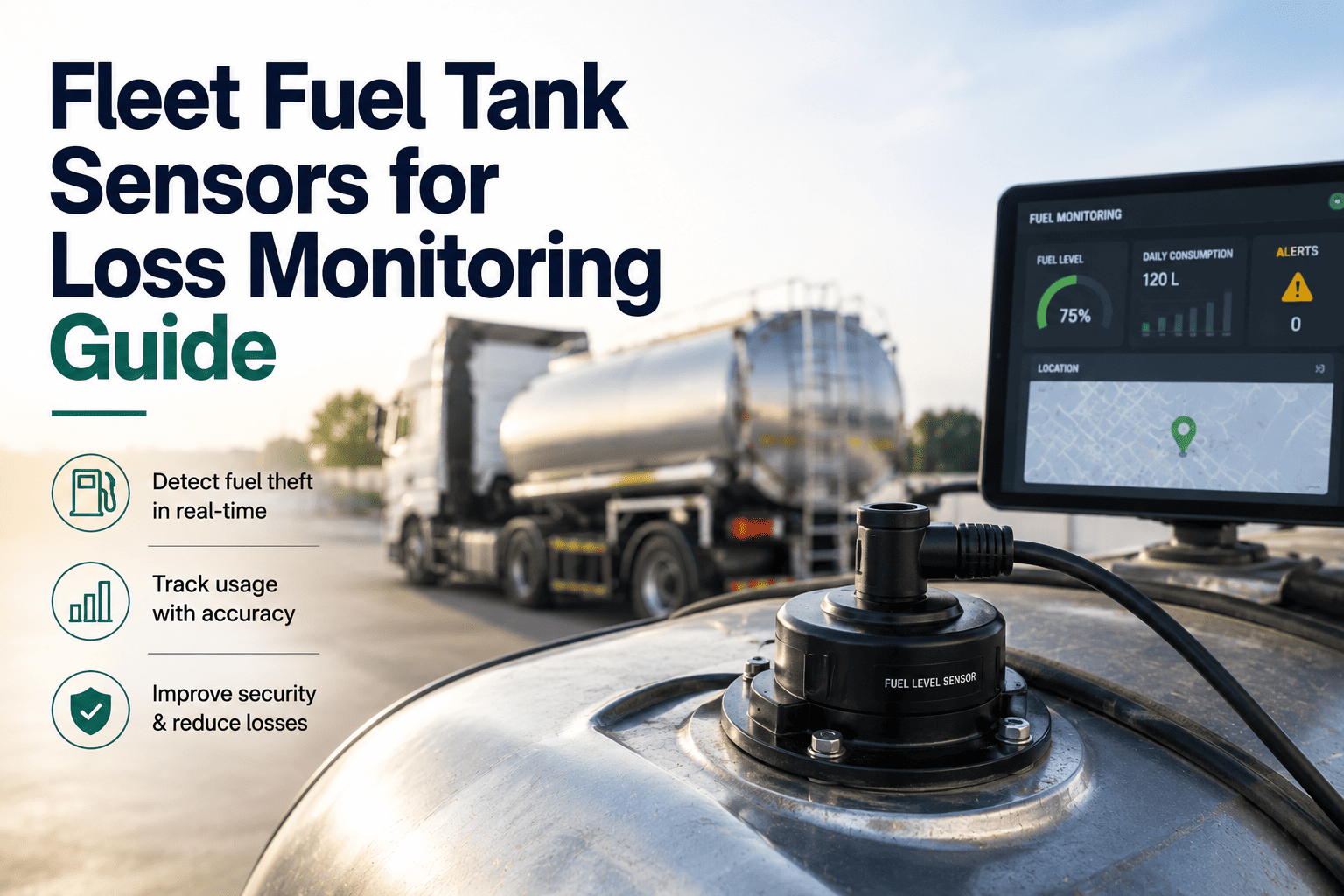
A fleet fuel tank sensor is the difference between discovering a 60-gallon overnight fuel loss when your drivers arrive at the yard and catching the theft in real time — while the pump is still running. Modern fuel level sensor monitoring uses continuous tank-level telemetry to detect unauthorized siphoning, sudden drops, and slow leaks, transforming fleet fuel tank monitoring from a reactive accounting headache into an active loss-prevention tool. By integrating tank-level sensor data directly into a CMMS, maintenance managers can automatically trigger work orders, alert security teams, and capture the exact time and volume of any fuel anomaly. See how OxMaint turns fleet fuel sensor monitoring into immediate action when you Start Free Trial today.
REAL-TIME THEFT DETECTION
How much fuel vanished from your yard last night?
Fleets lose an estimated 3–8% of annual fuel volume to theft, siphoning, and unreported leaks. With fleet fuel tank level sensors connected to OxMaint, a sudden overnight drop triggers an instant alert — so you catch the loss in real time, not on next month's fuel reconciliation report.
THE TRUE COST OF UNMONITORED TANKS
Why fleet fuel tank monitoring can no longer rely on manual dipsticks
For a 150-truck fleet averaging 1,800 gallons per week per vehicle at $3.85 per gallon, a modest 4% unexplained fuel variance translates to roughly $44,000 in evaporated operating margin every year. Manual stick readings and weekly fuel card reconciliation catch discrepancies days or weeks too late — long after the security cameras have overwritten the footage and the responsible party is gone. A fleet fuel tank sensor closes that visibility gap, measuring tank level every 30–60 seconds and pushing anomalies to your maintenance system in under five seconds.
WORKED EXAMPLE
A 180-vehicle regional fleet stops $38K in annual overnight fuel theft
Consider a regional logistics operator running 180 tractors out of two terminals. Managers noticed recurring fuel card transactions that did not match physical tank dips, but could never pinpoint when the siphoning occurred. After installing fleet fuel tank level sensors on 40 high-utilization units and routing the telemetry stream into OxMaint, the maintenance team configured a threshold alert: any drop exceeding 3 gallons in 10 minutes outside scheduled fueling windows triggers an immediate incident work order.
Within the first 30 days the system flagged six after-hours drain events totaling 210 gallons — roughly $800 in recovered fuel costs and a clear timestamp handed to site security. Extrapolated across the full fleet and accounting for the deterrent effect once drivers and contractors knew tanks were monitored, the program is projected to save $38,400 annually, paying back the sensor hardware and OxMaint subscription in under four months.
$38,400
Projected annual savings on a 180-vehicle fleet — payback in under 4 months when fuel tank sensor theft detection is integrated directly into the CMMS work-order workflow.
DEPLOYMENT ROADMAP
How to deploy fuel tank sensor monitoring in 30 days
Sensor Selection & Baseline Audit (Days 1–7)
Choose capacitive or ultrasonic fleet fuel tank sensors compatible with your OEM tank geometry. Inventory current assets in OxMaint, tag each vehicle with its tank capacity, sensor ID, and fuel card number, then record a 72-hour baseline of normal consumption patterns to calibrate alert thresholds.
Telemetry Integration & Threshold Design (Days 8–15)
Stream tank-level data into OxMaint via API or MQTT. Configure fleet fuel sensor monitoring rules: volume-drop rate (gallons per minute), after-hours window detection, geofence arrival/departure fuel deltas, and rapid-refill validation. Set each alert to auto-generate a priority work order routed to the on-duty maintenance lead.
Incident Workflow & Security Handoff (Days 16–23)
Map the fuel tank monitoring fleet workflow end-to-end: sensor trigger creates an OxMaint work order, the system captures timestamp and GPS coordinates, attaches camera footage references, and notifies security via integrated escalation. Define a closed-loop resolution so every flagged event is investigated, categorized, and closed with a root-cause code.
Analytics Rollout & Loss Trend Review (Days 24–30)
Publish a weekly fleet fuel level monitoring dashboard inside OxMaint showing total fuel received vs. dispensed, loss events by terminal, recovery rate, and top-off anomalies. Use the trend data to justify expanding sensor coverage to remaining assets and to tighten thresholds on repeat-offense locations.
CMMS-INTEGRATED LOSS PREVENTION
How OxMaint turns fuel tank sensor data into immediate action
A fleet fuel tank sensor only prevents loss when its data triggers a fast, documented response. OxMaint connects tank-level telemetry directly to the maintenance workflow your team already uses — eliminating the lag between detection and action and giving you a full audit trail for every gallon.
Automated Theft-Alert Work Orders
When fuel level sensor monitoring detects a threshold breach, OxMaint instantly generates a priority work order pre-loaded with sensor ID, GPS location, volume lost, and timestamp — routed to the on-call technician or security lead within seconds.
Outcome: Cut incident response time from hours to under 5 minutes.
Fuel Loss Analytics Dashboard
Aggregate fleet fuel tank sensor monitoring data into live dashboards showing loss events by asset, terminal, shift, and driver — with OEE-style uptime context so you can correlate fuel anomalies with route assignments and overnight yard placement.
Outcome: Identify theft patterns and high-risk yards in days, not quarters.
Closed-Loop Incident Audit Trail
Every fuel tank sensor theft detection event flows through a structured incident workflow: trigger, investigation, evidence attachment, root-cause code, and resolution — all timestamped and FMCSA-audit-ready inside a single OxMaint record.
Outcome: Pass fuel-loss insurance and compliance audits with zero manual reporting.
Predictive Leak & Maintenance Flagging
OxMaint's AI engine analyzes fleet tank sensor fuel trends to distinguish sudden theft from slow mechanical leaks — automatically scheduling tank, fuel-line, or sender-unit inspections before a minor leak becomes a DOT-reportable spill.
Outcome: Reduce fuel-system unplanned downtime 30–50% and avoid EPA fines.
SENSOR TECHNOLOGY COMPARISON
Choosing the right fuel tank level sensor for fleet theft detection
Not all fleet fuel tank sensors are built for theft detection. The table below compares the three dominant technologies used in fleet fuel tank monitoring, focusing on the attributes that matter most for real-time loss prevention.
| Sensor Type | Accuracy | Theft Response | Installation | Best For |
|---|---|---|---|---|
| Capacitive Probe | ±1% of tank volume | Excellent — sub-second level changes | In-tank, 2–4 hrs per unit | High-value assets, overnight yard parking |
| Ultrasonic Sensor | ±2–3% of tank volume | Good — 30–60 sec polling | External, non-invasive | Retrofitting older tanks, mixed fleets |
| OBD-II / Telematics Fuel Data | ±5–10% (derived) | Limited — averaged, not instantaneous | Plug-in, minutes | Entry-level monitoring, low-risk routes |
For dedicated fuel sensor fleet theft programs, capacitive probes deliver the fastest response and tightest accuracy, making them the preferred choice when the goal is catching a siphon event the moment it starts. OxMaint integrates with all three sensor types via standard API, MQTT, or direct telematics-provider connectors.
ALERT THRESHOLD DESIGN
The fuel-loss detection formula every fleet manager should know
Setting the right alert threshold is what separates useful fleet fuel tank sensor monitoring from noisy false alarms. The goal is to flag genuine theft or leaks while filtering out normal slosh, refueling events, and temperature-related expansion. Use this baseline formula to configure your OxMaint alert rules:
THEFT-DETECTION THRESHOLD
Alert Trigger = Volume Drop (gal) > [Normal Burn Rate × Time Elapsed] + Safety Margin (3%)
Example: A truck burns 1.2 gal/hr idling. Over 8 overnight hours, expected burn = 9.6 gal. Add 3% safety margin (0.3 gal). Any drop exceeding 9.9 gal between 10 PM and 6 AM triggers an immediate OxMaint theft-alert work order.
After-Hours Drop Rule
Any volume decrease exceeding 3 gallons during predefined yard-parking hours when the ignition is off — the single most effective fleet fuel sensor theft detection trigger.
Rapid-Drain Rate Rule
A drop rate faster than 5 gallons per minute almost never indicates legitimate refueling or consumption — it signals active siphoning or a major tank breach.
Geofence Mismatch Rule
Fuel level drops by more than 2% between geofence exit and the next scheduled stop without a corresponding fuel-card transaction — flags mid-route drainage.
See OxMaint catch your next fuel-loss event in real time
Book a 30-minute demo and we will show you exactly how fleet fuel tank sensor data flows into automated work orders, alerts, and audit-ready incident records — on your assets, with your sensor stack.
FREQUENTLY ASKED QUESTIONS
Fleet fuel tank sensor monitoring: your questions answered
How does a fleet fuel tank sensor detect theft in real time?
A fuel tank level sensor measures the liquid volume in the tank every 30–60 seconds and transmits that reading via telematics to a monitoring platform. When the system detects a volume drop that exceeds the engine's normal consumption rate — or any drop while the ignition is off — it immediately flags the event as potential theft. Inside OxMaint, that flag auto-generates a priority work order with the timestamp, GPS location, and volume lost so your team can respond within minutes.
What is the ROI of fleet fuel level monitoring for theft prevention?
Most fleets see a 3–8% reduction in total fuel spend after deploying sensor-based monitoring, with payback typically achieved in 3–6 months. A 150-truck fleet losing 4% of annual fuel can recover $30,000–$45,000 per year. The ROI comes from three sources: recovered stolen fuel, the deterrent effect once drivers and contractors know tanks are monitored, and reduced insurance premiums for documented fuel-loss controls. You can Start Free Trial to model the exact savings on your fleet volume.
Can OxMaint integrate with my existing fuel tank sensors?
Yes. OxMaint accepts tank-level data via REST API, MQTT, or direct connectors to major telematics providers including Geotab, Samsara, and CalAmp. If your current fuel level fleet sensor pushes data to a telematics gateway, OxMaint can consume that stream, apply your custom theft-detection thresholds, and generate work orders without replacing any hardware.
How do I stop false alarms from fuel slosh and temperature changes?
Effective fleet fuel tank sensor monitoring uses time-weighted averaging and configurable safety margins — typically 3% above the expected burn rate — to filter out slosh, temperature expansion, and brief refueling spikes. OxMaint lets you set per-asset thresholds based on tank size, vehicle type, and duty cycle, then refine rules over a 72-hour baseline period so alerts fire only on genuine loss events.
Is fuel tank sensor theft detection compliant with FMCSA and DOT requirements?
While FMCSA does not mandate fuel sensors specifically, the documentation and incident records generated by OxMaint support broader compliance obligations under DOT vehicle maintenance rules and EPA spill-prevention guidelines. Every fuel-loss event is captured in a timestamped, auditable work-order record with root-cause coding — giving inspectors and insurers a defensible chain of evidence. Book a demo at https://calendly.com/oxmaintapp/30min to review the compliance workflow.
STOP LOSING FUEL OVERNIGHT
Turn tank-level data into loss-prevention action today
Deploy fleet fuel tank sensor monitoring that does not just log data — it triggers work orders, alerts your team, and builds the audit trail you need to stop theft for good. Start your free trial or book a personalized demo on your assets.
Free 14-day trial · No credit card