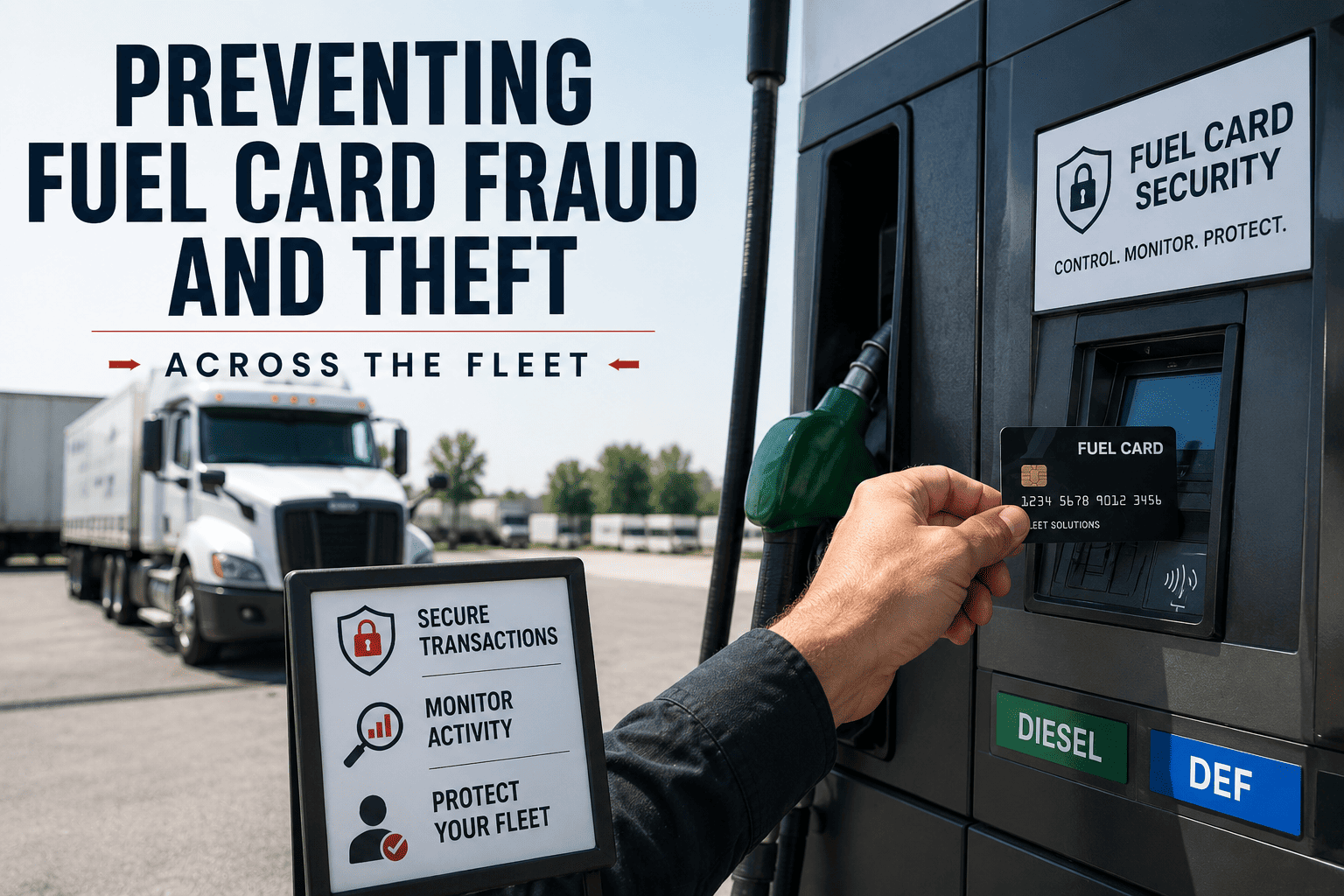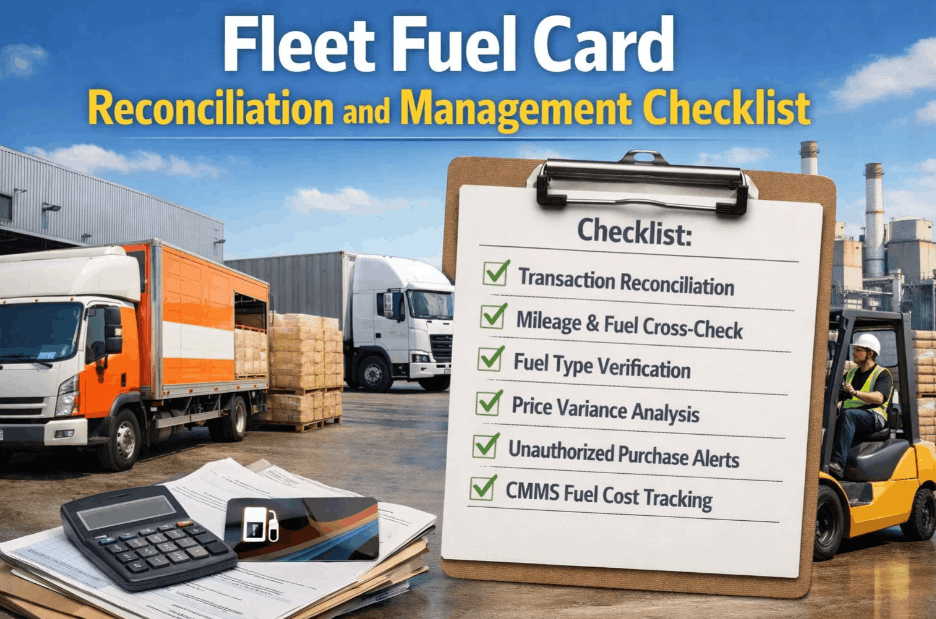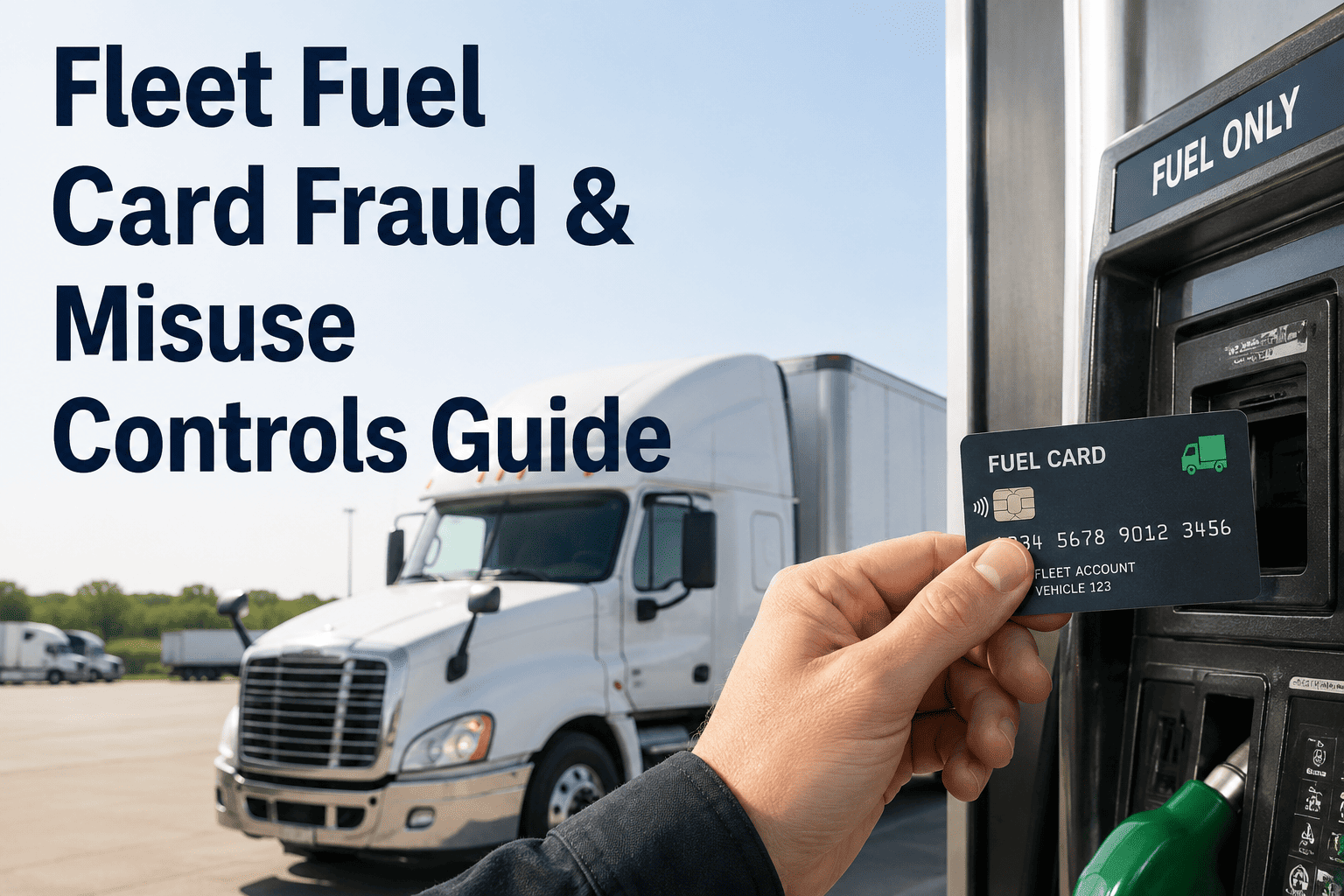
Fleet fuel card fraud and misuse cost operators an estimated 1–3% of total fuel spend annually — a leak that often goes undetected until it drains thousands from the maintenance budget. From cards used 200 miles away from the assigned vehicle to off-hours transactions and non-fuel purchases, fleet fuel card abuse thrives where manual reconciliation and spreadsheet tracking replace real-time controls. This guide walks through how to set fuel card controls that catch misuse before it compounds, covering geo-verification integration, exception rule design, and the CMMS-driven monitoring workflows that protect every gallon. Ready to stop the leak? You can Start Free Trial or book a personalized walkthrough today.
A fuel card used 200 miles from the vehicle is fraud in plain sight — are you catching it?
Most fleet managers discover fuel card misuse months after it happens, when reconciling receipts against odometer readings reveals impossible distances, phantom fill-ups, and non-fuel charges. OxMaint closes that gap with geo-verification, exception alerts, and asset-linked transaction controls — so misuse is flagged within minutes, not at month-end.
How fleet fuel card fraud drains your maintenance budget
Fuel is typically the second-largest operating cost for a fleet — behind labor and ahead of maintenance parts. When fuel card controls are weak, that cost creeps up silently. A 50-truck fleet spending $1.2M annually on diesel can lose $12,000–$36,000 per year to fuel card misuse, an amount that could instead fund a full CMMS rollout with predictive maintenance capabilities.
Consider a real-world scenario: a regional delivery operator with 80 vehicles discovered during an audit that three drivers had been fueling personal vehicles for six months using company cards assigned to trucks that were parked overnight at the depot. The total loss exceeded $14,000 — and because the fleet relied on spreadsheet-based fuel logs that nobody reviewed in real time, nobody caught the pattern until a quarterly review surfaced odometer readings that didn't match gallons purchased. With fleet fuel card monitoring tied directly to asset location and work-order data, those transactions would have triggered an exception alert the first time a card was used more than 10 miles from the assigned vehicle's GPS ping.
Common types of fleet fuel card abuse and misuse
Fleet fuel card fraud isn't always a sophisticated scheme. Most misuse falls into recognizable patterns that effective fuel card controls can catch automatically — if the right rules are configured and tied to real-time asset data.
Geo-mismatch transactions
Card is swiped at a station 200 miles from where the vehicle's telematics unit last reported. The most common fraud pattern — and the easiest to catch with geo-verification linked to live asset tracking.
Off-hours purchases
Transactions at 2:00 AM when the vehicle is off-duty and the driver isn't scheduled. Legitimate refueling happens during shift hours at approved stations — anything else deserves a flag.
Non-fuel purchases
Food, cigarettes, and personal auto parts charged to a fleet card. Without SKU-level purchase restrictions and category blocks, these charges blend into fuel statements unnoticed.
Gallon-odometer mismatch
Vehicle shows 45,000 miles but the card logged 2,800 gallons since last reset — a math impossibility. Indicates siphoning, secondary card use, or fueling another vehicle entirely.
Multiple transactions per fill
Two or more swipes in rapid succession — one for the truck, one for a personal vehicle. Driver-pocketed second receipts are a classic fuel card abuse pattern at unattended pumps.
Grade and quantity overrides
Premium fuel in a diesel rig or 120-gallon fills on a 75-gallon tank. Fuel card controls that enforce grade restrictions and tank-capacity limits eliminate these leaks instantly.
How to set fuel card controls that catch misuse in real time
Building an effective fleet fuel card fraud prevention program requires four control layers — each one narrowing the window in which misuse can occur undetected. The goal is not just to catch fraud after the fact but to make it structurally difficult in the first place.
Define card-to-asset binding rules
Every fuel card is permanently assigned to a specific vehicle — never to a driver. When a card is swiped, OxMaint cross-references the transaction location against the asset's last GPS ping from the telematics integration. If the distance exceeds a configurable threshold (typically 5–25 miles), the transaction is flagged for review within minutes. This single control eliminates 60–70% of common fleet fuel card fraud patterns.
Configure purchase restrictions at the card level
Lock each card to fuel-only purchases, restrict by fuel grade (diesel vs. unleaded), set daily gallon limits matching the vehicle's tank capacity, and block transactions during off-hours windows. OxMaint stores these rules as part of the asset profile, so when a new vehicle is added, its fuel card policy is inherited automatically — no manual configuration per card.
Design exception rules that surface anomalies
Instead of reviewing every transaction, set exception thresholds: gallons exceeding tank capacity, multiple swipes within 60 minutes, transactions outside approved station networks, or fill-ups when the vehicle is marked as out-of-service in the CMMS. OxMaint's analytics engine pushes these exceptions as work-order-linked alerts so maintenance and operations teams see them in a single dashboard.
Automate monthly reconciliation with odometer data
At month-end, OxMaint automatically compares total gallons purchased against miles driven (from telematics or PM inspection odometer readings) and calculates actual MPG per asset. Vehicles with MPG deviations greater than 15% from baseline are flagged for investigation — catching siphoning, odometer tampering, or fuel card misuse fleet-wide in a single report.
What effective fleet fuel card controls are worth
The business case for fuel card fraud prevention is one of the fastest paybacks in fleet management — typically under 3 months when combined with CMMS-driven asset tracking and automated exception monitoring.
| Fleet Size (vehicles) | Annual Fuel Spend | Est. Annual Fraud Loss (2%) | Savings w/ OxMaint (70% recovery) | Payback Period |
|---|---|---|---|---|
| 25 | $410,000 | $8,200 | $5,740 | 2.8 months |
| 60 | $980,000 | $19,600 | $13,720 | 2.1 months |
| 120 | $1,950,000 | $39,000 | $27,300 | 1.5 months |
| 250 | $4,100,000 | $82,000 | $57,400 | 1.1 months |
These figures represent only direct fraud recovery. The secondary benefits — reduced administrative time spent on manual reconciliation (typically 8–12 hours/week for a mid-size fleet), improved fuel efficiency from MPG-deviation investigations, and audit-ready documentation for FMCSA and IFTA compliance — add another 30–40% in soft savings on top of the hard-dollar fraud recovery.
OxMaint capabilities that stop fuel card misuse before it drains the budget
OxMaint brings fuel card fraud prevention into the same platform your maintenance and reliability teams already use for work orders, asset tracking, and predictive maintenance — so fuel anomalies are never siloed from the asset context that explains them.
Geo-verification integration
Every fuel transaction is automatically cross-referenced against the assigned asset's last known GPS location from your telematics provider. Transactions outside a configurable radius trigger instant alerts — no manual cross-checking required.
Exception rule engine
Define custom rules — tank-capacity limits, off-hours windows, grade restrictions, multi-swipe detection, out-of-service asset blocks — that automatically flag suspicious transactions and generate investigation work orders in the CMMS.
Asset-linked card profiles
Fuel card policies are stored as part of each asset's record in OxMaint. Add a vehicle, and its fuel restrictions, grade limits, and approved station networks are inherited automatically — ensuring every new asset is protected from day one.
Fuel analytics & MPG dashboards
Real-time dashboards track gallons purchased, miles driven, and calculated MPG per asset — with automatic deviation flags when actual MPG falls more than 15% below baseline, indicating potential siphoning, misuse, or mechanical issues.
See OxMaint catch fuel card misuse on your fleet — live in 30 minutes
Book a personalized demo and we'll walk you through geo-verification, exception rules, and MPG analytics configured for your actual vehicles and fuel card program. No slides — just your fleet inside OxMaint.
Fleet fuel card fraud detection & prevention: your questions answered
What is fleet fuel card fraud and how common is it?
Fleet fuel card fraud is the unauthorized or deceptive use of a company fuel card — including fueling personal vehicles, making non-fuel purchases, or using a card assigned to one vehicle for another. Industry studies estimate that 1–3% of total fleet fuel spend is lost to fraud and misuse annually, making it one of the most common cost leaks in fleet operations. Most fleets experience some level of misuse, though many don't detect it until an audit or reconciliation cycle reveals the pattern.
How do I detect fuel card misuse in my fleet?
The most effective detection method is geo-verification: comparing each transaction's location to the assigned vehicle's GPS position at the time of purchase. Additional detection layers include off-hours transaction monitoring, gallon-to-odometer ratio analysis, multiple-swipe detection, and MPG deviation tracking. A CMMS like OxMaint automates all of these checks by integrating telematics data with fuel card transaction feeds, surfacing exceptions as alerts rather than requiring manual receipt reconciliation. Book a demo to see the detection rules configured for your fleet.
What fuel card controls should a fleet policy include?
A strong fleet fuel card policy should enforce card-to-asset binding (never card-to-driver), fuel-only purchase restrictions, grade and tank-capacity limits, approved station networks, off-hours transaction blocks, and daily or per-transaction gallon caps. The policy should also require odometer entry at the pump and define clear consequences for misuse. OxMaint stores these controls as part of each asset's profile, ensuring they're applied consistently and inherited automatically when new vehicles are added.
Can a CMMS help prevent fuel card fraud?
Yes — a CMMS with asset tracking and telematics integration is one of the most effective fuel card fraud prevention tools available. By linking each fuel card to a specific asset record, cross-referencing transactions against real-time GPS data, and generating exception alerts within the maintenance workflow, a CMMS like OxMaint catches misuse that spreadsheet-based systems miss for months. The result is typically 60–70% improvement in fraud detection speed and significant recovery of previously lost fuel spend.
How much does fleet fuel card fraud cost per year?
For a 60-vehicle fleet spending $980,000 annually on fuel, estimated fraud and misuse losses at a conservative 2% rate total $19,600 per year. Larger fleets scale proportionally — a 250-vehicle operation can lose $82,000 or more. With effective controls and CMMS-driven monitoring recovering an estimated 70% of that loss, the annual savings often exceed the total cost of the OxMaint platform, delivering payback in under 3 months. You can Start Free Trial to evaluate the platform on your own fleet data.
Stop fuel card misuse before your next fill-up
Join the fleet operators using OxMaint to catch fraud in minutes, cut fuel reconciliation time by 80%, and recover 1–3% of annual fuel spend. Your 14-day trial includes full geo-verification, exception rules, and fuel analytics — configured for your vehicles.
Free 14-day trial · No credit card