Diesel spot prices spiked to $5.64 a gallon in a single week this spring, and fleets sitting on month-to-month retail purchases absorbed every cent of it. Fleets buying through a bulk contract instead typically pay 15 to 30 percent below retail, but only when the contract terms actually protect them rather than lock them into a bad number. A basic fixed-price agreement on one 7,500-gallon load can save roughly $300, and pairing it with index-based timing or just-in-time delivery pushes that closer to $450 per load. The real problem is that most fleet managers sign whatever structure the supplier hands them first, without comparing volume tiers, price caps, or exit clauses. This guide breaks down the contract types worth negotiating and shows how OxMaint helps fleets verify a supplier is actually holding to the number on paper.
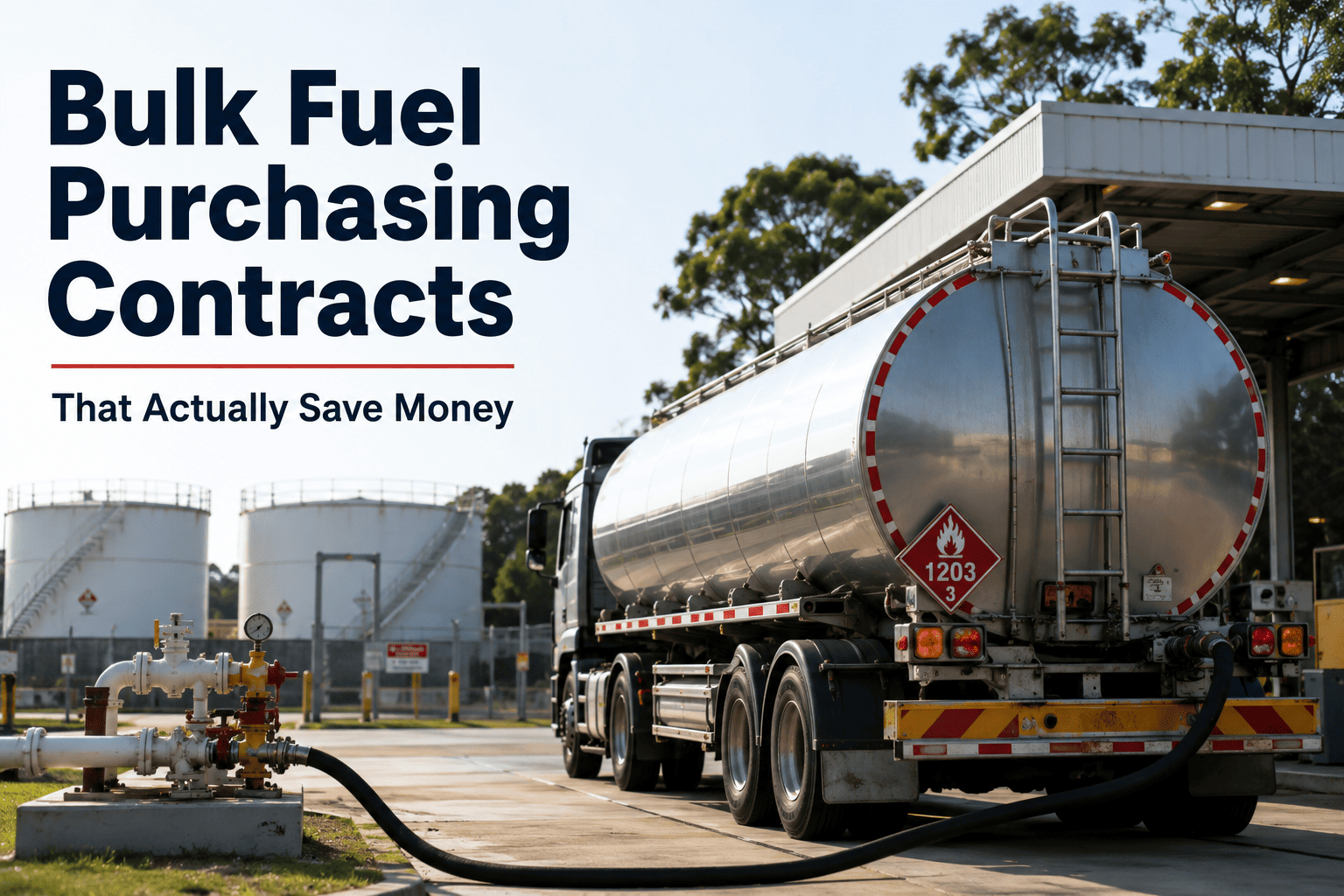
Bulk Fuel Purchasing Contracts That Actually Save Money
A practical breakdown of fixed-price, index-based, and hybrid fuel contracts — and how to tell which one protects your fleet's margin in 2026.
Three Ways to Lock In Your Fuel Price
Every bulk fuel agreement is built on one of three pricing structures. Picking the wrong one for your fleet's cash flow and risk tolerance is the single most common mistake fleet managers make when they first move away from retail pump purchases.
Fixed-Price Contract
Locks a flat per-gallon rate for a set term, usually 30 to 90 days and sometimes up to a year. Every invoice matches the number in your budget spreadsheet, no surprises either direction.
Index-Based Contract
Price moves with a published benchmark plus a fixed differential agreed up front. You ride the market in both directions instead of betting on a single locked number.
Hybrid Contract
Blends a fixed floor and ceiling with indexed pricing in between, sometimes called a collar. You keep downside protection while still capturing some upside when the market softens.
Stop guessing what your next fill-up will cost
OxMaint tracks every fuel delivery against your contracted rate, flags when a supplier bills above the agreed price, and rolls it all into one fuel cost dashboard.
Retail Volatility vs. a Locked Contract Rate
Retail diesel swung between roughly $3.20 and $5.64 a gallon in 2026 alone. A fixed contract doesn't chase that swing — it holds a flat line while the retail market moves underneath it.
Illustrative comparison based on 2026 diesel price movement. Your locked rate depends on term length, supplier, and regional supply conditions.
What Your Monthly Volume Unlocks
Discount depth and available contract structures both scale with volume. Use this table to see roughly where your fleet's monthly fuel use puts you.
| Monthly Volume | Typical Discount vs. Retail | Contract Type Fit | Est. Annual Savings |
|---|---|---|---|
| 1,000–5,000 gal | 5–10% | Fuel card + short fixed-price | $2,300–$9,100 |
| 5,000–15,000 gal | 10–18% | 30–90 day fixed-price | $9,100–$41,000 |
| 15,000–40,000 gal | 15–24% | Index-based with price cap | $41,000–$145,000 |
| 40,000–100,000 gal | 20–28% | Hybrid (fixed + indexed) | $145,000–$510,000 |
| 100,000+ gal | 25–30%+ | On-site storage + wholesale contract | $510,000+ |
Estimates assume a $3.80/gallon retail baseline. Actual savings vary by region, supplier, and negotiated contract terms.
Is Your Fleet Ready to Buy in Bulk
Bulk purchasing rewards predictability. These are the operational signals suppliers and fleet managers both look for before recommending a move off retail pump purchases.
Consistent Monthly Volume
Usage stays within a predictable band month over month, so a supplier can price your contract confidently.
Predictable Routes
Fixed lanes or job sites make it easier to forecast delivery timing and avoid take-or-pay penalties.
Storage or Terminal Access
An on-site tank or nearby terminal relationship removes the retail markup layer entirely.
Stable Cash Flow
Volume commitments and take-or-pay clauses require budget room even in a slower month.
Multi-Year Growth Plans
Longer contract terms only make sense if your fleet size and fuel needs are staying steady or growing.
High Price Exposure
Fleets that can't pass fuel surcharges to customers carry the most upside from locking in a rate.
Contract Terms Worth Negotiating
The headline rate is only part of the deal. These six clauses determine whether a bulk fuel contract actually protects your margin or just moves the risk somewhere less visible.
Frequently Asked Questions
How much can bulk fuel purchasing actually save my fleet?
What's the difference between fixed-price and index-based contracts?
Is bulk buying worth it for a small fleet?
How do I know if my supplier is honoring the contracted price?
What should I check before signing a bulk fuel contract?
Turn your fuel contract into a number you can enforce
Connect your fuel deliveries, invoices, and telematics data in one place. OxMaint checks every fill against your contracted rate so savings on paper become savings in your budget.