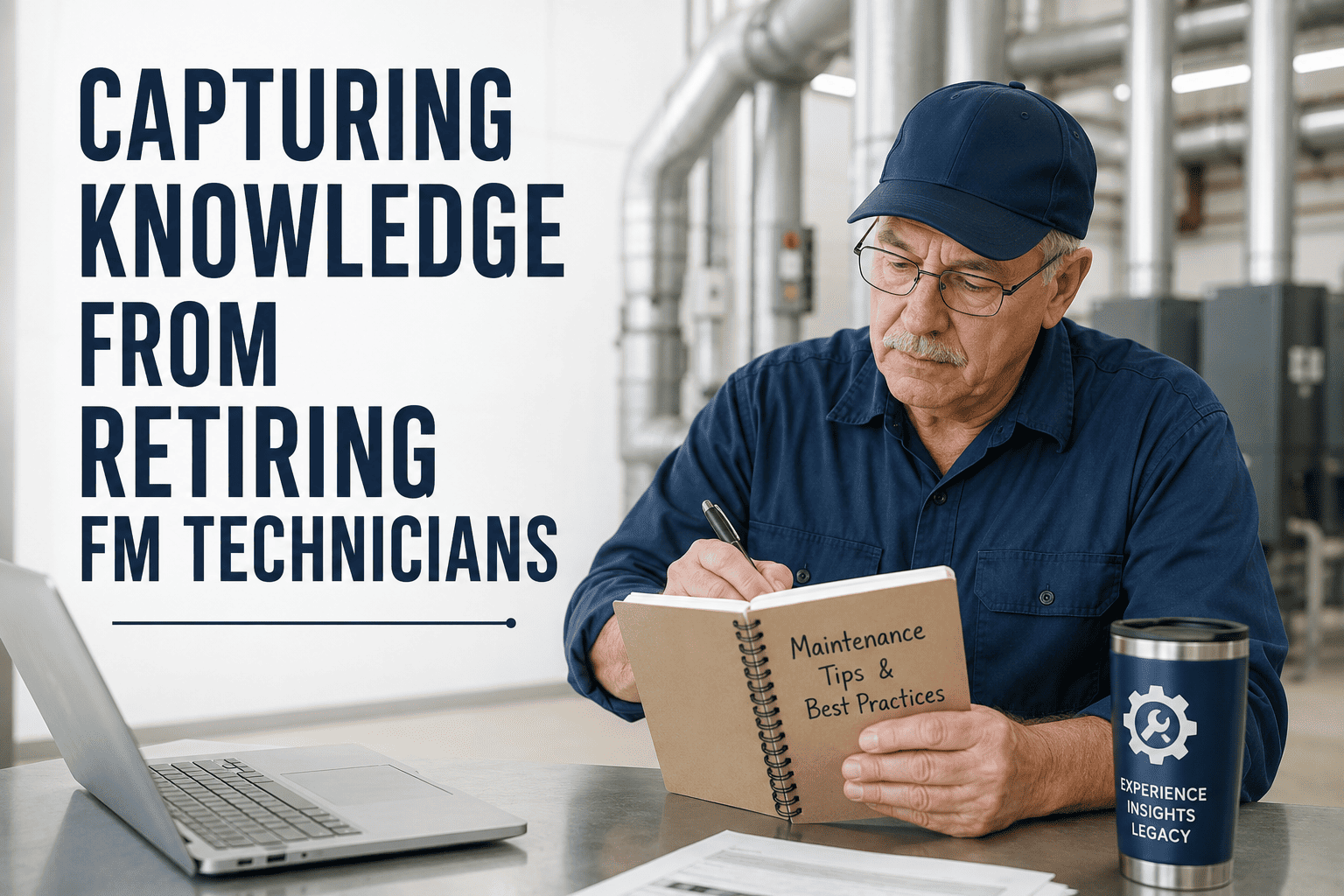
A technician who's spent twenty years on the same chiller plant doesn't just know how to fix it, they know it's making a sound it only makes right before the bearing goes. That kind of knowledge never makes it into an OEM manual, and right now it's leaving buildings faster than it's being replaced. The average time to repair a failed asset has climbed from 49 minutes to 81 minutes industry-wide, a jump tied directly to widening skills gaps as experienced technicians retire. Every repair that takes longer than it should is really a knowledge problem wearing a maintenance costume. See what's still undocumented on your own team, start free on OxMaint.
The Facility Skills Gap Is Already Showing Up in Your MTTR
Why repair times are climbing, what walks out the door with every retiring technician, and how facility teams are capturing that knowledge before it's gone for good.
The MTTR Climb, Minute by Minute
Repair times aren't rising because equipment got harder to fix, they're rising because fewer people on the floor have seen this specific failure before. The gap between 49 and 81 minutes is almost entirely diagnosis time lost to guessing.
What Actually Retires With Every Technician
An experienced technician carries an estimated 10,000+ hours of equipment-specific intuition, the sounds, smells, and vibration patterns no manual has ever captured. None of it transfers automatically.
Don't Let Institutional Knowledge Walk Out the Door
OxMaint captures repair procedures, job aids, and asset history as work happens, so a junior technician isn't starting from zero on a failure a senior tech has already solved.
Undocumented Knowledge vs a CMMS Knowledge Base
| What Happens | Undocumented (Tribal Knowledge) | Captured in a CMMS |
|---|---|---|
| A senior tech retires | Their repair history and shortcuts leave with them, permanently | Procedures and job aids stay attached to the asset record for every future technician |
| A junior tech hits an unfamiliar fault | Calls around, guesses, or waits for someone senior to be free | Pulls up the documented procedure and prior repair notes on the asset directly |
| A repeat failure occurs | Diagnosed from scratch each time since nothing was recorded | Failure history and root cause are already logged against the asset |
| A new hire onboards | Shadows a senior tech for months to absorb equipment knowledge informally | Works from a searchable library of procedures built from real jobs on real assets |
| Night shift hits a fault alone | No senior tech available, repair time stretches while they wait or guess | Same documented procedure available regardless of who's on shift |
4 Steps to Capture Knowledge Before It Retires
Knowledge capture works best as part of the daily job, not a separate project competing for a retiring technician's last few weeks.
Expert Perspective
The plants that handle this well don't treat knowledge capture as an exit interview. They build it into the normal workflow so a senior technician is documenting a repair the same week they're doing it, not trying to remember it three months before retirement. By the time someone actually leaves, the knowledge base is already built, and the transition is quiet instead of a scramble.
Frequently Asked Questions
Turn Retiring Expertise Into a Knowledge Base That Stays
OxMaint makes knowledge capture part of the daily workflow, so equipment expertise gets documented while it's still being used, not after it's already gone.