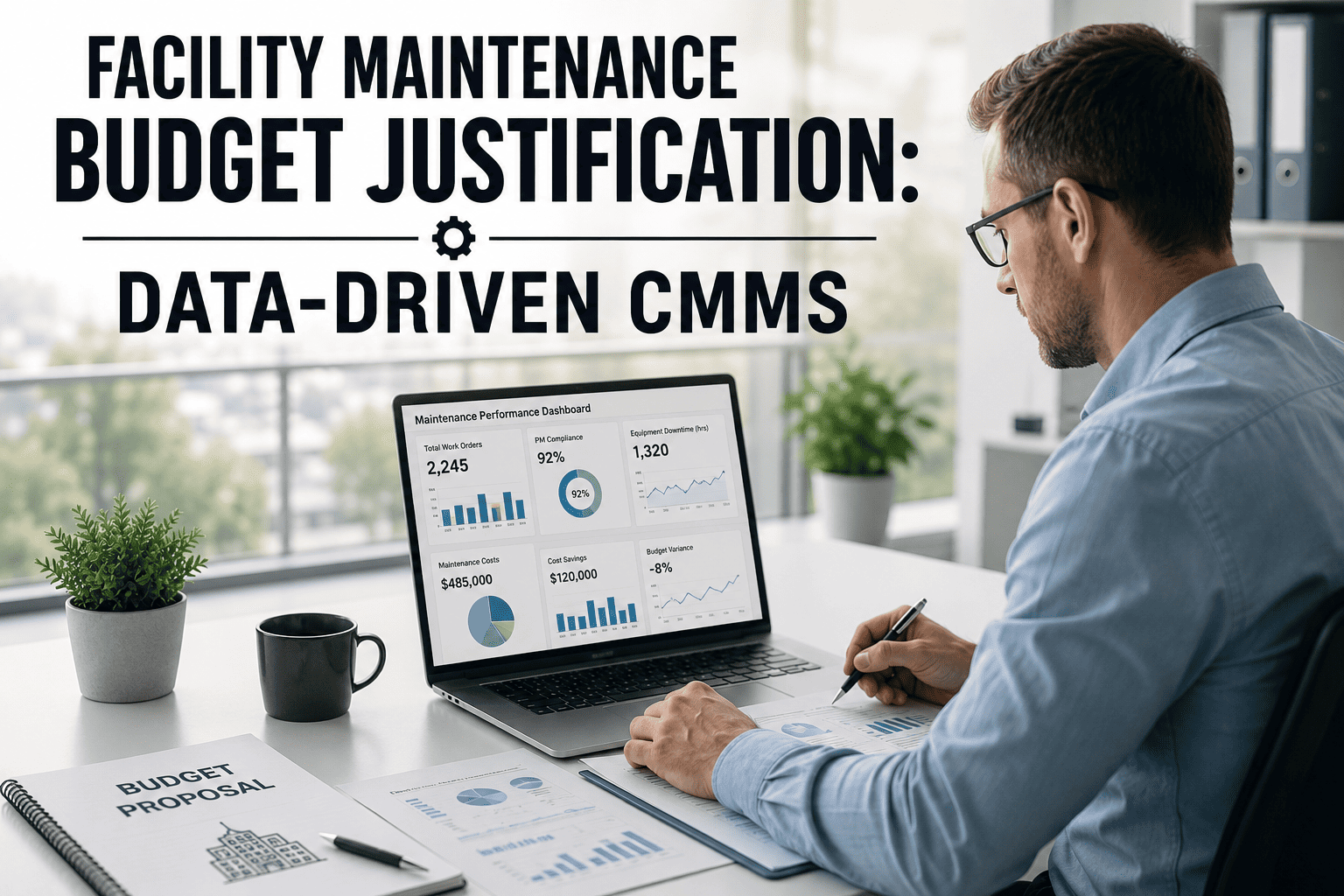
Most facility budgets don't fail because of one bad year, they fail one quiet decision at a time: a deferred inspection, a part bought at emergency pricing, a technician sent across the site because nobody flagged the closer option. Nearly 60 percent of facility teams are heading into flat or shrinking budgets this year, while the cost of maintenance technology, parts, and labor keeps climbing regardless. The teams that hold their numbers steady aren't the ones with bigger budgets, they're the ones who can see exactly where every dollar of maintenance spend is going before it's already gone. That kind of visibility is what turns a maintenance budget from a guess into a number finance actually trusts. See how cost tracking looks against your own assets, start free on OxMaint.
Facility Maintenance Cost Optimization: The 2026 Budget Guide
Where facility budgets actually leak, how much a CMMS realistically saves, and the four-step path from reactive spending to a maintenance budget you can defend line by line.
Where Maintenance Budgets Quietly Leak
A maintenance budget rarely blows up from one big mistake. It leaks from four ordinary habits that look harmless in isolation and add up to real money by the time the fiscal year closes.
Planned vs Reactive: Where the Budget Actually Goes
This is the single number that predicts most of a facility's maintenance cost trend. Teams running mostly on paper or spreadsheets stay stuck near an even split, while teams on a connected CMMS shift the balance toward planned work within a year.
Still Guessing Where Your Maintenance Dollars Go?
OxMaint ties parts, labor, and vendor spend to every work order automatically, so your next budget review starts with real numbers instead of estimates.
Manual Budget Tracking vs a CMMS-Driven Budget
| Budget Area | Spreadsheets & Manual Tracking | CMMS-Driven Budget |
|---|---|---|
| Parts spend | Reviewed once a year, usually after an overspend is already visible | Tracked per work order, flagged the moment a category trends over plan |
| Labor allocation | Overtime hours reconciled weeks later from timesheets | Planned vs reactive hours visible in real time by technician and site |
| Vendor spend | Invoices approved against memory of what was actually done | Invoices checked against the logged scope of the matching work order |
| Cost per asset | Rarely calculated, so failing equipment isn't flagged until replacement | Running total per asset, surfacing repair-vs-replace decisions early |
| Multi-site comparison | Each site reports separately with no common baseline | Every site measured on the same cost metrics in one dashboard |
4 Steps to a Leaner Maintenance Budget
Cost optimization is a sequence, not a single project. Facility teams that actually lower spend follow this order rather than jumping straight to new software.
Expert Perspective
Every facility budget I've reviewed has the same hidden problem: the money isn't gone, it's just not visible until the invoice arrives. Teams that get their reactive spend under control aren't spending less on maintenance overall, they're spending it earlier, on the smaller planned job instead of the expensive emergency one. That shift alone accounts for most of the savings finance actually sees.
Frequently Asked Questions
Turn Your Maintenance Budget From a Guess Into a Plan
OxMaint tracks parts, labor, and vendor spend against every asset automatically, so you walk into your next budget review with numbers, not estimates.