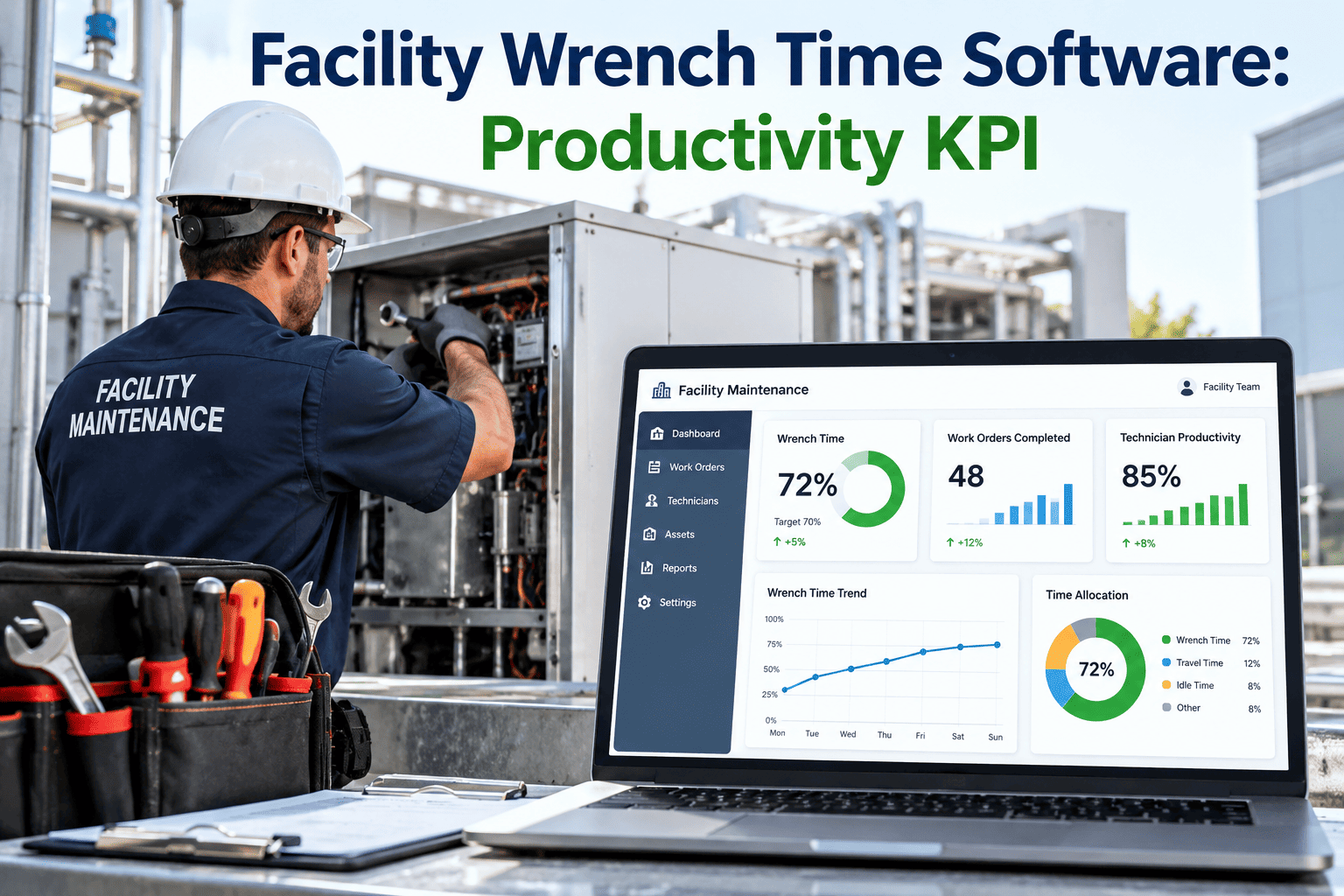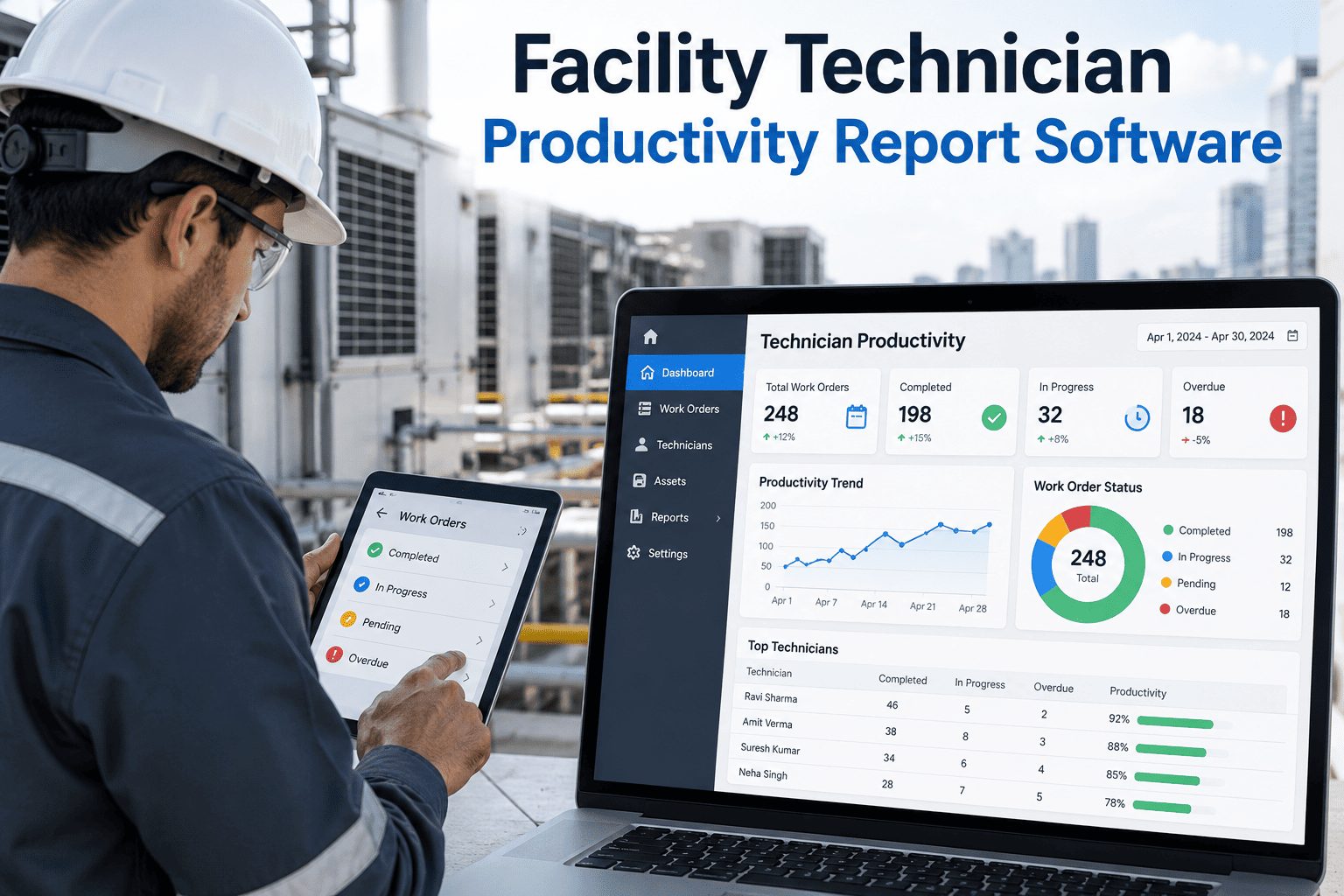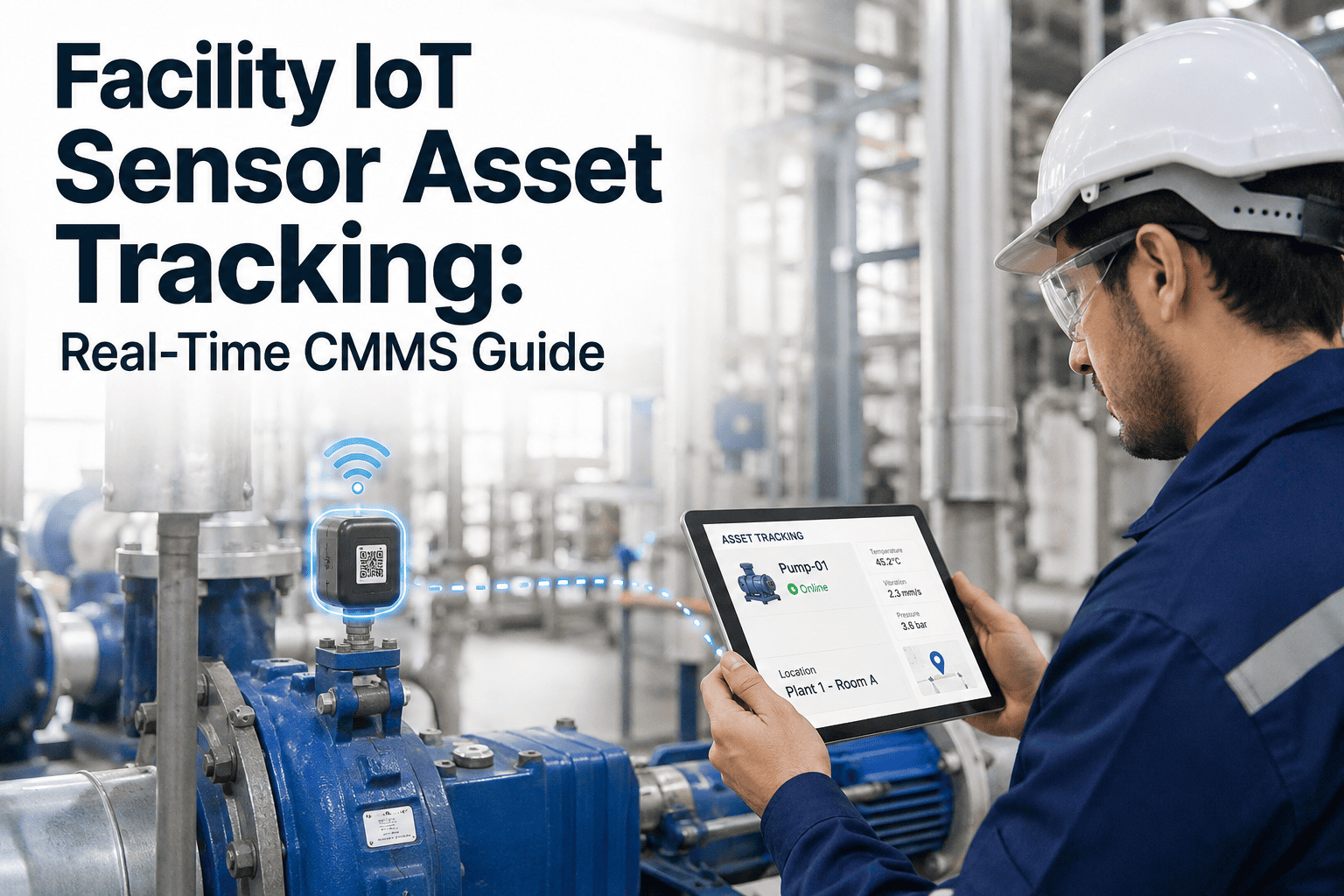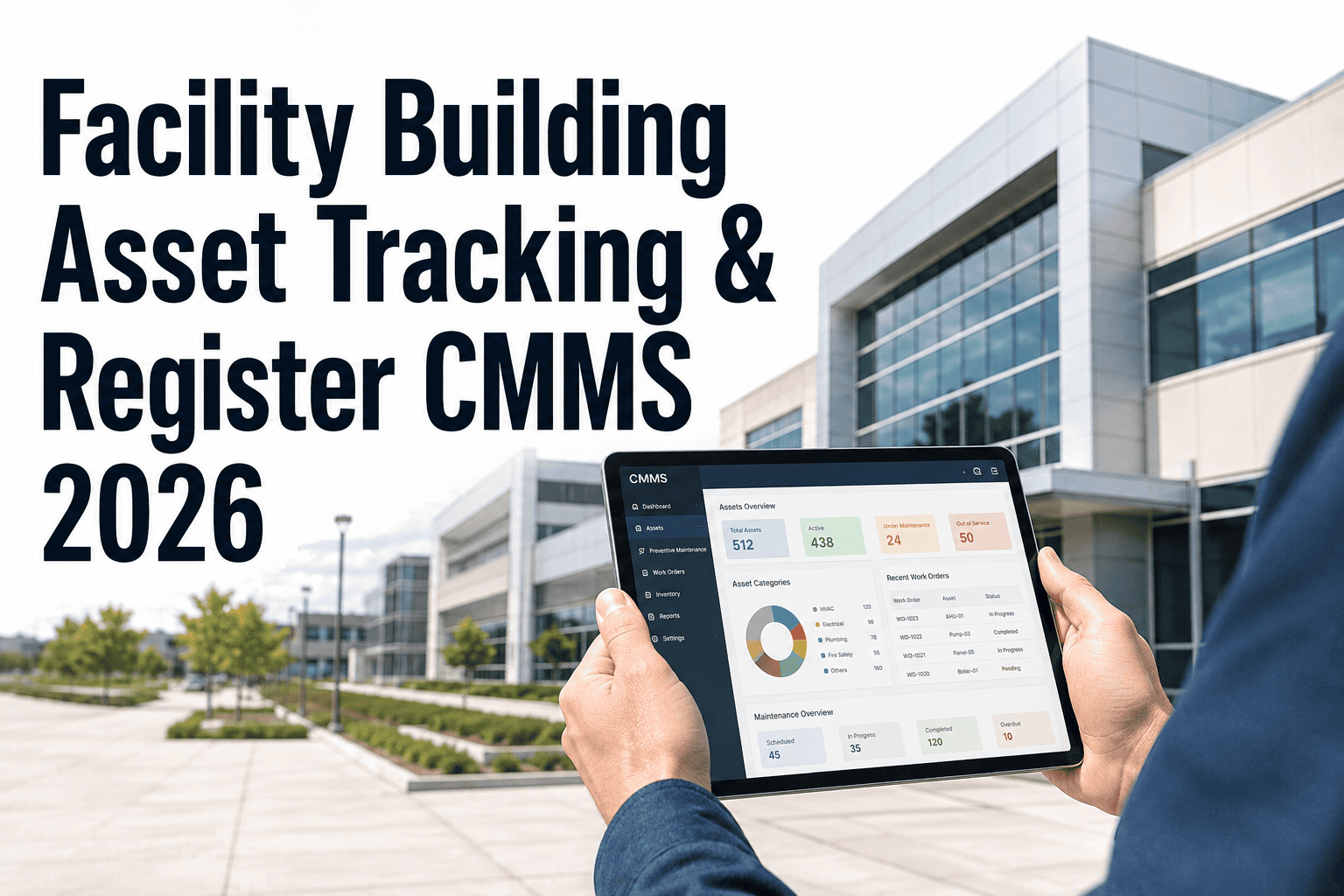
Facility technician labor efficiency is the single biggest lever maintenance leaders control—yet most facility teams still lose 40–55% of their wrench time to manual tracking, parts hunting, and paperwork. A modern CMMS facility labor platform like OxMaint eliminates the clipboard-and-spreadsheet tax that erodes productivity, giving technicians instant mobile work orders, automated PM scheduling, and real-time asset history so more hours go to actual repair work. If your facility wrench time sits below 35%, you are effectively paying 3 technicians to deliver the output of 2. This labor efficiency CMMS guide breaks down how to measure wrench time accurately, where the hidden hours leak, and how facility teams achieve 20–30% productivity gains within the first quarter of implementation—Start Free Trial to see your baseline improve in weeks, not quarters.
How many wrench-time hours is your facility losing to manual work-order tracking?
The average facility technician spends under 35% of a shift with tools in hand. The rest is consumed by paperwork, searching for parts, waiting for approvals, and logging data into spreadsheets. OxMaint's AI-powered CMMS recovers those lost hours—automating dispatch, eliminating manual entry, and giving technicians everything they need on a mobile device.
What is wrench time and why most facilities measure it wrong
Wrench time—the percentage of a technician's shift spent directly performing hands-on maintenance—averages just 25–35% in facilities without a CMMS. World-class maintenance organizations sustain 50–55% by eliminating manual tracking friction.
Facility teams that rely on paper work orders or spreadsheets consistently undercount lost time because they only capture what gets logged—never the time spent walking to a stockroom, calling a supervisor for approval, or re-entering the same asset data into three different systems. A facility productivity CMMS like OxMaint closes that visibility gap by passively capturing timestamps at every workflow stage: work-order assignment, travel, parts checkout, repair start, repair complete, and closeout. No manual timesheets required.
Five hidden sinks draining facility technician efficiency
Before you can improve facility technician labor efficiency, you have to know where the day actually goes. Here are the five biggest time sinks OxMaint eliminates.
Manual work-order creation and data entry
Technicians spend 45–90 minutes per shift handwriting or re-typing work-order details, asset IDs, failure codes, and labor hours into spreadsheets—time that produces zero maintenance value.
Parts search and stockroom waits
Without real-time inventory visibility, technicians walk to the storeroom, discover a part is out of stock, and wait or improvise—averaging 30–50 minutes of wasted travel time per work order.
Approval bottlenecks and dispatch delays
Reactive work orders sit in an inbox or on a supervisor's desk for hours before assignment. Manual prioritization means critical assets wait while low-priority tasks jump the queue.
Missing or incomplete asset history
Technicians arrive on-site without prior repair history, fault patterns, or OEM manuals—turning a 20-minute fix into a 90-minute diagnostic session because context is buried in a filing cabinet.
Duplicate data entry across systems
The same work-order data gets entered into a maintenance log, an ERP, and a compliance spreadsheet—tripling administrative overhead and introducing transcription errors that skew KPI reporting.
Calculating the real cost of low wrench time
Use this formula to quantify what manual tracking is actually costing your facility—and the payback a CMMS delivers.
A 180-asset facility with 8 technicians
A mid-sized manufacturing facility runs 8 maintenance technicians at an average burdened rate of $52/hr. Each technician loses 3.2 hours per day to manual tracking, parts hunting, and paperwork across 250 working days.
Recovering even 40% of that loss through OxMaint's automated work-order dispatch, mobile access, and parts reservation delivers $133,120 in annual savings—before factoring downtime avoided, overtime reduced, or asset life extended.
How OxMaint's CMMS boosts facility technician productivity
OxMaint maps directly to the time sinks above—each capability targets a specific source of lost labor and delivers a measurable productivity outcome.
AI-automated work-order dispatch
OxMaint's AI auto-assigns work orders to the right technician based on skill, location, and availability—eliminating 2–6 hour manual dispatch delays and cutting work-order creation time by 80%.
Mobile-first technician app
Technicians receive work orders, log labor, capture photos, and close out jobs from any phone or tablet—removing the clipboard round-trip and cutting data entry to under 60 seconds per task.
Real-time spare-parts inventory
OxMaint shows live stock levels and reserves parts at work-order creation—technicians know exactly where to go and never waste 30 minutes discovering a critical part is out of stock.
Predictive maintenance analytics
OxMaint's AI analyzes asset history and condition data to predict failures before they happen—shifting technicians from reactive firefights to planned, efficient work that maximizes wrench time.
Facility manual tracking reduction: before vs. after OxMaint
See how each workflow stage changes when a facility moves from spreadsheets and paper to an AI-powered CMMS.
| Workflow Stage | Manual / Spreadsheet | OxMaint CMMS | Time Recovered |
|---|---|---|---|
| Work-order creation | 15–20 min handwritten per WO | Auto-generated from PM schedule or request | ~18 min/WO |
| Dispatch & assignment | 2–6 hrs in supervisor queue | AI auto-assigns in real time | 2–6 hrs/WO |
| Parts retrieval | 30–50 min search + stockout delays | Reserved at creation, location mapped | 25–40 min/WO |
| Diagnostic & history lookup | 15–40 min digging through files | Full asset history on mobile device | 15–35 min/WO |
| Closeout & data entry | 20–30 min re-entering into 2–3 systems | One-tap closeout, auto-synced | 20–30 min/WO |
| Total time recovered per work order | ~1.5–3 hrs | ||
A 90-day timeline to lift facility wrench time above 45%
Follow this phased rollout to move from baseline measurement to measurable productivity gains within one quarter.
Baseline & digitize
Migrate all assets, PM schedules, and spare-parts data into OxMaint. Go live with mobile work orders for all technicians. Eliminate paper work-order forms on day one.
Optimize & automate
Activate AI dispatch rules, auto-PM triggers, and parts reservation. Review wrench-time reports weekly and identify remaining bottlenecks in travel and approval flow.
Predict & sustain
Enable predictive maintenance alerts on critical assets. Shift 60% of work from reactive to planned. Wrench time crosses 45% as technicians arrive prepared with parts and context.
"We went from 28% wrench time to 47% in one quarter. OxMaint eliminated the clipboard round-trip entirely—our technicians now spend their day fixing things, not filling out forms. The AI dispatch alone saved us two hours per technician per shift."
Ready to recover $100K+ in lost facility labor?
See OxMaint on your assets—book a 30-minute demo and we'll show you exactly how many wrench-time hours your facility can recover in the first 90 days.
Facility technician labor efficiency & CMMS: your questions answered
What is a good wrench time benchmark for facility maintenance teams?
A facility wrench time of 50–55% is considered world-class per SMRP benchmarks. Most facilities without a CMMS sit between 25–35%. Reaching 45% is a realistic first-year target after implementing a facility productivity CMMS like OxMaint, which eliminates manual tracking and streamlines dispatch, parts retrieval, and closeout.
How does a CMMS improve facility technician labor efficiency?
A CMMS improves labor efficiency by automating work-order creation, dispatching jobs to the nearest qualified technician, providing real-time asset history on mobile devices, and reserving spare parts at assignment. This eliminates the 3+ hours per shift that technicians typically lose to paperwork, searching for parts, and waiting for approvals. Start Free Trial to measure your baseline in days.
How much does manual work-order tracking cost a facility per year?
A facility with 8 technicians earning $52/hr loses approximately $332,800 per year in labor value to manual tracking, data entry, parts searching, and dispatch delays—roughly 3.2 hours per technician per day. Recovering 40% of that loss through a CMMS delivers over $130K in annual savings.
How long does it take to see wrench-time improvement after implementing a CMMS?
Most facility teams see a measurable wrench-time improvement within 30 days of going live—typically a 5–10 point gain from eliminating paper work orders alone. By day 90, after activating AI dispatch and predictive maintenance, facilities routinely reach 45%+ wrench time. Book a Book a Demo session to see a customized 90-day rollout plan.
Can OxMaint integrate with our existing ERP and inventory systems?
Yes. OxMaint integrates with major ERP systems (SAP, Oracle, NetSuite, and others) to sync spare-parts inventory, purchase orders, and asset data in real time. This eliminates duplicate data entry and ensures technicians always see live stock levels—directly reducing the 30–50 minutes per work order typically lost to parts-related delays.
Stop paying technicians to do paperwork
Give your facility team the AI-powered CMMS that turns lost hours into wrench time. See OxMaint on your assets in a 30-minute demo—or start free today and digitize your first work order in under 10 minutes.
Free 14-day trial · No credit card required