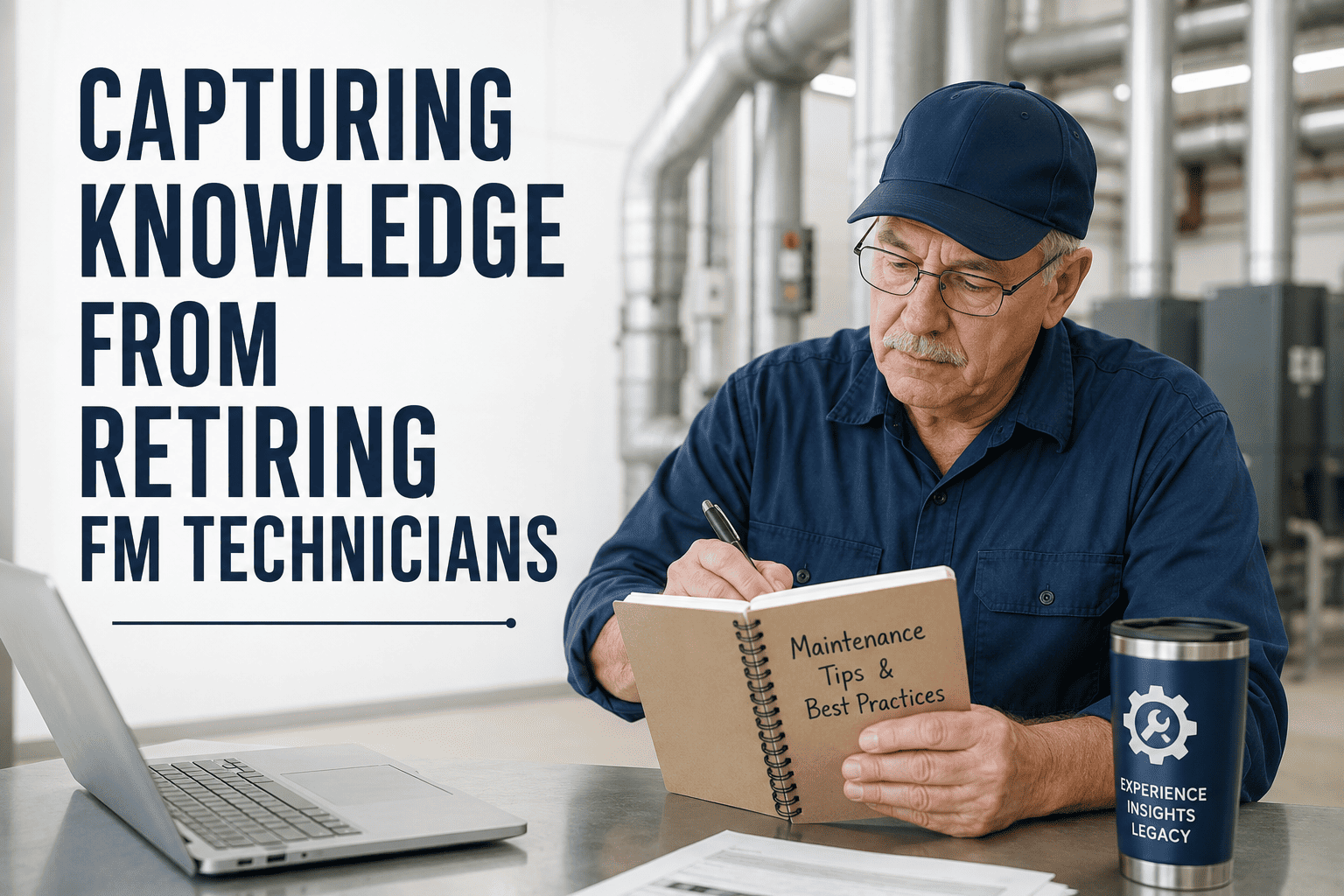
Facility maintenance teams lose an estimated $50B annually as experienced technicians retire and take decades of undocumented know-how with them — and most organizations have no structured FM knowledge capture process to stop the bleed. Retiring technician knowledge in facility operations spans everything from which boiler valve sticks in cold weather to the exact sequence for restarting a chiller after a fault, insight that lives only in a senior tech's head. Without deliberate facility knowledge transfer, new hires spend 18–24 months reaching baseline competence, while meantime-to-repair on legacy equipment doubles. OxMaint solves this by embedding FM expertise capture directly into daily work orders, maintenance history and mobile job aids, so institutional knowledge is captured automatically — start a Start Free Trial or read on to build your retention playbook.
FACILITY KNOWLEDGE RETENTION
40% of skilled FM technicians will retire by 2034. Will their expertise survive the exit?
Every retirement without a knowledge-transfer plan permanently erases 20–30 years of troubleshooting intuition, vendor relationships and asset-specific quirks. OxMaint captures that facility technician knowledge into structured work-order history, photo logs and predictive models — before it walks out the door.
THE STAKES
Why FM tribal knowledge is the most expensive asset you never tracked
Facility maintenance teams rely on FM tribal knowledge — unwritten procedures, equipment quirks, and repair shortcuts — for up to 60% of day-to-day troubleshooting decisions. When a senior technician retires, that knowledge rarely transfers through a formal facility knowledge capture process; instead, it vanishes, and the organization pays for the loss every time an asset breaks down.
STEP-BY-STEP GUIDE
How to capture retiring technician knowledge before the window closes
A structured FM knowledge transfer program works best when it is phased over 6–12 months and embedded in existing workflows rather than treated as a side project. Below is a proven five-phase timeline for facility knowledge retention that pairs human-led documentation with a CMMS platform like OxMaint to make captured knowledge instantly searchable.
Identify at-risk knowledge & critical assets
Cross-reference your asset register against technician assignments. Flag any equipment where 70%+ of repair history is tied to one technician eligible for retirement within 36 months. Prioritize FM institutional knowledge on life-safety systems, legacy HVAC plant, and custom-built machinery with thin documentation.
Conduct structured video & procedure capture
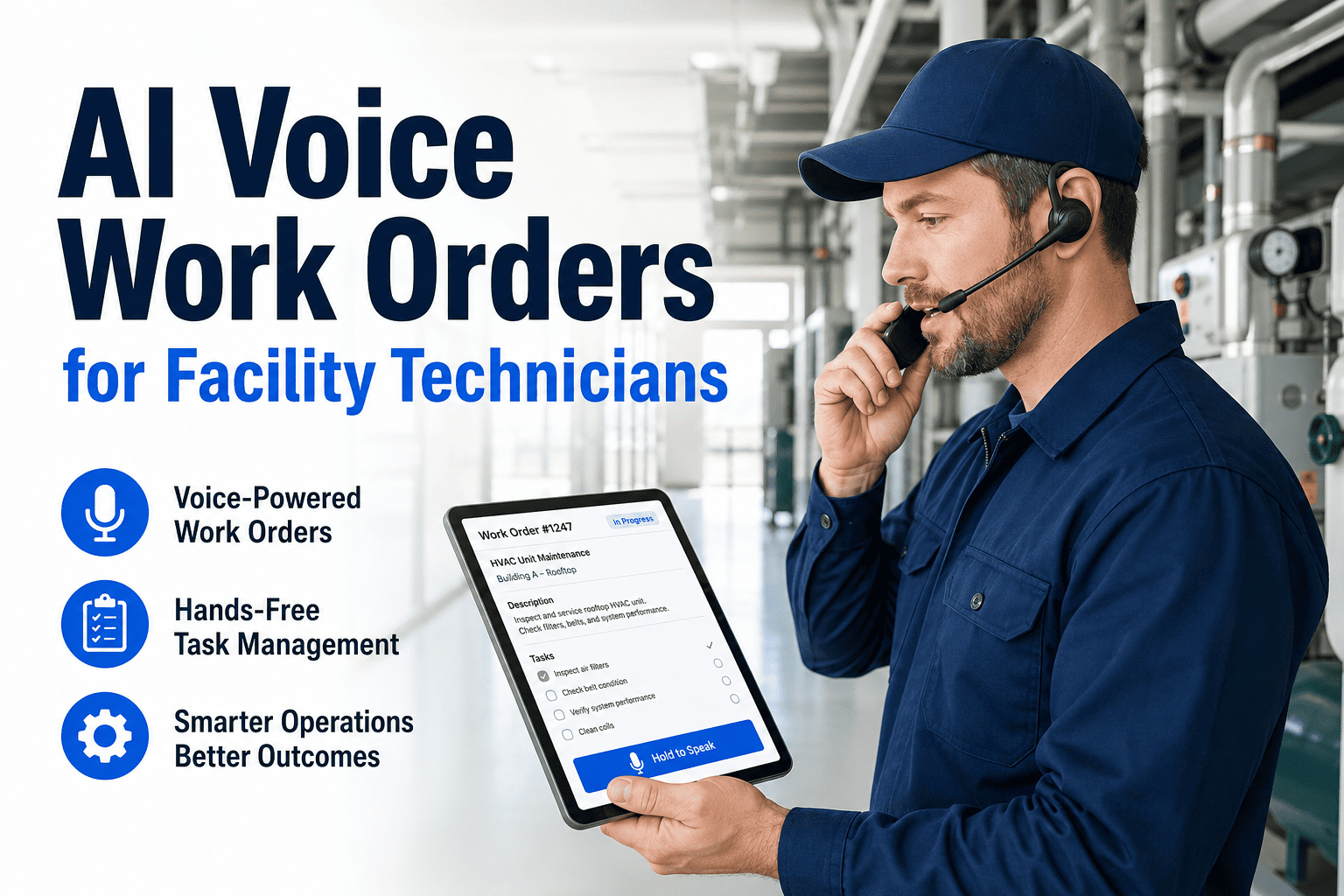
Record 5–10 minute video walkthroughs of complex repairs, lockout/tagout procedures and seasonal startup/shutdown sequences. The retiring technician narrates while performing the task. Upload clips to OxMaint work-order templates so the next tech sees them on their mobile device at the point of repair.
Build mobile job aids & interactive checklists
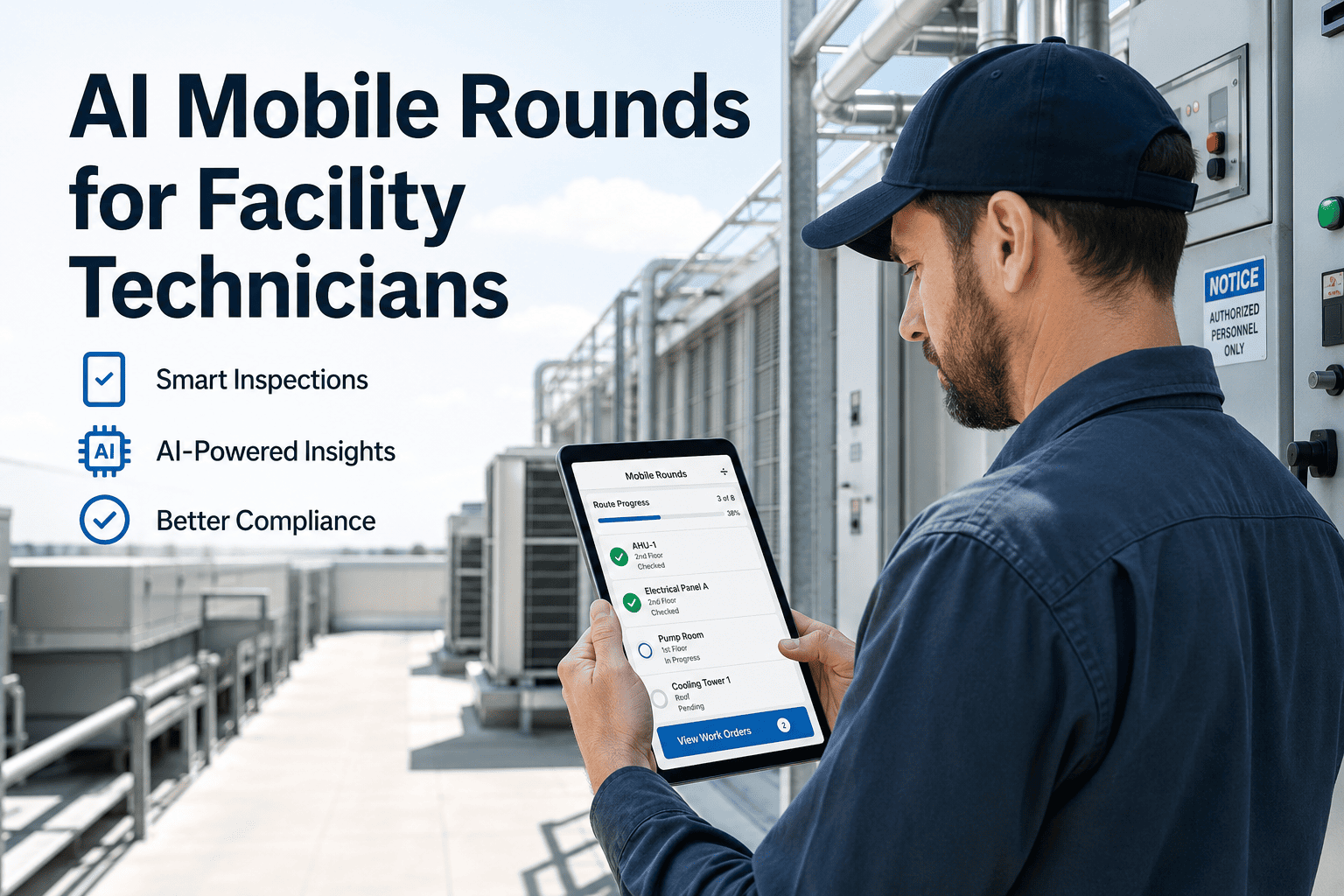
Translate captured FM expertise into step-by-step mobile job aids inside OxMaint. Every checklist item can carry a photo, a safety warning and a diagnostic question — turning facility technician knowledge into a guided workflow that a first-year tech can follow safely and correctly.
Run paired-shadow maintenance shifts
Pair the retiring technician with a junior tech for live work orders. The senior tech reviews the junior's completed work in OxMaint, annotates discrepancies and approves the closure. This validates the captured knowledge against reality and surfaces gaps the documentation missed.
Audit, validate & lock the knowledge base
Conduct a final audit: can a mid-level technician resolve the top 20 fault codes on critical assets using only OxMaint job aids and history? Where the answer is no, schedule targeted re-capture. Lock validated procedures into version-controlled templates before the retirement date.
WORKED EXAMPLE
A 180-asset facility that cut MTTR 34% by capturing senior-tech expertise
Before: Knowledge in one head
A 320,000 sq ft corporate campus maintained a 22-year-old central chiller plant primarily through one senior technician. When he gave 6 months' notice, the FM team discovered he was the only person who knew the bypass sequence for the aging primary-secondary pumping system and the trick to restarting compressor #2 after a low-oil trip. Estimated cost of his undocumented knowledge: $87K/year in extended downtime and contractor callouts.
After: Knowledge in the system
Over 4 months the team captured 14 video procedures, built 9 OxMaint job-aid checklists and ran 12 shadow-shift work orders. The senior tech retired on schedule. In the first year post-retirement, MTTR on the chiller plant dropped 34% versus the pre-capture baseline because the replacement team followed structured procedures instead of guessing — and every completed work order added new facility knowledge to the system automatically.
CAPTURE CHANNELS
Four channels every FM knowledge management program must include
Relying on a single capture method — usually a Word document SOP — is why most facility knowledge retention initiatives fail within a year. A robust program layers four complementary channels so that different types of FM expertise are captured in the format best suited to each.
Structured Work-Order History
Every completed work order in OxMaint captures labor hours, parts used, fault codes, resolution notes and photos. Over time this becomes a searchable library of asset-specific repair knowledge — no extra effort required from technicians.
Video Procedure Library
Short narrated clips of complex or infrequent procedures — chiller annual maintenance, switchgear inspection, fire-pump test. Tagged to assets and fault codes in OxMaint, they play on a tech's phone at the point of work.
Interactive Mobile Job Aids
Step-by-step checklists with embedded safety warnings, diagnostic decision trees and reference photos. These convert tribal know-how into a guided workflow that ensures consistency regardless of who performs the task.
Predictive Failure Patterns
OxMaint's AI analyzes years of work-order data to identify which asset conditions, vibration readings or temperature trends preceded past failures — encoding a retiring tech's instinct into algorithms that flag risk before breakdown.
HOW OXMAINT HELPS
Turn retirements into systematized facility expertise — not knowledge loss
OxMaint is built specifically to embed facility expertise capture into the daily maintenance workflow, so knowledge is recorded as a byproduct of doing the work — not as a separate documentation project nobody has time for. Here is how four OxMaint capabilities map directly to the FM knowledge retention challenge:
Digital work orders with rich history
Every work order captures resolution notes, photos, parts and labor — creating a permanent, searchable knowledge base per asset. New technicians see every prior repair, fault code and fix before they touch the equipment.
Mobile job aids & PM checklists
Build interactive, photo-rich checklists that guide junior techs through complex procedures step by step. Retiring technicians validate the content, then the system enforces it on every subsequent work order.
AI-powered predictive maintenance
OxMaint's AI ingests years of work-order and sensor data to detect failure patterns a retiring tech would have recognized by instinct — then alerts the team before the next breakdown happens.
Asset registry with full lifecycle tracking
A single source of truth for every asset — manuals, warranty data, repair history, spare-parts mapping and attached video procedures. When a senior tech leaves, their knowledge stays attached to the equipment, not lost with their departure.
COMPARISON
Spreadsheet SOPs vs. a CMMS-powered knowledge base
Most facilities try to manage FM knowledge transfer through shared drives, paper logbooks or spreadsheet-based SOPs. The comparison below shows why those methods consistently fail to retain facility technician expertise — and why teams switch to OxMaint.
| Knowledge Dimension | Spreadsheets & Paper SOPs | OxMaint CMMS Knowledge Base |
|---|---|---|
| Capture effort | Separate documentation project; rarely updated after first draft | Captured automatically through daily work orders and checklists |
| Searchability | Buried in folders; findability depends on naming conventions | Searchable by asset, fault code, technician or keyword in seconds |
| Accessibility at point of work | Printed or laptop-only; rarely on the floor | Mobile-first; procedures and history on phone at the asset |
| Knowledge validation | No mechanism to verify SOP matches reality | Every work order updates the record; discrepancies flagged for review |
| AI pattern detection | Impossible — no structured data to analyze | AI detects recurring failure patterns and predicts next breakdown |
| Cost of knowledge loss | High — knowledge leaves with the technician | Near zero — knowledge lives in the system, not the person |
Don't let the next retirement erase 30 years of facility expertise
See how OxMaint captures your retiring technicians' knowledge into structured work-order history, mobile job aids and AI-driven failure prediction — before the window closes.
FAQ
Facility knowledge capture from retiring technicians — answered
What is FM knowledge capture and why does it matter for facility operations?
FM knowledge capture is the structured process of documenting the procedures, troubleshooting intuition and equipment-specific expertise held by experienced facility maintenance technicians before they retire or leave. It matters because up to 60% of day-to-day FM decisions rely on this undocumented knowledge, and losing it can double MTTR on critical assets while forcing expensive contractor callouts. Capturing it into a CMMS like OxMaint ensures the knowledge stays with the equipment, not the individual.
How far in advance should we start facility knowledge transfer before a technician retires?
Ideally, begin a formal knowledge transfer program 6–12 months before the retirement date. This allows time for video capture, job-aid development and paired shadow shifts without rushing. You can start the process immediately by booking a demo of OxMaint to see how work-order history and mobile checklists structure the capture from day one.
What are the best methods for capturing retiring technician knowledge in a facility?
The most effective methods combine structured video walkthroughs of complex procedures, interactive mobile job aids with photos and safety warnings, paired shadow shifts where a junior tech works alongside the retiring expert, and passive capture through detailed work-order documentation in a CMMS. Layering all four ensures different knowledge types — procedural, diagnostic, safety and historical — are preserved in the format best suited to each.
How does a CMMS support FM knowledge management and retention?
A CMMS like OxMaint supports knowledge retention by capturing resolution notes, photos, parts and labor data on every work order, creating a searchable per-asset knowledge base that grows automatically. It also hosts interactive job aids and checklists at the point of work, and uses AI to detect failure patterns from historical data — effectively encoding a senior technician's instinct into predictive alerts that survive their departure.
How much does it cost when facility maintenance knowledge is not captured?
Organizations that fail to capture retiring technician knowledge typically see a 2.4× increase in MTTR on legacy equipment, 25–40% more unplanned downtime in the first year after a senior tech leaves, and significant contractor escalation costs — often $50K–$100K+ per critical asset annually. These losses dwarf the cost of implementing a CMMS-based knowledge capture program, which most facilities recover within 3–6 months through reduced downtime alone.
Start capturing your team's expertise today
Deploy OxMaint in days, not months. Your retiring technicians' knowledge becomes structured work-order history, guided job aids and predictive intelligence — permanently.
Free 14-day trial · No credit card