Campus restrooms are one of the most direct signals of institutional pride that students, faculty, and campus visitors observe — and one of the most frequently cited complaints in campus satisfaction surveys. Research from the National Association of College and University Business Officers shows that restroom condition ranks in the top three factors affecting overall campus satisfaction scores, alongside food service and campus safety. Yet most campus facilities operations manage restroom inspections through paper checklists, verbal shift assignments, and manual supervisory walkthroughs — a system that creates visible service gaps, inconsistent compliance, and zero documentation trail when institutional standards are questioned. Campuses that implement automated CMMS inspection scheduling with mobile digital checklists report 43% improvement in restroom hygiene compliance scores, 55% reduction in complaint-driven work orders, and complete audit documentation for health department and accreditation inspections without manual record assembly. When a restroom failure becomes a student retention signal or a health inspection finding, the cost of documentation gaps far exceeds the cost of the system that prevents them. To see how automated campus restroom inspection works in practice, start a free trial or book a demo and see digital inspection workflows built for campus custodial operations.
Campus Facilities · Hygiene Compliance · CMMS Automation
Campus Restroom Hygiene Inspection Software: Automated, Documented, and Defensible
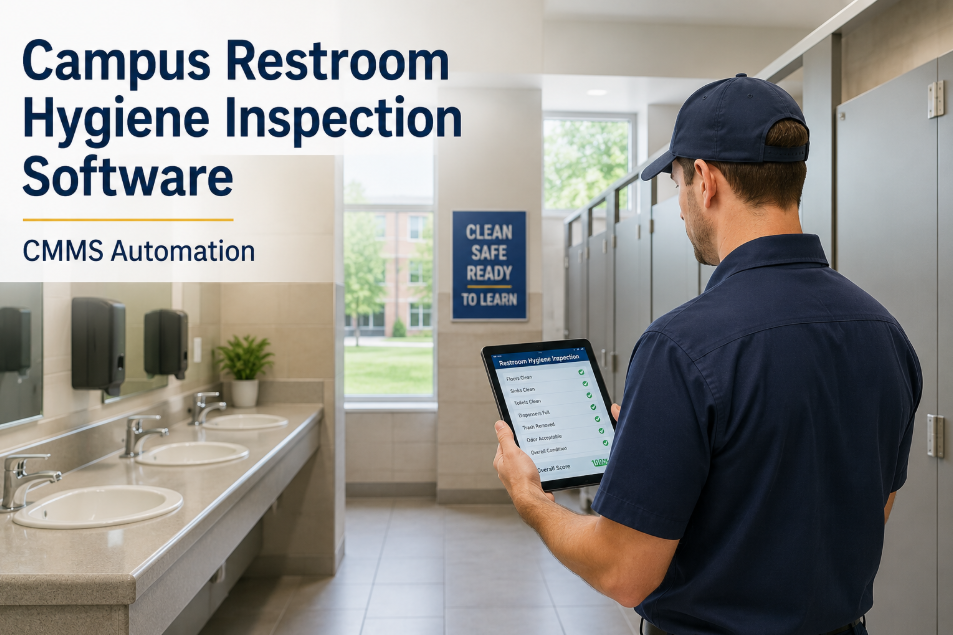
Replace paper checklists with mobile digital inspections — and give every custodian, supervisor, and facilities director real-time visibility into restroom condition across every building on campus.
Top 3
campus satisfaction driver — restroom condition ranks alongside food service and safety in student surveys
43%
improvement in restroom hygiene compliance scores for campuses using automated digital inspection schedules
55%
reduction in complaint-driven custodial work orders after systematic digital inspection program implementation
0hrs
audit prep time for health department inspections when digital records are auto-generated from every completed inspection
Paper Checklists Leave Gaps. Digital Inspection Records Leave None.
Oxmaint schedules recurring restroom inspections automatically, delivers checklists to custodians on mobile, captures photo evidence of deficiencies, and auto-generates corrective work orders — all timestamped and stored in an audit-ready format.
Start a free trial and deploy your first restroom inspection schedule today, or
book a demo to see digital inspection workflows across a multi-building campus.
The 6 Ways Paper Restroom Inspection Fails Campus Facilities
01
Completion Is Unverifiable
A paper checklist can be signed without the inspection occurring. There is no timestamp, no GPS location data, and no photo evidence. When a student complaint references a restroom that was "just checked," facilities has no objective record to determine whether the inspection actually happened or whether standards were met.
02
Defect-to-Repair Chain Breaks
A custodian notes a broken soap dispenser on a paper checklist. The note gets lost between shift handoffs. The next inspection round finds the same broken dispenser — and another notation. Without automatic work order generation from inspection deficiencies, repair tasks fall into a documentation gap between the custodial and maintenance functions.
03
No Portfolio-Level Visibility
A facilities director managing 80 restroom locations across a university campus cannot review 80 paper checklists per inspection cycle. Without aggregated digital data, supervisors never see the pattern: Building C restrooms fail supply compliance 60% of cycles while Building A is consistently compliant. Pattern blindness prevents systematic improvement.
04
Health Department Audits Create Scrambles
State health departments and accreditation bodies periodically audit campus restroom maintenance records. Producing 12 months of inspection records from paper binders takes 8–15 hours of staff time and still delivers incomplete documentation. Digital records export in minutes — sorted by building, date, and inspector.
05
Inconsistent Standards Across Custodial Staff
Paper checklists with 8–12 items leave interpretation gaps. One custodian marks "soap dispensers — OK" when there are 4 pumps remaining; another marks the same category "OK" with 40 pumps remaining. Digital checklists with defined pass/fail thresholds, photo requirements, and quantity logging eliminate interpretation variance from compliance scoring.
06
Complaint Tracking Is Disconnected
A student submits a restroom complaint through the facilities request portal. The complaint triggers a work order — but there is no automatic connection to the inspection schedule or the inspection history for that location. Repeated complaints about the same location never trigger a systematic review of whether inspection frequency or standards need adjustment.
Campus Restroom Inspection Checklist — Standard Digital Format
A complete campus restroom inspection covers four categories with defined pass/fail criteria. Digital checklists enforce completeness — every item must be addressed before the inspection record can be submitted.
Category 1
Cleanliness and Sanitation
All toilet and urinal fixtures cleaned and sanitized
Sink basins and countertops free of debris and residue
Floor mopped — no pooling water or visible debris
Mirrors cleaned — no water spots or smearing
Partition walls and doors wiped down
Odor status — no chemical or waste odors present
Category 2
Supply Levels
Toilet paper — quantity logged per stall (threshold: 50%+)
Paper towels or air dryer operational
Soap dispensers — quantity logged (threshold: 30%+)
Seat covers present (where applicable)
Waste receptacles at less than 75% capacity
Feminine hygiene dispensers stocked (applicable restrooms)
Category 3
Equipment and Fixtures
All flush valves operating correctly
Faucets operational — no drips or low pressure
Soap and paper towel dispensers functional
Lighting — all fixtures operating, no burned bulbs
Stall locks and hinges functional
Ventilation fan operational
Category 4
Safety and Accessibility
Emergency eyewash station operational (lab-adjacent restrooms)
ADA grab bars secure — no looseness or play
Floor surface non-slip — no damaged tile or mat displacement
Door hardware functional — ADA lever handles operational
No standing water or slip hazards
Emergency call pull (residential halls) functional and unobstructed
How Oxmaint Automates Campus Restroom Inspection
Scheduled Inspections
Automatic Inspection Dispatch by Building, Shift, and Frequency
Configure inspection frequency per building type — high-traffic academic buildings every 2 hours during class sessions, residence halls twice daily, administrative buildings once per shift. Oxmaint dispatches checklist assignments to the assigned custodian's mobile at the scheduled time — no supervisor reminder required.
Mobile Checklists
Standardized Digital Forms With Photo Evidence Capture
Custodians complete checklists on mobile with defined pass/fail fields, quantity logging for supplies, and mandatory photo capture for any failed item. Every submission is timestamped, GPS-tagged to the building location, and signed by the completing staff member. Interpretation variance is eliminated by explicit criteria.
Auto Work Orders
Deficiencies Generate Maintenance Work Orders Instantly
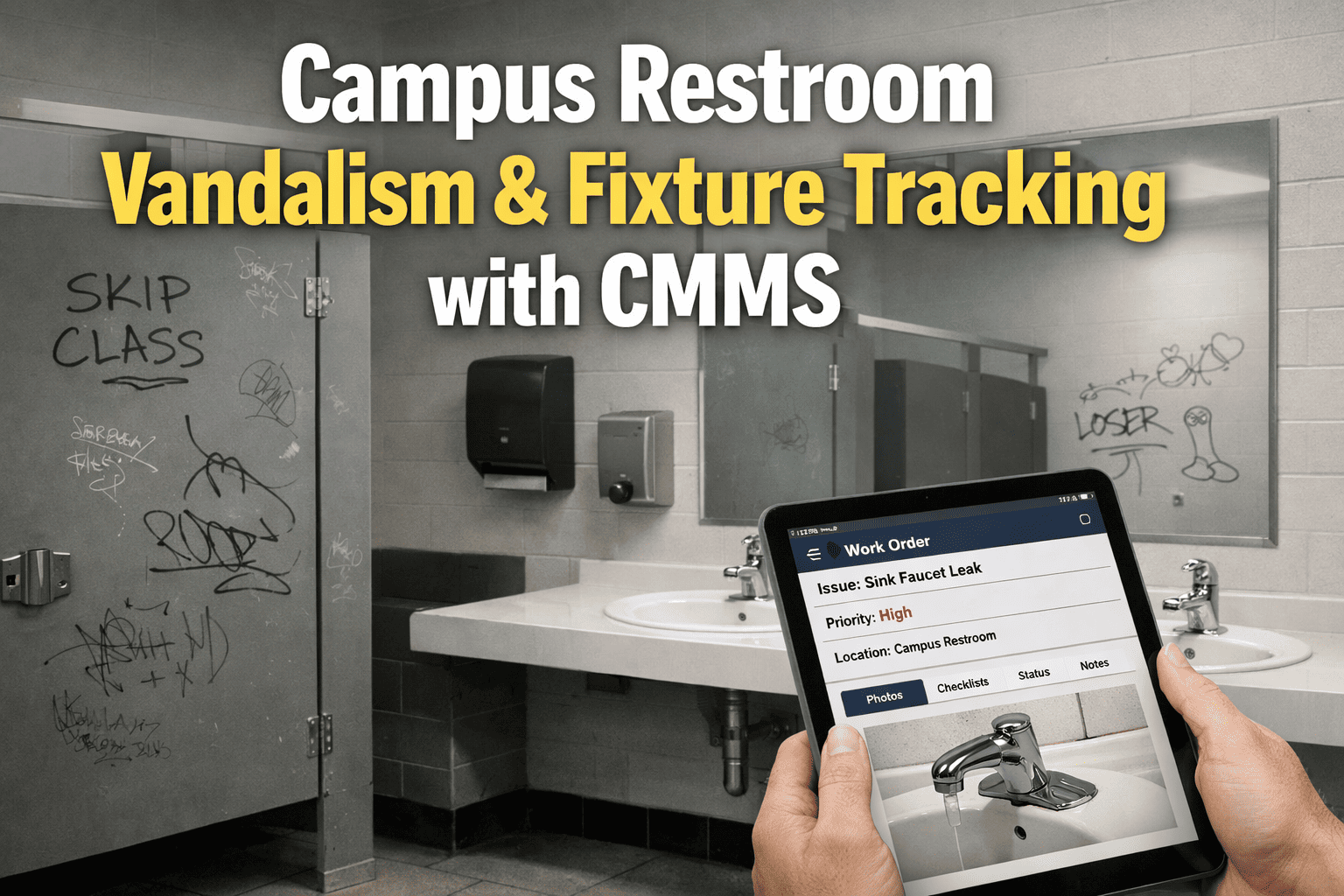
When an inspection flags a broken flush valve, non-functional dispenser, or lighting failure, Oxmaint automatically generates a corrective work order — assigned to the appropriate maintenance trade with the inspection photo attached. No phone call, no radio dispatch, no paper note. The defect-to-repair chain is unbroken.
Compliance Dashboard
Real-Time Hygiene Compliance Score Across Every Campus Restroom
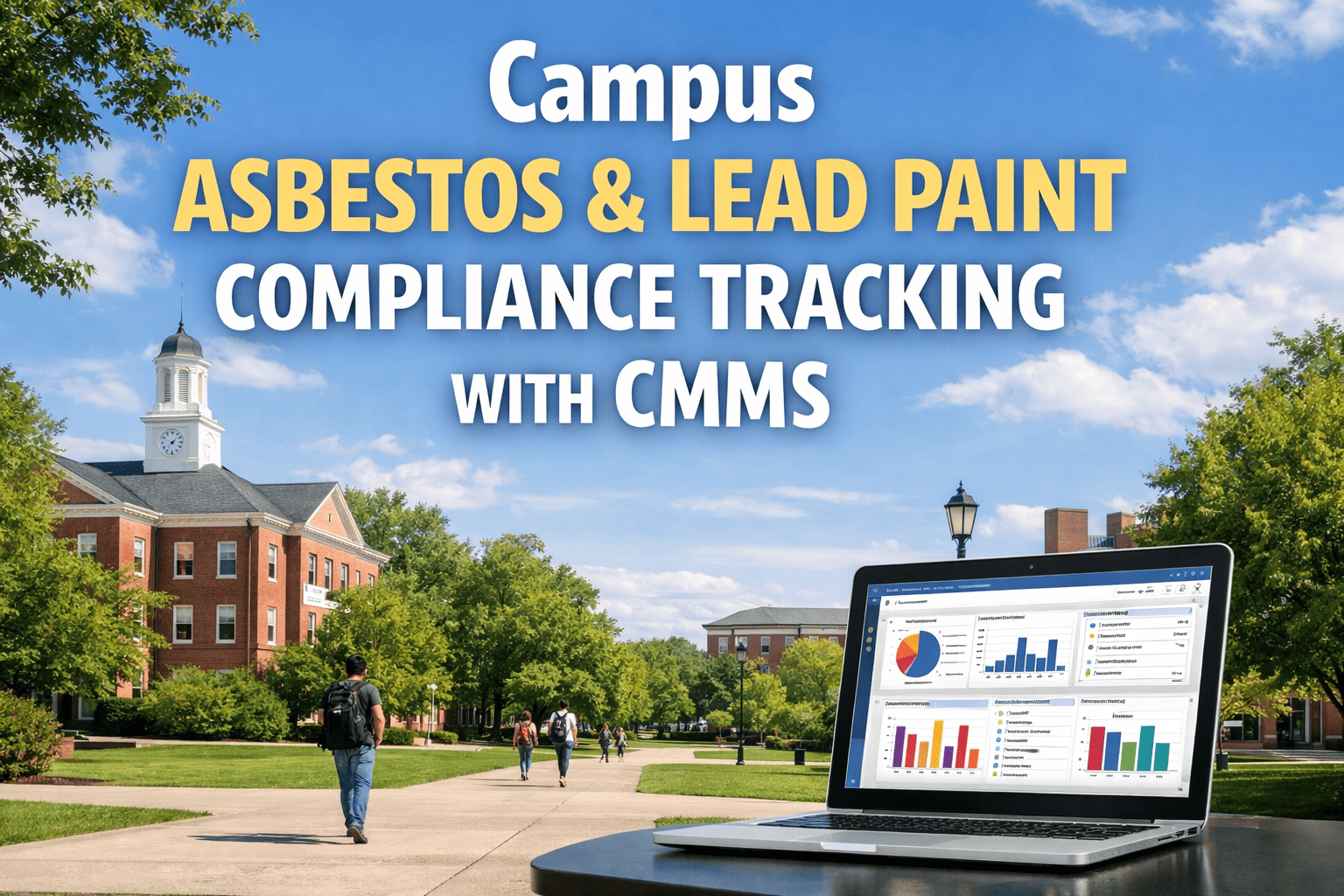
Facilities directors see compliance scores by building, by inspector, by day, and by checklist category — updated in real time. Identify which locations consistently fail supply compliance versus which fail equipment compliance. Allocate custodial resources based on actual failure patterns, not assumption.
Trend Analysis
Inspection History Reveals Systemic Issues Before Complaints Arrive
A restroom that passes 7 of 8 inspections but consistently fails soap dispenser supply reveals a restocking frequency gap — not an equipment problem. Oxmaint's trend data makes these patterns visible within 30 days, allowing facilities to correct systemic supply issues before they generate complaint-driven work orders or student survey entries.
Audit Exports
Health Department and Accreditation Records in One Click
Export 12 months of restroom inspection records, sorted by building and date, with completion rates, failure categories, and corrective action closure times — in minutes. When the state health department or accreditation team requests documentation of campus hygiene maintenance practices, the response is a digital export, not a binder search.
Inspection Frequency Standards by Campus Building Type
| Building Type |
Recommended Inspection Frequency |
Peak Period Adjustment |
Critical Compliance Category |
| High-Traffic Academic Buildings |
Every 1.5–2 hours during class sessions |
Every 60 minutes during exam periods |
Cleanliness + Supply Levels |
| Residence Halls |
2× daily minimum — morning and evening |
Add midday during move-in week and semester start |
Supply Levels + Safety |
| Athletics and Recreation Facilities |
After each major event plus daily baseline |
Every 45 min during large events (1,000+ attendees) |
Cleanliness + Floor Safety |
| Research and Lab Buildings |
Once daily — plus after known heavy lab periods |
Pre-semester deep clean inspection |
Safety Equipment + ADA |
| Administrative Buildings |
Once daily during business hours |
Pre-event inspection for large administrative gatherings |
Cleanliness + Equipment |
| Dining and Food Service Areas |
Every 45–60 minutes during service hours |
Health department standard — no adjustment permitted |
All Categories — regulatory standard |
What Digital Restroom Inspection Delivers — Documented Results
43%
hygiene compliance improvement
campuses moving from paper to digital inspection within 90 days — measured by inspection pass rate and complaint frequency reduction
55%
fewer complaint-driven work orders
when systematic digital inspection detects and corrects deficiencies before students or faculty encounter them and submit requests
100%
inspection completion verifiability
every digital inspection is timestamped and GPS-tagged — no unverifiable paper submissions, no supervisor walkthroughs needed to verify completion
8 min
average audit export time
versus 8–15 hours of manual record assembly from paper binders when health departments or accreditation bodies request inspection documentation
Frequently Asked Questions
How do digital restroom inspections differ from traditional custodial checklists?
Traditional paper checklists record what a custodian chose to write — there is no timestamp verification, no GPS confirmation that the inspector was physically present, no photo evidence for failed items, and no automatic connection to repair workflows. Digital CMMS inspections enforce completeness (every field must be completed before submission), capture GPS location and timestamp automatically, require photo documentation for any failed checklist item, and generate corrective work orders immediately when deficiencies are noted. The outcome difference: paper checklists create a compliance record that may or may not reflect reality; digital inspections create a verifiable, timestamped record that is defensible to health departments, accreditation bodies, and institutional leadership.
What compliance standards govern campus restroom maintenance and hygiene?
Campus restrooms fall under multiple overlapping standards: OSHA 29 CFR 1910.141 (sanitation standards for general industry) requires adequate toilet facilities, potable water, and sanitary conditions for employees; state health codes (vary by state) apply to food service adjacent restrooms and student residential facilities; ADA Standards for Accessible Design (2010) specify fixture heights, clearances, grab bar placement, and hardware requirements; fire codes govern exit signage and lighting within restroom areas; and accreditation bodies (HLC, SACSCOC, regional accreditors) review facilities condition as part of institutional adequacy assessments. Digital inspection records that document systematic compliance with each category provide the defense for all of these regulatory layers simultaneously.
How should inspection frequency change during high-demand campus events?
Standard inspection frequency scales by occupancy — and campus events create occupancy spikes that standard schedules don't capture. Best practice: configure event-triggered inspection protocols in your CMMS. When a facilities event notification is received (commencement, athletics event, open house, orientation), the CMMS increases inspection frequency automatically for the affected buildings for the duration of the event window. For high-attendance events (over 2,000 occupants), APPA recommends restroom inspection every 30–45 minutes during peak periods. Digital scheduling makes this adjustment automatic — custodial supervisors don't need to manually reassign staff or communicate schedule changes to every shift worker.
How do restroom inspection scores connect to student retention and campus reputation?
The connection is direct and documented. APPA's research indicates facilities quality — including restroom condition — ranks among the top five campus visit impressions for prospective students. The National Survey of Student Engagement consistently surfaces facilities cleanliness in open-ended satisfaction responses. More directly: campus review platforms (Niche, College Confidential, Reddit forums) show restroom complaints appearing in negative campus reviews disproportionately to their frequency as facilities issues. A sustained decline in restroom hygiene scores is a leading indicator of facility satisfaction deterioration that eventually surfaces in enrollment metrics. Digital inspection data gives facilities directors the evidence to address this before it becomes an institutional reputation issue visible in rankings and enrollment trend data.
Oxmaint CMMS · Campus Hygiene Inspection
Every Campus Restroom — Inspected, Documented, and Corrected Automatically.
Oxmaint schedules recurring restroom inspections across every campus building, delivers digital checklists to custodians on mobile, captures photo evidence of deficiencies, auto-generates corrective work orders, and stores every inspection record in audit-ready format. Replace paper walkthrough checklists with a system that actually verifies compliance — and proves it when asked.