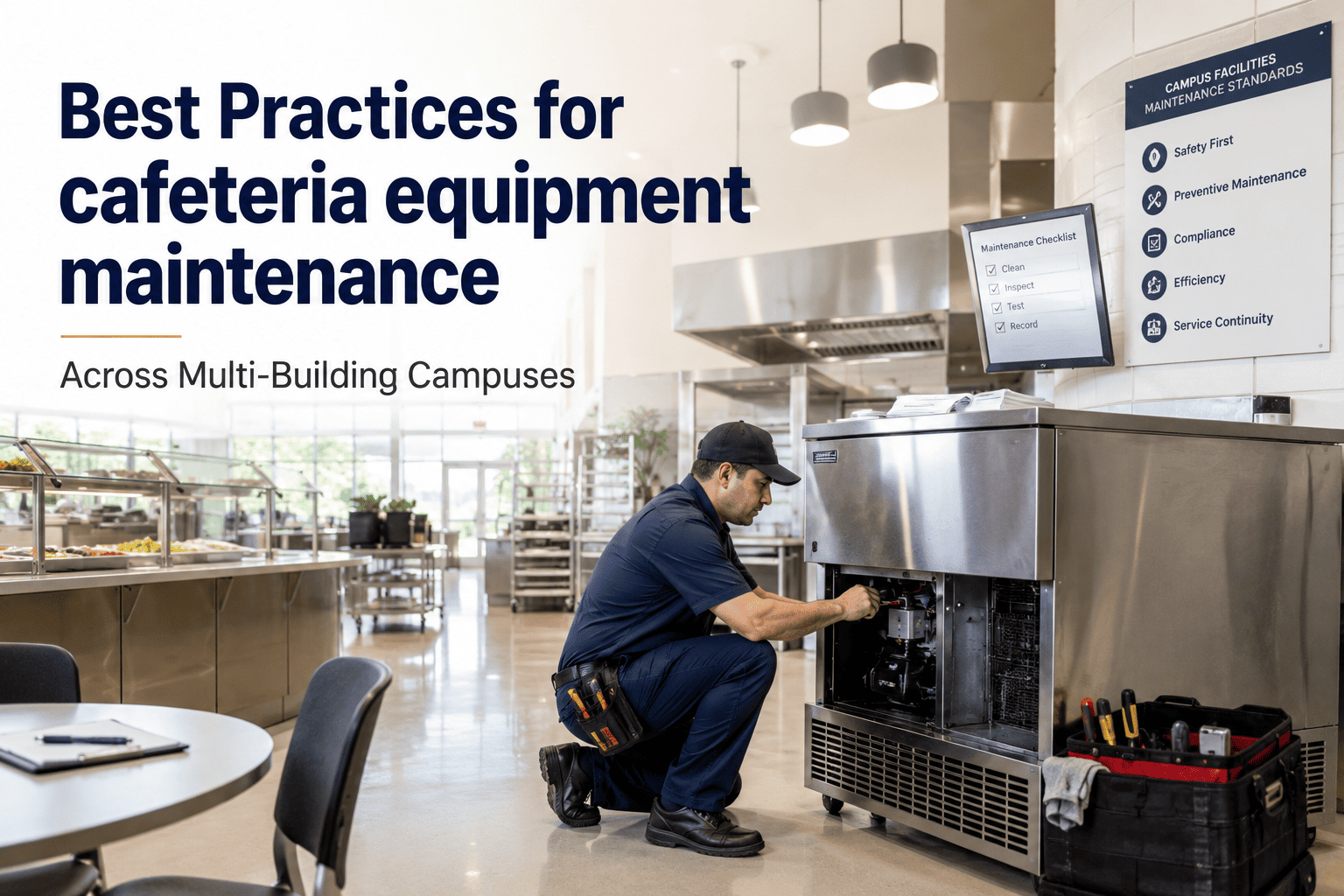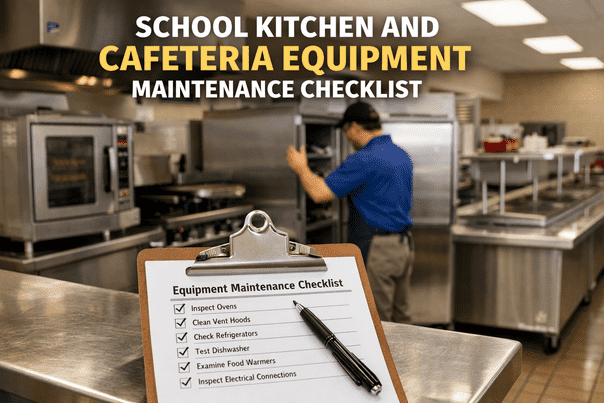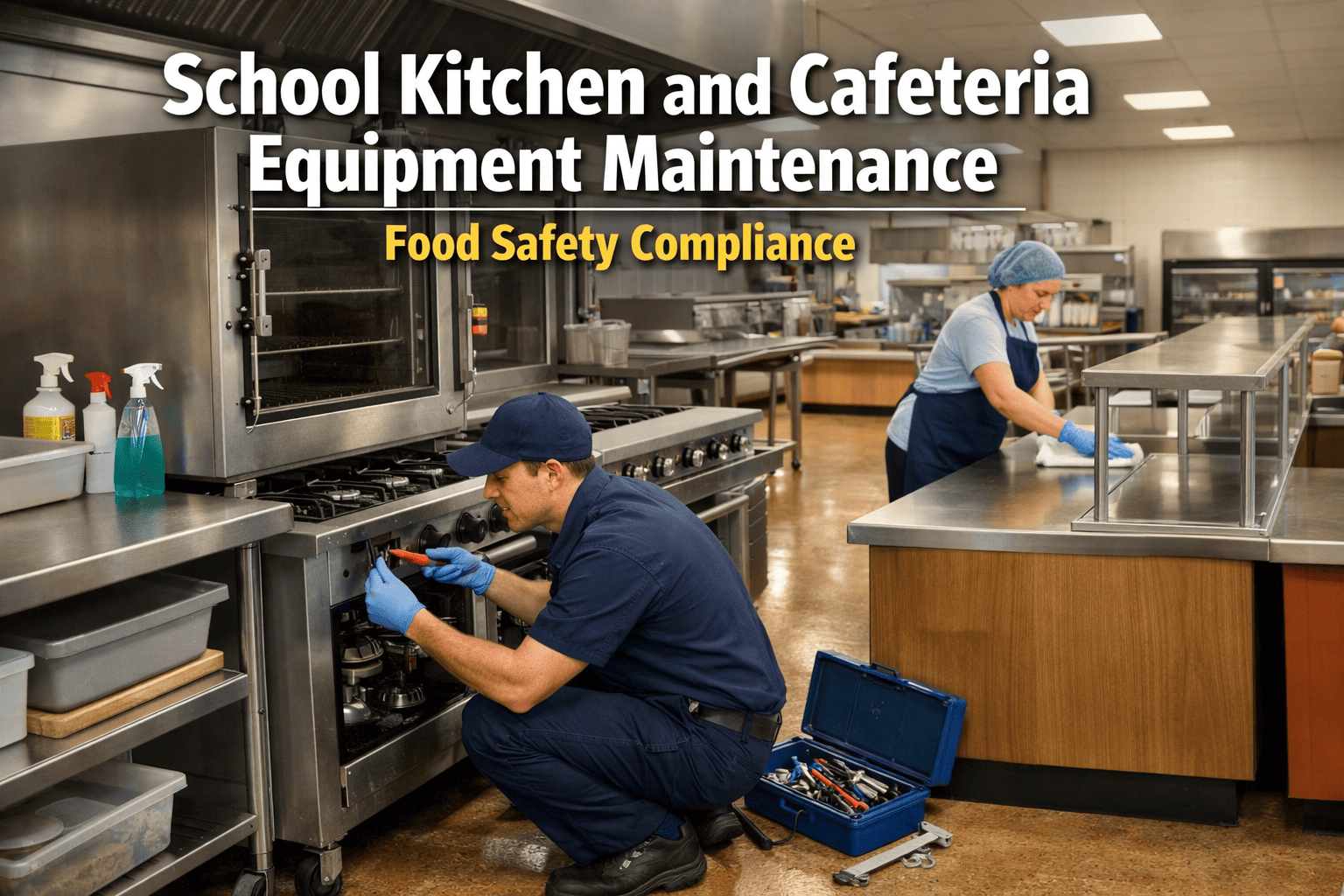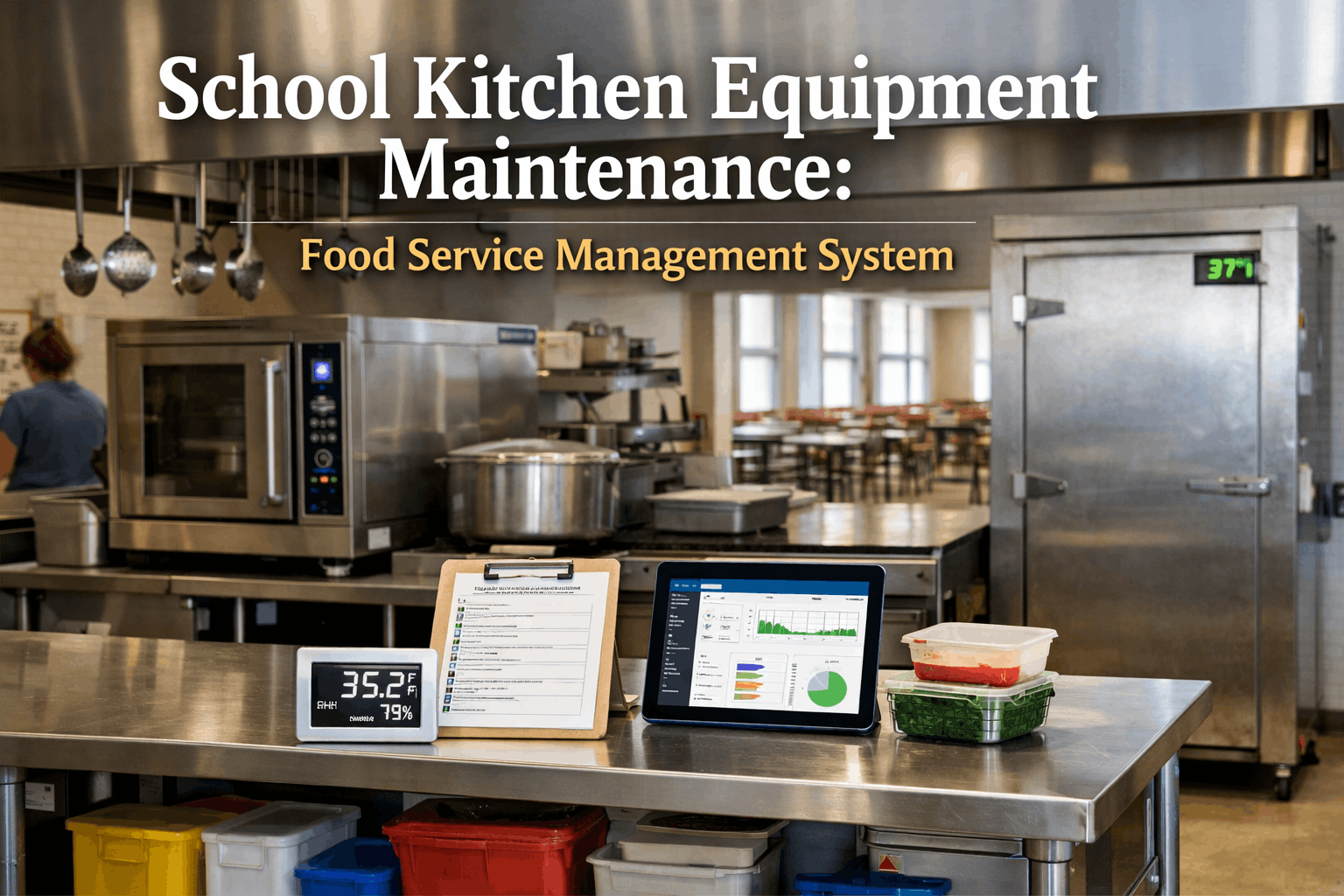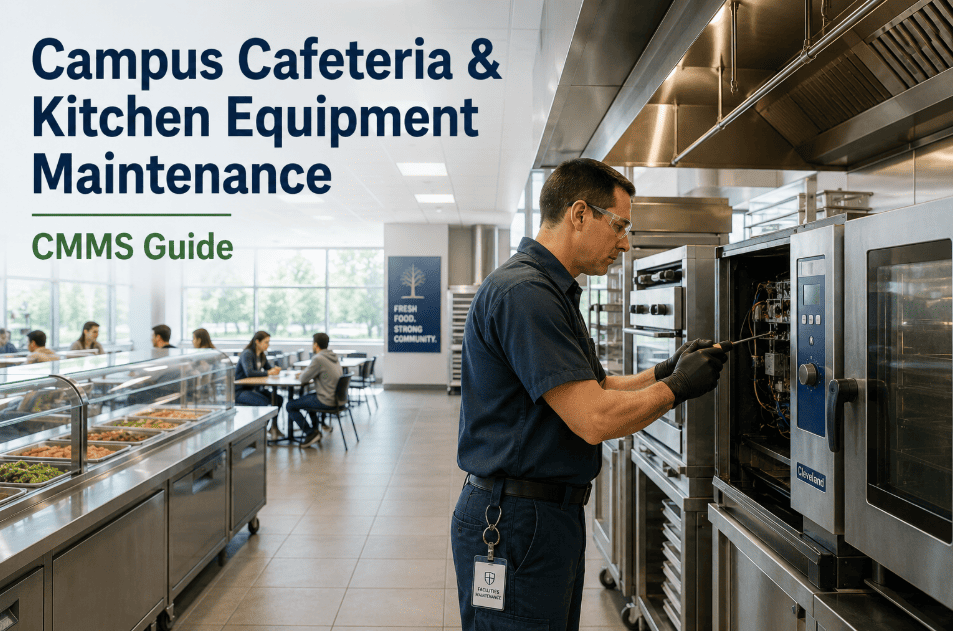
A walk-in cooler failure at 2 AM on a Tuesday does not wait for your maintenance team to arrive at 7. By 6 AM, 1,200 pounds of perishable protein inventory is above safe holding temperature, the health department violation clock is ticking, and 3,000 students expecting breakfast are about to face a dining hall closure that ripples through the entire campus day. Commercial kitchen equipment in campus dining facilities operates under extreme thermal, mechanical, and chemical stress — commercial ovens cycle through 500-degree temperature swings daily, dishwashers process 800+ racks per shift, and hood ventilation systems filter grease-laden air for 16 hours straight. These assets do not degrade gracefully. They fail abruptly and expensively when preventive maintenance is inconsistent. Campus dining operations using CMMS-driven preventive scheduling through platforms like OxMaint report 64% fewer unplanned equipment failures during service hours, 100% health inspection pass rates with digital compliance documentation, and average equipment lifespan extensions of 4-6 years on commercial kitchen assets that typically cost $15,000-$80,000 to replace. When your dining operation feeds 5,000 students per day across multiple locations, equipment reliability is not a maintenance issue — it is an institutional continuity requirement. See how OxMaint manages dining facility maintenance end-to-end, start a free trial or book a demo to walk through the kitchen equipment workflow.
Campus Cafeteria and Kitchen Equipment Maintenance
How CMMS preventive scheduling, digital health inspection tracking, and asset lifecycle management keep commercial kitchen equipment running, dining halls open, and health code compliance documented — across every campus dining location.
Why Campus Kitchen Equipment Demands Specialized Maintenance
Commercial kitchen assets are fundamentally different from standard campus building equipment. They operate under extreme conditions — high heat, constant moisture, caustic cleaning chemicals, and relentless daily usage cycles that compress years of wear into months. A campus HVAC unit might cycle on and off 4-6 times per day. A commercial combi-oven cycles through heating and cooling 30-50 times per day. A campus dishwasher processes more water volume in a single lunch service than an entire residence hall bathroom uses in a week. Standard building PM schedules do not account for these intensity levels — and that mismatch is why kitchen equipment fails at 3x the rate of other campus assets when maintained on generic calendars.
Critical Kitchen Asset Classes and Their Failure Signatures
Each commercial kitchen asset class has distinctive failure patterns that require specific PM protocols. Generic "check equipment" maintenance tasks miss these patterns entirely. OxMaint deploys asset-class-specific PM templates that target the actual failure modes for each equipment type — catching problems during the detection window, not after catastrophic failure.
Compressor failures develop over 3-6 weeks as refrigerant charge drops, condenser coils foul, and evaporator fan bearings wear. Temperature drift of 2-3 degrees signals compressor stress weeks before total failure. A failed walk-in during service destroys $8,000-$25,000 in perishable inventory instantly and triggers mandatory health department notification.
Ignition system degradation, thermostat calibration drift, and door seal failure are the primary failure modes. A combi-oven with a 15-degree calibration drift undercooks protein — creating a food safety risk that may not be detected until students report illness. Door seal failure increases energy consumption by 20-35% before visible damage appears.
High-temperature commercial dishwashers must maintain 180-degree final rinse temperatures for sanitization compliance. Heating element degradation, wash arm clogging, and chemical injector failures compromise sanitization without visible indication. Health inspectors test rinse temperature — a reading below 165 degrees is an automatic critical violation.
Grease accumulation in hood ducts and exhaust fans creates the highest fire risk in any campus building. NFPA 96 requires professional hood cleaning every 3-6 months depending on cooking volume. A grease fire in a campus kitchen exhaust system averages $340,000 in damage, building closure, and remediation costs — and is the most common cause of campus dining facility fires.
High-torque rotating equipment with blade and guard assemblies that degrade under daily use. Blade dullness increases operator force requirements, raising injury risk. Guard misalignment from wear creates amputation hazards. Motor bearing failures cause seized equipment mid-preparation, disrupting meal production timelines across multiple menu items simultaneously.
Steam table heating elements and refrigerated display case compressors must maintain precise temperature ranges — hot food above 140 degrees, cold food below 41 degrees — to comply with food safety holding requirements. A single serving line section dropping below compliance temperature during service creates a food safety incident affecting hundreds of students in a single meal period.
How OxMaint Manages Campus Dining Equipment Maintenance
OxMaint provides the specialized maintenance workflow that campus dining operations require — combining equipment-specific PM templates, digital health code compliance tracking, and multi-location dining facility management in a single platform. Every feature below is designed for the unique operational demands of commercial food service environments. Explore the full dining facility workflow — book a demo or start a free trial to configure your first kitchen PM schedule.
Pre-built PM templates for every commercial kitchen asset class — cold storage, cooking, warewashing, ventilation, preparation, and serving equipment. Each template targets the specific failure modes and compliance requirements for that equipment type, with task frequencies calibrated to commercial food service usage intensity.
Replace paper temperature logs with timestamped digital records that health inspectors can verify on demand. Daily holding temperature checks, rinse temperature verifications, and chemical sanitizer concentration tests are logged through mobile checklists with automatic out-of-range alerts — creating an unbroken compliance trail.
Technicians and kitchen staff capture before-and-after photos of hood cleaning, coil maintenance, gasket replacement, and equipment repairs directly within the work order. Photos are permanently linked to the asset record — providing visual evidence for health inspections, insurance claims, and warranty documentation.
Manage PM compliance, open work orders, and equipment condition scores across every campus dining location from a single portfolio view. Identify which locations are current on hood cleaning, which have aging cold storage equipment trending toward failure, and which need contractor scheduling — without visiting each site individually.
Hood cleaning, refrigeration service, and fire suppression inspections require specialized contractors. OxMaint tracks contractor credentials, schedules recurring vendor visits, verifies completion with photo documentation, and reconciles invoices against approved scopes — ensuring compliance work is completed, not just scheduled.
Track maintenance cost per asset over time. When a 12-year-old combi-oven has consumed $18,000 in repairs and its replacement cost is $35,000, OxMaint's CapEx forecast flags it as approaching economic replacement threshold — giving dining directors the data to request capital funding before the equipment fails during finals week service.
Paper Logs vs Digital CMMS: Campus Kitchen Operations
The operational difference between paper-based and CMMS-driven kitchen maintenance extends beyond efficiency — it determines whether your dining operation can defend itself during health inspections, insurance audits, and the inevitable equipment failure post-mortem.
| Operational Area | Paper Logs and Clipboards | OxMaint Digital CMMS |
|---|---|---|
| Temperature Logging | Handwritten logs — often completed retroactively, missing entries | Timestamped digital logs with auto-alerts for out-of-range readings |
| Hood Cleaning Verification | Contractor certificate filed in a binder — hard to verify completion | Work order with contractor photos, timestamps, and scope verification |
| Equipment Failure Response | Phone call to vendor — no record of response time or scope | Auto-generated emergency work order with full audit trail |
| Health Inspection Readiness | Staff scrambles to compile paper records day before inspection | One-click export of complete compliance history — ready in 5 minutes |
| Equipment Replacement Justification | Based on age estimates and vendor opinions | Data-driven from documented repair cost history and condition scores |
| Multi-Location Visibility | Individual site visits or phone calls to each kitchen manager | Real-time dashboard across all dining locations simultaneously |
Health Code Compliance: The Documentation Standard Inspectors Expect
Health department inspectors are increasingly expecting — and in some jurisdictions requiring — digital maintenance and temperature records. Paper logs with gaps, illegible entries, and retroactive completions are treated as evidence of non-compliance, not just poor record-keeping. OxMaint creates the documentation standard that exceeds inspector expectations and eliminates the compliance risk of paper-based systems.
Health codes require documented evidence that refrigerated foods are maintained below 41 degrees continuously. OxMaint mobile checklists capture temperature readings with timestamps at scheduled intervals — creating a continuous digital record with no gaps. Out-of-range readings trigger immediate corrective action alerts and document the response.
Commercial dishwashers must achieve 180-degree rinse temperatures or maintain proper chemical sanitizer concentrations. OxMaint logs daily sanitization verifications with the specific method, measurement value, and inspector-verifiable timestamp. Readings below compliance thresholds auto-generate a HIGH priority work order for equipment inspection.
NFPA 96 requires documented hood cleaning at intervals determined by cooking volume. Fire marshals and health inspectors require proof of cleaning dates, contractor credentials, and scope of work. OxMaint maintains the complete contractor work order history with photos, dates, and vendor compliance certificates — exportable in seconds during an inspection.
Many jurisdictions require documented evidence of regular equipment maintenance — thermostat calibration, gas line integrity testing, and fire suppression system inspections. OxMaint links every PM completion to the specific equipment asset, creating a maintenance history that inspectors can review by equipment type, date range, or specific compliance requirement.
Documented ROI of CMMS-Driven Kitchen Maintenance
The financial return on structured kitchen equipment maintenance comes from three sources: avoided emergency failures during service, extended equipment lifespan that defers capital replacement, and eliminated health code violations that carry direct financial penalties and reputational damage. These outcomes are documented across campus dining operations managing 2-12 dining locations.
Frequently Asked Questions
Can kitchen staff use OxMaint for daily temperature logs, or is it only for maintenance technicians?
How does OxMaint handle PM scheduling around meal service hours?
Can we track food safety incidents alongside equipment maintenance in the same system?
How does the system help justify capital replacement of aging kitchen equipment to administration?
Your Students Cannot Eat If Your Kitchen Equipment Cannot Cook
Every commercial oven, walk-in cooler, dishwasher, and hood system in your campus dining operation is either maintained proactively or heading toward a failure that will shut down meal service for thousands of students. OxMaint gives your dining facilities team the equipment-specific PM schedules, digital health code compliance tracking, and multi-location management visibility to keep every kitchen running safely and reliably. Most dining operations have their first PM schedules generating work orders within the first week of deployment.