Campus district energy systems — the underground network of steam tunnels, condensate return lines, manholes, and distribution piping that delivers heating and cooling to every building — are the most infrastructure-critical and least visible assets on any university campus. When a steam trap fails in a tunnel 20 feet underground, or a condensate return pump seizes in a confined-space manhole, the maintenance team faces a cascade of problems: confined space entry permits, emergency excavation costs, building heating interruptions, and potential safety incidents. National data from APPA shows that 73% of university district energy failures originate from components that had no documented PM history — expansion joints that were never inspected, condensate pumps that were never rebuilt, and steam traps that were never tested. The average cost of a district energy emergency repair on a university campus is $28,000-$65,000 per incident, versus $3,200-$8,500 for a planned repair on the same component. Universities using Oxmaint's CMMS for district energy management document every tunnel inspection, confined space entry, trap survey, and pump rebuild — creating a maintenance history that prevents failures before they cascade. Want to see how it works for your campus utility loop? Book a demo or start a free trial.
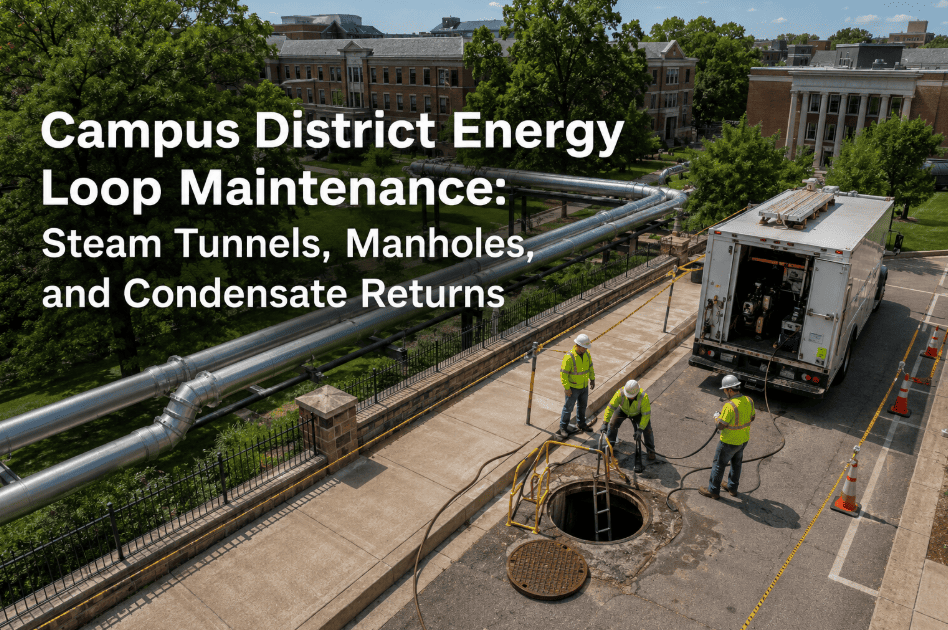
Campus District Energy Loop Maintenance: Steam Tunnels, Manholes, and Condensate Returns
Steam tunnel inspections, confined space manhole entry protocols, condensate return pump maintenance, expansion joint monitoring, and CMMS-tracked compliance for underground utility distribution systems.
Prevent Underground Failures Before They Surface
Oxmaint tracks every steam tunnel inspection, confined space entry, trap survey, and condensate pump rebuild — so your district energy system stays reliable instead of surprising you with emergency excavations mid-semester.
What Is a Campus District Energy Loop?
A campus district energy loop is the underground infrastructure network that distributes thermal energy — steam, hot water, or chilled water — from a central plant to every connected building on campus. This network includes steam supply mains, condensate return piping, pre-insulated direct-buried lines, walk-through utility tunnels, access manholes, expansion joints, steam traps, pressure reducing stations, condensate receivers, and return pumps. On large university campuses, these systems span 5 to 30 miles of piping, pass through dozens of manholes, and serve 50 to 200 buildings. The infrastructure is typically 30 to 80 years old, buried underground or enclosed in tunnels that qualify as confined spaces under OSHA 29 CFR 1910.146. Maintaining these systems requires a structured program that addresses corrosion monitoring, insulation degradation, trap performance, expansion joint condition, and confined space entry compliance — all of which generate documentation requirements that paper-based systems consistently fail to sustain. Universities running Oxmaint track every component in the distribution loop with geo-referenced asset records, automated inspection schedules, and confined space permit documentation that satisfies OSHA auditors on demand. Explore how this works for your campus — book a demo or start a free trial.
Critical Components of District Energy Maintenance
Walk-through tunnels require semi-annual structural inspection: pipe supports, hangers, insulation condition, ventilation adequacy, lighting, and egress path clearance. 38% of tunnel incidents trace to unidentified structural issues.
Manholes housing valves, traps, and expansion joints are OSHA-defined confined spaces. Every entry requires atmospheric testing, permits, attendants, and rescue provisions — all generating compliance documentation.
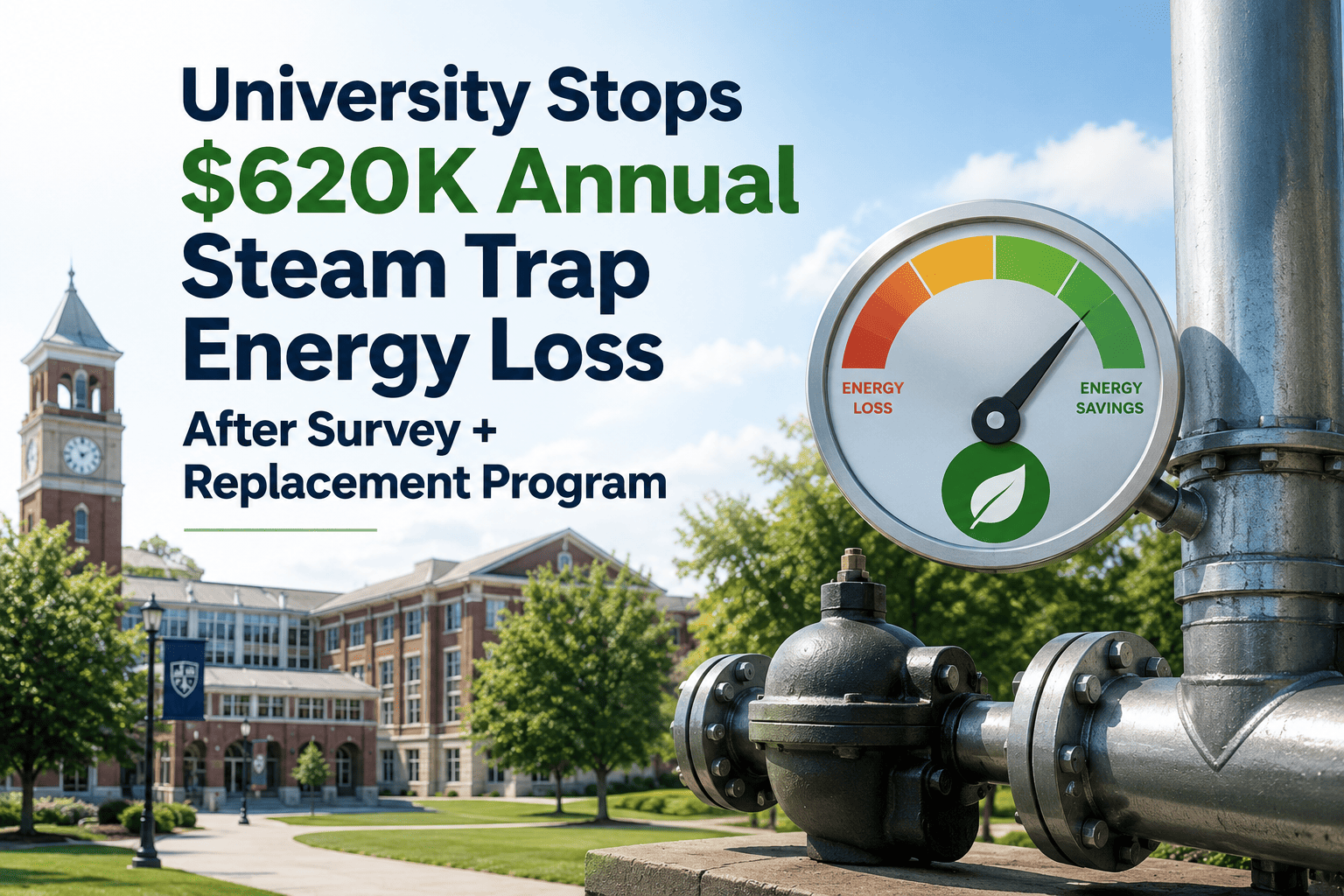
Failed-open steam traps waste 22% of steam energy. Annual ultrasonic trap surveys identify failed traps, but without CMMS tracking, survey results sit in filing cabinets and failed traps remain unreplaced for years.
Condensate receivers, pumps, and return piping recover 70-80% of steam energy through returning hot condensate. Pump failures cause condensate dumping — wasting water, energy, and chemical treatment investment.
Thermal expansion in steam mains requires bellows-type or slip-type expansion joints. A failed expansion joint can rupture a main, causing steam release in an enclosed tunnel — the most dangerous failure mode in district energy.
Underground piping insulation degrades from moisture intrusion, losing thermal performance. Corrosion under insulation (CUI) is responsible for 45% of pipe replacement projects on university campuses over 40 years old.
Why District Energy Systems Fail on Campus
Underground systems receive the least maintenance attention because they are invisible. Campuses that lack automated PM scheduling for tunnel and manhole inspections report 3.2x more emergency distribution failures.
OSHA requires written confined space entry programs, atmospheric monitoring records, and permit documentation. 56% of university EHS audits find deficiencies in tunnel and manhole confined space records.
Most campuses have no digital inventory of what is installed in each tunnel section or manhole. When a trap fails, technicians spend 45 minutes identifying the location and component before starting repair.
Expansion joints have 15-25 year lifespans and fail catastrophically without warning when uninspected. Replacement during a planned outage costs $4,000-$12,000 — emergency replacement after a rupture costs $35,000-$80,000.
How Oxmaint Manages District Energy Maintenance
Every tunnel section, manhole, expansion joint, steam trap, PRV station, and condensate pump is registered with location, age, condition score, and maintenance history — accessible from mobile devices at the point of work.
Semi-annual tunnel walk-through inspections and quarterly manhole inspections are auto-scheduled with checklists covering structural condition, insulation, ventilation, lighting, and egress compliance.
Digital confined space entry permits with atmospheric test readings, entrant identification, attendant logs, and rescue plan documentation — stored on the asset record for OSHA audit retrieval.
Annual trap survey results are loaded into the CMMS by trap location. Failed traps automatically generate replacement work orders with priority, estimated energy waste, and parts requirements.
Receiver level controls, return pumps, check valves, and float mechanisms have individual PM schedules. Pump rebuild intervals are tracked against runtime hours to prevent condensate dumping from pump failures.
Bellows and slip joint condition is scored during inspections. Age, cycle count, and condition trending identify joints approaching end-of-life so replacements happen during planned summer shutdowns, not mid-heating-season emergencies.
Planned Maintenance vs. Emergency Response: District Energy Costs
Frequently Asked Questions
Are university steam tunnels classified as confined spaces?
How often should steam traps be surveyed on a university campus?
What causes expansion joint failures in campus steam systems?
Can CMMS track maintenance across miles of underground piping?
Your Underground Infrastructure Deserves Above-Ground Visibility
Every uninspected tunnel section, every undocumented manhole entry, and every failed steam trap left unreplaced is a risk multiplier hiding underground. Oxmaint brings your entire district energy system into a single digital platform — with automated inspection schedules, confined space compliance, and component lifecycle tracking that prevents emergencies instead of reacting to them.