Japan has long set the global benchmark for precision manufacturing — but the final step of getting a verified, zero-defect shipment out of the factory and into the hands of the customer is where that precision most often breaks down. Manual inspection handoffs, verbal quantity confirmations, and paper documentation trails introduce the exact variability that Japan's manufacturing culture works hardest to eliminate. AI-powered delivery operations management is closing that gap — automating every check from quality inspection to dispatch clearance so that only approved shipments ever leave the facility.
Zero
defect shipping target achievable when AI inspection is applied at every dispatch gate
68%
of dispatch errors originate from manual documentation and verbal inspection handoffs
3x
faster clearance approval with automated AI workflows vs. paper-based sign-off processes
40%
reduction in damaged or incorrect shipments after digitising pre-dispatch inspection
Japan's Precision Manufacturing Gap: Where Errors Still Enter
Japanese manufacturing pioneered kaizen, just-in-time, and poka-yoke — but the loading dock remains a weak point in many facilities. Production quality is tightly controlled; dispatch quality is often managed by memory, paper forms, and the judgment of a single inspector under time pressure. AI-powered delivery management applies the same rigour at the point of dispatch that Japan's production floors have maintained for decades.
Q
Quality Errors Leave Undetected
Surface defects, assembly omissions, and specification mismatches pass the loading dock because visual checks are inconsistent across shifts and inspectors.
N
Quantity Discrepancies Found Post-Delivery
Short shipments and overages are discovered only after the customer receives the consignment — generating claims, returns, and relationship damage that erodes client trust.
P
Packaging Failures in Transit
Incorrectly wrapped, labelled, or cushioned products are damaged before arrival. Packaging compliance is rarely documented with photo evidence before loading.
D
Documentation Gaps Block Customs
Missing certificates, unsigned delivery notes, and incorrect commodity codes hold export shipments at customs — delays that compound across global supply chains.
Apply Japan's precision standards to every dispatch — not just production
Oxmaint automates quality inspection, quantity verification, packaging checks, and documentation approval in one connected platform.
The AI-Powered Delivery Operations Model for Japan
Modern AI delivery management applies a four-stage verification model at the point of dispatch. Each stage is automated, photo-documented, and linked to a clearance pass that is only issued when every check is confirmed. No stage can be bypassed — and every result is stored as a permanent, auditable record.
AI-guided inspector checklist with mandatory photo capture per item or batch
Automatic pass, flag, or reject scoring — no subjective judgment under shift pressure
Defects escalated instantly to supervisor before shipment advances
Batch and lot number linked to the inspection record for full traceability
↓
Physical count entered into the system and automatically cross-checked against delivery order
Any discrepancy — even a single unit — triggers an automatic hold on dispatch
Overage and shortage resolutions require documented supervisor sign-off before re-check
Confirmed count written to shipment record — visible to customer portal if integrated
↓
Packaging material, carton condition, and pallet configuration verified against spec
Hazardous goods markings, fragile indicators, and shipping labels verified with photo evidence
Non-standard packaging requires supervisor sign-off — no informal workarounds permitted
Completed packaging record archived per shipment for carrier dispute resolution
↓
Delivery notes, packing lists, and compliance certificates auto-generated from inspection data
Digital approval routing — no unsigned documents, no missing certificates at customs
Export documents including HS codes and origin declarations verified before clearance
All documentation version-controlled and stored against the shipment permanent record
↓
✓
Clearance Pass Issued — Shipment Authorised for Dispatch
All four stages passed and recorded. Driver receives digital clearance on mobile. No pass — no dispatch. The rule is enforced by the system.
Robotics and Warehouse Automation: Where AI Fits In
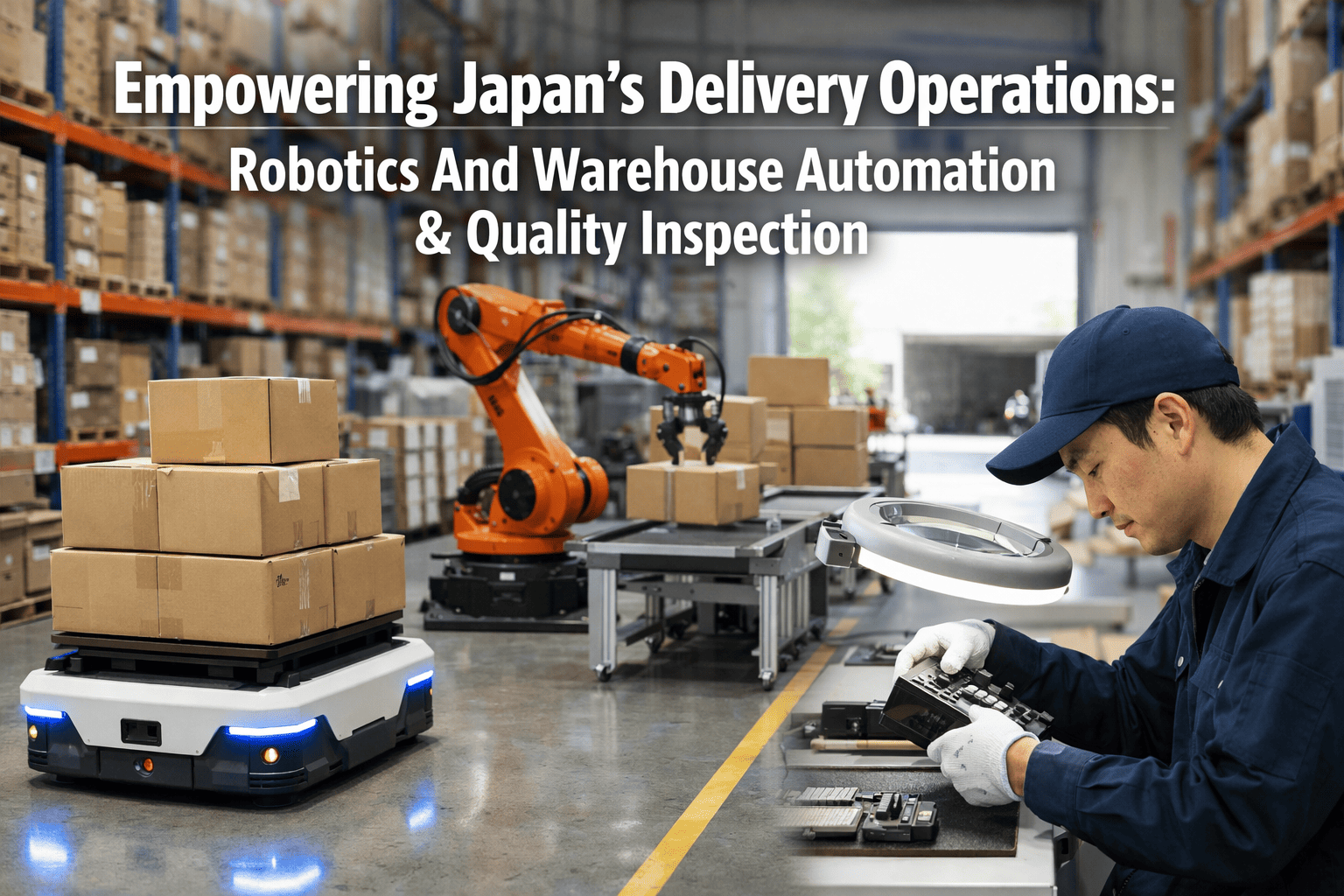
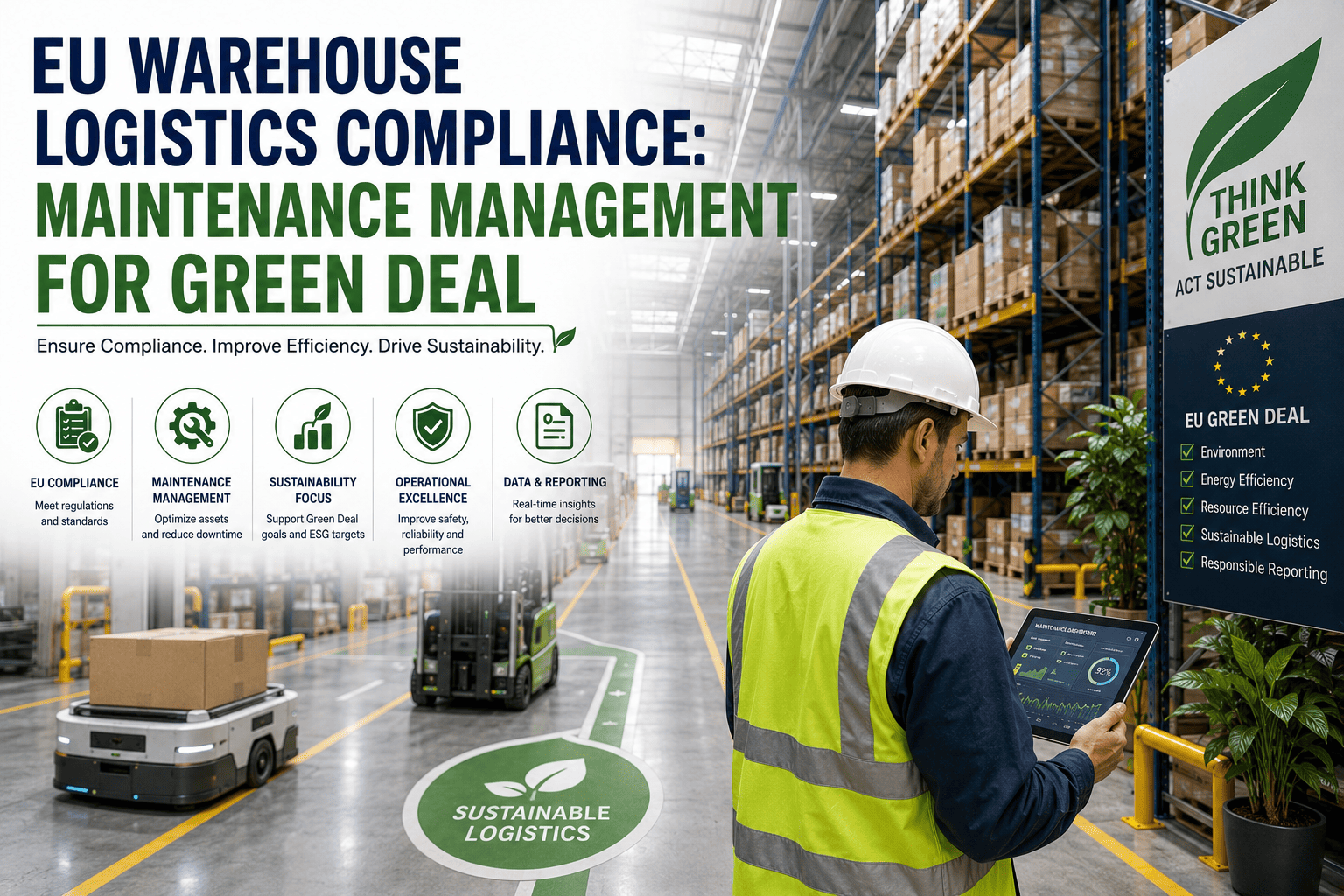
Japan's warehouses are already integrating robotic pick-and-pack systems, autonomous mobile robots, and automated conveyor sorting. AI-powered delivery management connects to this infrastructure — receiving data from robotic systems and feeding verified shipment records back into dispatch workflows without manual re-entry.
01
Robotic Pick-and-Pack Integration
AI inspection systems receive completion signals from robotic pick stations. Quantity accuracy is confirmed automatically — no manual re-count of robotically picked orders required.
02
Vision-Based Quality Scanning
Camera-equipped inspection points capture product images at the end of the packing line. AI vision models flag surface defects, label errors, and assembly gaps before the item reaches the loading bay.
03
Automated Sorting and Dispatch Routing
Automated conveyor and sortation systems route verified pallets to the correct loading bay. Shipments with open inspection flags are automatically held in a quarantine lane — not loaded.
04
Digital Work Order and Documentation Flow
Warehouse management data feeds directly into document generation. Packing lists, delivery notes, and shipping labels are produced from verified system data — eliminating manual transcription errors.
Connect your warehouse automation to a verified dispatch workflow
Oxmaint integrates with robotic and warehouse systems to ensure every automated pick becomes a verified, documented shipment.
Zero-Defect Shipping: Before vs. After AI Automation
Traditional Dispatch Process
Quality checked visually at loading bay — no photo, no consistent criteria
Quantity confirmed verbally by loader — discrepancies found post-delivery
Packaging inspected by eye under time pressure — no documented record
Documents printed and signed by hand — certificates sometimes missing
Clearance granted informally — driver departs on verbal confirmation
Errors discovered at customer site — claims, returns, and trust damage follow
AI-Powered Dispatch Process
AI-guided inspection with mandatory photo capture — automatic scoring per item
System cross-checks physical count against delivery order — holds on any mismatch
Packaging compliance verified through guided checklist with photo evidence
Documents auto-generated and digitally approved — complete before clearance
Clearance pass issued only when all four stages pass — driver notified on mobile
Every shipment leaves with a complete, auditable digital record
What Zero-Defect Shipping Looks Like in the Data
I
Inspection Pass Rate
Percentage of shipments passing all four AI verification stages on first attempt. Target: 98% or higher for precision manufacturing operations.
C
Claim and Return Rate
Shipments disputed or returned due to quality, quantity, or packaging failures. A declining rate is the clearest signal that AI inspection is working at scale.
A
Approval Cycle Time
Average minutes from inspection completion to clearance pass issued. Automated workflows cut this from hours to under 10 minutes for standard shipments.
D
Documentation Completion Rate
Percentage of dispatched shipments with fully completed and digitally signed documentation. Any gap creates customs or compliance risk in export operations.
40%
fewer damaged or incorrect shipments after AI inspection is applied at dispatch
3x
faster clearance approval with automated documentation vs. manual paper sign-off
100%
shipment traceability when every dispatch is linked to a complete digital inspection record
How Oxmaint Powers Zero-Defect Dispatch for Japan's Operations
Japan's delivery operations do not need more inspection staff — they need a system that makes every existing inspector faster, more consistent, and fully auditable. Oxmaint connects AI-guided mobile inspections, automated quantity cross-checks, packaging compliance workflows, and digital documentation approval into a single platform. Every shipment earns its clearance pass. Every record is permanent, searchable, and exportable.
AI-Guided Mobile Quality Inspection
Structured checklists prompt inspectors through every quality check with mandatory photo fields. AI scores results automatically — pass, flag, or reject — with no manual calculation.
Automated Quantity Cross-Check
Physical count input is automatically compared to delivery order data. Discrepancies trigger a system hold — no phone calls between loader, dispatcher, and operations manager required.
Packaging Compliance Verification
Guided checklist with photo capture verifies carton condition, label accuracy, and hazardous goods markings. Incomplete packaging gates cannot be submitted — no workarounds permitted.
Auto-Generated Documentation and Digital Approval
Delivery notes, packing lists, and compliance certificates are generated from verified inspection data. Digital approval workflows route to the correct authority — no paper, no missing signatures.
Clearance Pass and Driver Dispatch Notification
When all four verification stages are complete, a digital clearance pass is issued and the driver is notified on their mobile device. No pass — no vehicle departs. Enforced by the system.
Shipment Analytics and Defect Trend Reporting
Track inspection pass rates, claim rates, approval cycle times, and documentation completion by product line, shift, or facility. Data identifies recurring failure patterns before they escalate.
Bring Zero-Defect Standards to Every Shipment Leaving Your Facility
Oxmaint gives Japan's delivery operations teams the tools to inspect, verify, document, and dispatch with the same precision that drives world-class production floors — powered by AI and built into a single mobile-first platform. Every shipment leaves verified. Every clearance pass is earned.
Frequently Asked Questions
How does AI-powered delivery management help Japan's manufacturers achieve zero-defect shipping?
AI delivery management applies structured, photo-verified checks at the point of dispatch — quality inspection, quantity verification, packaging compliance, and documentation validation. Each stage is scored automatically and a clearance pass is issued only when all four are confirmed. This removes the variability of verbal handoffs and inconsistent manual checks that allow defects to leave the facility.
How does warehouse robotics integrate with AI inspection and dispatch management?
Robotic pick-and-pack systems and automated sortation lines can feed completion signals directly into AI inspection workflows. Quantity accuracy from robotic picks is confirmed automatically, vision-based scanning flags defects at the end of the packing line, and automated sorting holds flagged shipments in quarantine lanes — preventing them from being loaded without clearance.
What documentation does the system generate automatically for each shipment?
The platform auto-generates delivery notes, packing lists, shipping labels, and compliance certificates from the verified inspection and quantity data. For export operations, it supports digital approval of HS code declarations and origin certificates. All documents are version-controlled, digitally signed, and stored permanently against the shipment record.
Can Oxmaint handle the full four-stage dispatch verification for Japanese manufacturing operations?
Yes. Oxmaint runs quality inspection, quantity verification, packaging compliance, and documentation approval as a connected four-stage workflow. Each stage generates a timestamped digital record. The clearance pass is issued automatically only when all four stages are complete — giving operations managers a complete, exportable audit trail for every dispatched shipment.