Warehouse delivery operations in 2026 are running on infrastructure that cannot afford unplanned downtime — conveyor systems, dock equipment, forklifts, sortation lines, and refrigeration units that stop a fulfilment centre when they fail. The maintenance strategies that worked when warehouse throughput was measured in thousands of daily picks do not scale to operations processing hundreds of thousands. Edge AI, NVIDIA-powered vision inspection, digital twins, and autonomous sensor networks are not future capabilities — they are production-deployed technologies delivering measurable ROI in leading distribution operations right now. OxMaint's AI-powered CMMS platform brings these capabilities together in a single maintenance system built for the speed and asset density of modern warehouse and delivery operations.
Blog · Warehouse & Logistics · AI Maintenance 2026
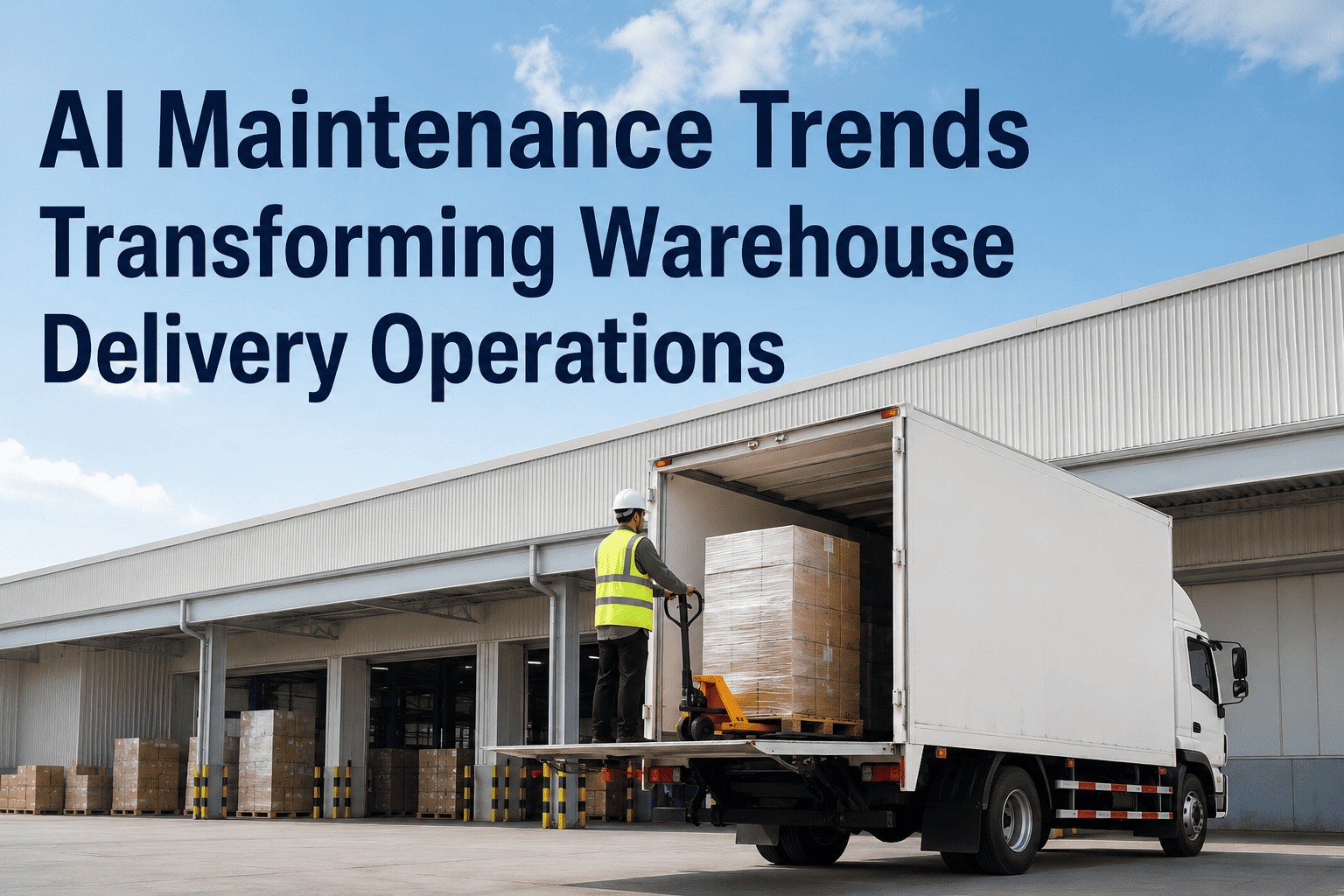
AI Maintenance Trends Transforming Warehouse Delivery Operations
Edge AI · NVIDIA Vision Inspection · Digital Twins · Autonomous Sensors · Predictive Maintenance ROI
Warehouse AI Maintenance · 2026 Benchmarks
Unplanned Downtime Reduction
Predictive vs Reactive Maintenance
Vision Inspection Accuracy
Maintenance Cost Reduction
$260K
Average hourly cost of unplanned downtime in a large fulfilment centre
45%
Downtime reduction from AI predictive maintenance in warehouse deployments
6× ROI
Average return on AI maintenance investment in warehouse operations — Year 2
90 days
Typical time from AI deployment to first measurable downtime reduction
5 AI Maintenance Trends Delivering ROI in Warehouse Operations Right Now
Trend 01
Edge AI for Conveyor and Sortation System Monitoring
Downtime reduction: 40–60% · Payback: 8–14 months
Edge AI inference deployed on existing conveyor sensors detects belt tension anomalies, roller bearing temperature trends, and jam-pattern precursors without sending data to the cloud. Processing happens locally on NVIDIA Jetson or comparable edge hardware — sub-100ms inference latency means fault detection and work order generation happens before the conveyor stops, not after. Leading 3PL operators are deploying edge AI across conveyor networks of 2–8 km of belt length and reporting 40–60% reductions in unplanned stops within 90 days of deployment.
Trend 02
NVIDIA-Powered Vision Inspection for Dock and Loading Equipment
Defect detection accuracy: 96% · False positive rate: below 2%
Computer vision models running on NVIDIA A2 and A10 GPU servers inspect dock levellers, loading bay seals, forklift masts, and pallet wrapper equipment at shift change — automatically flagging wear, damage, and safety non-compliance in under 3 seconds per asset. Facilities replacing manual walk-around inspections with AI vision inspection are reporting 96% defect detection accuracy and a 70% reduction in dock equipment downtime events linked to missed inspection findings. OxMaint generates the corrective work order directly from the vision system alert.
Trend 03
Digital Twins for Warehouse Asset Simulation
Maintenance cost optimisation: 18–25% · Spare parts reduction: 30%
Digital twin models of high-value warehouse assets — automated storage and retrieval systems (ASRS), sortation machines, and refrigeration plants — simulate degradation curves and maintenance intervention impacts before decisions are made. Warehouse operators using digital twins report 18–25% maintenance cost reductions from optimised PM intervals and 30% spare parts inventory reductions from accurate failure probability modelling. OxMaint integrates digital twin outputs as maintenance scheduling inputs — adjusting PM intervals dynamically based on simulated asset health rather than fixed calendar dates.
Trend 04
Autonomous Sensor Networks for Fleet and MHE Monitoring
Fleet maintenance cost reduction: 28% · Battery utilisation improvement: 35%
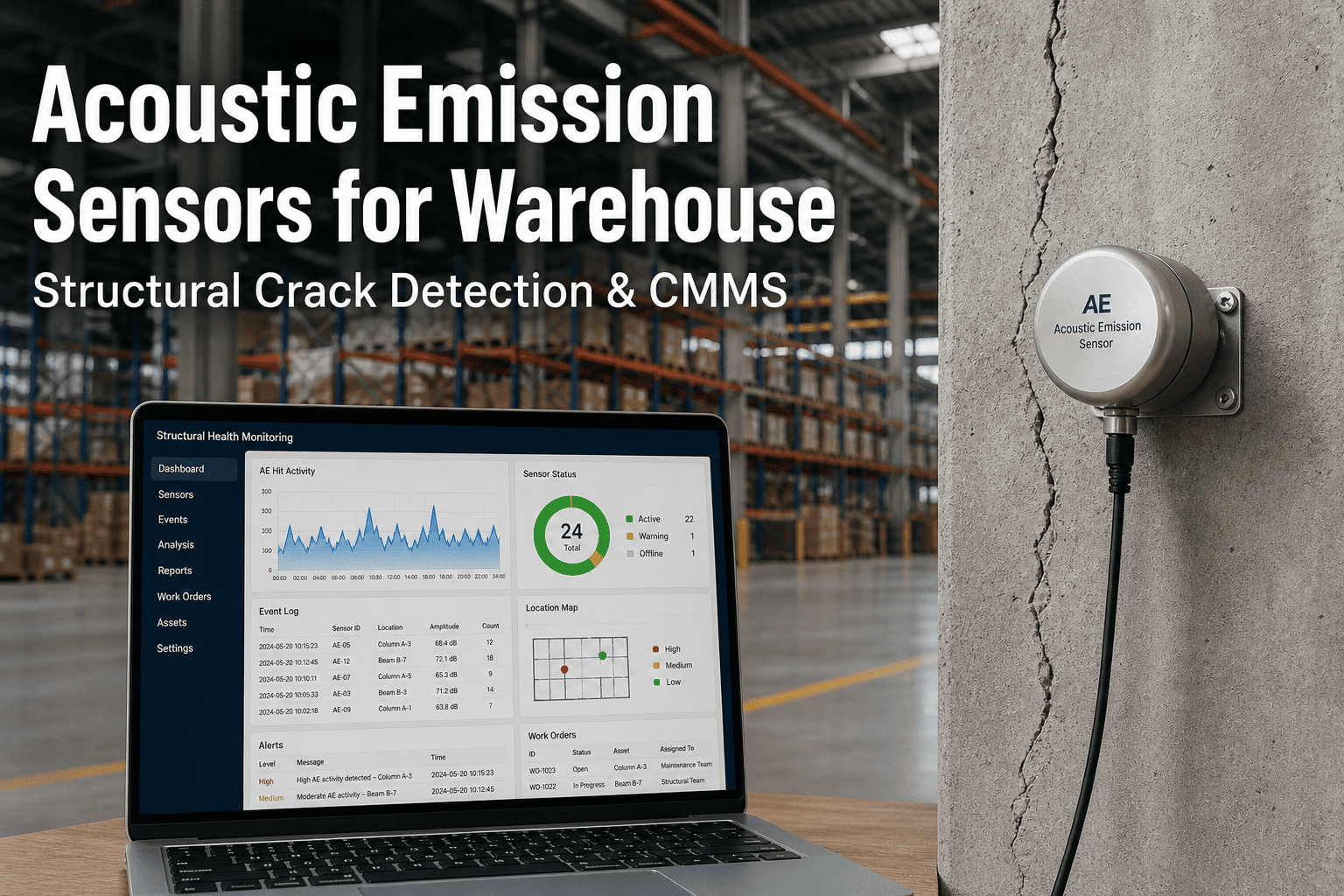
Wireless vibration, temperature, and current sensors attached to forklift motors, reach truck masts, and AGV drive trains transmit continuous health data to the CMMS without manual data collection. Autonomous sensor networks in warehouse fleets are reducing fleet maintenance costs by 28% and improving battery utilisation by 35% through accurate state-of-health monitoring. OxMaint's IoT integration layer processes sensor streams and generates predictive maintenance work orders before the asset reaches failure threshold — typically 3–6 weeks ahead of detectable mechanical symptoms.
Trend 05
AI Work Order Intelligence — Auto-Classification and Routing
Dispatch time reduction: 65% · First-time fix rate improvement: 28%
AI-powered work order management classifies incoming fault reports, selects the correct technician based on skill, proximity, and current workload, and attaches the relevant procedure, parts list, and historical repair data — all before the technician receives the notification. Warehouses deploying AI work order routing report 65% reductions in mean dispatch time and 28% improvements in first-time fix rate. OxMaint's AI dispatch engine routes 70–80% of work orders without human coordination — reducing the operational overhead of maintenance management in high-volume facilities.
AI Maintenance Technology Readiness — Where Is Your Operation?
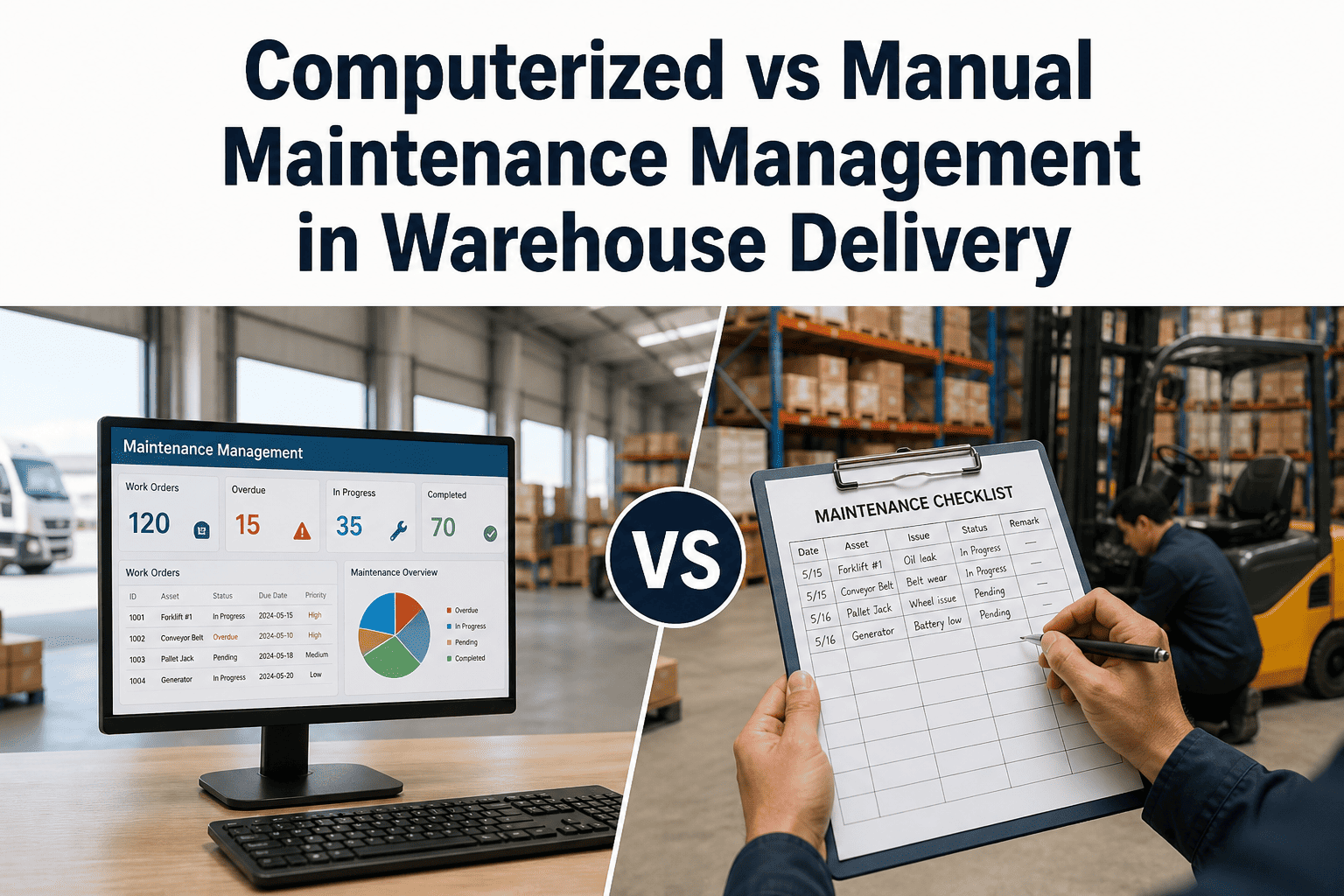
| Capability |
Reactive (Level 1) |
Preventive (Level 2) |
AI-Predictive (Level 3) |
| Fault detection |
After equipment stops |
Schedule-based checks |
Continuous sensor monitoring — 3–6 weeks ahead |
| Work order creation |
Manual — radio or paper |
PM calendar-generated |
Auto-generated from sensor/AI alert |
| Technician dispatch |
Supervisor decision — avg 18 min |
Supervisor routes digitally |
AI routing — avg 2.8 min dispatch |
| Spare parts availability |
Reactive procurement |
Fixed safety stock |
Failure-probability-driven stock optimisation |
| Downtime tracking |
Shift report — next day |
Work order completion time |
Real-time OEE and MTTR by asset |
| Energy monitoring |
Monthly utility bill only |
Manual meter readings |
Asset-level energy anomaly detection |
"
The warehouses that are winning on maintenance in 2026 made a specific decision three to four years ago: they stopped treating maintenance as a cost to minimise and started treating it as an operational capability to invest in. The facilities running edge AI on their conveyor systems and vision inspection on their dock equipment are not doing it because they had budget to burn — they did it because their operations colleagues showed them the downtime cost numbers and they could not ignore them. At $260,000 per hour of unplanned downtime in a large fulfilment centre, an AI maintenance deployment that prevents two unplanned stops per month pays for itself in 6–8 weeks. The ROI case is not difficult. What was difficult, until recently, was finding a CMMS that could actually receive sensor data, generate the work order, dispatch the technician, and close the loop on energy and compliance in one integrated system. OxMaint solves that integration problem.
Marcus Veltri, CMRP, CSCP
VP Operations Technology — Global 3PL and Distribution · 19 Years Warehouse Operations and Maintenance Technology · Certified Maintenance and Reliability Professional (SMRP) · Certified Supply Chain Professional (ASCM) · Specialist in AI maintenance deployment for high-volume fulfilment centres, conveyor system reliability, and logistics fleet maintenance digitalisation
2026 AI Maintenance Investment — ROI by Technology
Edge AI · Conveyors
Investment: $40K–$120K
Year 1 Saving: $180K–$400K
Payback: 8–14 months
Vision Inspection · Dock Equipment
Investment: $25K–$80K
Year 1 Saving: $90K–$220K
Payback: 10–16 months
Autonomous Sensors · MHE Fleet
Investment: $15K–$60K
Year 1 Saving: $70K–$180K
Payback: 6–12 months
AI CMMS · Work Order Intelligence
Investment: $20K–$50K/yr
Year 1 Saving: $120K–$300K
Payback: 4–8 months
Your Warehouse Generates Enough Sensor Data to Predict Every Failure. OxMaint Makes It Actionable.
OxMaint integrates edge AI, IoT sensors, and vision inspection outputs into one maintenance platform — generating predictive work orders, routing technicians automatically, and tracking ROI in real time.
Frequently Asked Questions
How long does it take to see measurable ROI from AI maintenance deployment in a warehouse?
Most warehouse operations see measurable downtime reduction within 60–90 days of AI maintenance deployment — driven initially by the improvement in work order response time and dispatch accuracy before predictive models are fully calibrated. Full predictive maintenance capability, where the AI is generating failure predictions 3–6 weeks ahead of detectable mechanical symptoms, typically requires 90–180 days of sensor data accumulation for the models to calibrate against the specific asset population and operational patterns of the facility. ROI tracking in OxMaint is automatic — comparing maintenance costs, downtime hours, and parts spend before and after deployment with no manual calculation required.
Start a free trial to begin your ROI baseline measurement.
Does OxMaint integrate with existing WMS and warehouse automation platforms?
OxMaint connects to major WMS platforms including SAP EWM, Manhattan SCALE, Blue Yonder, and Oracle WMS via API integration — enabling maintenance events to be contextualised against operational throughput data and production schedules. For conveyor and sortation systems, OxMaint integrates with Dematic, Vanderlande, and Knapp automation control systems via OPC-UA and REST API. The integration allows maintenance work orders to be coordinated with operational windows — scheduling conveyor PM during planned throughput gaps rather than forcing operational stoppages. Most WMS integrations are completed within 2–4 weeks depending on the API availability of the source system.
Book a demo to review your warehouse technology integration options.
What warehouse assets benefit most from AI predictive maintenance in the first 90 days?
The assets delivering the fastest ROI from AI predictive maintenance in warehouse environments are those with the highest downtime cost per failure event and the most measurable sensor signatures. In order of typical impact: conveyor drive motors and gearboxes (vibration and current signature monitoring), dock leveller hydraulic systems (pressure and cycle count monitoring), refrigeration compressors in cold-store facilities (suction/discharge pressure and amperage trending), and forklift and reach truck drive motors (temperature and current monitoring). OxMaint's deployment guide for warehouse operations prioritises sensor installation on these asset classes first — allowing ROI to be demonstrated within 90 days while the broader asset population is instrumented over the following 6–12 months.
Explore OxMaint's warehouse asset prioritisation with a free trial.
OxMaint · Warehouse & Logistics AI Maintenance
Edge AI. Vision Inspection. Digital Twins. Autonomous Sensors. One CMMS That Connects Them All.
OxMaint is the AI maintenance platform purpose-built for the asset density, throughput pressure, and downtime cost profile of modern warehouse and delivery operations.