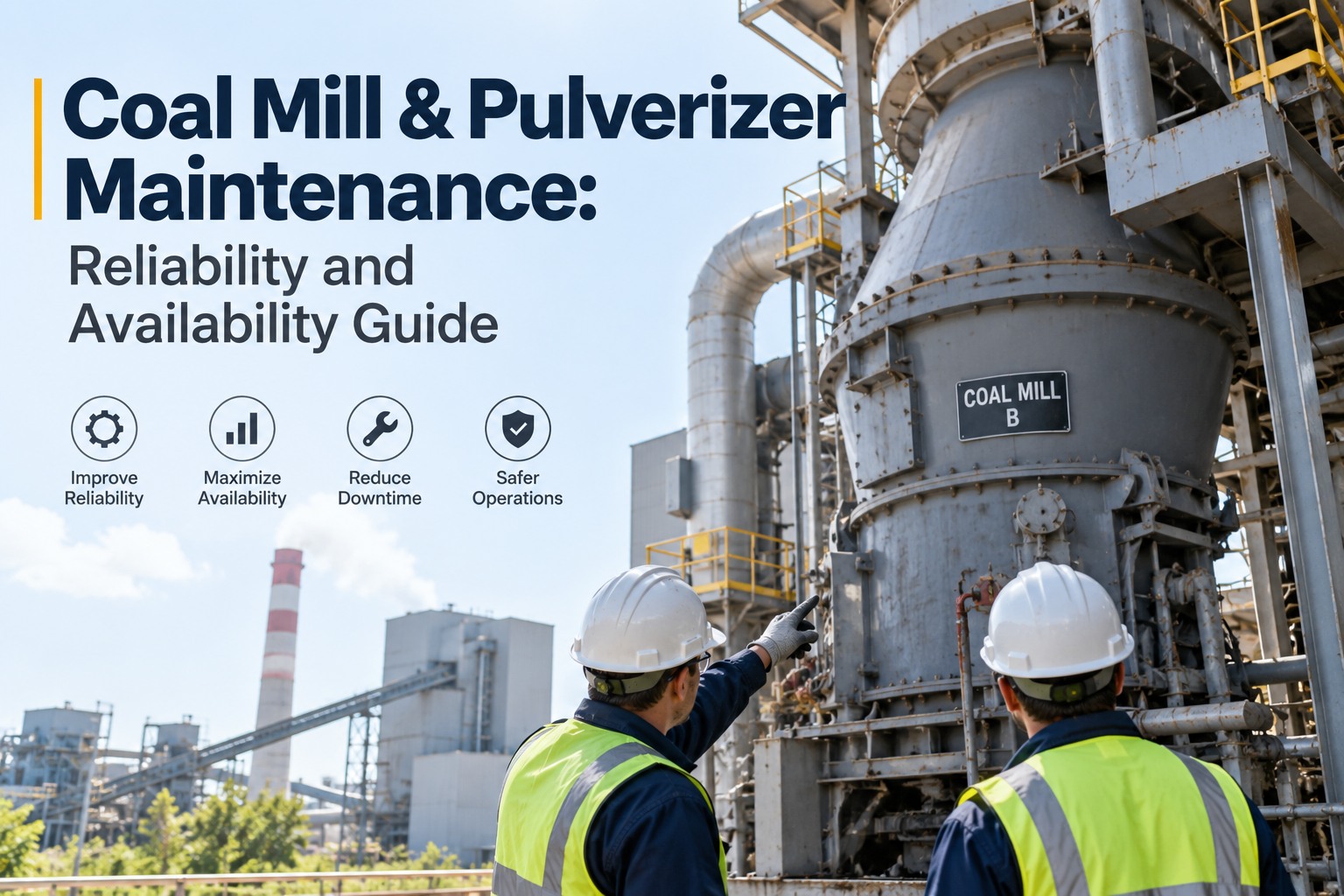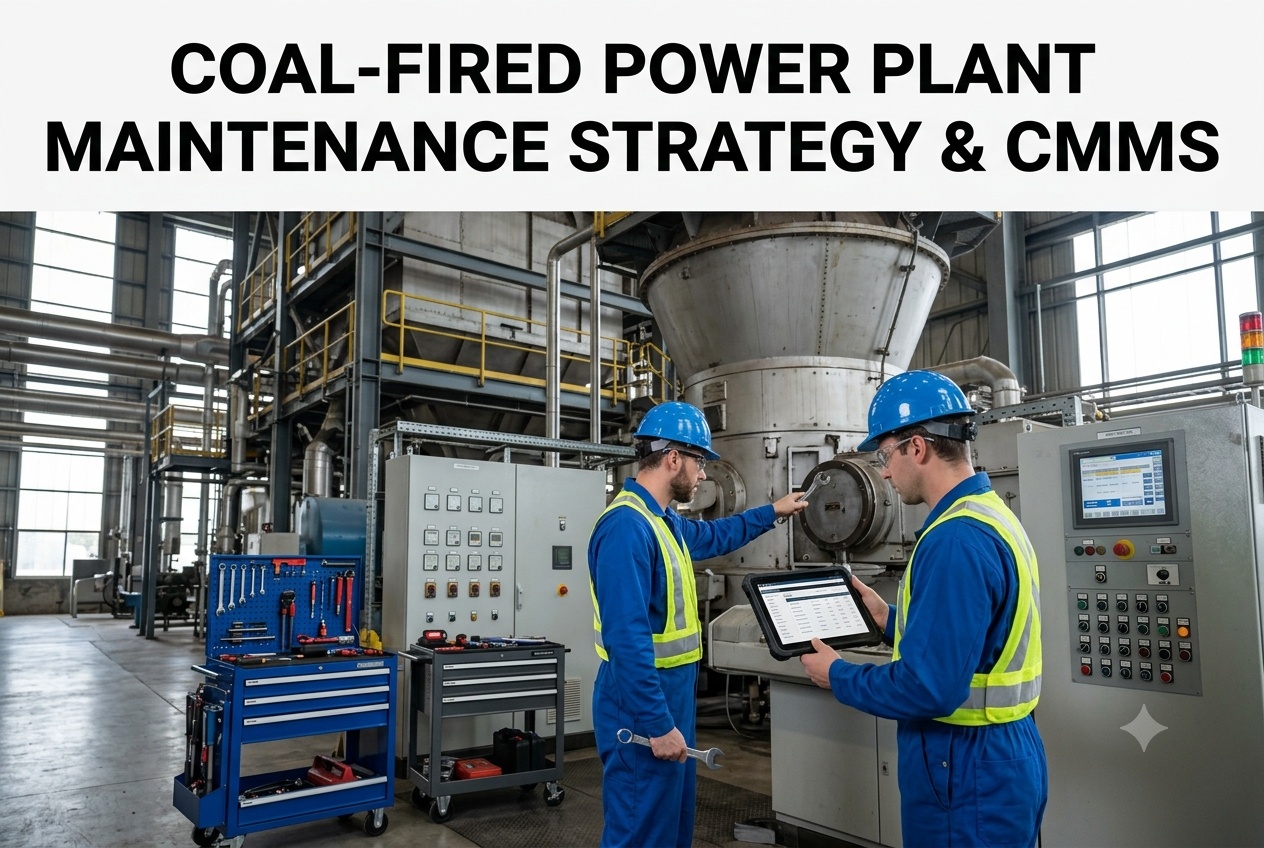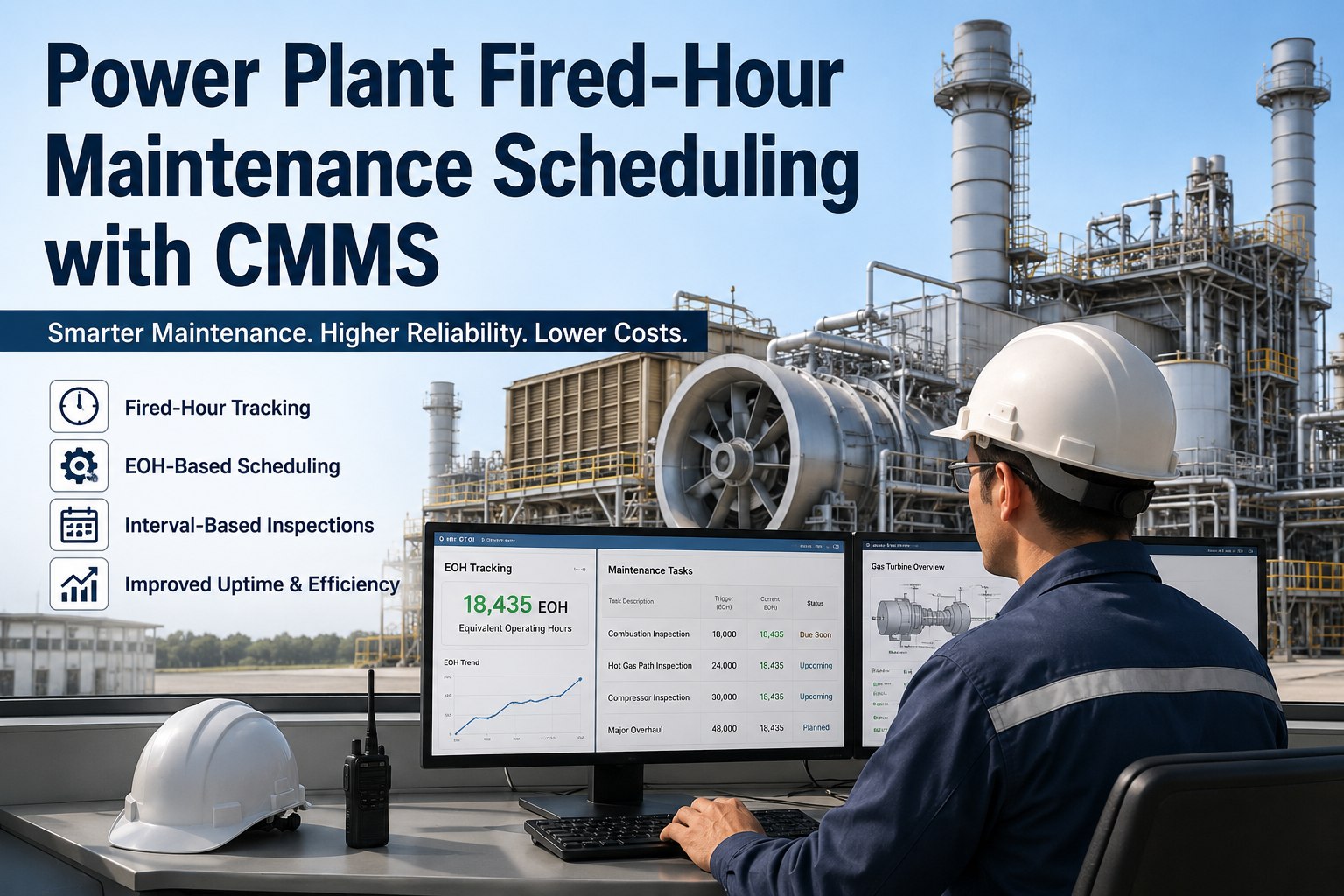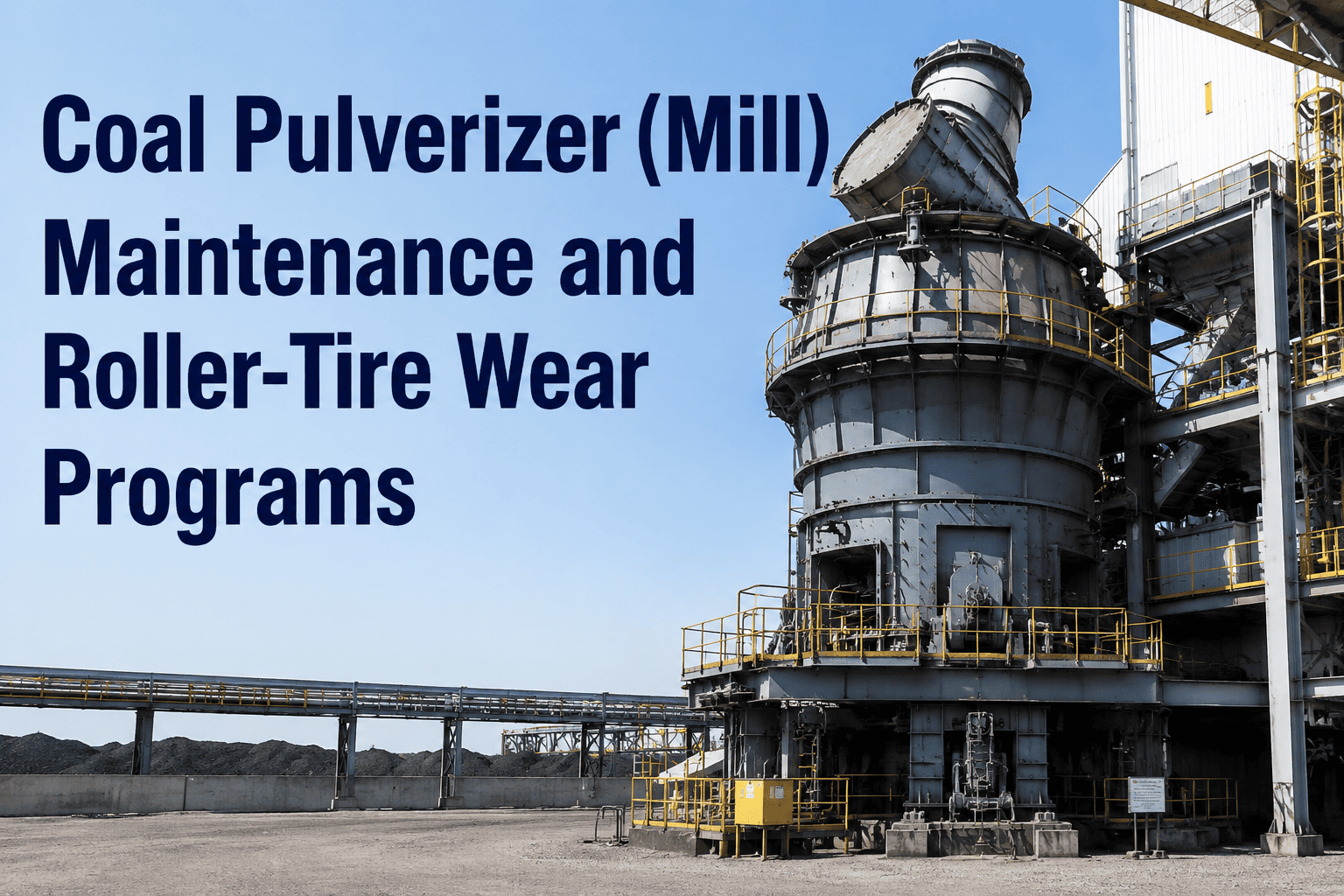
Pulverizer and coal mill maintenance is the single highest-leverage reliability activity in a coal-fired power plant — a single pulverizer outage can derate a 500 MW unit by 80 MW and cost upwards of $40,000 per day in lost generation. This guide covers bowl mill PM, vertical roller mill maintenance, classifier inspection, reject system upkeep, and the pulverizer CMMS workflows that keep coal mills available, efficient, and compliant. Whether you manage bowl mills, MPS mills, or ball-and-race mills, the schedules and benchmarks below are designed to plug directly into OxMaint so you can automate PM triggers, track wear-part life, and forecast overhauls — or you can Start Free Trial and configure your mill assets today.
Is one failed pulverizer quietly costing your plant $40K a day?
Coal mill availability below 92% drags down unit heat rate, increases NOx, and forces costly load derates. OxMaint's pulverizer CMMS automates bowl mill PM, classifier inspections, and wear-part replacement so your mills hit 95%+ availability — guaranteed.
Pulverizer PM schedule: bowl mill, MPS, and vertical roller mill checkpoints
A coal pulverizer operating without a structured PM schedule experiences 3× more unplanned outages than one maintained on condition-based intervals. The checklist below covers the four PM tiers plants use to keep bowl mills and vertical roller mills above 95% availability.
- Inspect mill lube oil pressure (min 1.5 bar) and temperature (max 65°C)
- Check seal air differential pressure (min 2.5 kPa above pulverizer outlet)
- Listen for abnormal roller/bowl vibration — log dB reading
- Verify pyrites/reject chute flow — no blockages or rollback
- Inspect classifier outlet temperature trend (target 75–85°C)
- Measure roller-tire and bowl-ring wear — log thickness in mm
- Inspect journal spring preload and hydraulic loading pressure
- Check classifier vane integrity and vane-opening consistency
- Examine seal air fan inlet filters and housing for dust buildup
- Sample and test lube oil — ISO 4406 cleanliness target 18/16/13
- Full classifier internal inspection — vane tip clearance ≤3 mm
- Clean and calibrate coal-air mixture temperature sensors
- Inspect reject pyrites hopper liner — replace if ≥50% worn
- Check mill outlet pulverized-coal pipe elbow thickness (ultrasonic)
- Test CO and O2 monitoring system — NFPA 85 compliance check
- Replace or hardface bowl ring and roller tires at 60% wear
- Rebuild journal assemblies — new bearings, seals, and oil
- Replace classifier cage and dynamic separator internals
- NDE on mill shaft, spider, and yoke — MPI and ultrasonic
- Re-align mill gearbox — run-out ≤0.05 mm full indicator
Coal mill inspection benchmarks: what numbers a CMMS should track
Tracking the right KPIs is what separates a 95%-available coal mill from one that derates your unit every quarter. The table below maps the inspection parameter, the alarm threshold, the action trigger, and how a pulverizer CMMS like OxMaint automates the response.
| Inspection Parameter | Normal Range | Alarm Threshold | PM Action Triggered in CMMS |
|---|---|---|---|
| Roller-tire thickness (bowl mill) | 100–85 mm | ≤70 mm | Auto-generate work order for roller replacement at next outage |
| Mill differential pressure | 2.0–3.5 kPa | >4.5 kPa | Dispatch inspection team — check for pyrites buildup or worn grinding elements |
| Classifier outlet temperature | 75–85°C | <65°C or >95°C | Flag fire or wet-coal risk — trigger emergency CO2 purge procedure |
| Seal air ΔP (vs. mill outlet) | ≥2.5 kPa | <1.5 kPa | Generate seal-air fan inspection and filter-replacement work order |
| Gearbox vibration (ISO 10816) | Zone A/B (<4.5 mm/s) | Zone D (>11.2 mm/s) | Forced mill shutdown — gearbox bearing inspection WO priority 1 |
| Coal fineness (% passing 200 mesh) | 70–75% | <65% | Schedule classifier vane adjustment or dynamic separator overhaul |
| Lube oil ISO cleanliness | 18/16/13 | >21/19/16 | Auto-create oil-change and filter-swap work order with parts kit |
What a pulverizer outage really costs — and what payback looks like
A mid-size 500 MW coal plant running six pulverizers typically loses $240K in margin per unplanned mill outage if the unit derates for six days. The formula below shows how quickly a pulverizer CMMS pays for itself — usually in the first single outage avoided.
A 500 MW plant with six bowl mills: from reactive to 95% availability
A regional generating station running six B&W-10E bowl mills was averaging 4.2 unplanned pulverizer outages per year — each costing $240K in derated margin and contractor labor. After implementing OxMaint's pulverizer CMMS with automated wear-part tracking and condition-based PM triggers, the plant reduced unplanned outages to 1.1 per year in the first 12 months. Result: $744K in avoided downtime cost, a 28% reduction in mill maintenance labor overtime, and coal fineness improved from 66% to 73% passing 200 mesh — all within a single budget cycle.
How OxMaint's pulverizer CMMS transforms coal mill maintenance
OxMaint maps directly to the PM schedules, wear-part tracking, and inspection workflows above — turning your pulverizer maintenance guide into an automated, audit-ready system. Here are four concrete capabilities and the measurable outcomes they deliver.
Automated PM Triggers by Run-Hours
OxMaint generates bowl mill PM work orders automatically based on actual mill run-hours, coal throughput, or calendar intervals — not guesswork. Each trigger fires a pre-built checklist with parts, tools, and safety permits attached.
Wear-Part Life Prediction
Log roller-tire and bowl-ring thickness measurements into OxMaint on each inspection. The AI engine projects remaining useful life and schedules replacement at the next planned outage — before you hit the 60% wear alarm.
Spare-Parts Inventory Sync
Every pulverizer work order auto-reserves wear parts (rollers, rings, journal bearings, classifier vanes) from your inventory. OxMaint tracks min/max levels and generates PO requests when stock drops below reorder thresholds.
Audit-Ready Compliance Records
Every inspection, measurement, and repair is timestamped, geo-tagged, and linked to the asset record. Generate NFPA 85, ISO 55000, and NERC-GADS compliance reports in one click — no more spreadsheet archaeology during audits.
See OxMaint manage your pulverizers — book a 30-minute demo
We'll load your mill asset hierarchy, import your PM schedules, and show you exactly how automated work orders and wear-part tracking will lift your coal mill availability above 95%.
Pulverizer maintenance & CMMS: top questions answered
How often should a coal pulverizer be inspected?
A coal pulverizer should receive a running (external) inspection weekly — checking lube pressure, seal air ΔP, vibration, and coal-air temperature. Internal inspections of the grinding zone, classifier, and reject system should occur monthly during baseload operation and at every planned outage. A pulverizer CMMS like OxMaint automates these intervals based on actual run-hours so no inspection is missed, even during high-generation seasons.
What is the difference between bowl mill PM and vertical roller mill maintenance?
Bowl mill PM (B&W, CE-Raymond) focuses on roller-tire and bowl-ring wear measurement, journal spring preload, and pyrites reject system cleaning. Vertical roller mill maintenance (MPS, ATOX) centers on grinding-table and roller-hub wear, hydraulic cylinder pressure, and dynamic separator vane condition. Both require the same CMMS-driven PM structure — OxMaint supports both mill types with asset-specific checklists and wear-part libraries. You can Start Free Trial and configure either mill type in minutes.
How does a CMMS improve pulverizer availability?
A CMMS improves pulverizer availability by converting time-based and condition-based PM schedules into automated work orders that fire on run-hour or calendar triggers — ensuring inspections and wear-part replacements happen before failure. Plants using a pulverizer CMMS typically lift mill availability from 88–90% to 94–96% within the first year, cutting unplanned outages by 30–50% and reducing derated-generation losses.
What coal fineness target should a pulverizer maintenance program achieve?
The industry target for coal fineness is 70–75% passing a 200-mesh screen (75 μm) with less than 0.1% remaining on a 50-mesh screen. Falling below 65% passing 200 mesh indicates worn grinding elements, classifier vane deterioration, or improper vane settings — all of which should trigger a PM work order. OxMaint tracks fineness test results against each mill asset and auto-flags deviations for corrective action.
Can OxMaint import our existing pulverizer PM schedules from spreadsheets?
Yes — OxMaint supports bulk import of PM schedules, asset hierarchies, parts lists, and inspection checklists from Excel and CSV files. Most plants migrate their entire pulverizer PM program in under a day. Book a 30-minute demo at calendly.com/oxmaintapp/30min and we'll walk you through the import live on your data.
Stop losing $40K a day to unplanned pulverizer outages
Deploy OxMaint's AI-powered pulverizer CMMS and lift your coal mill availability above 95% in the first year. Automate bowl mill PM, predict wear-part replacement, and eliminate reactive maintenance for good.
Free 14-day trial · No credit card