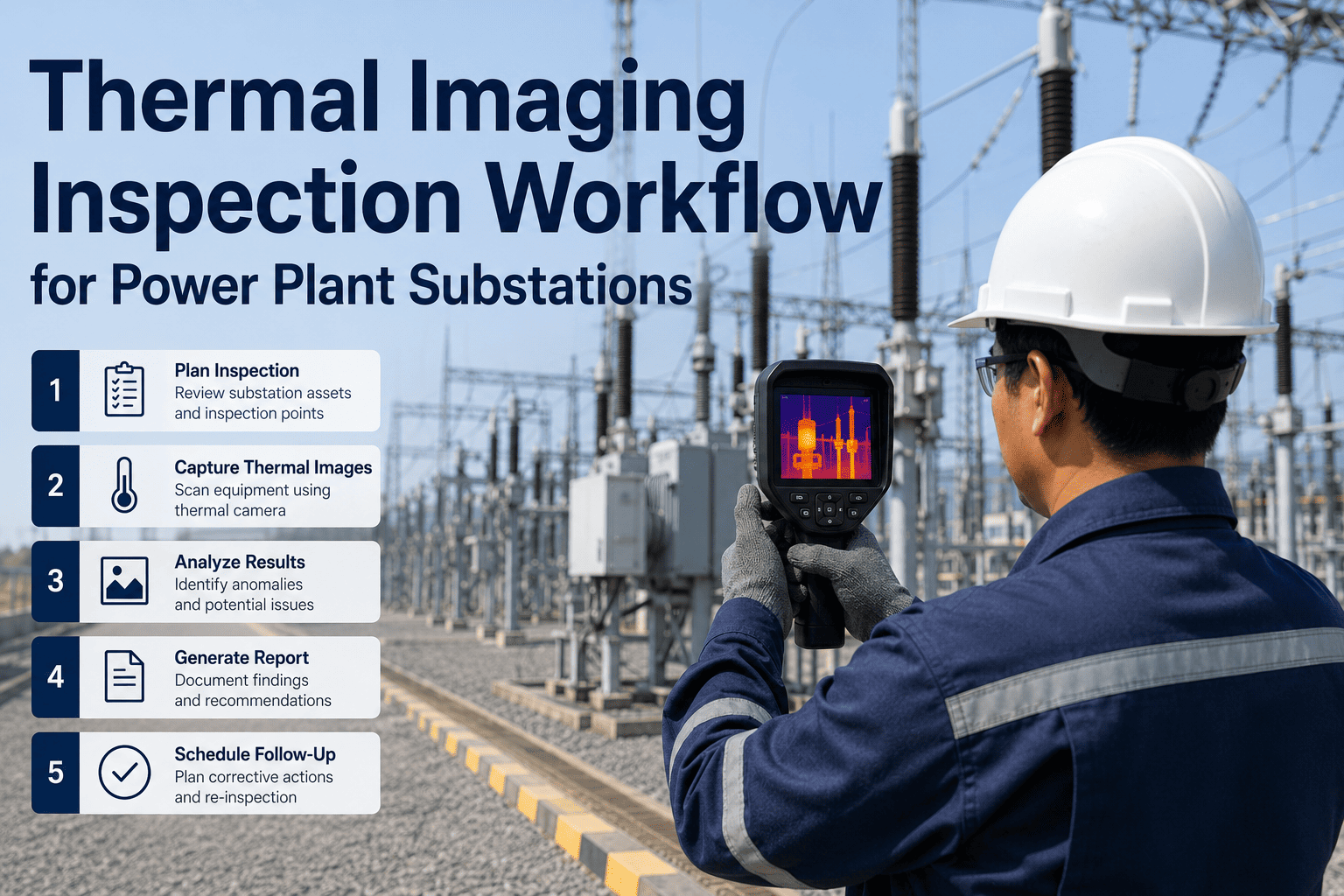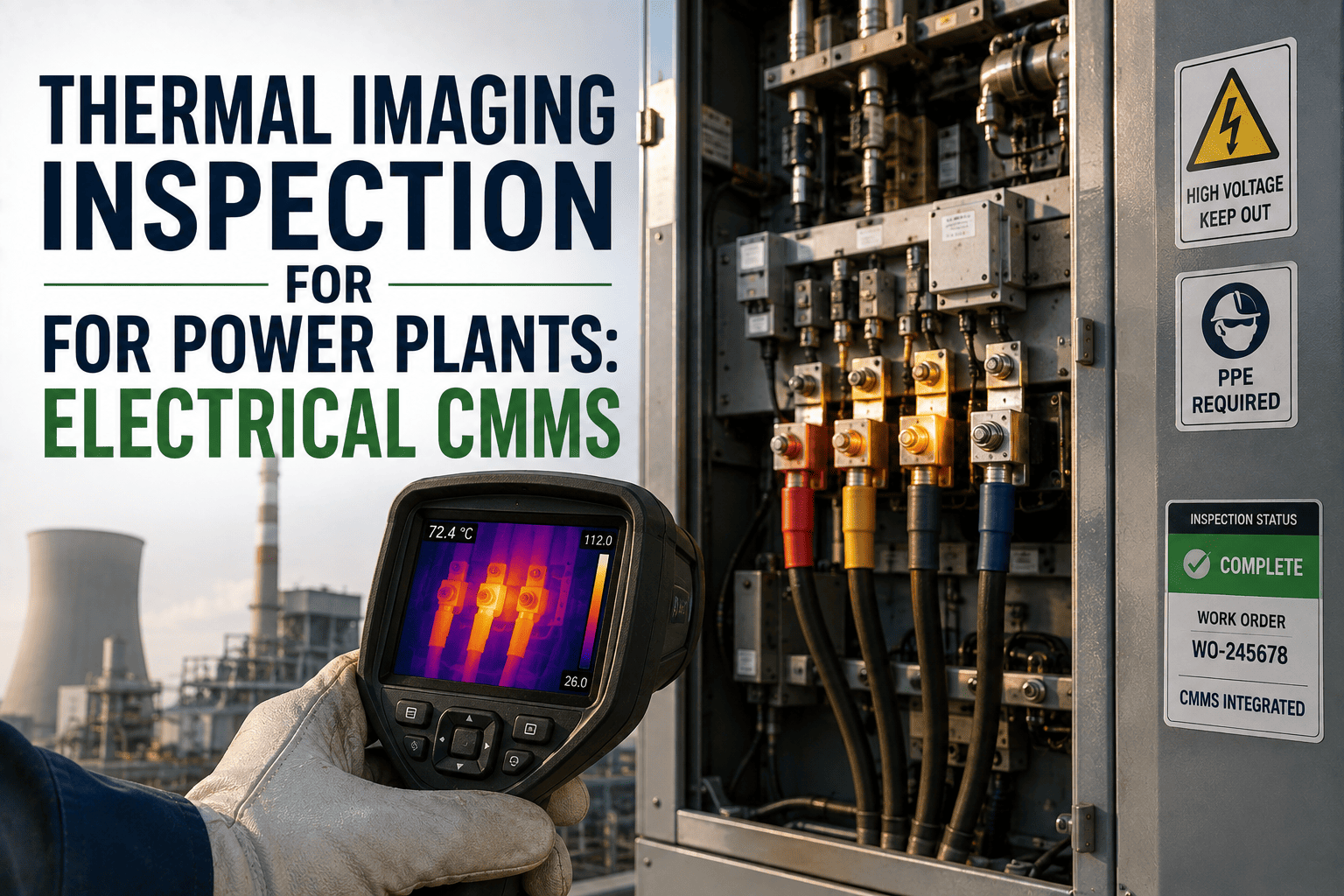
Thermal imaging inspection for power plants is the practice of using infrared cameras to detect abnormal heat signatures in electrical switchgear, transformers, busbars, and motor terminals before they escalate into catastrophic failures or forced outages. A well-structured power plant infrared program—tightly integrated with a CMMS—can identify loose connections, overloaded circuits, and degrading insulation weeks before conventional maintenance catches them, routinely reducing unplanned electrical downtime by 30–50%. Switchgear thermography and transformer thermal imaging are now baseline expectations for NFPA 70B and NETA compliance, yet many plants still rely on fragmented paper logs that bury critical temperature data. By pairing electrical thermography with an AI-powered CMMS like OxMaint, reliability teams can automate thermal routes, trigger predictive work orders, and trend hot-spot degradation over time—ready to modernize your program? Start Free Trial.
Are hidden electrical hot spots draining your plant's reliability and margins?
Power plant thermal imaging detects loose busbar connections, overloaded transformer windings, and failing motor terminals before they cause forced outages. OxMaint digitizes your thermal inspection routes and automatically converts critical temperature anomalies into prioritized work orders.
Where to focus thermal imaging inspection for power plants
Electrical failures account for over 40% of unplanned downtime in power generation. Targeting these four high-risk areas during your thermal route maximizes inspection ROI and catches faults early.
Switchgear Thermal Inspection
Scan circuit breaker stabs, draw-out contacts, and insulated bus joints. A temperature rise of 15°C or more above a similar component under similar load indicates a loose connection requiring immediate corrective maintenance.
Transformer Thermal Imaging
Inspect cooling radiators for blocked flow, bushing connections for overheating, and LTC tap changers. Uneven thermal patterns across radiator fins often reveal degraded oil flow or stuck valves.
Busbar Thermography
Check busbar joints, splices, and isolation points under normal load. Hot spots at bolted connections develop slowly but can cascade into explosive arc-flash events if left uncorrected.
Motor Terminal Thermography
Image motor terminal boxes, cable lugs, and contactors. Loose power connections at 3-phase motor terminals cause localized heating that damages insulation and leads to winding failure.
Power plant thermal inspection checklist: severity thresholds and action triggers
Use this standardized severity matrix during electrical thermography to classify hot spots and trigger the correct work order priority in your CMMS.
| Component | Temperature Rise vs. Baseline | Severity Class | Required CMMS Action |
|---|---|---|---|
| Busbar joint | 1–10°C | Minor | Schedule corrective work order within 30 days |
| Switchgear breaker stab | 11–25°C | Moderate | Issue priority work order within 7 days |
| Transformer bushing | 26–40°C | Serious | Emergency work order, de-energize if load permits |
| Motor terminal lug | >40°C | Critical | Immediate shutdown and isolation |
| Cable connection | Any delta with visible sparking | Critical | Immediate isolation, follow NFPA 70E protocols |
How much does electrical thermography save a power plant?
Quantifying the value of thermal imaging power plant programs requires comparing inspection costs against the avoided cost of a single catastrophic electrical failure.
Annual Savings = (Avoided Outage Hours × MWh Generation × $/MWh Margin) + (Avoided Equipment Replacement Cost) − (Annual Thermography Program Cost)
A 180-asset power generation facility
Consider a 300 MW plant spending $42,000 annually on contracted thermography and internal thermal route labor. A single undetected switchgear fault forces a 14-hour forced outage. At a $65/MWh margin, that outage costs $273,000 in lost revenue alone—plus $50,000 in emergency switchgear rebuilds. By catching just one such event per year, the thermal inspection CMMS program yields a 6:1 return. Integrating OxMaint ensures the detected fault is instantly routed, repaired, and documented, preventing the outage entirely.
How to implement a thermal route power plant program in 4 steps
Transitioning from ad-hoc infrared scanning to a predictive, CMMS-driven thermal route takes a single quarter to operationalize.
Asset Database Setup
Tag all critical electrical assets (switchgear, transformers, motors) in OxMaint. Attach single-line diagrams and nameplate data to each asset record.
Define Thermal Routes
Build automated, recurring PM work orders in the CMMS. Assign QR code labels to panels so thermographers scan and verify location before capturing images.
Capture & Upload Baseline
Perform the initial infrared scan under normal load. Attach thermal images and temperature readings directly to the active work order in OxMaint via mobile app.
Trend & Auto-Trigger
Leverage OxMaint analytics to trend temperature deltas over time. AI thresholds automatically generate priority corrective work orders when anomalies breach severity limits.
How OxMaint powers CMMS thermography for power plants
Manual thermal logs and spreadsheets cannot trend degradation or guarantee audit readiness. OxMaint closes the loop between infrared detection and corrective action.
Automated Thermal Routes
Schedule recurring switchgear thermography and motor terminal inspections. OxMaint auto-generates mobile work orders, cutting planning time by 80% and ensuring no asset is skipped.
Temperature Trending & Predictive AI
Attach IR images to asset records. OxMaint's AI analyzes temperature deltas to predict failures weeks in advance, reducing unplanned electrical downtime by 30–50%.
Instant Corrective Work Orders
When a hot spot is found, generate a priority corrective work order directly from the inspection screen. Route it to the right technician with required spare parts pre-allocated.
NFPA 70B / NETA Compliance
Maintain a bulletproof, time-stamped audit trail of every thermal scan, severity classification, and repair. Eliminate paper logs and pass insurance and regulatory audits effortlessly.
Stop reacting to electrical failures. Start predicting them.
See how OxMaint digitizes your power plant infrared inspections, automates thermal routes, and converts hot spots into resolved work orders—before they cause outages.
Power plant thermal imaging FAQs
How often should thermal imaging inspections be performed in a power plant?
Critical electrical assets like main switchgear and power transformers should undergo thermography power plant inspections quarterly, while secondary distribution panels and motor control centers are typically scanned bi-annually. High-load summer months often warrant increased frequency. OxMaint allows you to automate these varying intervals with route-based PM scheduling.
What temperature differential indicates a critical problem during switchgear thermography?
A temperature rise of 40°C or more above a comparable reference component under similar load is generally classified as critical and requires immediate shutdown and repair. Rises between 15°C and 40°C are prioritized for prompt corrective maintenance. Always compare similar components under similar load conditions to avoid false positives.
Can thermal imaging find faults in motor terminals?
Yes, motor terminal thermography is highly effective at finding loose, corroded, or overloaded power lugs at 3-phase motor connections. These hot spots generate localized heat that degrades winding insulation and is a leading cause of premature motor failure. OxMaint helps you document these scans and track terminal degradation over time.
How does a CMMS improve thermal inspection programs?
A thermal inspection CMMS bridges the gap between finding a hot spot and fixing it. Instead of logging temperatures on clipboards, technicians attach IR images directly to digital work orders. This enables automated trending, instant corrective work order generation, and auditable compliance records. You can see this workflow live—book a 30-minute demo to experience it.
Is thermal imaging required for NFPA 70B compliance?
Yes, NFPA 70B recommends infrared inspections of electrical systems at least annually as part of a preventive maintenance program. NETA standards also specify thermography as a primary diagnostic tool. Using a CMMS like OxMaint ensures these inspections are scheduled, executed, documented, and audit-ready, satisfying insurance and regulatory requirements.
Modernize your electrical thermography program today
Join the reliability teams using OxMaint to predict failures, automate thermal routes, and eliminate reactive maintenance chaos. Get set up in minutes.
Free 14-day trial · No credit card required