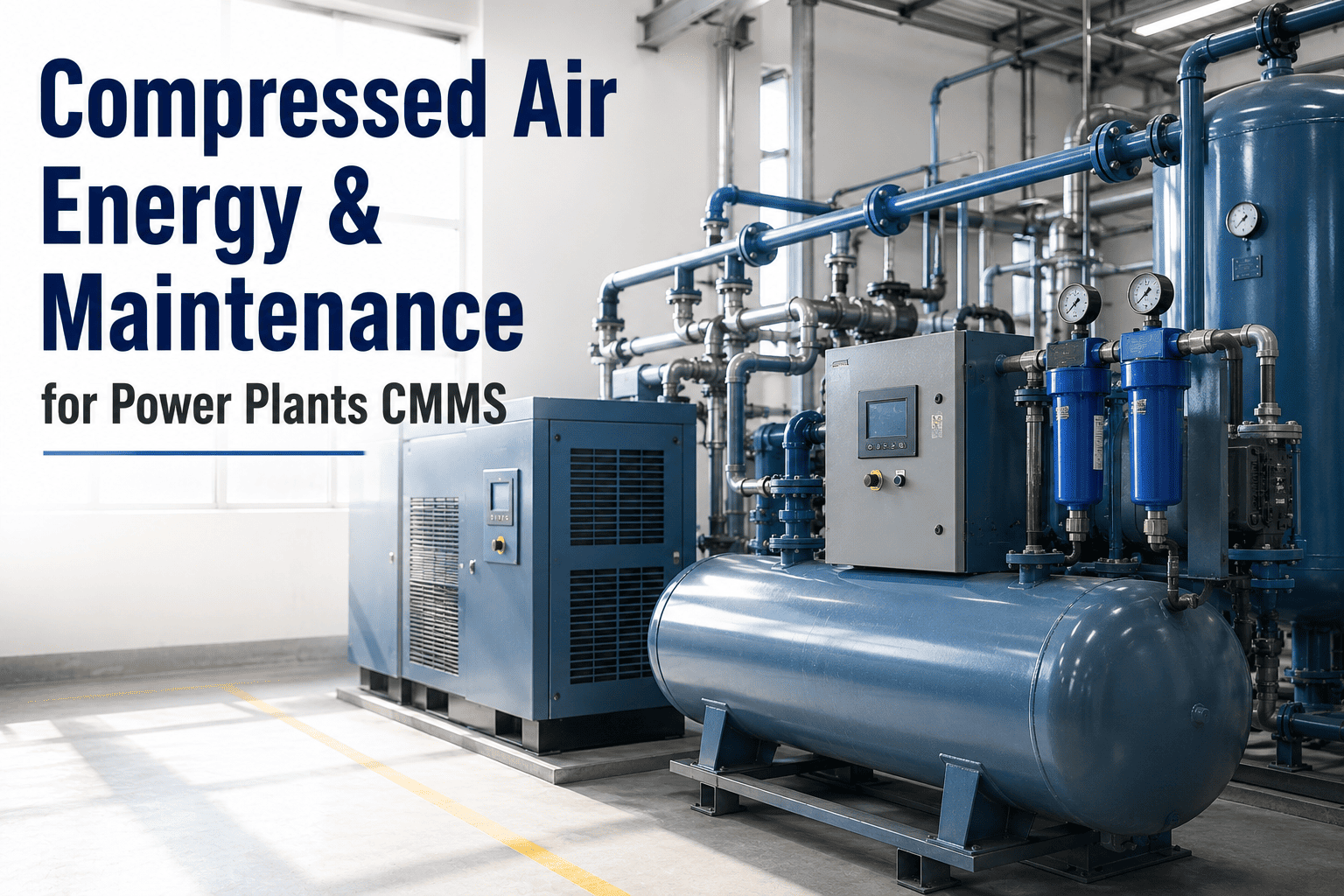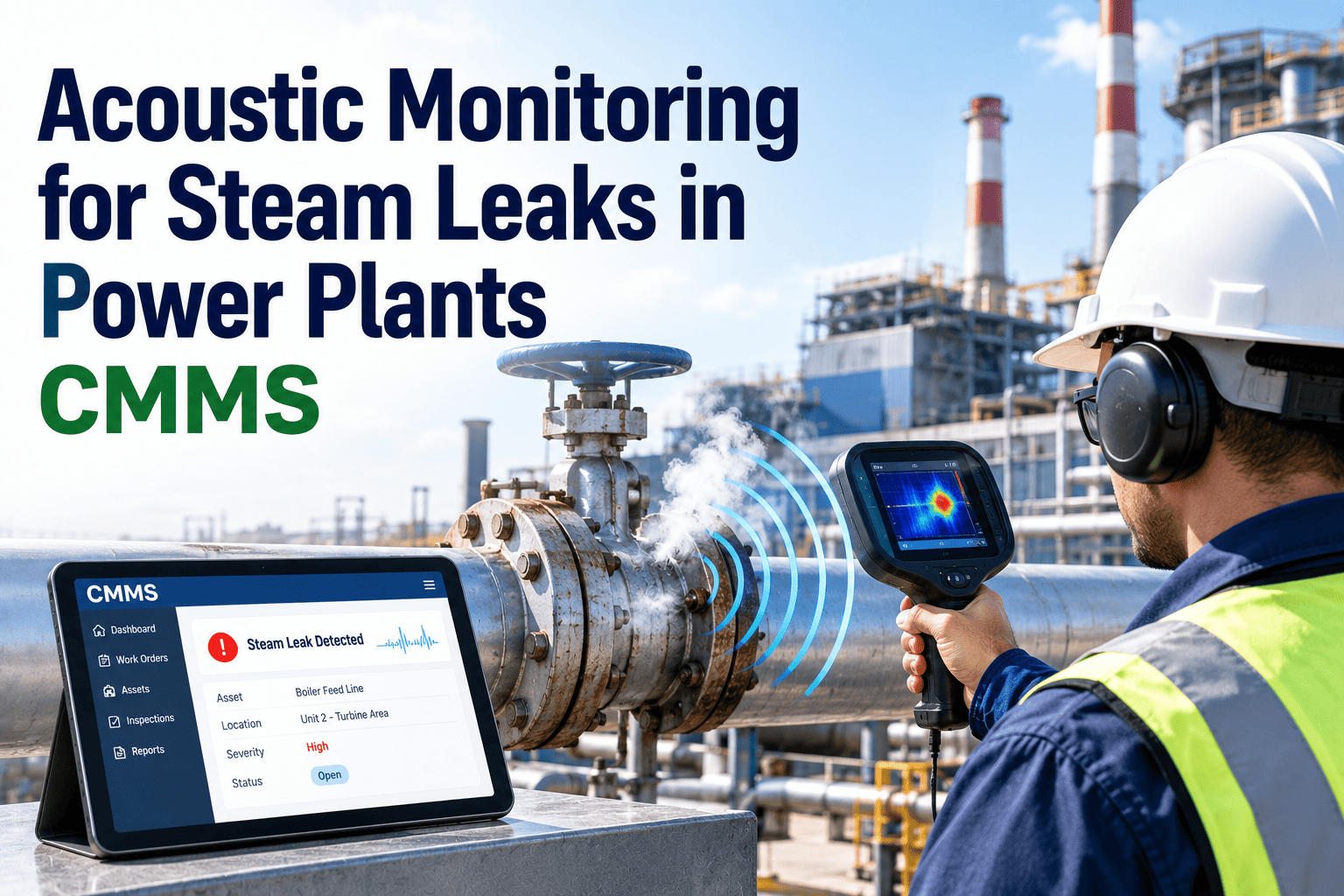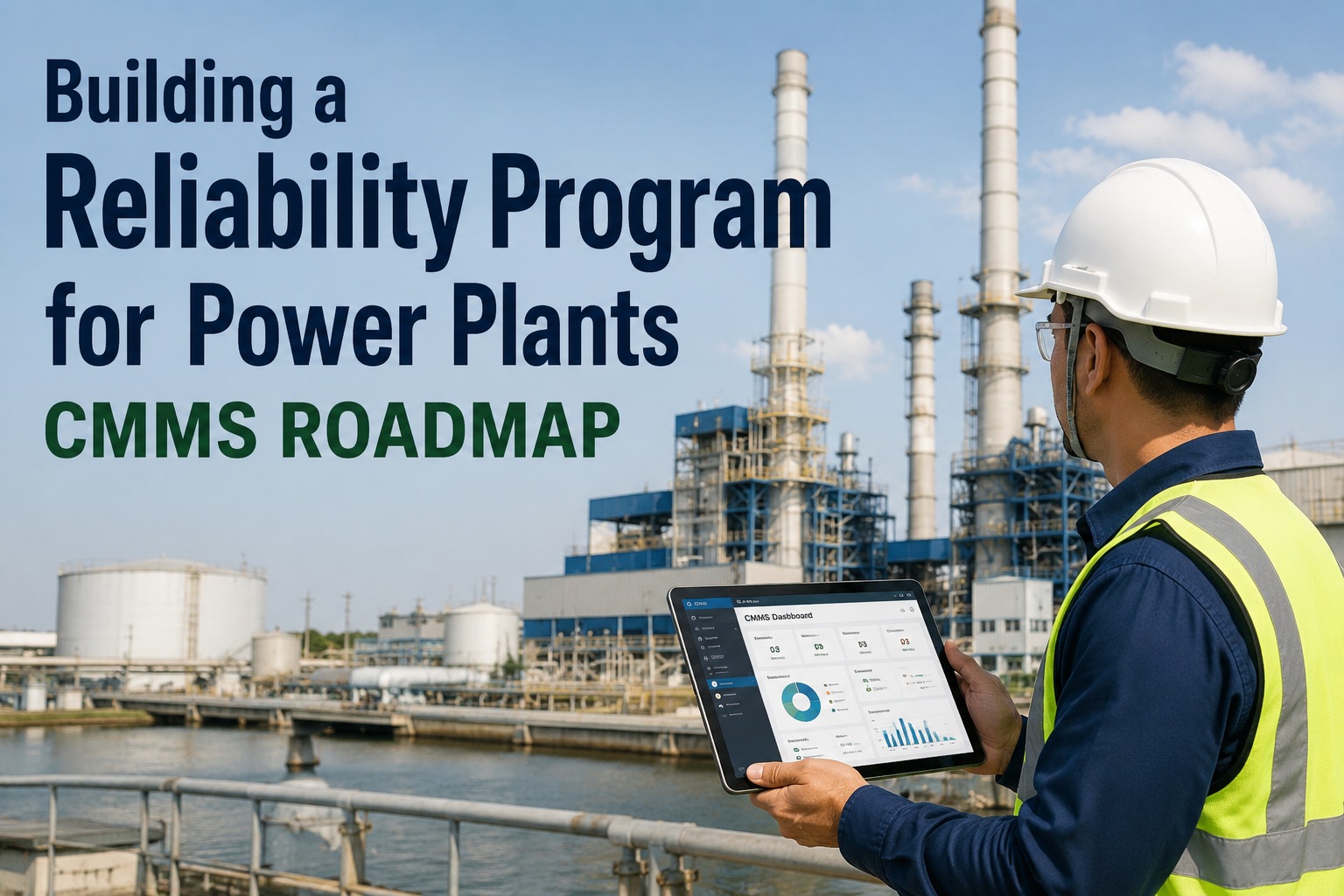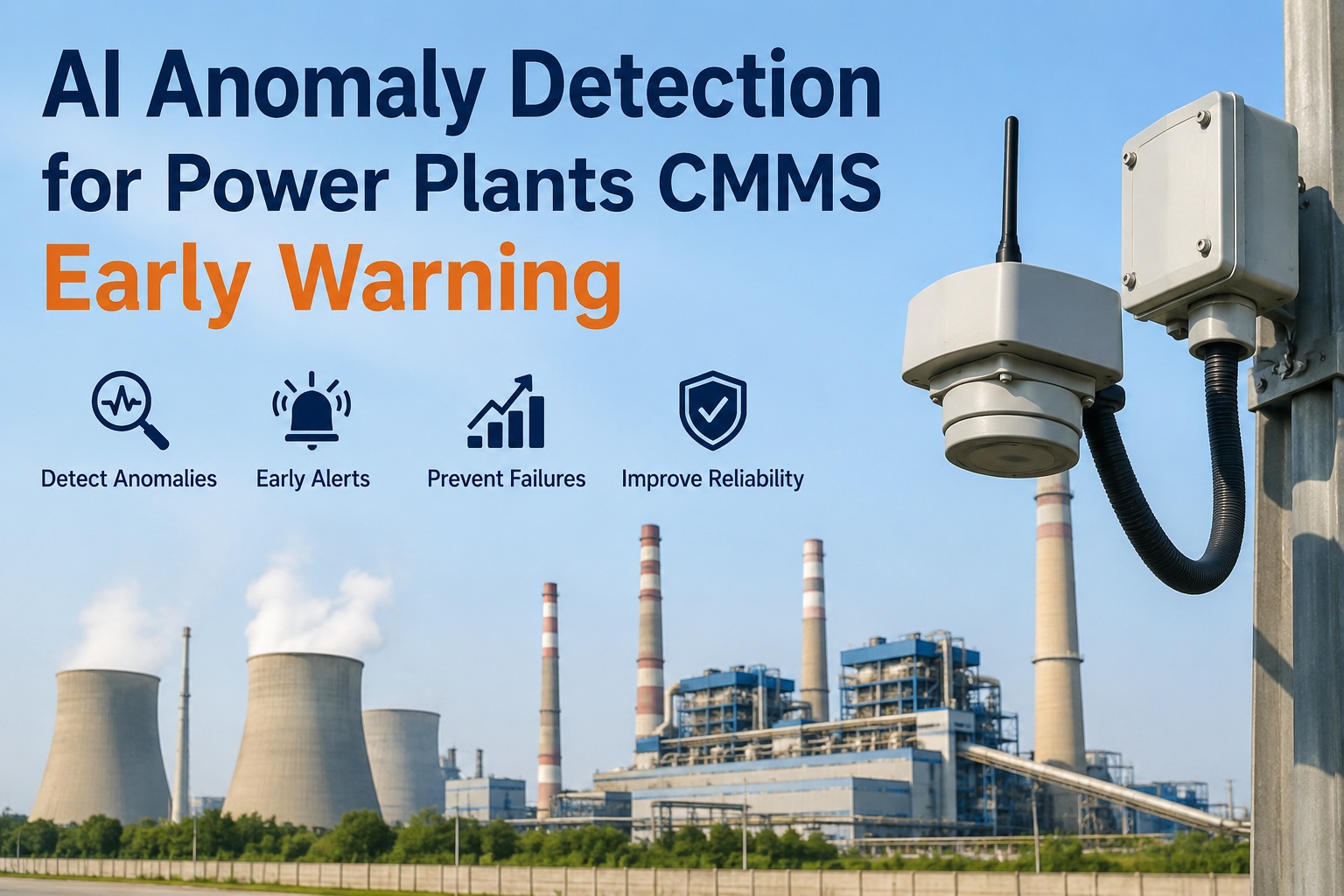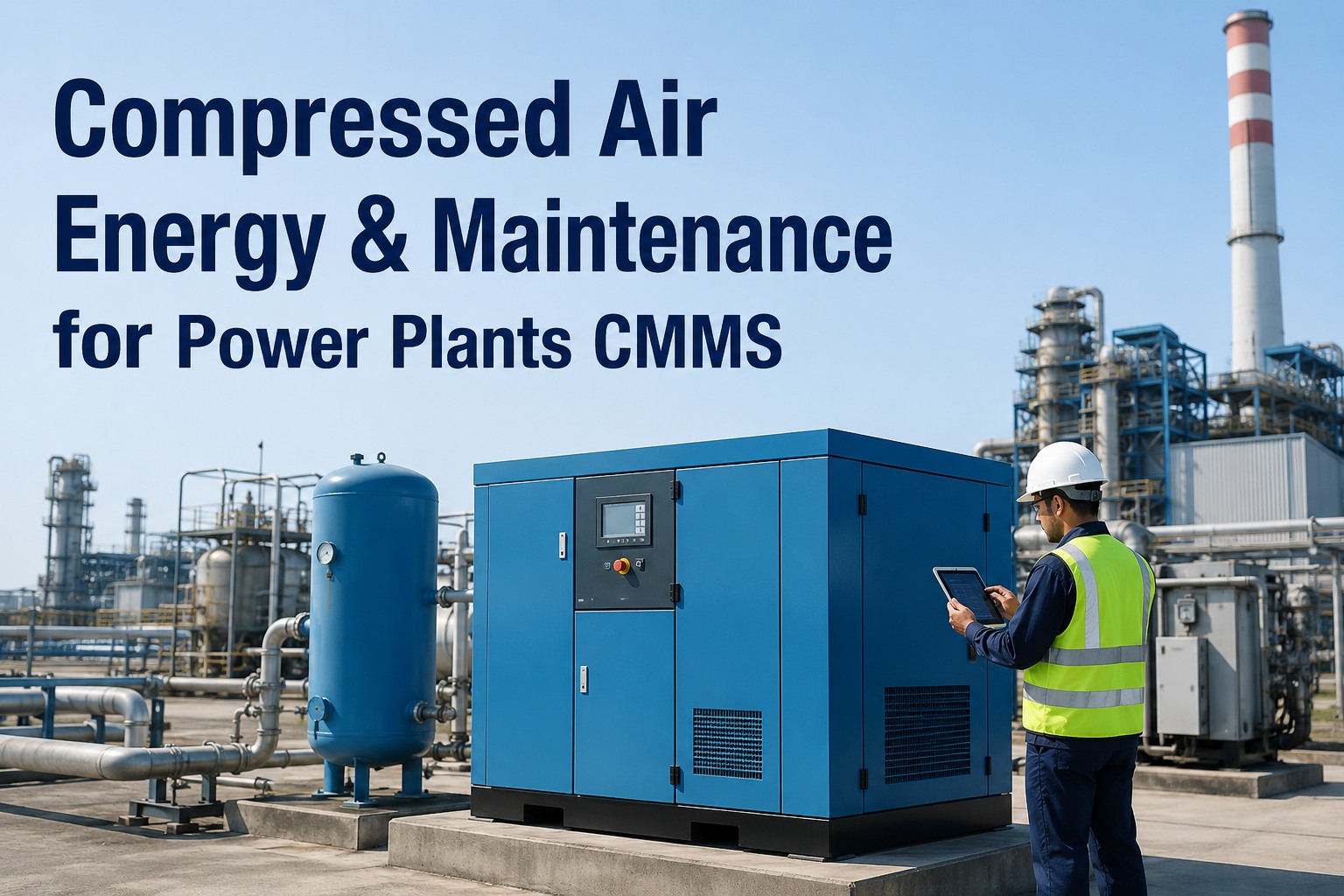
A compressed air energy and maintenance program for power plants typically targets the 20–40% of generated compressed air that is lost to leaks, inefficient compressor sequencing, and unoptimized pressure bands. For a mid-sized generating station spending $180K–$400K annually on compressed air, even a 15% reduction in waste translates to $27K–$60K in immediate energy savings — plus fewer forced outages, longer valve and seal life, and lower unplanned maintenance costs. This guide maps the leak detection surveys, compressor efficiency maintenance, and pressure optimization steps that reliability teams use to capture those savings, and shows how an AI-powered CMMS like OxMaint automates the work orders, asset tracking, and analytics behind a sustained program. You can Start Free Trial to deploy it on your assets today.
Stop Losing $50K+ a Year to Compressed Air Leaks and Inefficiency
Industry studies show 20–40% of all compressed air produced in power plants is wasted. OxMaint's AI-powered CMMS tracks every compressor, valve, and fitting — auto-generating leak-repair work orders and efficiency analytics so your team fixes losses before they hit the utility bill.
How Much Do Compressed Air Leaks Cost a Power Plant?
Compressed air is widely considered the most expensive utility in a power plant — roughly 7–8 times the cost of equivalent electrical energy due to thermodynamic conversion losses. When 30% of that air escapes through undetected leaks, the plant pays for compression energy, cooling, and dryer capacity it never actually uses at the point of demand.
A single 1/8-inch leak at 100 PSIG flows roughly 29 CFM. At $0.09/kWh and 8,000 operating hours, that one fitting wastes over $2,300/year. A typical 500 MW plant has 50–150 such leaks.
180-Asset Coal-Fired Station
A 180-asset plant spending $42,000/yr on compressed air identified 94 leaks totaling 340 CFM during an ultrasonic survey. Repair cost: $8,200 in labor and parts. First-year energy savings: $26,400. Payback: 3.7 months. The program now repeats quarterly via OxMaint PM triggers.
Building a Compressed Air Maintenance Program for Power Plants
A high-performing air system efficiency program follows a structured, repeatable sequence — from baseline measurement through sustained monitoring. Each phase ties directly to work orders and asset records inside the CMMS.
Baseline & Ultrasonic Leak Detection Survey
Map every compressor, receiver, dryer, and distribution header. Conduct an ultrasonic leak detection survey across all pneumatic assets — tagged by location, severity (CFM loss), and priority. Log each leak as a discrete work order in the CMMS with photo and dB reading.
Prioritized Repair & Compressor Efficiency Maintenance
Rank leaks by cost impact. Dispatch repair teams to high-CFM losses first. Simultaneously schedule preventive maintenance on compressors — replace air/oil filters, clean intercoolers, calibrate unloaders, and verify VFD control logic for optimal sequencing.
Pressure Optimization & Demand Side Control
Lower system pressure in 2-PSI increments while monitoring critical end-use points — every 2 PSI reduction saves ~1% compressor energy. Install or repair flow controllers, eliminate artificial demand, and verify dryer and filter pressure drops stay under 4 PSI combined.
Sustainment, Monitoring & Re-survey
Set CMMS triggers for quarterly ultrasonic re-surveys. Track kW/100 CFM as a monthly KPI. Use predictive analytics on motor vibration and temperature to catch compressor degradation before it spikes energy draw or causes a forced outage.
Compressed Air Optimization: Savings Breakdown by Action
Not every efficiency action returns the same dollar value. The table below ranks interventions by typical energy savings and implementation cost, based on DOE compressed air best-practice benchmarks.
| Optimization Action | Typical Energy Savings | Est. Implementation Cost | Payback Period | CMMS Trigger |
|---|---|---|---|---|
| Ultrasonic Leak Repair Program | 15–30% | $5K–$15K | 2–6 months | Quarterly PM Survey |
| Compressor Filter & Cooler PM | 3–7% | $1K–$4K | 1–3 months | Run-hours PM |
| Pressure Band Reduction (2–5 PSI) | 1–5% | $500–$2K | 1–2 months | Inspection Checksheet |
| VFD / Sequencer Control Upgrade | 10–25% | $20K–$60K | 12–24 months | Capital Project WO |
| Dryer & Filter Pressure-Drop Fix | 2–4% | $3K–$8K | 6–12 months | Condition-Based PM |
How OxMaint CMMS Drives Power Plant Air Efficiency
OxMaint replaces clipboard surveys and standalone spreadsheets with a connected, AI-driven maintenance platform that automates the entire compressed air maintenance lifecycle — from leak detection work orders to compressor predictive analytics.
Automated Leak-Repair Work Orders
Generate prioritized work orders directly from ultrasonic survey data. Each WO carries leak location, CFM loss, photo evidence, and repair history — cutting administrative time by 40% and ensuring no leak is missed or forgotten.
Predictive Compressor Analytics
AI models on vibration, temperature, and motor current detect compressor degradation 2–4 weeks before failure — preventing efficiency losses and avoiding $15K–$50K in unplanned downtime per forced outage event.
Asset Registry & KPI Dashboard
Track every compressor, dryer, valve, and fitting in a single asset hierarchy. Real-time dashboards display kW/100 CFM, leak-repair rate, and energy cost avoidance — proving program ROI to leadership and audit-readiness to regulators.
Spare-Parts Inventory Linkage
When a leak-repair WO opens, OxMaint auto-reserves fittings, seals, and hose from inventory — eliminating part-stock-outs that delay repairs by 3–7 days and ensuring the maintenance team closes survey findings within target SLAs.
Within one quarter of deploying OxMaint for our compressed air program, we cut survey-to-repair cycle time from 45 days to 9 days and recovered 280 CFM. The energy savings alone paid for the platform.
See OxMaint on Your Compressors — Book a 30-Min Demo
We'll map your compressed air assets, import your leak survey data, and show you the exact work-order and analytics workflows that recover 15–30% in energy costs.
Compressed Air CMMS & Maintenance: FAQs
How often should a power plant conduct compressed air leak detection surveys?
Most reliability-focused power plants run ultrasonic leak detection surveys quarterly, with high-demand facilities moving to monthly partial surveys on critical zones. The DOE recommends re-surveying at least every 6 months because new leaks develop continuously through vibration, thermal cycling, and fitting fatigue — a quarterly cadence inside a CMMS typically keeps aggregate leak losses under 5–8% of production.
What is the ROI of a compressed air maintenance program for power plants?
Typical ROI is 150–400% in the first year, with payback periods of 2–8 months. A plant spending $100K/yr on compressed air that recovers 20% of losses saves $20K annually — against a survey and repair investment of $5K–$12K. Using a CMMS like OxMaint to automate re-surveys and work orders extends those savings year over year with minimal administrative overhead.
How does a CMMS improve compressed air efficiency versus spreadsheets?
A CMMS links each detected leak to a trackable work order with location, severity, photo, and repair history — eliminating the gap between "found" and "fixed" that plagues spreadsheet-based programs. It also schedules recurring PMs, reserves spare parts automatically, and rolls repair data into KPI dashboards so managers see kW/100 CFM and dollar savings in real time. To see this workflow on your assets, Book a Demo with our team.
What pressure optimization targets should a power plant set for compressed air?
Start by auditing actual end-use pressure requirements — most plants can reduce header pressure by 5–10 PSI without affecting operation, saving 2.5–5% in compressor energy. Target a maximum combined pressure drop of 4 PSI across dryers and filters, and use flow controllers to stabilize pressure at the point of use so compressors can unload or stage down during low-demand periods.
Can OxMaint integrate with existing compressor controllers and SCADA systems?
Yes. OxMaint connects to plant SCADA, PLC, and IoT vibration/current sensors via standard industrial protocols, pulling compressor run-hours, pressure, temperature, and motor data into the asset registry. This enables condition-based PM triggers and AI predictive alerts so your team is notified of efficiency drift or impending failure before it escalates into an unplanned outage.
Recover 15–30% of Your Compressed Air Costs This Quarter
Deploy OxMaint's AI-powered CMMS to automate leak-repair work orders, track compressor health, and prove energy savings to leadership — starting today.
Free 14-day trial · No credit card required