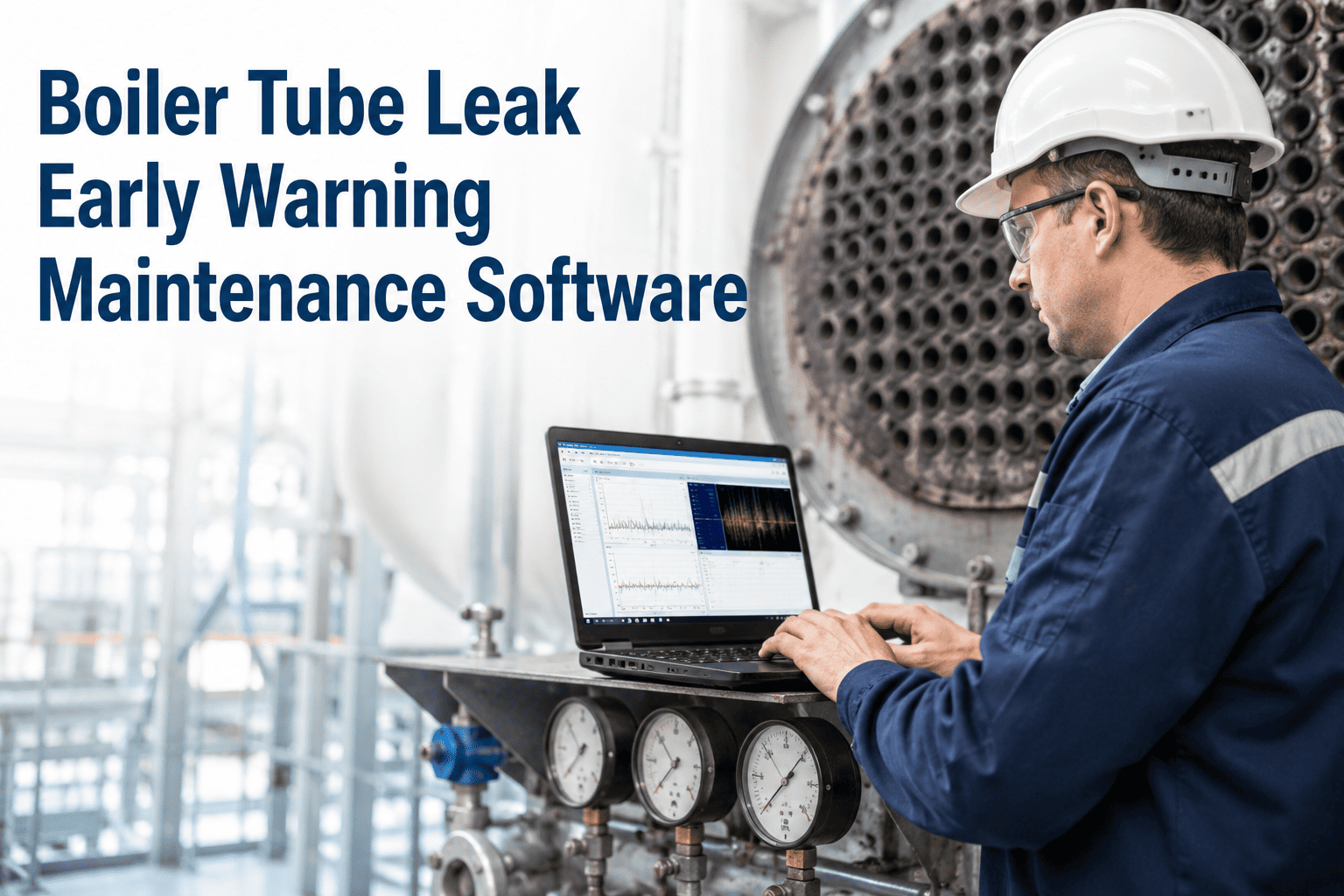
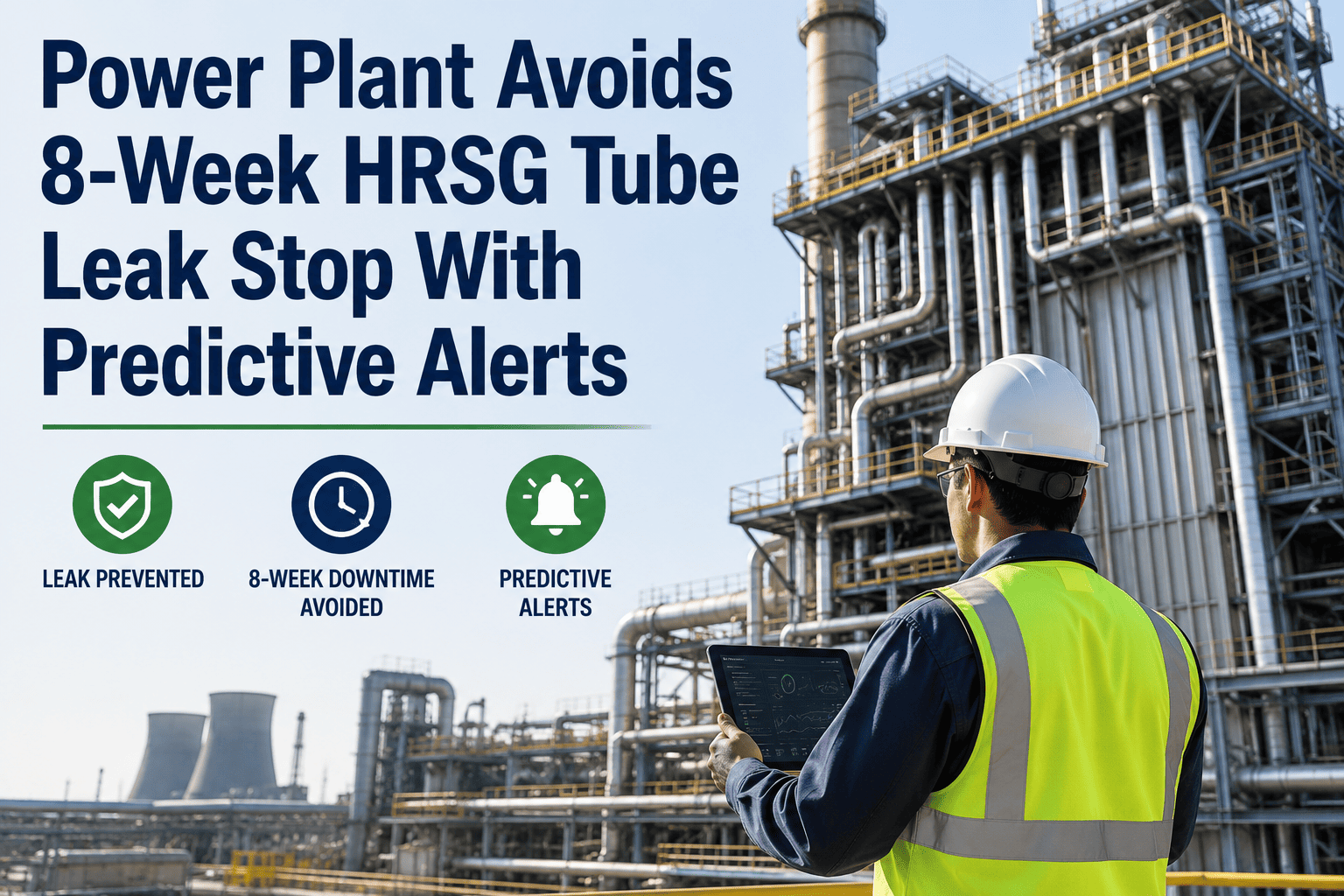
Boiler tube leaks cause 54% of all forced outages at thermal power plants — more than balance of plant, steam turbines and generators combined, according to NETL outage data. But detecting that a leak exists is rarely the hard part anymore; acoustic and chemistry monitoring can flag a developing leak weeks before rupture. The hard part is localization — figuring out which tube, in which zone, out of the thousands running through a boiler or HRSG. A crew that knows "something's leaking in the superheater" can still spend a full shift on listening rounds and visual inspection before pinpointing the actual tube, and every hour spent narrowing the search is an hour closer to a forced outage that can run $2 million to $10 million in repair and lost generation. This guide covers how structured operator observations, inspection evidence and historical failure data cut that search down — and how OXMAINT AI keeps that evidence chain connected from first suspicion to repaired tube.
Power Generation · Boiler & HRSG Reliability · Leak Localization · 2026
Boiler Tube Leak Localization: Digital Inspection & Troubleshooting Guide
"We know something's leaking" isn't the same as knowing where. OXMAINT AI connects the localization workflow in one platform: operator observations, inspection findings and historical failure data all log against specific boiler zones, so a suspected leak narrows to a tube faster — and once it's confirmed, a corrective work order carries the exact location, not a general note about "the superheater."
Observation Logged
→
Inspection Evidence Attached
→
Zone Narrowed
→
Corrective Work Order
54%
of all forced outages at thermal power plants caused by boiler tube leaks, per NETL data
$2M–$10M
typical repair and lost-generation cost per boiler tube leak incident
4–8 Days
average forced outage duration from a pressure-part failure in a combined-cycle HRSG
60%
of HRSG tube failures are detectable weeks before rupture through chemistry and thickness trending
Pain Point #5: Why Localization Is the Hard Part
A steam-to-feedwater imbalance or an acoustic alert tells you a leak exists somewhere in a unit with thousands of linear feet of tubing. Getting from "somewhere" to "this tube" is where most of the time actually goes. Sign up free and start logging structured leak observations today.
🔊
Sound Travels & Echoes
A hissing sound heard near the economizer can actually originate two zones away — steel structure and ducting carry the sound in misleading directions.
🗣
Observations Stay Verbal
One operator notes something odd at shift start, mentions it in passing, and the detail doesn't survive the handoff to the next shift.
🧠
Tribal Knowledge, Not Records
The senior tech "just knows" that this unit's superheater outlet header tends to fail first — but that pattern isn't written down anywhere a newer tech can check.
🌫
Signal Masked by Noise
At full load, ambient combustion and flow noise can bury an early-stage leak signature that would be obvious during a quieter turndown period.
The Localization Evidence Chain
Every piece of evidence narrows the search. The chain works when each piece is captured and connected — not scattered between a logbook, a memory and a monitoring dashboard. Book a demo to see a suspected leak narrow to a zone in real time.
Localization Case #4471 · In Progress
Status: Narrowing
01
Operator Observation
Sound, smell, visible steam or a gauge anomaly logged with time, load condition and approximate location.
02
Monitoring Signal Attached
Acoustic alert, sodium spike or steam-feedwater imbalance data linked to the same case record.
03
Historical Zone Check
Prior failures on this unit cross-referenced by zone — a header known for repeat failures gets checked first.
04
Inspection Findings Logged
Visual and thermal inspection results recorded against the narrowing zone, with photos attached.
05
Tube Confirmed
Exact tube and location identified, closing out the localization case with the full evidence trail attached.
06
Corrective Work Order
Repair work order generated with the confirmed location, part and access requirements — not a general zone guess.
Common Failure Zones — Where History Points First
Tube failures aren't randomly distributed. Flow imbalance, thermal cycling and weld stress concentrate failures in known zones — and a unit's own history is usually the fastest lead.
Waterwall Tubes
Highest overall failure share across boiler tube categories — driven by fireside erosion, corrosion fatigue and flow-accelerated corrosion.
Superheater Outlet Headers
Prone to creep and thermal fatigue on units with cyclic operation, especially where flow-correcting devices have degraded.
Reheat Sections
Stress corrosion cracking and thermal fatigue concentrate here on units with frequent start/stop cycling.
Economizer Sections
Pitting and oxygen corrosion are the common early-stage signatures, often the first zone to show chemistry deviations.
A Suspected Leak With No Logged History Starts the Search From Zero Every Time.
OXMAINT AI keeps every observation, inspection and prior failure tied to the asset, so the next suspected leak starts with a lead, not a blank slate.
Verbal Troubleshooting vs. a Structured Localization Record
Verbal & Memory-Based Troubleshooting
Observations shared at shift change, easily lost in translation
Historical failure zones known only by the most senior techs
Monitoring alerts sit in a separate system from inspection notes
Repair work order starts with a general zone, not a confirmed tube
Structured Digital Localization
Every observation logged with time, load and location, visible to the next shift
Historical failure zones searchable by any technician, on any shift
Monitoring alerts and inspection findings attached to the same case
Work order carries the confirmed tube, part and access requirements
What OXMAINT AI Gives Boiler & HRSG Reliability Teams
Structured Observation Logging
Operators log sound, smell, visible steam or gauge anomalies with time, load and location — captured, not just mentioned at shift change.
Monitoring Signal Integration
Acoustic and chemistry alerts attach to the same localization case as operator observations, instead of living in a separate dashboard.
Historical Failure Zone Records
Every prior tube failure on a unit stays searchable by zone, so the next suspected leak starts with a lead from the unit's own history.
Inspection Evidence Attachment
Visual and thermal inspection findings, with photos, attach directly to the narrowing localization case.
Confirmed-Tube Work Orders
Once localized, the repair work order carries the exact tube, zone and access requirements — not a general area guess.
Shift-to-Shift Continuity
A localization case stays open and visible across shift changes, so the next crew picks up exactly where the last one left off.
"
We'd get an acoustic alert and know a leak existed somewhere in the unit, but narrowing it down used to mean walking the boiler with a stethoscope and hoping the sound led somewhere real. Now every observation — an operator's note, the acoustic signal, what we found on the last inspection — logs against the same case, and it's cross-checked against every prior failure on that unit. Our last localization went from a full shift of guessing to about ninety minutes, because the history pointed us straight to the header that had failed there twice before.
Boiler Reliability Engineer · Combined-Cycle Power Plant
Frequently Asked Questions
Why is localizing a boiler tube leak harder than detecting one?
Detection tells you a leak exists somewhere in a unit with thousands of feet of tubing. Localization means narrowing that down to a specific tube — and sound, chemistry signals and visible steam can all be misleading about the actual source due to how they travel through the boiler structure.
How does historical failure data help localize a new leak faster?
Tube failures cluster by zone due to flow imbalance, thermal cycling and weld stress. A unit with a documented history of repeat failures in, say, a superheater outlet header gives the next investigation a strong first lead instead of starting the search from zero.
What should an operator log when they suspect a tube leak?
Time, current load, the approximate location and nature of what was observed — a sound, a smell, visible steam or an unusual gauge reading. Even an imprecise early observation becomes useful once it's cross-referenced against monitoring alerts and inspection findings.
Does OXMAINT AI replace acoustic or chemistry-based leak detection systems?
No. OXMAINT AI connects to your existing monitoring systems via open API and organizes the localization workflow around their alerts — operator observations, historical zone data and inspection evidence all tie to the same case, so the detection signal turns into a confirmed tube location faster.
Stop Starting Every Search From Zero.
Operator observations, monitoring alerts, inspection evidence and unit history — connected in one localization case, so "somewhere in the boiler" becomes a confirmed tube faster. That's the workflow OXMAINT AI runs.