Boiler tube leaks are not random events — they are predictable failures that occur when known degradation mechanisms go undetected long enough to breach tube walls. Power plants that shift from reactive repair to structured prevention programs report 60 to 80 percent reductions in boiler-related forced outages and maintenance cost savings that routinely exceed seven figures annually. The difference between a plant that loses 400 hours to boiler outages each year and one that loses fewer than 40 hours is not luck — it is the systematic application of predictive maintenance strategy backed by AI monitoring tools built for exactly this challenge.
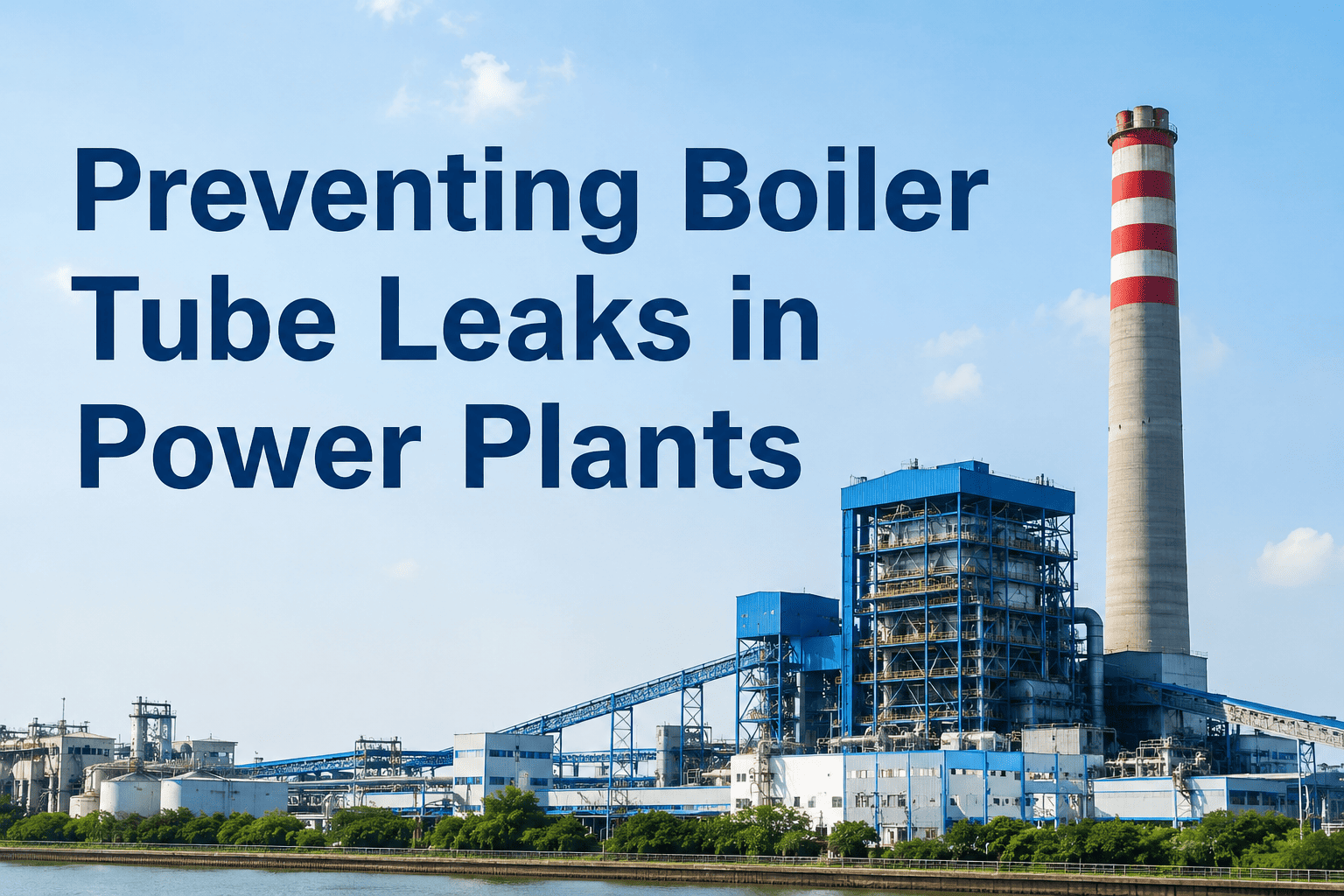
Preventing Boiler Tube Leaks in Power Plants
A structured guide for maintenance teams: from understanding leak mechanisms to deploying AI monitoring systems that stop failures weeks before they happen.
The Prevention Mindset: Why Most Plants Still Get It Wrong
Most power plant maintenance teams know that prevention is cheaper than repair. But knowing this and building the systems to act on it are two very different things. The gap between intent and execution usually comes down to three structural failures that affect plants at every scale.
Annual or biannual outage inspections cannot detect failures that initiate and propagate between inspection windows. Tube degradation does not wait for your maintenance schedule.
Modern plants generate terabytes of sensor data daily. Without AI analysis, 99% of that data is never reviewed — the failure signals are there, but no one is reading them.
Root cause analysis after a failure tells you what went wrong. Predictive monitoring tells you what is about to go wrong — at least 4 to 12 weeks in advance. That window is everything.
The 5-Layer Boiler Tube Leak Prevention Framework
High-reliability plants don't rely on a single prevention technique. They layer multiple strategies so that if one layer misses a developing failure, another layer catches it. Here is the framework that leading maintenance teams use.
Maintaining feedwater pH between 9.0 and 9.6, controlling dissolved oxygen below 7 ppb, and managing total dissolved solids prevents the chemical attack mechanisms — pitting, hydrogen damage, caustic gouging — that initiate the majority of waterside tube failures. Chemistry excursions that last even a few hours can initiate damage that culminates in failure months later.
Ultrasonic testing (UT) and eddy current inspection of high-risk tube zones during planned outages establishes wall thickness baselines and tracks degradation rates. UT grid mapping of economizer and superheater sections identifies thinning zones before they reach critical thresholds. Results feed directly into OxMaint CMMS for trend tracking across inspection cycles.
Monitoring tube metal temperatures, steam pressure differentials, flue gas temperatures, and drum levels continuously catches operational deviations that accelerate tube degradation. Key parameters include superheat temperature spread across tube bundles — asymmetric heating is an early indicator of flow restriction, scale buildup, or tube blockage before wall damage becomes severe.
AI models trained on historical failure events identify subtle multi-variable patterns that precede tube failures — patterns that no human operator can consistently detect in high-dimensional sensor data. OxMaint's predictive engine analyzes temperature gradients, acoustic emission data, vibration signatures, and chemistry trends simultaneously to classify failure risk by tube zone and failure mode.
Prevention only works if detected anomalies trigger actual maintenance actions — and if each repair is documented in a way that feeds the next detection cycle. OxMaint automatically generates prioritized work orders from AI alerts, tracks repair execution, documents as-found conditions, and uses repair outcomes to refine failure prediction models over time. Every repair makes the system smarter.
All 5 Prevention Layers. One Platform.
OxMaint integrates continuous AI monitoring, automated work order generation, inspection record tracking, and portfolio-wide boiler health dashboards — giving your maintenance team the tools to run every prevention layer from a single system.
Leak Detection Technologies: Choosing the Right Tool for Each Zone
No single detection technology covers all failure modes across all boiler zones. Effective prevention programs match detection methods to the specific risk profile of each section — and AI monitoring coordinates them all.
| Detection Method | Best For | Boiler Zone | Lead Time Before Failure | AI Integration |
|---|---|---|---|---|
| Ultrasonic Thickness Testing | Wall thinning, erosion | Economizer, waterwalls | Months (if inspected regularly) | Trending & threshold alerts |
| Acoustic Emission Monitoring | Active crack propagation | Superheater, reheater | Days to weeks | Real-time anomaly detection |
| Thermocouple Grid Analysis | Overheating, flow blockage | All sections | Weeks | Multi-sensor pattern analysis |
| Steam Flow Differential | Active leaks, flow restriction | All sections | Hours to days | Automated leak rate calculation |
| Eddy Current Inspection | Surface & subsurface cracking | Reheater, superheater | Months (during outages) | Outage data ingestion & trending |
| Water Chemistry Analyzers | Corrosion risk, chemistry excursions | Waterwall, drum | Weeks to months | Excursion alerts & cumulative risk scoring |
Prevention in Numbers: What Structured Programs Actually Deliver
These outcomes come from plants that have implemented structured boiler tube leak prevention programs — not theoretical projections, but documented operational improvements reported across the industry.
Boiler Tube Leak Prevention Checklist for Maintenance Teams
Use this checklist to audit your current prevention posture and identify which layers of your program need strengthening.
"We went from averaging five forced boiler outages per year to one in three years — and that one was a tube we replaced proactively during a scheduled window based on AI alert data. The prevention program paid for itself in the first outage it prevented. Every outage after that was pure savings."
— Chief Maintenance Engineer, 800MW Coal Power Station, Southeast Asia
Ready to Build a Leak-Free Boiler Program?
OxMaint gives your maintenance team the AI monitoring engine, the CMMS workflow, and the inspection record system to run all five prevention layers from one platform — starting with your first building block or rolling out across your entire fleet. See it running on a live plant configuration in 30 minutes.