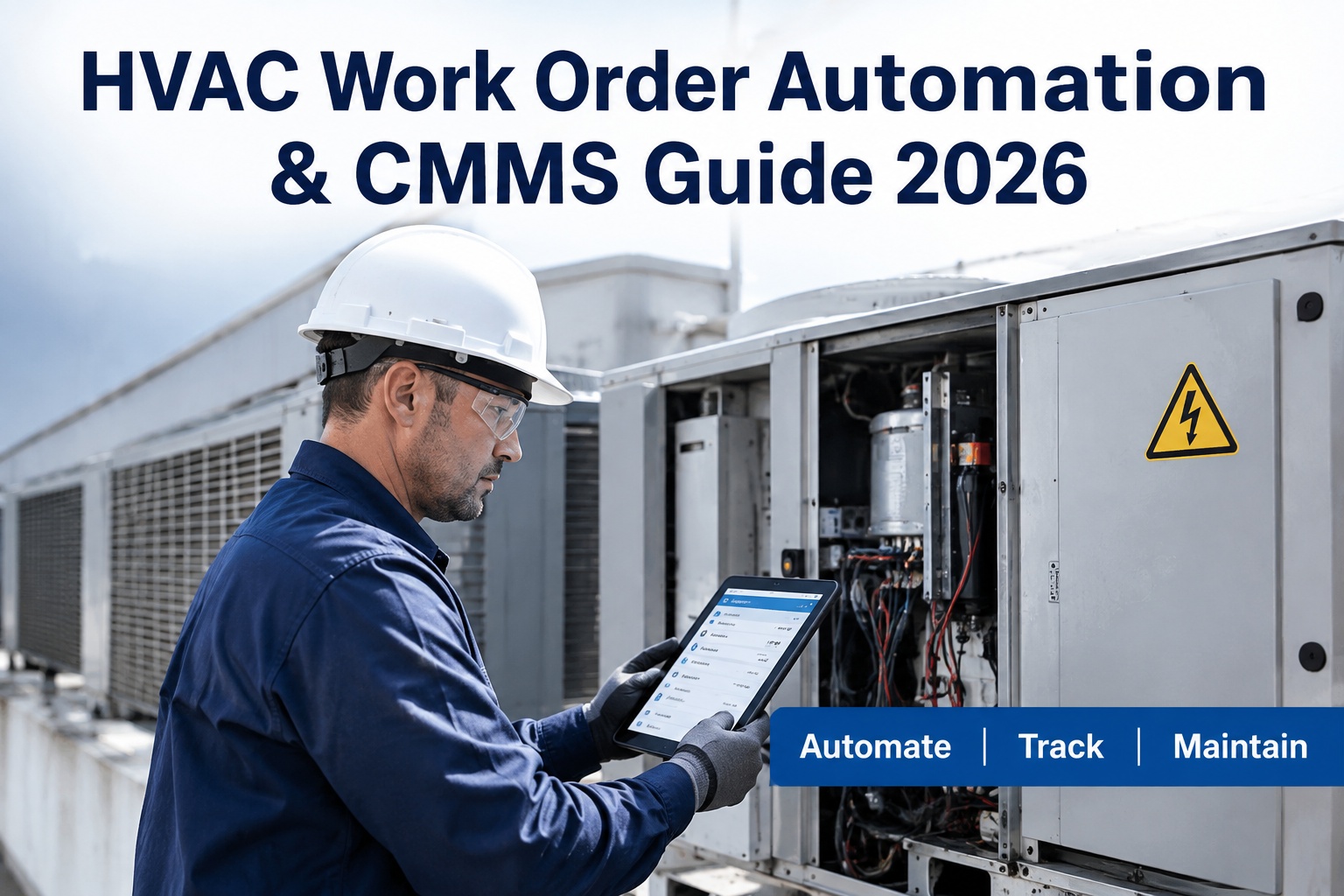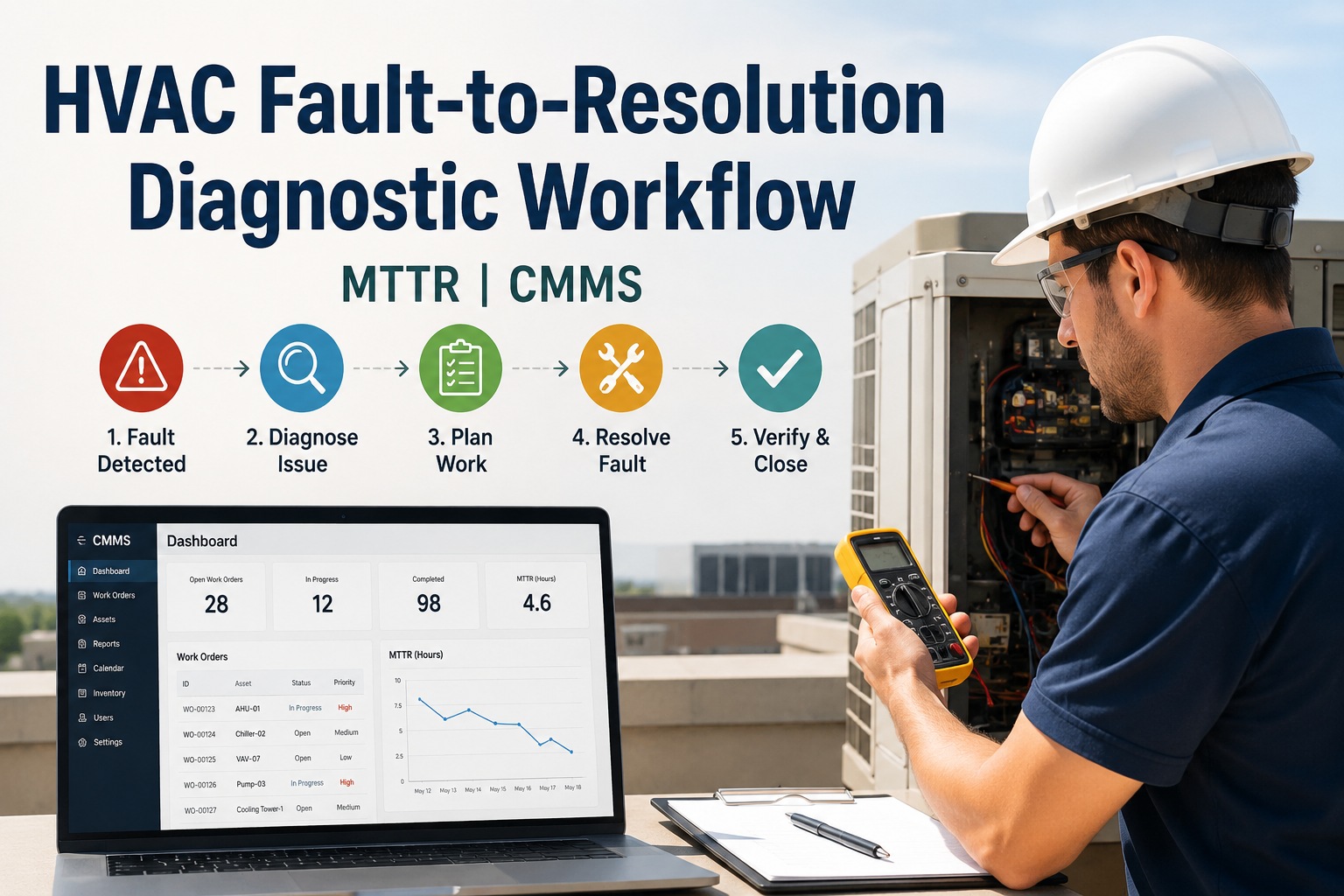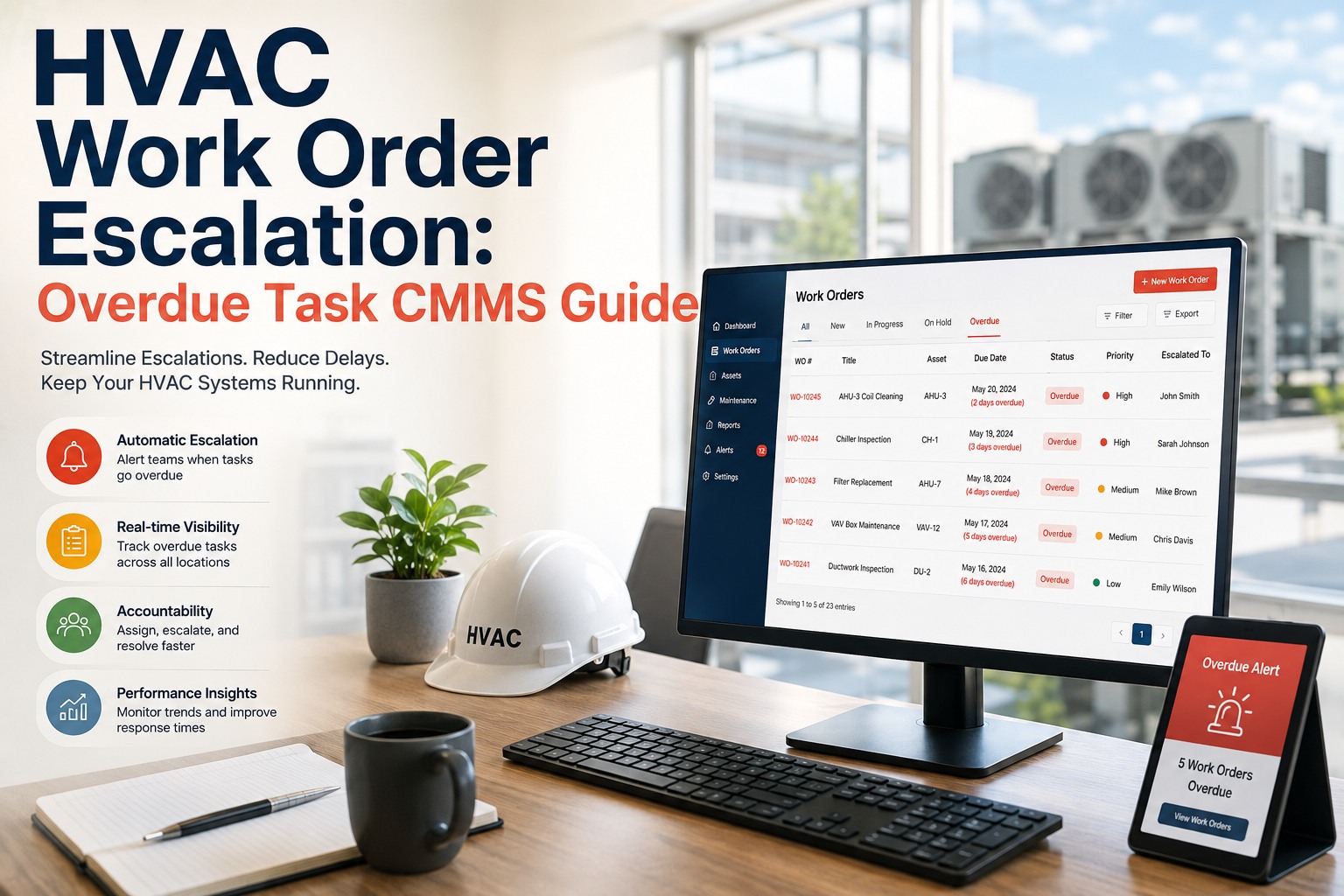
HVAC work order escalation ensures that overdue preventive maintenance tasks automatically move up the priority chain and notify supervisors before a minor service slip turns into a catastrophic equipment failure. In facilities managing hundreds of air handlers, chillers, and rooftop units, an escalation workflow HVAC teams can rely on is the difference between 98% uptime and costly emergency repairs. This CMMS escalation guide breaks down exactly how to structure accountability tracking, automate supervisor notifications, and prevent any maintenance interval from slipping through the cracks. Ready to eliminate overdue maintenance escalation blind spots? Start Free Trial with OxMaint today.
HVAC Escalation Workflow 2026
Is your maintenance interval slipping through the cracks?
When an HVAC work order passes its due date, the cost of inaction compounds by the hour. Without automated escalation, unassigned overdue tasks silently risk compressor failures, IAQ violations, and voided warranties. Stop hoping technicians notice — automate the alert.
What happens when a belt replacement on a 50-ton RTU is 14 days overdue and nobody knows?
The belt snaps. The unit draws 40% more amperage. The motor burns out. A $45 preventive task becomes a $4,800 emergency replacement — and a 12-hour downtime event for the occupied space below.
The True Cost of an Overdue HVAC Task
Why untracked overdue maintenance escalates into emergencies
A single missed preventive maintenance interval on a commercial chiller can trigger a chain reaction. As the refrigerant charge drifts 10% below optimal, compressor head pressure climbs. Energy consumption spikes 15–20%. Within 30 days, what was a $150 filter and refrigerant top-off becomes a $12,000 compressor rewind. HVAC accountability tracking is not just about compliance — it is the financial firewall between a routine PM and a capital expenditure.
A 180-asset commercial office portfolio was spending $42,000 annually on emergency HVAC callouts. After implementing automated escalation workflows in their CMMS, overdue tasks triggered tiered supervisor notifications at 24, 48, and 72 hours. Within 6 months, emergency callouts dropped by 62%, and PM compliance rose from 71% to 96%. The portfolio saved $26,000 in year one and achieved full ROI on their CMMS investment in under 4 months.
Escalation Workflow HVAC
How a 4-tier HVAC work order escalation workflow operates
A robust escalation CMMS guide outlines a multi-tiered approach. The goal is to ensure that no work order accountability gap exists between the technician, the supervisor, and the facility manager. Here is how the standard 4-tier escalation sequence functions in practice.
+24 Hours: Automated Reminder
The CMMS sends an automated push notification and email to the assigned technician. The work order turns yellow on the dashboard. No supervisor involvement yet — this resolves 60% of minor delays caused by scheduling conflicts.
+48 Hours: Supervisor Notification
If the task remains open, the CMMS escalates to the direct supervisor via SMS and email. The supervisor receives a one-click reassignment option. Supervisor notification HVAC protocols at this tier catch 85% of remaining overdue tasks.
+72 Hours: Facility Manager Alert
The system escalates to the facility or maintenance manager, flagging the task in red on the executive dashboard. The alert includes the asset's criticality rating, downtime risk, and cost impact projection to prioritize immediate dispatch.
+96 Hours: Executive Override
For mission-critical assets (e.g., hospital OR air handlers, data center CRAC units), the CMMS escalates to the director of operations and automatically generates an emergency work order with a high-priority flag for an external contractor.
CMMS Overdue Tracking
CMMS escalation vs. manual tracking: what changes?
Teams transitioning from spreadsheets or whiteboards to an AI-powered CMMS often underestimate the impact of automation. The difference in accountability tracking and audit readiness is immediate.
| Capability | Manual / Spreadsheet Tracking | CMMS Escalation Automation |
|---|---|---|
| Overdue Detection | Manual weekly audits; tasks often missed for 7+ days | Real-time detection; triggers at exact interval breach |
| Supervisor Notification | Relying on memory, phone calls, or sticky notes | Automated multi-channel alerts (SMS, email, push) |
| Audit Trail | Incomplete paper trails; ISO 55000 non-compliance risk | Time-stamped, immutable logs for every escalation tier |
| Reassignment Speed | Hours to days to find available technician | Instant reassignment via mobile app with skill-matching |
| Downtime Risk Projection | Reactive; only known after failure occurs | Predictive AI flags high-risk overdue assets automatically |
How OxMaint Helps
Eliminate overdue maintenance escalation gaps with OxMaint
OxMaint transforms HVAC accountability tracking from a reactive chase into an automated, closed-loop system. Here is how our AI-powered CMMS platform specifically solves the overdue task escalation problem for maintenance and reliability teams.
Automated Tiered Escalation
Configure custom escalation triggers at 24, 48, and 72-hour intervals. OxMaint automatically routes notifications to the right people based on asset criticality and technician availability — no manual follow-up required.
Outcome: Cut overdue task resolution time by 70%
Real-Time Supervisor Dashboards
Supervisors get a live, color-coded view of all approaching and overdue work orders. The dashboard prioritizes tasks by asset downtime risk and cost impact, so critical HVAC units never fall behind routine filter changes.
Outcome: Achieve 95%+ PM compliance in 90 days
Immutable Audit Trails
Every escalation action is time-stamped and logged permanently. Perfect for ISO 55000 audits, FMCSA compliance, and internal SLA reviews — proving that work order accountability was maintained at every tier.
Outcome: Pass compliance audits with zero findings
AI-Powered Risk Prediction
OxMaint's predictive analytics engine identifies which overdue tasks pose the highest failure risk based on asset history, vibration data, and operating conditions. It auto-escalates high-risk work orders before the standard timer expires.
Outcome: Reduce unplanned HVAC downtime 30–50%
Stop letting overdue HVAC tasks slip through the cracks
See how OxMaint's automated escalation workflow keeps every work order accountable — from technician to facility manager. Book a 30-minute demo on your own asset data.
Work Order Escalation Guide
Frequently asked questions about HVAC escalation workflows
What is an HVAC work order escalation workflow?
An HVAC work order escalation workflow is an automated sequence in a CMMS that triggers tiered notifications when a maintenance task passes its due date. It ensures overdue tasks are automatically flagged to technicians, then supervisors, then managers — eliminating manual follow-up and ensuring no maintenance interval slips through unnoticed. You can configure these tiers in OxMaint by visiting Start Free Trial to set up your first workflow in minutes.
How does overdue task escalation work in a CMMS?
In a CMMS, overdue task escalation works by monitoring work order due dates against the current time. When a task breaches its deadline, the system automatically sends alerts via email, SMS, or push notification to the assigned technician. If the task remains open after a set interval (e.g., 48 hours), the system escalates to the supervisor, creating a documented audit trail at each step.
Can I customize escalation rules for different HVAC asset types?
Yes, modern CMMS platforms like OxMaint allow you to customize escalation rules based on asset criticality, location, and equipment type. For example, a hospital OR air handler can trigger a Tier 1 supervisor alert in 4 hours, while a warehouse unit heater might wait 72 hours before escalating. This ensures that mission-critical HVAC equipment receives faster attention than low-priority assets.
How much does a missed HVAC preventive maintenance task cost?
A missed HVAC PM task typically costs 4–10 times more than the original preventive work. For example, a $45 belt replacement that is skipped can lead to a $4,800 motor replacement and 12 hours of building downtime. Across a portfolio, unplanned HVAC downtime costs commercial buildings an estimated $50B annually, with the majority traced back to missed preventive intervals.
How long does it take to implement an escalation workflow in OxMaint?
Most maintenance teams are live with OxMaint's escalation workflows within 1–2 weeks. The system includes pre-built escalation templates for HVAC assets, and our team assists with importing your existing asset list, PM schedules, and technician assignments. To see the setup process on your own data, Book a Demo with our implementation team.
Get Started Today
Automate your HVAC escalation workflow before the next task goes overdue
Join the maintenance teams who eliminated overdue blind spots, cut emergency callouts by 60%, and achieved 95%+ PM compliance. See OxMaint on your assets — book a 30-minute demo today.
Free 14-day trial · No credit card

.png)