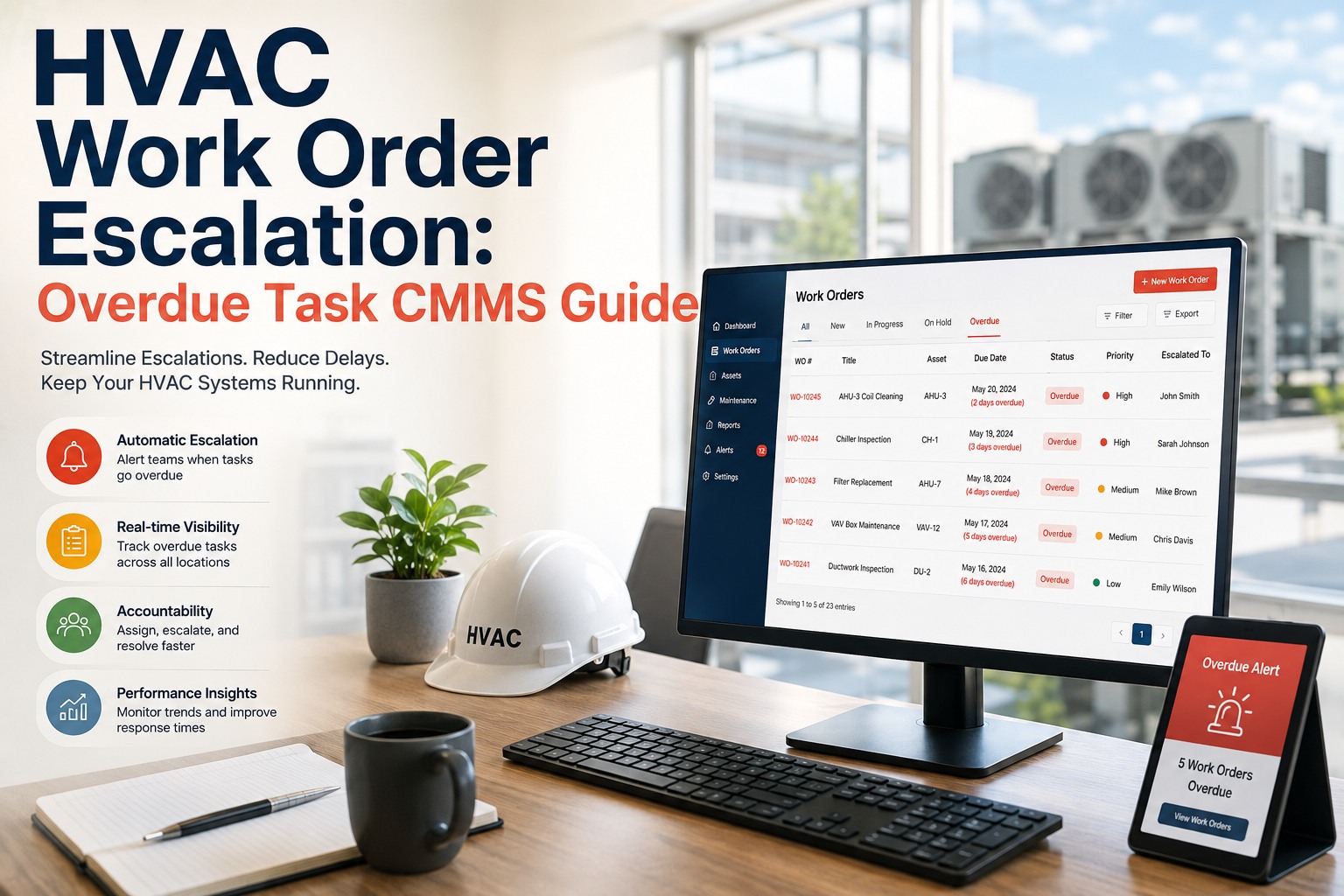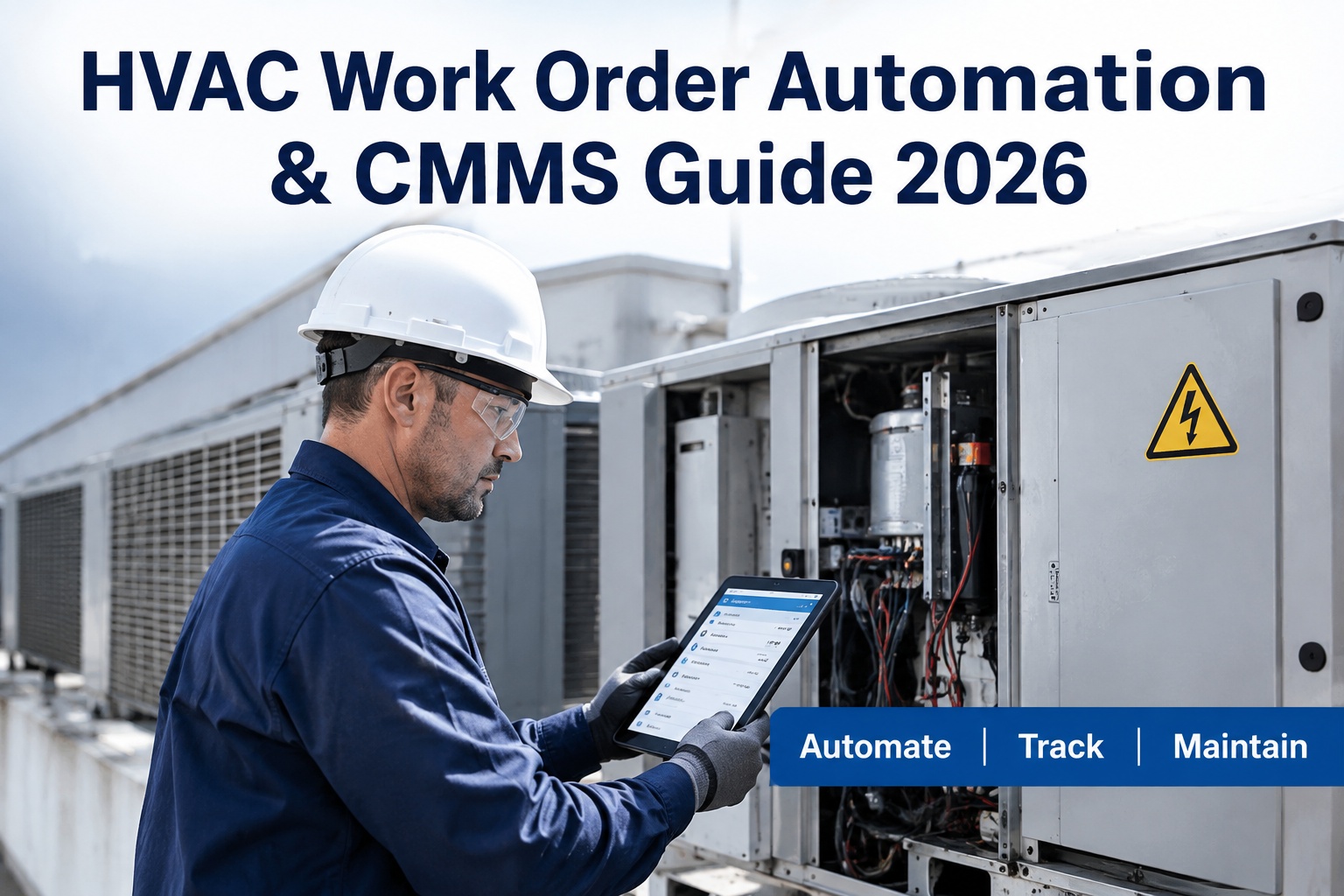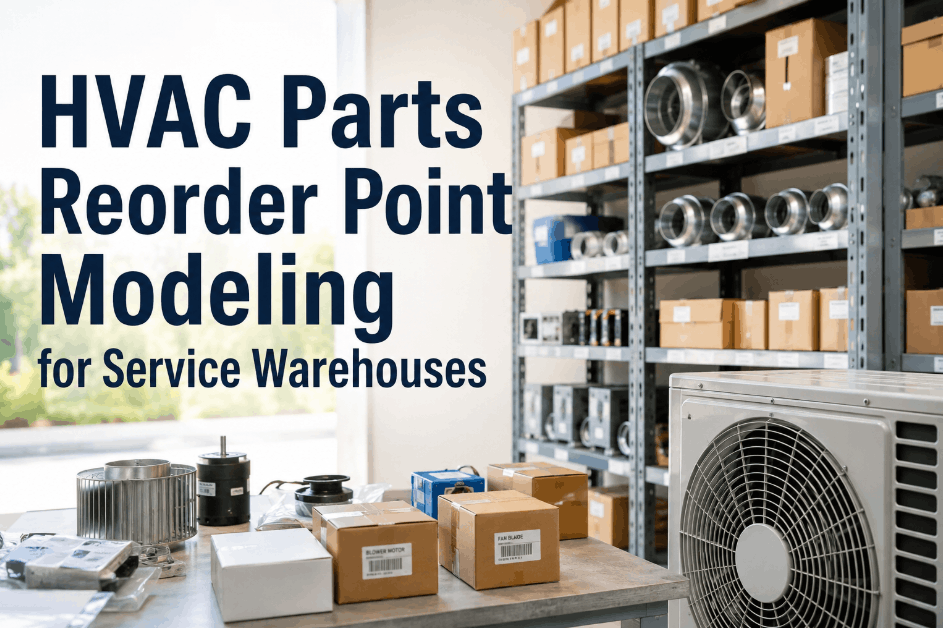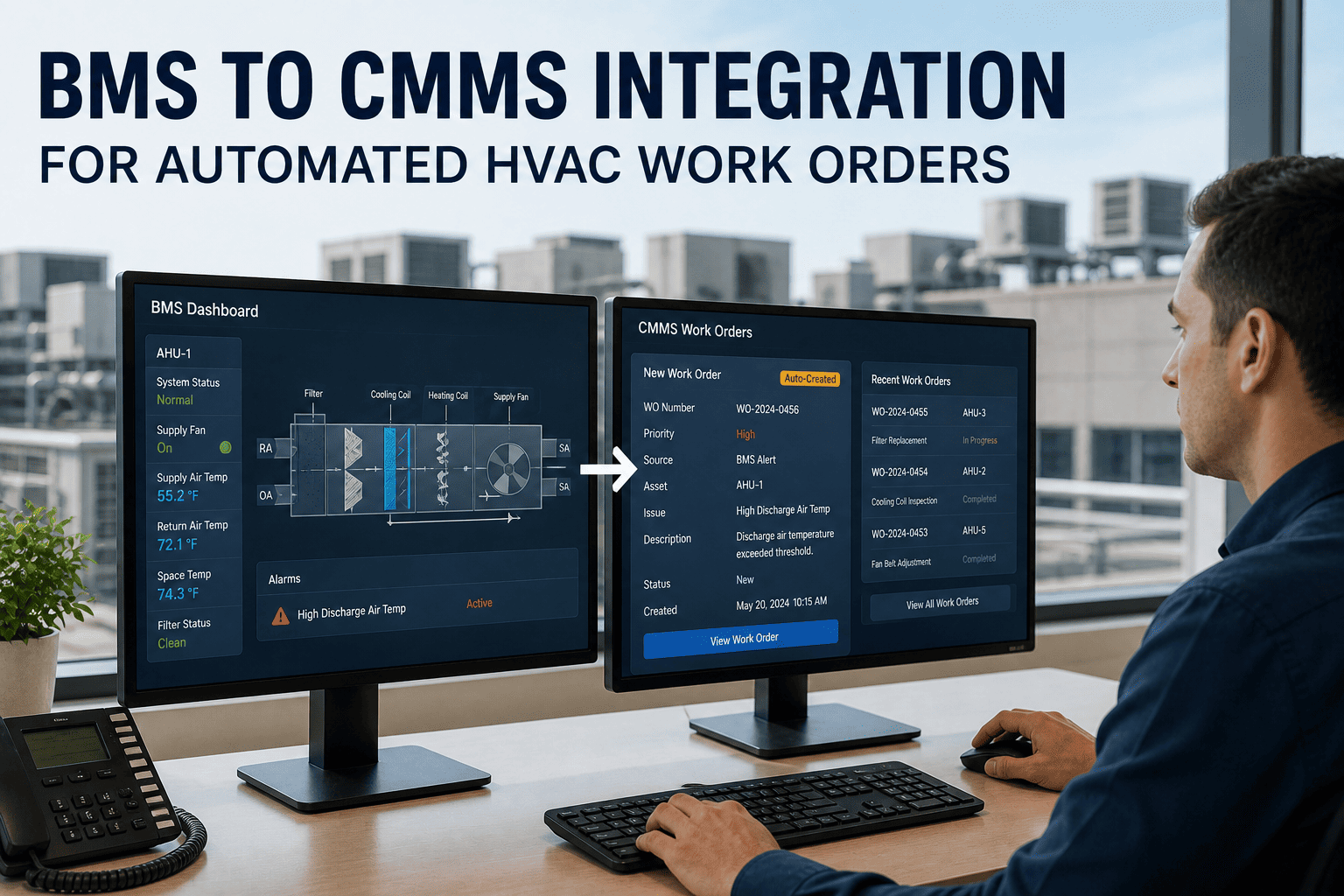
Integrating HVAC work order parts with a real-time parts inventory CMMS eliminates the costly disconnect between field technicians and the stockroom, ensuring every maintenance task has the verified components it needs before a technician ever dispatches. When stock verification, reorder alerts, and HVAC parts automation happen automatically inside the work order workflow, facilities cut emergency parts spend by up to 25% and drastically reduce equipment downtime. This HVAC parts guide breaks down how modern maintenance teams connect inventory to work orders, the exact metrics that improve, and why a unified platform like OxMaint is the fastest way to stop stockouts. Ready to automate your maintenance supply chain? You can Start Free Trial today.
HVAC WORK ORDER PARTS GUIDE 2026
Is your HVAC team dispatching technicians without verifying parts are in stock?
Disconnected work orders and inventory systems cause up to 30% of return trips. When HVAC work order parts and CMMS stock levels aren't integrated, you pay for emergency freight, lose cooling hours, and frustrate clients. It's time to close the gap.
THE COST OF DISCONNECT
Why HVAC work order parts fail without inventory integration
When a technician arrives at a rooftop unit only to find the required compressor or filter is out of stock, the failure isn't operational — it's systemic. A missing $50 belt can halt a $2M production line for hours.
In a recent real-world scenario, a 180-asset commercial facility spending $42K annually on HVAC maintenance discovered that $11K of that budget was consumed by emergency parts procurement and unnecessary technician return trips. By implementing a work order inventory CMMS with automatic stock verification, they reduced expedited freight by 85% within the first quarter. The problem isn't a lack of effort from your maintenance team — it's a lack of parts integration CMMS capability that ties work order generation directly to live inventory counts.
HOW IT WORKS
HVAC stock integration: The 4-stage work order to inventory workflow
Effective HVAC inventory work order management follows a strict sequence — from triggered request to automated reorder. Here is the exact workflow the best maintenance teams use.
Automatic Stock Verification at Trigger
When a preventive maintenance trigger fires, the CMMS instantly cross-references the required BOM (Bill of Materials) against current warehouse and van stock. If the part is unavailable, the system flags the work order before it is ever assigned.
Dynamic Work Order Holds & Alternative Routing
Instead of dispatching a tech into a blind spot, the system places the HVAC work order on a parts-hold queue and alerts the procurement team. If a substitute part is available, the CMMS suggests it automatically.
Real-Time Deduction & Reorder Alert HVAC Trigger
As soon as a technician scans the barcode on a part and closes the work order, inventory levels deduct instantly. When stock falls below the par level, a reorder alert HVAC procurement workflow is automatically generated.
Predictive Parts Pre-Staging
Using historical asset data and predictive analytics, the CMMS forecasts which HVAC parts will be needed in the next 30 days based on asset condition, ensuring high-failure components are pre-staged before the work order is even created.
PLATFORM CAPABILITIES
How OxMaint solves HVAC parts automation and inventory work order challenges
OxMaint is an AI-powered CMMS and EAM platform that natively links work order execution to spare-parts inventory, eliminating the silos that cause downtime. Here is how our CMMS parts inventory capabilities map directly to your HVAC maintenance outcomes.
Real-Time Stock Verification Engine
OxMaint automatically checks HVAC parts availability against multi-warehouse and van stock the moment a work order is generated. Outcome: Eliminates 95% of "part not available" return trips and cuts emergency freight spend by up to 40%.
Automated Reorder Alert HVAC System
Set dynamic par levels for every HVAC component — from compressor contacts to filter media. When stock drops below threshold, OxMaint auto-generates purchase requests. Outcome: Reduces stockouts by 85% and frees up 10+ hours of manual inventory management per week.
AI-Driven Predictive Parts Pre-Staging
OxMaint analyzes asset vibration, runtime, and failure history to predict which parts will fail next. It alerts you to stage those parts before the work order is triggered. Outcome: Cuts unplanned HVAC downtime 30-50% by having the right part ready before failure occurs.
Unified BOM & Asset Registry
Every HVAC asset in OxMaint carries a linked Bill of Materials. The system knows exactly which belts, bearings, and filters fit which rooftop unit. Outcome: Eliminates wrong-part ordering and slashes work order resolution time by an average of 22%.
ROI ANALYSIS
The financial impact of parts integration CMMS for HVAC operations
Quantifying the value of HVAC stock integration requires looking at both cost avoidance and labor recovery. Use this formula to calculate your potential annual savings.
ANNUAL SAVINGS FORMULA
Annual Savings = (Return Trips Avoided × $Avg Labor/Trip) + (Emergency Freight Avoided) + (Downtime Hours Saved × $Hourly Production Loss)
| ROI Metric | Before OxMaint (Spreadsheets) | With OxMaint CMMS | Annual Impact |
|---|---|---|---|
| Technician Return Trips | 4-6 per month | 0-1 per month | $18,000 saved |
| Emergency Parts Freight | $1,200 per event | $250 standard shipping | $11,400 saved |
| Inventory Carrying Cost | Overstocked 35% | Optimized par levels | $8,500 freed cash |
| Unplanned Downtime | 18 hrs per failure | 6 hrs per failure | $24,000 saved |
For a typical commercial HVAC operation managing 150+ assets, moving from spreadsheet-based inventory tracking to an integrated parts CMMS guide approach like OxMaint yields an average annual savings of $61,900 — with a payback period of less than 2 months on software subscription costs.
Stop losing money to unverified HVAC parts.
See how OxMaint's work order inventory CMMS cuts return trips, automates reorders, and keeps your cooling systems online.
IMPLEMENTATION GUIDE
Step-by-step CMMS parts inventory setup for HVAC teams
Transitioning to an automated HVAC parts workflow doesn't require a massive IT overhaul. Here is the 90-day implementation roadmap teams use to get live with OxMaint.
Asset Registry & BOM Build
Import all HVAC assets (RTUs, chillers, boilers) into OxMaint. Attach Bills of Materials to each asset, mapping the exact parts required for PM and reactive work orders.
Inventory Baseline & Par Levels
Conduct a physical count and upload current stock levels. Configure min/max par levels and reorder alert HVAC triggers for high-velocity parts like filters, belts, and contactors.
Workflow Automation & Go-Live
Enable automatic stock verification on work order creation. Connect barcode scanners to the OxMaint mobile app for real-time deductions. Launch predictive parts pre-staging for critical assets.
"Within 60 days of integrating OxMaint, our HVAC technicians stopped driving back to the warehouse for parts. Our overtime costs dropped by 22% in the first quarter alone."
FREQUENTLY ASKED QUESTIONS
Common questions about HVAC work order parts and CMMS integration
What is HVAC work order parts inventory integration?
HVAC work order parts inventory integration is the automatic connection between maintenance work orders and spare-parts stock levels inside a CMMS. When a work order is created, the system instantly verifies the required parts are in stock, deducts them when used, and triggers reorder alerts when inventory runs low — eliminating manual stock checks and return trips. You can Start Free Trial to see this live.
How does a reorder alert work in an HVAC CMMS?
A reorder alert automatically triggers when a specific HVAC part's stock level falls below a pre-defined minimum (par level) threshold. The CMMS generates a purchase request to the procurement team or directly to an approved vendor, ensuring critical components like compressor contacts and filter media are replenished before a stockout occurs.
Can OxMaint track parts across multiple warehouses and service vans?
Yes. OxMaint supports multi-location inventory tracking, meaning you can monitor parts across central warehouses, satellite storerooms, and individual technician vehicles. When a work order is assigned, the system identifies the closest available stock, improving first-time-fix rates. Book a Demo to see multi-location tracking in action.
How long does it take to implement parts inventory integration in a CMMS?
For most mid-sized HVAC operations, implementing parts inventory integration in OxMaint takes 60 to 90 days. The timeline includes building the asset registry, attaching Bills of Materials, conducting a physical inventory baseline, and configuring automated reorder triggers.
Does HVAC parts automation work with preventive and predictive maintenance?
Absolutely. HVAC parts automation is most powerful when combined with preventive and predictive maintenance. OxMaint uses AI to forecast which parts will be needed for upcoming PMs based on asset runtime and condition data, pre-staging inventory before the work order is ever generated — cutting downtime by up to 50%.
Ready to eliminate HVAC parts stockouts for good?
Join the maintenance teams using OxMaint to automate stock verification, trigger smart reorders, and keep their HVAC assets running at peak performance.
Free 14-day trial · No credit card
.png)