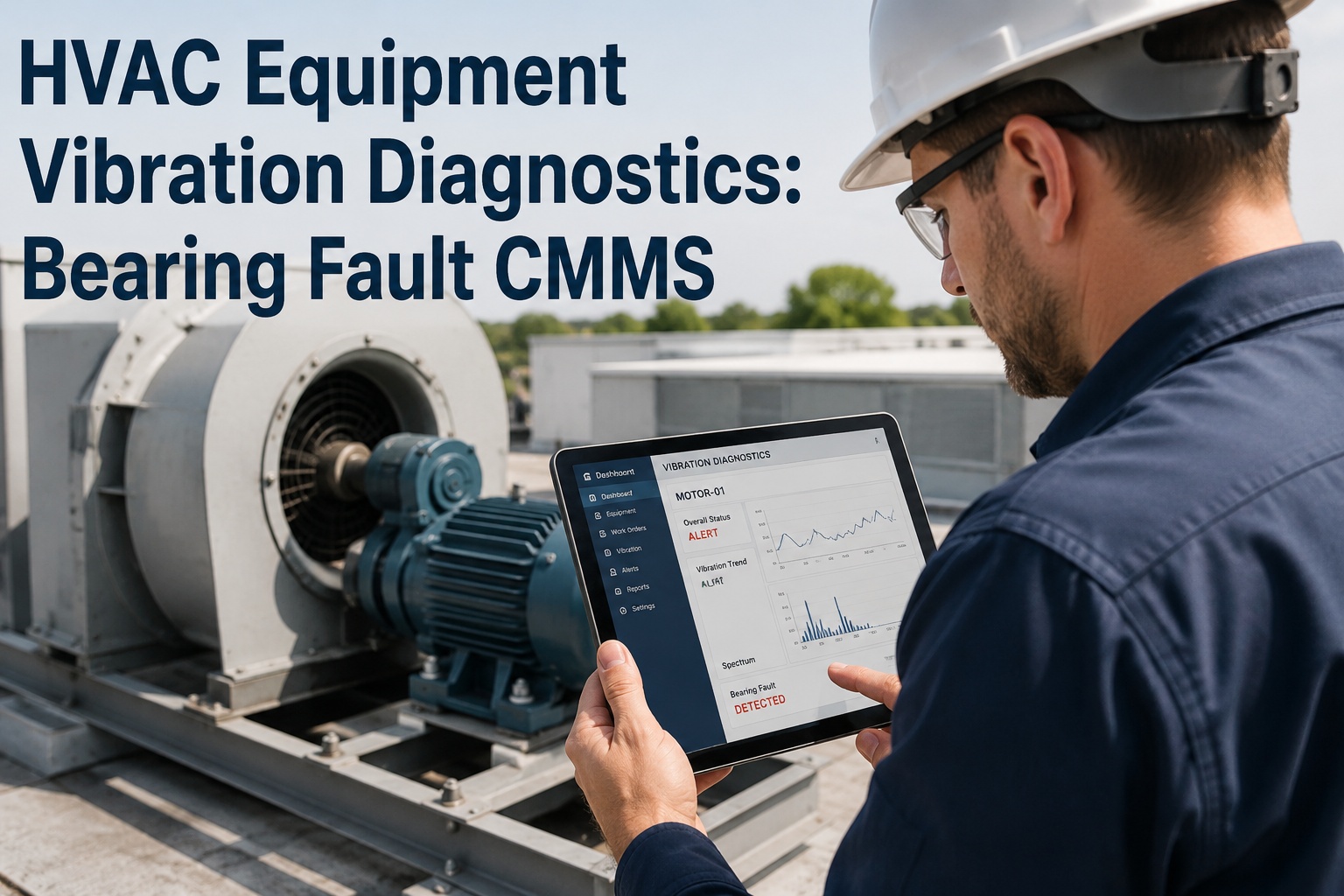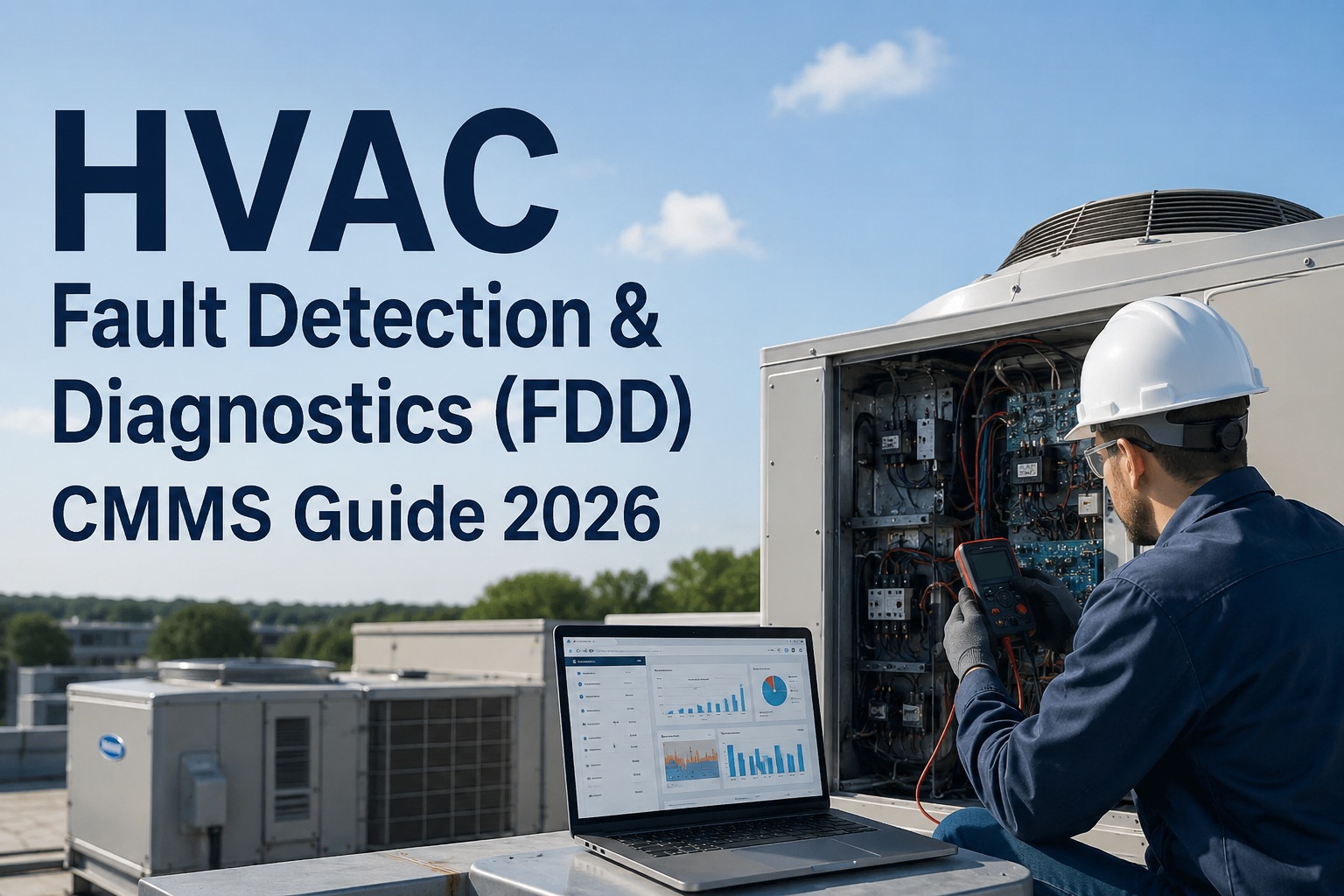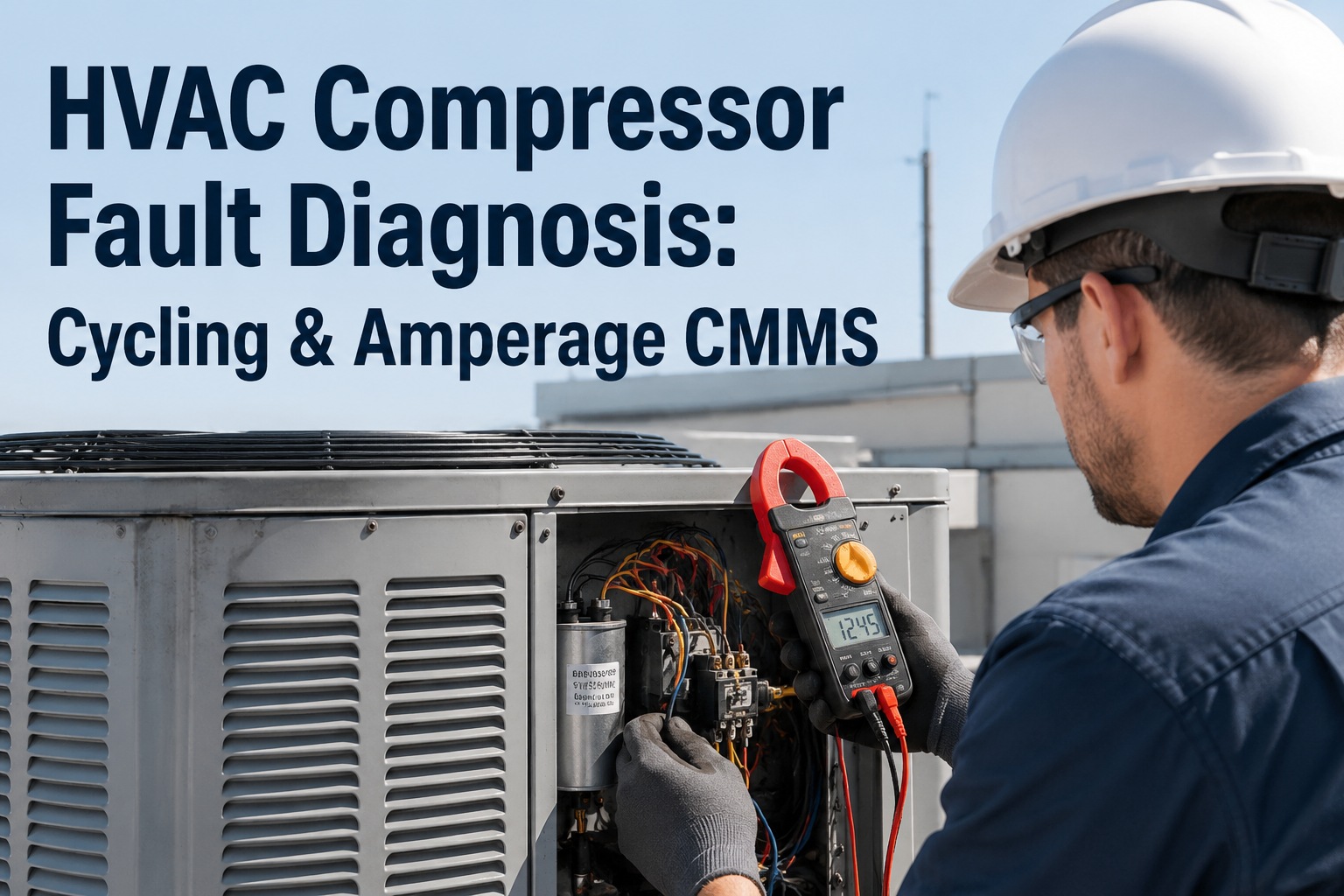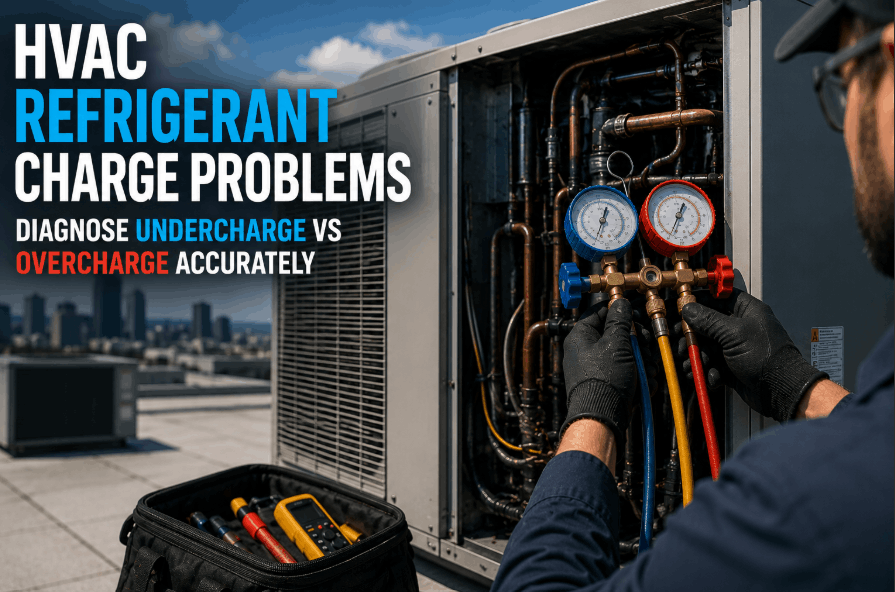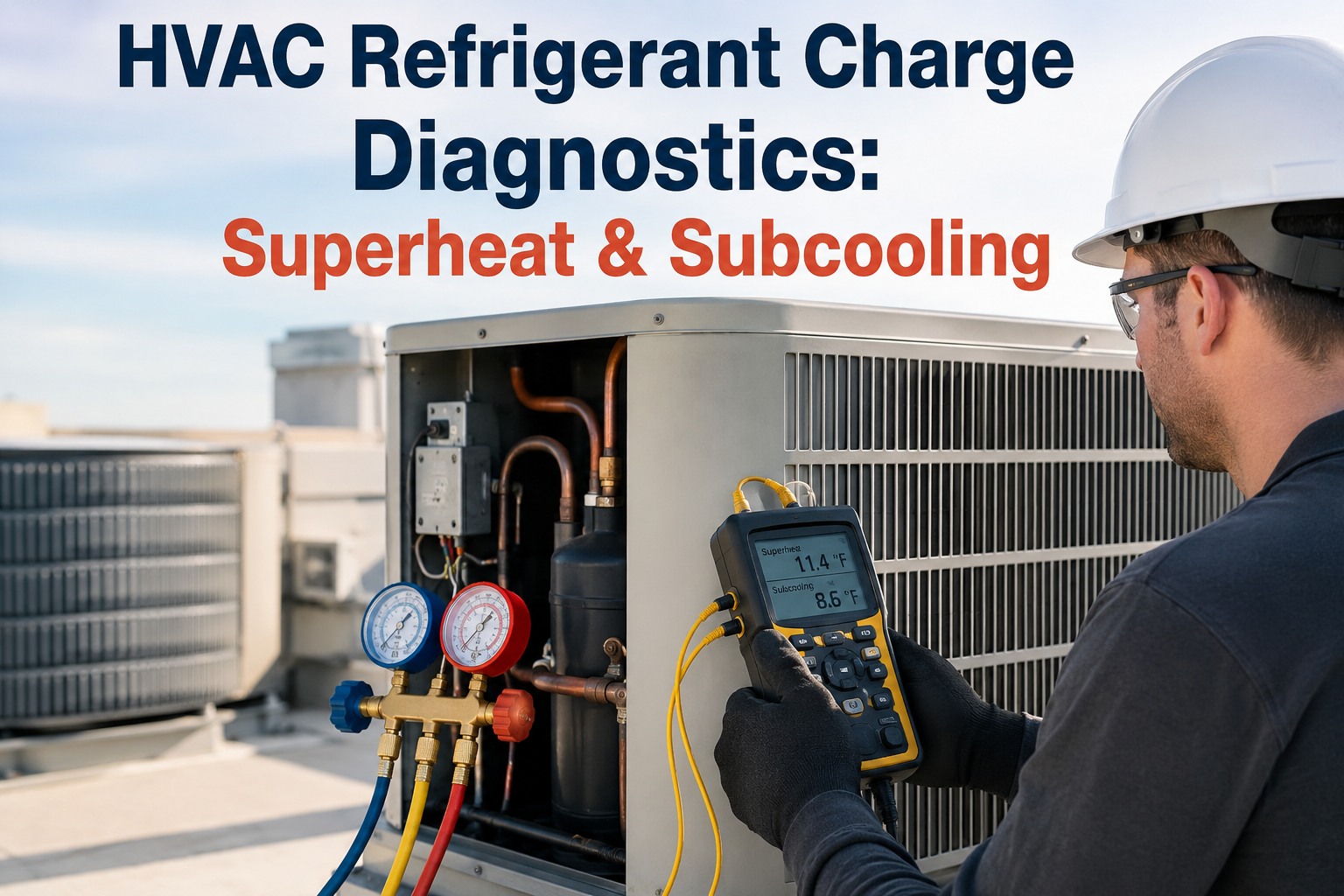
Accurate refrigerant charge diagnostics hinge on two measurements: superheat and subcooling. Superheat tells you how much liquid refrigerant is boiling off in the evaporator, while subcooling confirms how much liquid is stacked in the condenser before it reaches the metering device. Together, HVAC refrigerant diagnostics using these two values can pinpoint undercharge, overcharge, restricted metering, or non-condensables in minutes. This guide covers how to measure both, interpret the symptoms, and how a CMMS like OxMaint automates continuous charge verification so your technicians spend less time guessing and more time fixing. Start your Start Free Trial to digitize your HVAC maintenance workflows today.
HVAC REFRIGERANT CHARGE DIAGNOSTICS
Are your rooftop units running at the right refrigerant charge — or quietly wasting 25% more energy than they should?
A 10% undercharge can drop cooling capacity by 20% and spike compressor amp draw. Yet most teams verify charge only during breakdowns. OxMaint turns superheat and subcooling checks into scheduled, trended work orders — so you catch drift before it costs a compressor.
SUPERHEAT & SUBCOOLING FUNDAMENTALS
How to measure superheat and subcooling for HVAC charge verification
Superheat and subcooling are the two pressure-temperature relationships that reveal what is happening inside a sealed refrigeration circuit. Every technician should be able to calculate both in under five minutes per unit.
Superheat Measurement
Measure suction-line temperature at the evaporator outlet with a clamp probe. Read suction pressure, convert to saturated temperature using a PT chart for the refrigerant (R-410A, R-454B, R-32). The difference is superheat. For a TXV system, target 8–12°F. For fixed-orifice, consult the OEM superheat chart using indoor wet-bulb and outdoor dry-bulb.
Subcooling Measurement
Measure liquid-line temperature before the metering device. Read head pressure, convert to saturated condensing temperature via PT chart. The difference is subcooling. Most modern TXV systems target 10–15°F subcooling. Low subcooling suggests undercharge or a restricted condenser; high subcooling points to overcharge or a restricted liquid line.
WORKED EXAMPLE
Scenario: A 60-ton RTU on R-410A shows suction pressure 118 psig (40°F sat), suction line temp 61°F, head pressure 390 psig (120°F sat), liquid line temp 102°F. Superheat = 61 − 40 = 21°F (high — TXV starving or undercharge). Subcooling = 120 − 102 = 18°F (slightly high — overcharge or restricted liquid line). Combined: the system is likely overcharged with a partially restricted metering device, a fault that pure pressure-gauge diagnosis would miss entirely.
FAULT IDENTIFICATION
Refrigerant undercharge and overcharge symptoms: a diagnostic matrix
When superheat and subcooling move together — or in opposite directions — they tell a specific story. Use this matrix to narrow the fault before pulling a single hose.
| Fault Condition | Superheat | Subcooling | Supporting Symptoms | Corrective Action |
|---|---|---|---|---|
| Undercharge | High (20°F+) | Low (under 5°F) | Low suction pressure, warm supply air, frosted suction line near compressor | Leak-check, recover, weigh-in correct charge |
| Overcharge | Low (under 5°F) | High (20°F+) | High head pressure, high liquid-line temp, compressor cycling on high-pressure switch | Recover excess refrigerant, verify subcooling target |
| Restricted Liquid Line / Filter Drier | High | High | Temperature drop across drier, frost at restriction point | Replace drier, evacuate, verify flow |
| TXV Starving (Lost Power Head) | High | Normal to High | Low suction pressure, compressor short-cycles, frost at TXV bulb | Replace TXV power head or full valve assembly |
| Non-Condensables in System | Normal to High | High | High head pressure, elevated condenser exit temp, no temp drop across drier | Recover, evacuate to 500 microns, weigh-in fresh charge |
| Flooded Evaporator (Overfeed) | Low / Zero | Low to Normal | Compressor slugging, sweat on suction line, low amp draw | Adjust TXV, verify bulb placement and charge, add superheat |
A single gauge reading is never enough. A technician who logs only pressures will misdiagnose restricted metering as undercharge 40% of the time. Always pair pressure-temperature data with both superheat and subcooling calculations.
PROACTIVE DETECTION
Real-time superheat monitoring: from manual checks to predictive HVAC maintenance
Manual charge checks happen quarterly at best. By the time a technician spots high superheat on a PM visit, the compressor may have run weeks in an undercharged state, losing efficiency and accumulating wear.
Refrigerant Leak Begins
A micro-leak develops at a service valve. Charge drops 3–5%. Superheat creeps from 10°F to 14°F. Capacity loss is negligible (<2%) and invisible to manual inspections. No alarm triggers in a reactive maintenance program.
Efficiency Drift Detected
With OxMaint predictive analytics, connected suction and discharge pressure sensors trend superheat daily. At 16°F superheat (trend deviation >30% from baseline), OxMaint auto-generates a priority work order flagged "Refrigerant Charge Anomaly."
Targeted Intervention
A technician arrives with the right refrigerant, leak detector, and replacement valve core already listed on the mobile work order. Repair takes 90 minutes. The unit never drops below 95% capacity. Compressor life is preserved.
The Reactive Path
At week 10, the unit trips on low-pressure lockout. Compressor has run 600+ hours undercharged. Repair becomes a $4,200 compressor swap plus 2 days of downtime — versus a $185 service-valve core replacement.
CMMS REFRIGERANT DIAGNOSTICS
How OxMaint automates HVAC refrigerant fault detection and charge verification
A CMMS built for maintenance and reliability teams does more than schedule PMs. OxMaint turns every superheat and subcooling reading into a trended data point — so charge faults surface themselves.
Trended Charge Data
Every work order captures superheat, subcooling, suction and head pressures in structured fields — not free-text notes. OxMaint plots trends per asset so you see drift across an entire RTU fleet at a glance. Outcome: catch 80% of charge faults before they trigger a lockout.
Automated PM Scheduling
Build seasonal charge-verification checklists tied to cooling-degree-day triggers. OxMaint auto-assigns the right technician with refrigerant type, target superheat/subcooling ranges, and required tools pre-loaded. Outcome: cut scheduling admin by 70% and eliminate missed seasonal PMs.
Predictive Fault Alerts
When integrated pressure/temperature sensors deviate beyond configured thresholds, OxMaint's AI engine generates a predictive work order before failure. Outcome: reduce unplanned HVAC downtime 30–50% by shifting from reactive to condition-based maintenance.
Refrigerant Inventory & Compliance
Track refrigerant cylinders by serial number, log every pound added or recovered per asset, and auto-generate EPA Section 608 compliance reports. Outcome: pass refrigerant compliance audits in minutes, not days, and never run out of R-410A or R-454B mid-season.
REAL-WORLD IMPACT
What continuous charge verification costs — and what it saves
Consider a 180-asset facility running a mix of RTUs, split systems, and chillers. At an average of $42K/year in refrigerant-related service calls, compressor replacements, and energy waste from undercharged units, the cost of reactive charge management adds up fast.
Before OxMaint we were catching undercharged RTUs when tenants called about warm offices. Now the system flags a superheat trend deviation and we're on the roof before anyone notices. We cut refrigerant-related callouts by 60% in the first cooling season.
— Facilities Director, 240-unit commercial real estate portfolio
See how OxMaint turns superheat and subcooling checks into automated, trended work orders
Book a 30-minute demo and we'll show you charge-verification workflows on a live HVAC asset portfolio.
FREQUENTLY ASKED QUESTIONS
HVAC refrigerant charge diagnostics: common questions
What should superheat and subcooling be on a properly charged HVAC system?
For most TXV-equipped systems, target superheat is 8–12°F and target subcooling is 10–15°F. Fixed-orifice systems use an OEM superheat chart based on indoor wet-bulb and outdoor dry-bulb temperatures, typically ranging 12–25°F. Always verify against the equipment nameplate or service manual, as targets vary by refrigerant type (R-410A vs. R-454B vs. R-32) and metering device design.
How do I know if my HVAC system is undercharged?
The classic refrigerant undercharge symptoms are high superheat (20°F+), low subcooling (under 5°F), low suction pressure, and warm supply air. You may also see a frosted suction line near the compressor and compressor short-cycling on low-pressure controls. Confirm by calculating superheat and subcooling — if both are out of range in the directions described, recover the charge, leak-test, repair, and weigh in the OEM-specified charge. Book a demo to see how OxMaint flags these symptoms automatically from sensor data.
Can a CMMS help with refrigerant charge diagnostics?
Yes. A CMMS like OxMaint captures structured superheat and subcooling readings on every PM work order, trends them per asset, and auto-generates corrective work orders when readings deviate beyond configured thresholds. This shifts teams from quarterly manual checks to continuous charge verification — reducing refrigerant-related downtime 30–50% and cutting energy waste from chronic undercharge.
What is the difference between superheat and subcooling?
Superheat measures the temperature of refrigerant vapor above its boiling point in the evaporator (confirming all liquid has boiled off before reaching the compressor). Subcooling measures the temperature of liquid refrigerant below its condensing point in the condenser (confirming a solid column of liquid at the metering device). Superheat protects the compressor; subcooling ensures proper metering-device feed. Both are essential for full charge diagnosis.
How often should refrigerant charge be checked on commercial HVAC equipment?
Manual charge verification should occur at minimum twice per year — before cooling season and before heating season (for heat pumps). With OxMaint's predictive monitoring and connected sensor integration, superheat and subcooling are trended daily, and technicians are dispatched only when a deviation warrants hands-on diagnosis. This reduces unnecessary PM visits while catching faults weeks earlier. Start your Start Free Trial to build your seasonal charge-verification schedule today.
Stop guessing at refrigerant charge. Start trending it.
OxMaint digitizes superheat and subcooling checks, flags charge faults before they become compressor failures, and keeps your HVAC fleet at nameplate efficiency all season.
Free 14-day trial · No credit card