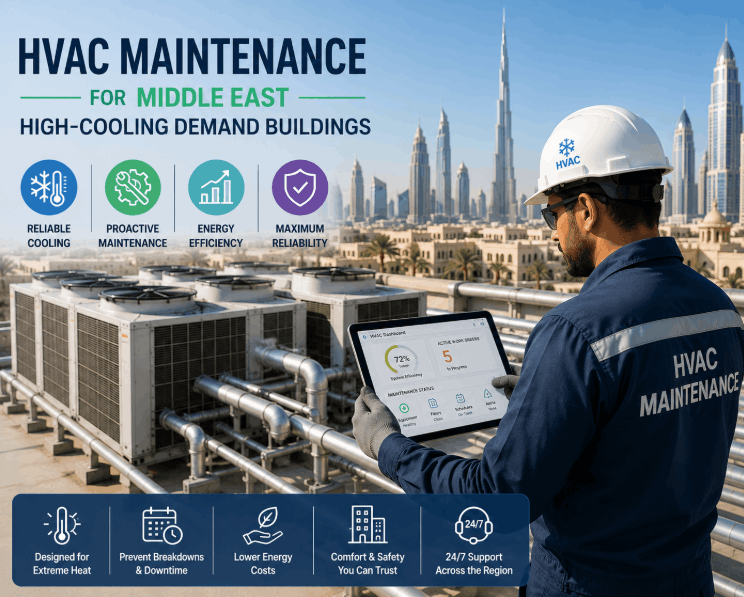
Managing HVAC maintenance in the Middle East is one of the most demanding challenges in facilities engineering. With summer temperatures exceeding 50°C in the UAE, Saudi Arabia, and Qatar, cooling systems run at near-peak load for eight to ten months a year — compressing typical equipment lifecycles, elevating energy costs, and turning every unexpected breakdown into a critical production or occupancy event. A reactive maintenance model cannot survive these conditions. Facility teams that want consistent HVAC reliability in high-cooling-demand environments need structured preventive maintenance, chiller analytics, and a mobile CMMS that works on the floor. Sign Up Free with Oxmaint and replace spreadsheets with a purpose-built maintenance platform that tracks every PM, every fault, and every energy variance — from any device on site.
Middle East HVAC · Predictive Maintenance AI · Chiller Optimization
Protect Cooling Uptime in Extreme Heat — With AI-Driven HVAC Maintenance
Oxmaint's Predictive Maintenance AI monitors chiller performance, schedules cooling tower PMs, and flags energy anomalies before they become breakdowns — purpose-built for high-load Middle East facilities.
Why Middle East HVAC Maintenance Demands a Different Strategy
Standard HVAC maintenance intervals designed for temperate climates are insufficient for buildings in Dubai, Riyadh, or Doha. Chillers operating at 90–100% capacity for extended periods accumulate wear, fouling, and refrigerant stress far faster than manufacturers' baseline assumptions. Facilities teams relying on annual service contracts or paper-based checklists consistently miss the early indicators — rising delta-T values, condenser fouling, compressor amp draw creep — that signal an impending failure. Book a Demo to see how Oxmaint's predictive maintenance AI catches these signals early and converts them into scheduled work orders before a breakdown interrupts operations.
Extreme Ambient Load
Chillers and cooling towers in the Gulf operate near design limits for most of the year, accelerating fouling, wear, and refrigerant degradation compared to temperate climates.
Sand and Dust Infiltration
Desert environments drive filter clogging, coil fouling, and outdoor unit blockages on weekly cycles — demanding higher-frequency PM schedules than standard manufacturer guidance.
High Energy Cost Exposure
HVAC systems account for 50–70% of total building energy consumption in Gulf commercial facilities. A fouled chiller or degraded cooling tower directly inflates operating costs.
Occupancy and Compliance Risk
Cooling failures in residential towers, hospitals, and data centers in the region carry immediate regulatory, safety, and reputational consequences — downtime is not acceptable.
Distributed Asset Portfolios
Large real estate and facility management companies in the UAE and KSA manage hundreds of buildings across multiple cities — requiring centralized CMMS visibility, not site-level spreadsheets.
Contractor Accountability Gap
Outsourced FM contracts are common in the region, but without digital work order records and sign-off workflows, facility owners have no audit trail for service delivery.
Core HVAC PM Tasks for High-Cooling-Demand Buildings
Effective Middle East HVAC maintenance requires climate-adapted PM frequency and scope. The following tasks form the operational backbone of any reliable cooling maintenance program for UAE and Gulf commercial or residential buildings. Book a Demo to see how Oxmaint structures these as recurring digital work orders with assigned technicians, completion checklists, and photo verification.
Chiller Plant Preventive Maintenance
Monthly oil analysis, refrigerant charge verification, compressor amp draw tracking, condenser tube cleaning, and evaporator approach temperature monitoring. Oxmaint auto-schedules each task by asset and logs technician sign-off against every checklist line.
Cooling Tower PM and Water Treatment Tracking
Weekly fill media inspection, bi-weekly basin cleaning, monthly fan belt and motor checks, and water chemistry logging. In Gulf climates, biological fouling and scaling rates are elevated — Oxmaint flags overdue water treatment tasks and links results to chiller delta-T trends.
Air Handling Unit and FCU Filter Schedules
Sand ingress in the Gulf demands filter replacement on 2–4 week cycles rather than quarterly. Oxmaint triggers filter PM work orders by elapsed time or by delta pressure readings logged in the system — whichever threshold is reached first.
BMS and Controls Calibration
Quarterly setpoint verification, sensor calibration audits, and economizer damper checks ensure BMS-controlled systems maintain design efficiency. Oxmaint stores calibration records against each asset for audit and warranty documentation.
Energy Performance Tracking
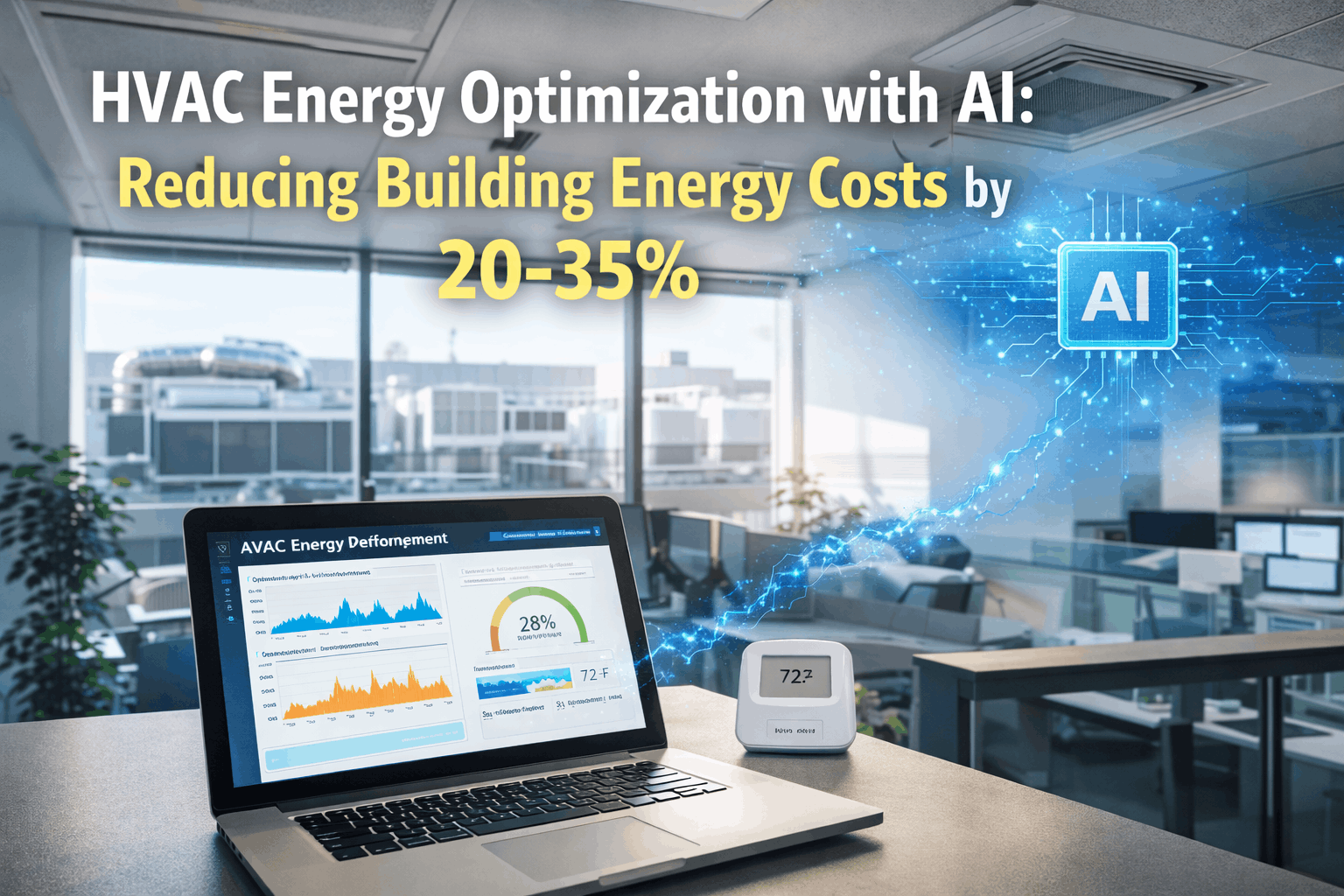
Monthly kWh-per-ton benchmarking against design baselines identifies chiller efficiency drift before it becomes visible on utility bills. Oxmaint's energy tracking module surfaces variance alerts automatically — no manual spreadsheet comparison required.
How Oxmaint Predictive Maintenance AI Works for Middle East HVAC
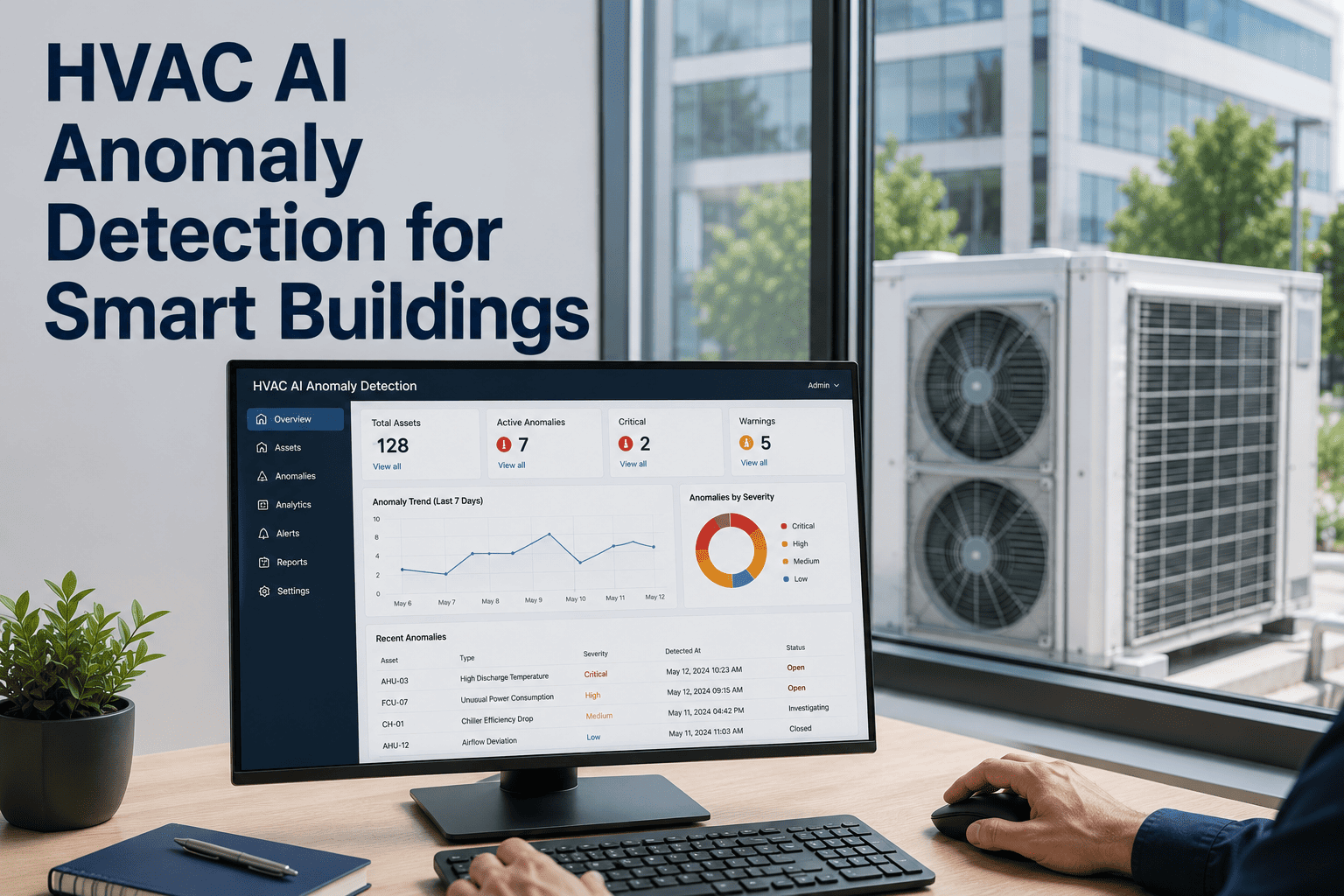
Oxmaint's Predictive Maintenance AI is built to detect HVAC performance degradation from logged operational data — without requiring expensive IoT sensor retrofits on every asset. Technicians log readings (temperatures, pressures, amp draws, vibration levels) directly into work orders via mobile app. The AI models baseline performance per asset, detects drift, and creates predictive alerts that route to the planner as prioritized work orders. For facility managers overseeing high-value Gulf commercial assets, this turns maintenance data into early warning intelligence. Sign Up Free to connect your HVAC assets to Oxmaint and activate predictive monitoring from day one.
| HVAC Challenge |
Without Oxmaint |
With Oxmaint |
| Chiller performance drift |
Discovered at breakdown or energy bill spike |
AI alert from logged amp draw / delta-T trend |
| Cooling tower fouling |
Visual inspection only, inconsistent frequency |
Scheduled PM with photo verification and sign-off |
| Contractor accountability |
Paper service report, no audit trail |
Digital work order with timestamps and technician ID |
| Multi-site visibility |
Separate spreadsheets per building |
Unified dashboard across all assets and sites |
| Energy cost management |
Monthly utility bill, no asset-level data |
kWh-per-ton tracking with variance alerts per chiller |
Middle East HVAC Maintenance Frequency Reference — Gulf Climate Adapted
Standard OEM maintenance intervals underestimate the service frequency required by Gulf climate conditions. The table below reflects climate-adapted PM frequencies used by leading UAE and Saudi facility management operations — and the task categories Oxmaint structures as recurring digital work orders for each asset type. Book a Demo to see how Oxmaint auto-schedules every interval below against your asset register with technician assignment, mobile checklists, and photo sign-off built in.
| HVAC Asset |
Task |
Gulf-Adapted Frequency |
Standard OEM Interval |
| Chiller Plant |
Oil analysis, refrigerant check, amp draw log |
Monthly |
Quarterly |
| Cooling Tower |
Basin clean, fill media check, water chemistry |
Bi-weekly / Monthly |
Monthly / Quarterly |
| AHU Filters |
Filter inspection and replacement |
Every 2–4 weeks |
Quarterly |
| FCU Units |
Coil clean, drain pan flush, filter change |
Monthly |
Bi-annual |
| Outdoor Condensing Units |
Coil wash, fan blade inspect, electrical check |
Monthly (sandstorm season: bi-weekly) |
Quarterly |
| BMS / Controls |
Setpoint audit, sensor calibration, damper check |
Quarterly |
Bi-annual |
| Pumps and Pipework |
Vibration check, gland packing, pressure test |
Monthly |
Quarterly |
Common HVAC Failure Causes in Middle East Commercial Buildings
Gulf climate conditions create failure patterns that differ significantly from temperate-climate norms. The six causes below are the leading drivers of HVAC breakdown and energy loss in UAE, Saudi, and Qatar commercial and mixed-use buildings. Sign Up Free with Oxmaint to build a PM program that closes each of these gaps before they reach the breakdown stage.
01
Condenser Coil Sand Fouling
Outdoor condensing units and air-cooled chillers in the Gulf accumulate sand and dust on coil surfaces within days of cleaning. Fouled coils raise condensing pressure, increase compressor amp draw, and cut system efficiency by 10–20% between service visits.
02
Cooling Tower Scaling and Biological Growth
High ambient temperatures and hard water supply in Gulf cities accelerate scaling and Legionella-risk biological growth in open cooling towers. Without bi-weekly water chemistry logging in a CMMS, deterioration is only detected when chiller approach temperatures rise visibly.
03
Compressor Overload from Sustained Peak Load
Chillers and packaged units in the Gulf operate at or near 100% capacity for 8–10 months annually. This compressed lifecycle accelerates compressor wear — detectable through monthly amp draw trend logging in Oxmaint before failure occurs.
04
Refrigerant Charge Loss from Vibration Leaks
Extended high-load operation increases vibration stress on refrigerant line connections and Schrader valves. Slow charge loss reduces cooling capacity gradually — making quarterly refrigerant verification a critical PM task in Gulf maintenance programs.
05
BMS Setpoint Drift in High-Temperature Conditions
Control panel and sensor exposure to ambient temperatures above 45°C causes calibration drift in BMS setpoints and room sensors. Without quarterly calibration records tracked in Oxmaint, setpoint errors run undetected — wasting energy and degrading comfort.
06
Pump and Chilled Water Circuit Neglect
Chilled water pumps, strainers, and expansion vessels in large Gulf buildings are frequently deprioritised during reactive maintenance cycles. Pump seal failures and strainer blockages disrupt chiller plant flow — and are entirely preventable through monthly PM work orders in Oxmaint.
UAE HVAC · Chiller Optimization · Smart Building CMMS
Cut HVAC Downtime and Energy Waste Across Your Gulf Portfolio
Oxmaint centralizes chiller PMs, cooling tower schedules, energy tracking, and contractor work orders into one mobile-first platform — built for the scale and intensity of Middle East facility operations.
Frequently Asked Questions — Middle East HVAC Maintenance
How often should chillers be serviced in UAE and Gulf climates?
In high-cooling-demand environments, monthly PM intervals for chillers are recommended — significantly more frequent than the quarterly or bi-annual schedules typical in temperate climates. Continuous near-peak operation accelerates wear and fouling rates.
What is the biggest cause of HVAC failure in Middle East commercial buildings?
Condenser and cooling tower fouling combined with deferred PM is the leading cause. Sand ingress, hard water scaling, and biological growth in warm water systems accelerate degradation when maintenance intervals are not adapted for the climate.
Can Oxmaint manage HVAC maintenance across multiple buildings in different Emirates or countries?
Yes. Oxmaint's cloud CMMS supports multi-site asset hierarchies, meaning facility managers can view PM compliance, open work orders, and energy KPIs across Dubai, Abu Dhabi, Riyadh, or any combination of sites from a single dashboard.
How does Oxmaint's predictive maintenance AI detect HVAC issues early?
The AI builds performance baselines from technician-logged readings — temperatures, pressures, amp draws — and identifies drift patterns that precede failure. Alerts are generated as prioritized work orders before symptoms become breakdowns.
Does Oxmaint support contractor and third-party HVAC vendor management?
Yes. Oxmaint allows external vendors to be assigned work orders, complete digital checklists, and submit photo evidence — giving facility owners a full audit trail for contracted HVAC service delivery without relying on paper reports.
How quickly can a Middle East facility team go live on Oxmaint?
Most facilities are operational within one to two days. Assets are uploaded, QR code labels are printed and attached, and technicians begin submitting digital work orders from their phones the same week.
Sign Up Free to start immediately.
HVAC Reliability · Middle East · Predictive Maintenance AI
From Paper Checklists to AI-Driven Cooling Maintenance — Start Today
Oxmaint gives Gulf facility teams mobile work orders, predictive chiller alerts, energy variance tracking, and multi-site dashboards — everything needed to protect cooling uptime in extreme heat environments.