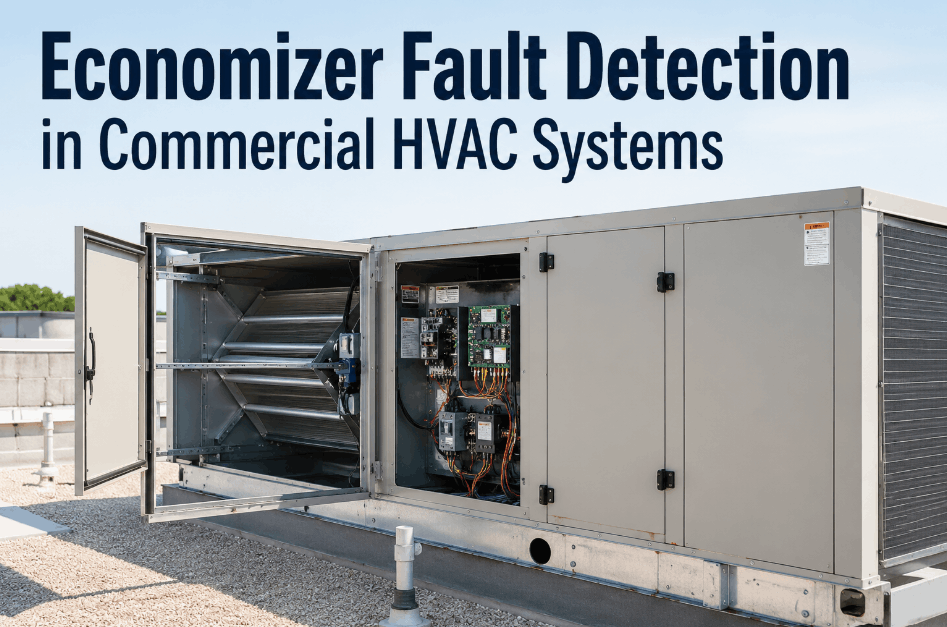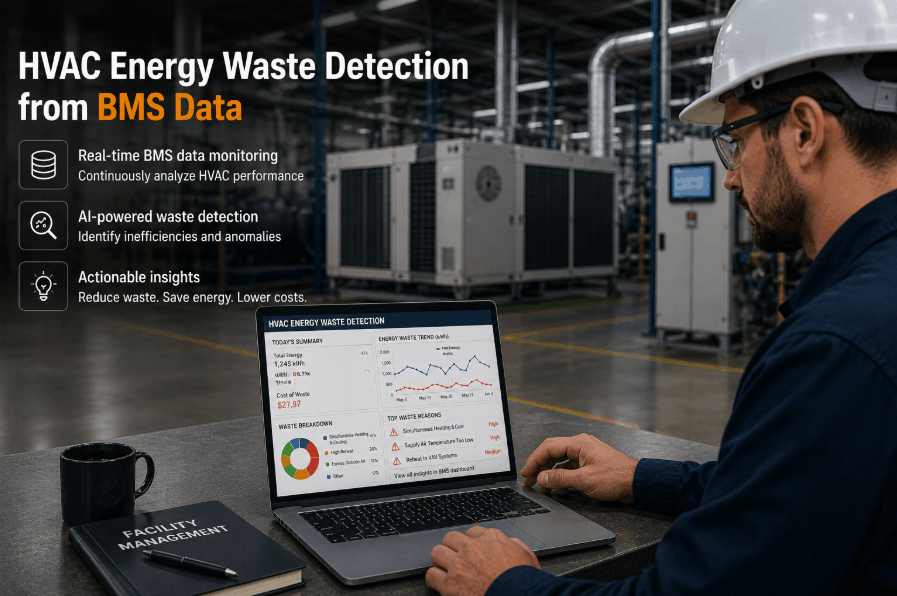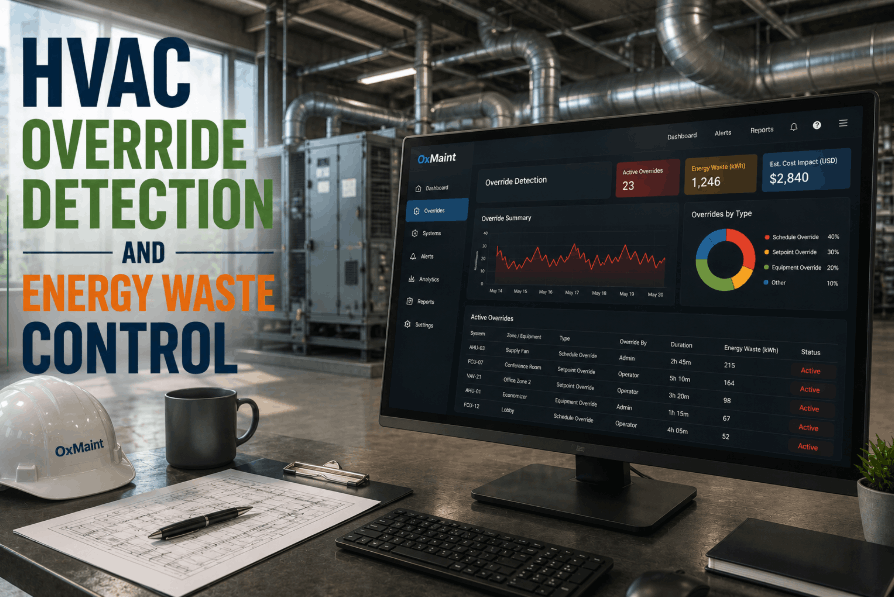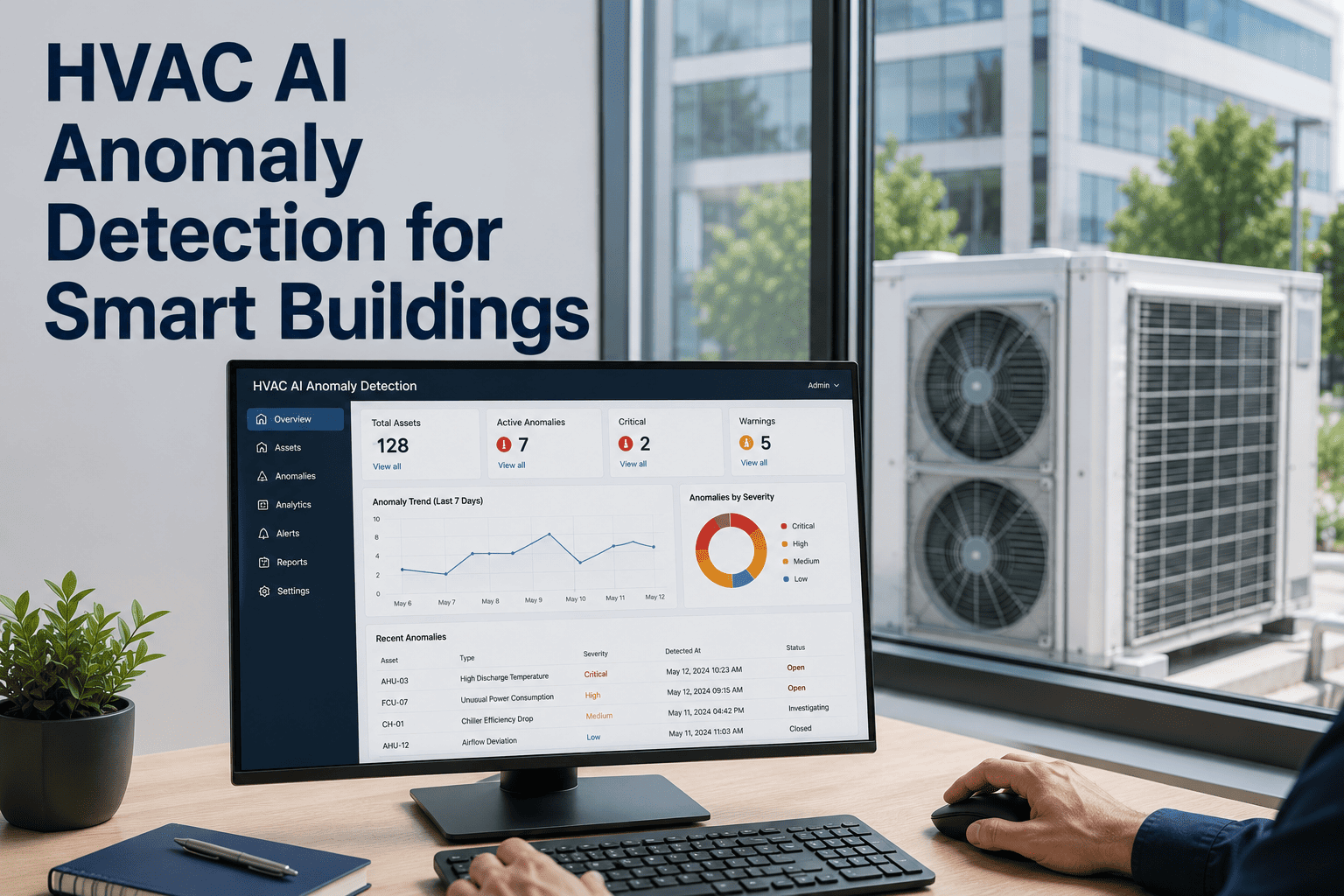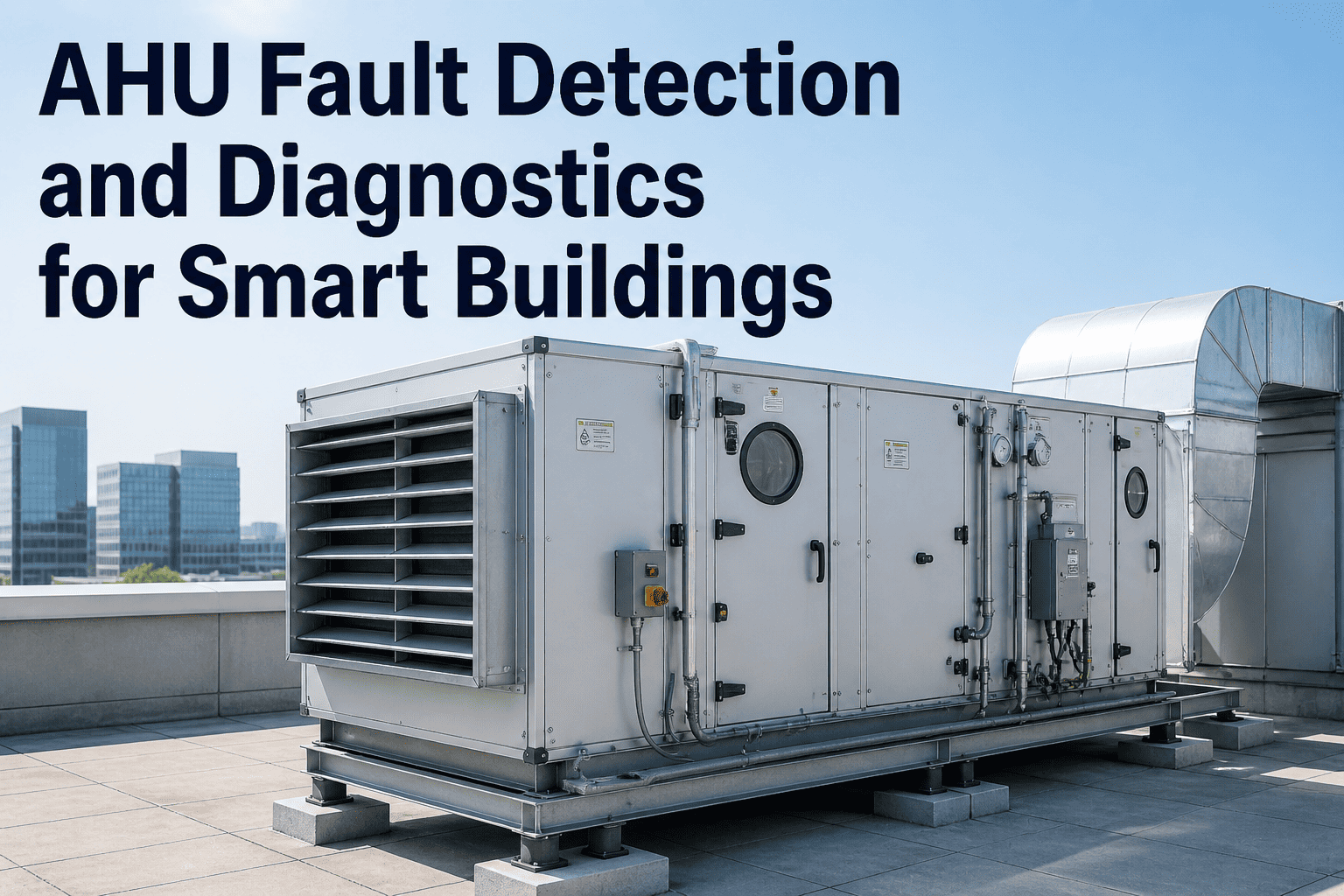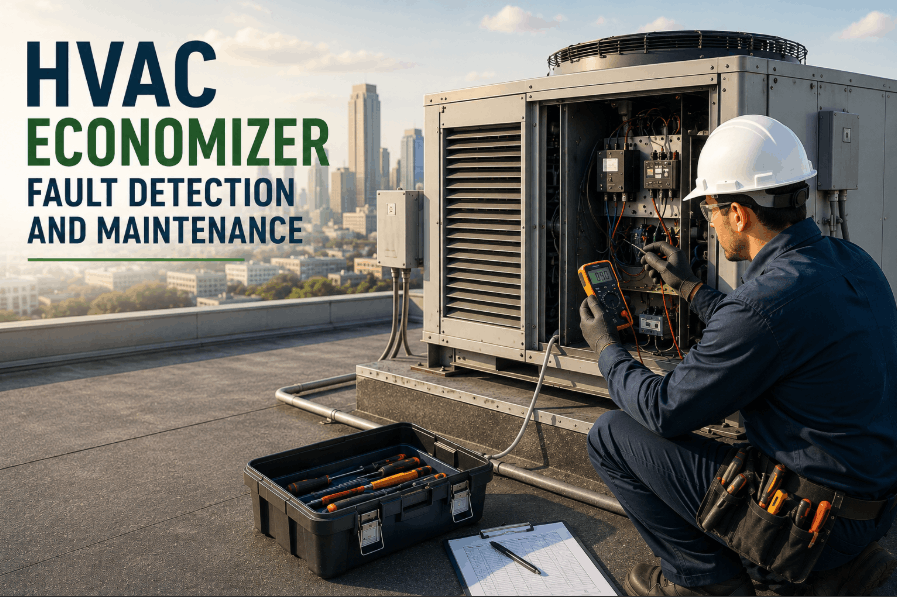
Economizers are among the most valuable and most frequently failed components on commercial rooftop units — responsible for delivering free cooling when outdoor conditions allow, yet prone to damper failures, actuator degradation, and sensor drift that silently eliminate those savings for months. Facilities that lack systematic economizer fault detection continue paying for compressor cooling during every hour a stuck damper or faulty sensor prevents free cooling delivery. Sign Up Free with OxMaint to activate economizer monitoring workflows that detect stuck dampers, sensor failures, and missed free cooling opportunities automatically. This guide covers the critical economizer fault modes, detection analytics, and how to Book a Demo to implement BMS-connected fault detection at your facilities.
Stop Losing Free Cooling to Undetected Economizer Faults
OxMaint's Energy and ESG Reporting module monitors economizer performance, detects stuck dampers and sensor faults in real time, and triggers maintenance workflows before energy waste compounds — free tier included.
The Hidden Cost of Economizer Faults in Commercial Buildings
A properly functioning economizer can reduce HVAC cooling energy by 20–50% in climates with sufficient hours of favorable outdoor conditions. When an economizer fails — whether a damper freezes in the closed position, an actuator loses calibration, or an outdoor air sensor drifts beyond calibration — that energy reduction disappears while the mechanical cooling system compensates. Research consistently shows that 25–40% of commercial rooftop units in operation have economizer faults active at any given time, the majority of which go undetected by standard maintenance practices. Facility teams that Sign Up Free with OxMaint gain access to systematic fault detection workflows that surface these losses before they accumulate over an entire cooling season.
Compare commanded damper position to actual outside air temperature and airflow outcomes — identifying dampers that fail to open, fail to close, or lose modulation capability under BMS commands.
Cross-validate outdoor air temperature sensor readings against weather station data and return air conditions to detect sensor drift, calibration errors, and wiring faults that cause incorrect economizer lockout decisions.
Monitor hours when outdoor conditions qualify for free cooling but mechanical cooling remains active — quantifying the energy cost of economizer faults in kWh and dollars per facility.
Track actuator feedback signals and damper position accuracy over time to identify progressive calibration drift before it causes gross position errors and airflow control failures.
Detect incorrect humidity lockout logic — including enthalpy sensor failures that cause economizers to lock out during acceptable conditions or remain active during high-humidity outdoor events.
Automatically generate energy waste reports per unit and per site showing kWh lost to economizer faults — supporting ESG reporting, energy audits, and capital repair prioritization decisions.
HVAC Economizer Fault Modes: Detection and Maintenance Response
A damper stuck closed prevents all free cooling delivery — the economizer provides zero benefit while the compressor runs continuously through conditions that would otherwise allow full or partial mechanical cooling lockout. Detection relies on monitoring the relationship between outdoor air temperature (below the economizer changeover setpoint), BMS damper open command, and actual supply air temperature. When OA conditions qualify for economizer operation and supply air temperature matches return air temperature rather than outdoor air temperature, damper closure is confirmed. OxMaint translates this logic into an automated work order flagging the specific RTU, fault type, and estimated energy waste — enabling prioritized dispatch rather than generic PM scheduling.
A damper stuck open creates opposite but equally serious problems — uncontrolled outside air introduction during hot, humid, or cold weather increases both cooling and heating loads significantly, and can cause humidity control failures and indoor air quality complaints. Detection identifies conditions where OA temperature is above the economizer changeover setpoint (commanding closure) but supply air temperature tracks outdoor air rather than return air. Book a Demo to configure OxMaint stuck-open damper detection for your RTU fleet.
The outdoor air sensor is the primary decision input for economizer operation. A sensor reading frozen at a fixed value, drifted above the changeover setpoint, or reporting implausible values causes the control system to make incorrect economizer activation decisions — either locking out during qualifying conditions or enabling during high outdoor temperatures. Cross-validation against onsite weather station data, neighboring RTU sensors, or BMS data feeds provides high-confidence sensor fault identification. Sign Up Free to connect sensor cross-validation logic to OxMaint calibration work order triggers.
Economizer actuators lose calibration over time due to thermal cycling, mechanical wear, and shaft binding. A miscalibrated actuator may report a damper position of 50% open while the actual mechanical position is fully closed or fully open — causing the control system to make decisions based on incorrect feedback. OxMaint maintenance records tracking actuator calibration history and inspection intervals enable systematic recalibration scheduling before position errors cause fault conditions.
Enthalpy-controlled economizers use combined temperature and humidity measurements to determine when outdoor air conditions are favorable. A failed or drifted enthalpy sensor can cause the system to continuously lock out economizer operation even during low-humidity, mild-temperature conditions — a fault that may go undetected for an entire cooling season. OxMaint energy waste reporting quantifies enthalpy lockout hours against ambient data to flag suspected sensor failures for investigation.
Economizers functioning but unable to achieve full outdoor air positions deliver partial free cooling benefit — a degraded mode that standard alarm-based monitoring misses entirely. Analytics comparing expected outdoor air percentage under different load conditions to actual supply air temperature outcomes can quantify damper authority loss as a percentage — providing maintenance teams with objective data on whether repair or replacement is warranted. Book a Demo to see how OxMaint tracks partial economizer authority loss across a multi-RTU fleet.
Economizer Fault Detection Reference: Signals, Faults, and Actions
| Fault Type | Primary Signal | Cross-Validation Source | Detection Confidence | OxMaint Response |
|---|---|---|---|---|
| Damper Stuck Closed | Supply air tracks return, not OA | OA temp + damper command | High | Logic fault work order |
| Damper Stuck Open | Supply air tracks OA above setpoint | Return air + supply air temp | High | Urgent work order |
| OA Sensor Failure | Frozen or implausible OA reading | Weather station cross-validation | High | Sensor inspection PM |
| Actuator Miscalibration | Position feedback vs. airflow mismatch | Airflow and thermal outcomes | Medium | Recalibration PM |
| Enthalpy Sensor Fault | Excess lockout hours vs. ambient | Ambient humidity/temp data | Medium | Energy waste + inspection WO |
| Partial Damper Authority | OA% below expected at full command | Supply air temperature delta | Medium | Damper repair/replace analysis |
How OxMaint Operationalizes Economizer Fault Detection
OxMaint's Energy and ESG Reporting module closes the loop between economizer monitoring analytics and structured maintenance execution. When fault detection logic identifies a stuck damper, sensor failure, or missed free cooling window, OxMaint automatically generates a work order with the fault type documented, asset location mapped, and the relevant inspection checklist attached — eliminating the manual review step that delays response in alarm-only monitoring setups. Facility managers can Sign Up Free and configure their first economizer fault detection trigger within an hour, without replacing existing BMS or building automation infrastructure.
Economizer Maintenance Checklist: What Effective Inspections Cover
Damper Position Verification
Physically verify damper blade position against BMS commanded position at minimum, maximum, and mid-stroke — confirming mechanical travel authority across the full operating range.
Actuator Calibration Check
Compare actuator feedback signal to physical damper position. Recalibrate or replace when position error exceeds 5% of full travel — preventing invisible authority loss.
OA Temperature Sensor Calibration
Verify outdoor air sensor accuracy against a calibrated reference thermometer. Sensors drifted more than ±1.5°F from reference require recalibration or replacement to maintain accurate changeover decisions.
Linkage and Shaft Inspection
Inspect damper linkage arms, shaft bearings, and blade seals for wear, corrosion, and binding — addressing mechanical resistance that causes partial authority loss and actuator overload.
Free Cooling Functional Test
Force economizer into full open position under qualifying outdoor conditions and verify supply air temperature moves toward outdoor air temperature — confirming actual free cooling delivery capability.
Control Sequence Verification
Confirm economizer changeover setpoints, high-limit controls, and lockout logic match current design intent — flagging setpoint drift and incorrect parameters that cause systematic economizer misoperation. Book a Demo to configure this checklist in OxMaint.
Activate Economizer Fault Detection Across Your Facility Fleet
OxMaint connects BMS data to automated fault detection workflows — identifying stuck dampers, sensor failures, and free cooling losses before they accumulate into a full season of wasted energy.
Frequently Asked Questions
What is economizer fault detection in HVAC systems?
Economizer fault detection uses BMS data, sensor cross-validation, and operational analytics to identify damper failures, sensor errors, and missed free cooling opportunities — enabling corrective maintenance before energy waste compounds over an entire season.
How common are economizer faults in commercial rooftop units?
Research indicates 25–40% of commercial RTUs have active economizer faults at any time. Most go undetected by standard maintenance because the fault doesn't trigger visible alarms — it simply eliminates free cooling quietly.
What causes an economizer damper to get stuck?
Stuck dampers result from actuator failure, mechanical linkage binding, shaft corrosion, blade warping from thermal cycling, and dirt accumulation in blade tracks. Annual inspection and lubrication significantly reduces stuck damper incidence.
How does OxMaint support ASHRAE 90.1 economizer compliance?
OxMaint auto-generates economizer inspection records, fault documentation, and maintenance histories per unit — supporting ASHRAE 90.1 Section 6 requirements for economizer commissioning and periodic maintenance documentation.
Can OxMaint quantify energy waste from economizer faults?
Yes. OxMaint's Energy and ESG Reporting module calculates estimated kWh lost to economizer faults based on fault hours, unit capacity, and local energy rates — converting fault detections into dollar-denominated repair priority data.
Recover Your Free Cooling Hours — Start Detecting Economizer Faults
Join facility teams using OxMaint to detect stuck dampers, sensor failures, and missed free cooling automatically — turning economizer analytics into maintenance actions that recover energy and extend RTU life.