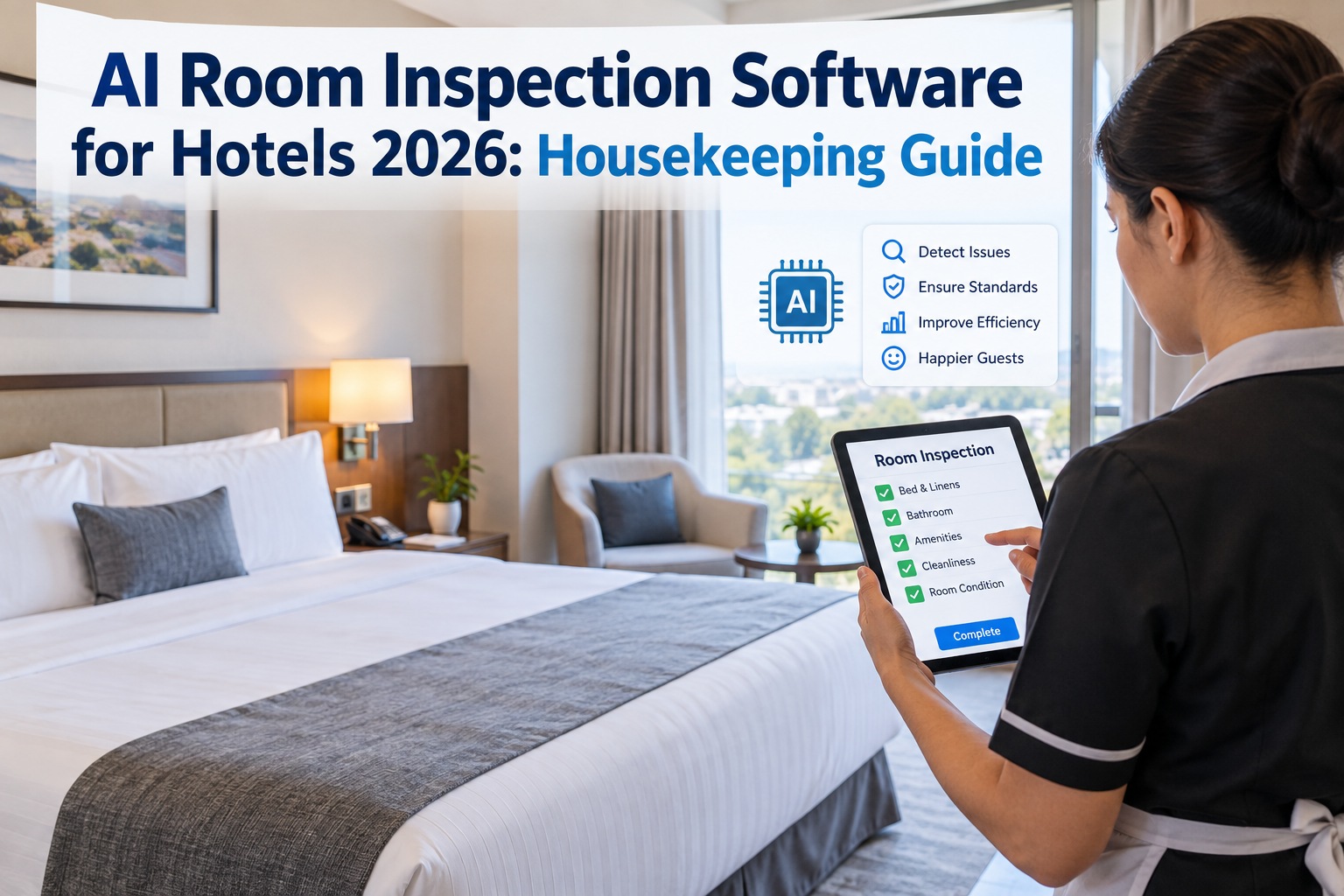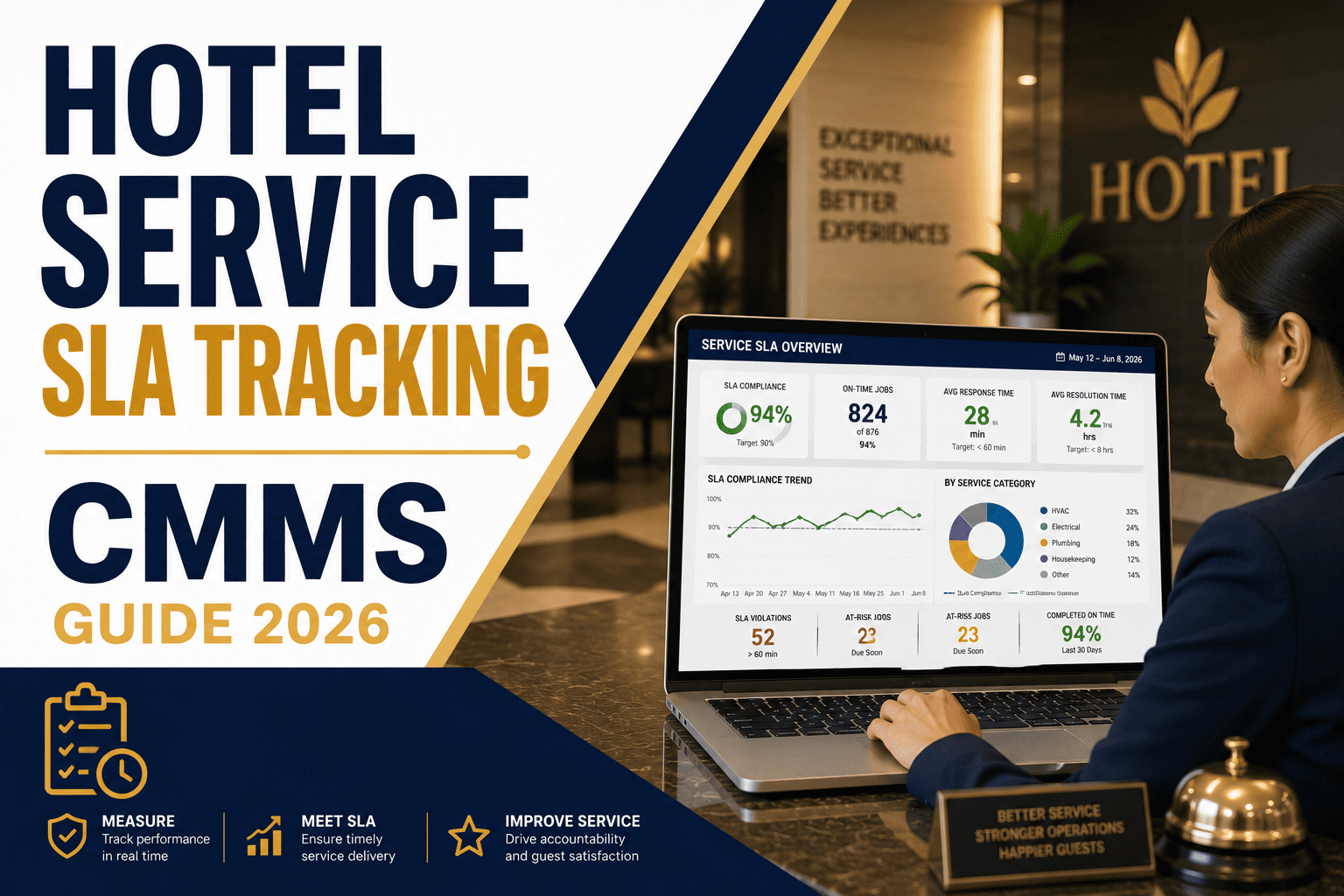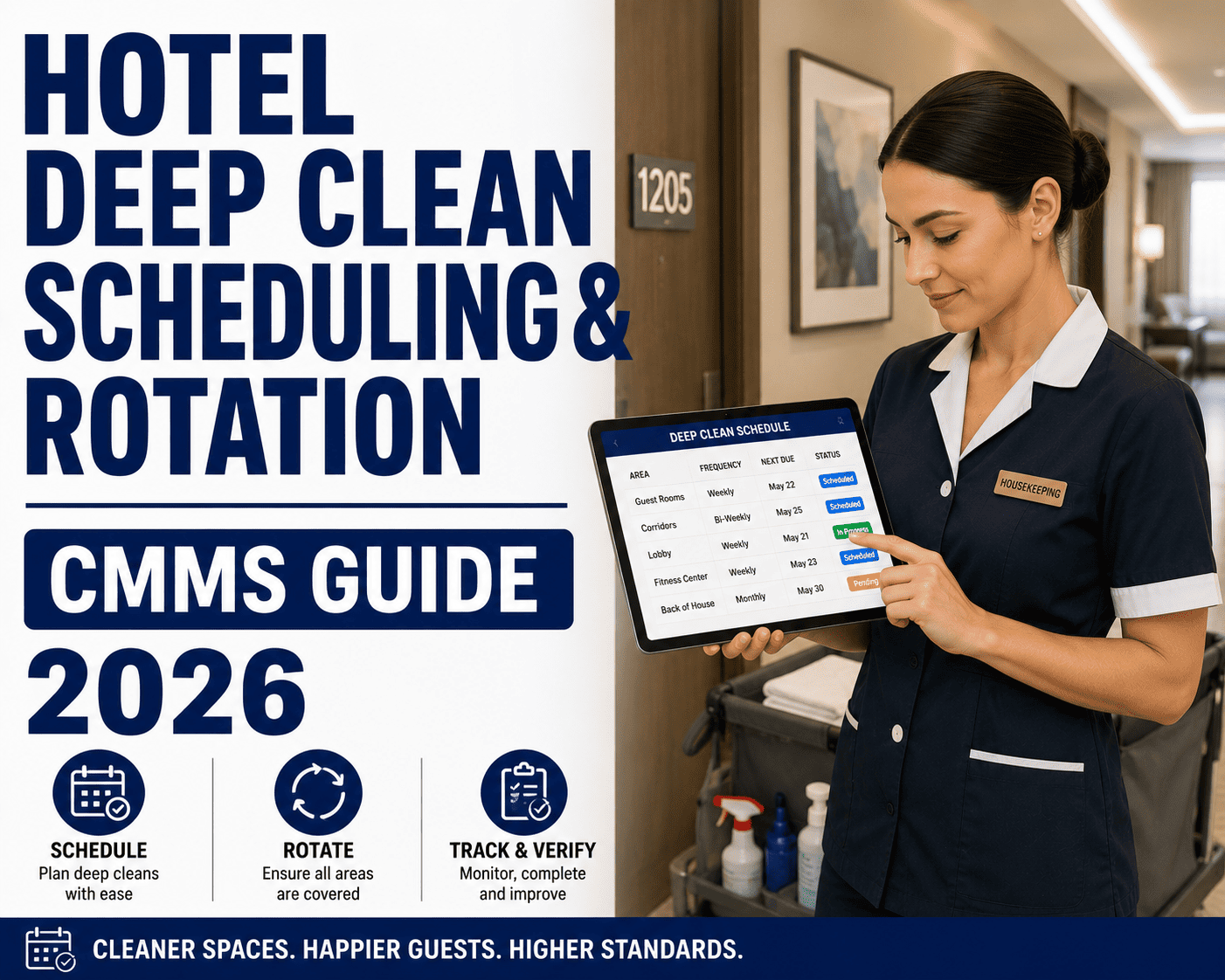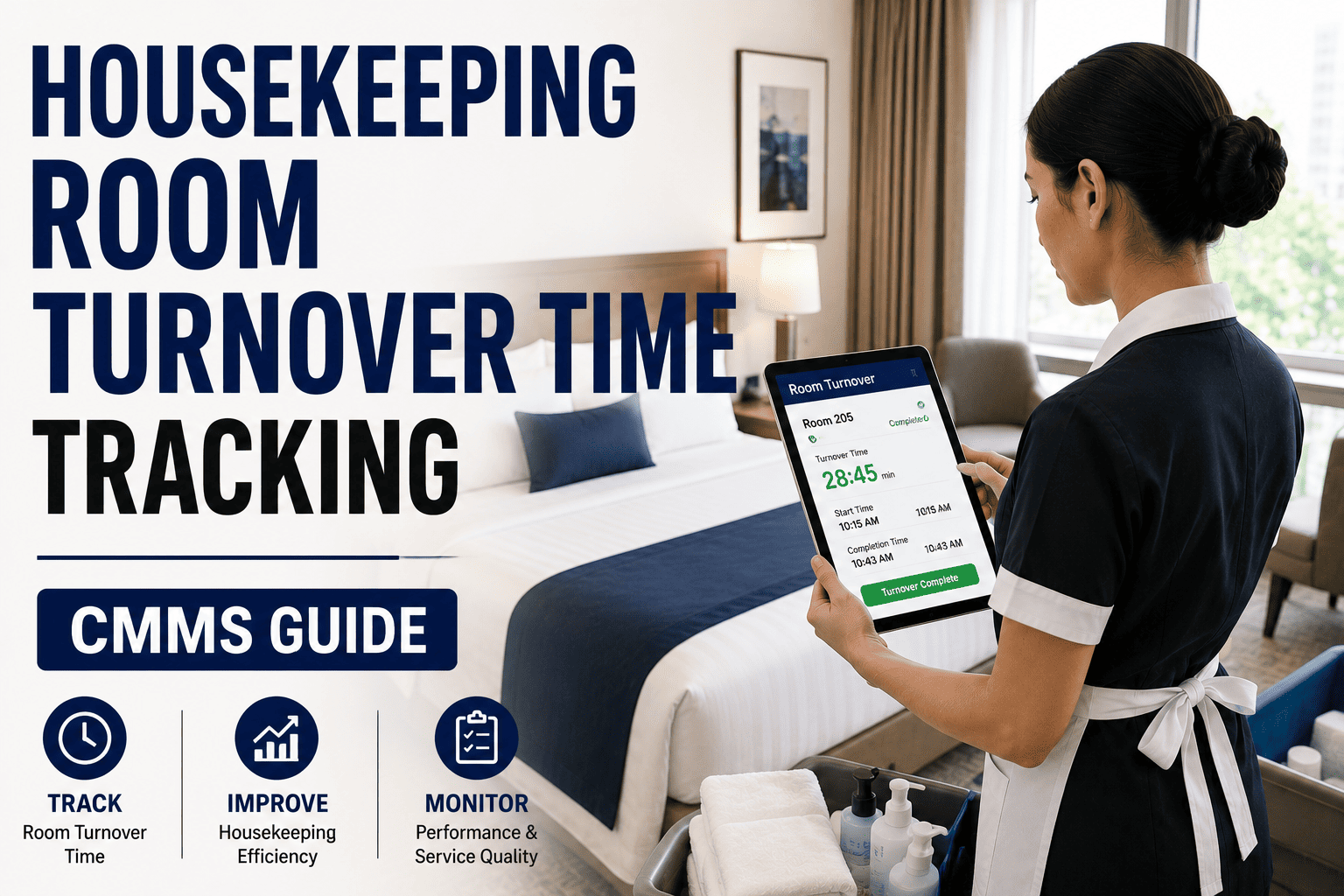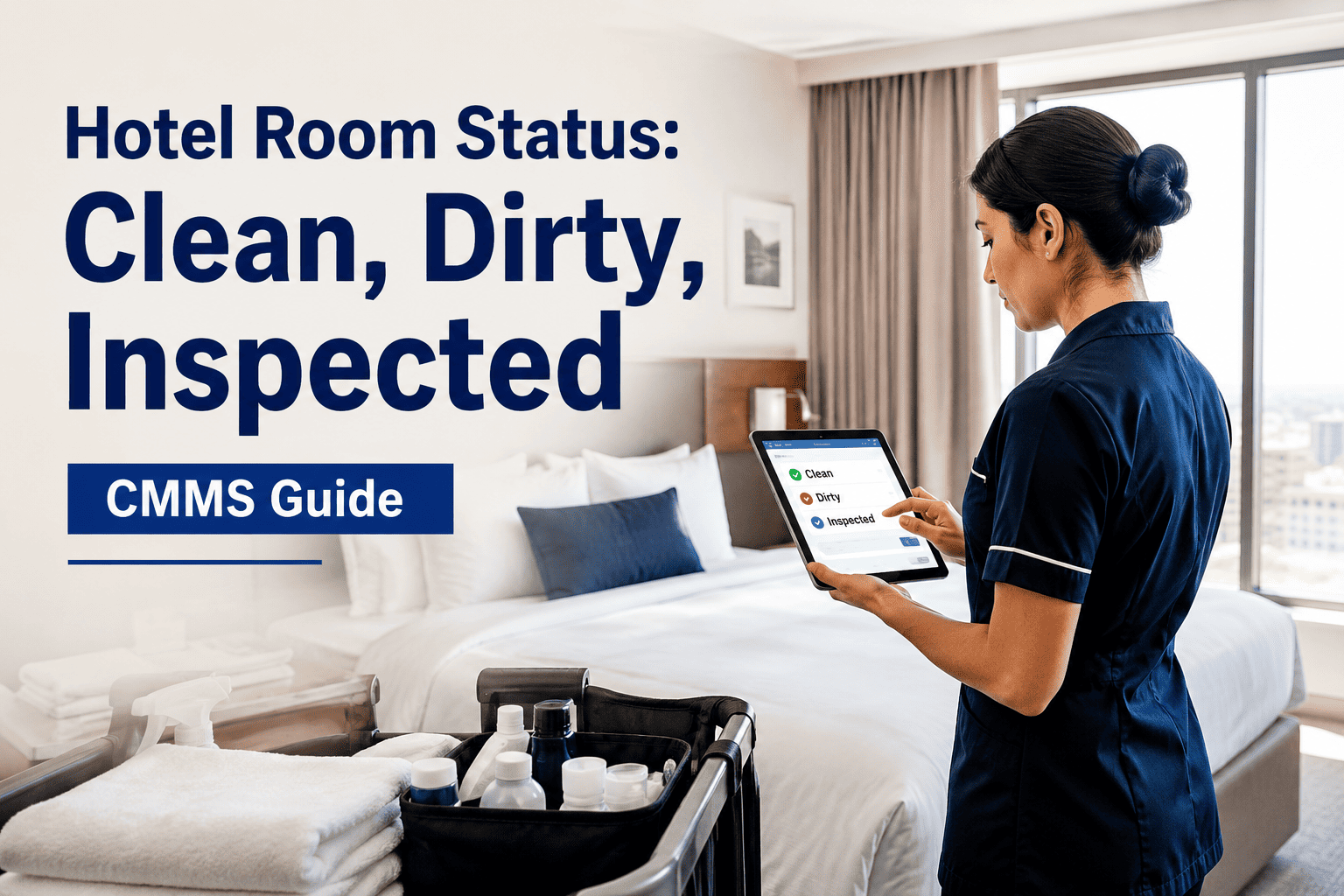
Hotel room status tracking — the clean, dirty, and inspected workflow — is the operational heartbeat that connects housekeeping, the front desk, and engineering in real time. When room status is inaccurate or delayed, hotels lose revenue on unrentable inventory, front desk staff overpromise early arrivals, and maintenance issues go unresolved until they become guest complaints. This CMMS hotel room status guide breaks down the full status workflow, PMS integration points, engineering hold codes, and the CMMS setup that keeps every department aligned. Modern AI-powered platforms like OxMaint replace clipboard-and-whiteboard tracking with real-time status visibility — you can Start Free Trial to see the difference immediately, or read on for the complete 2026 implementation playbook.
Is your front desk selling rooms that housekeeping hasn't inspected yet?
A single missed room-status update costs the average 200-room hotel over $48,000 per year in lost rack-rate revenue, comp rooms, and negative reviews. OxMaint's CMMS hotel room status module synchronizes clean, dirty, and inspected states across every department in under three seconds — no more walkie-talkie chaos, no more guessing.
How the clean, dirty, inspected room status flow actually works
A room moves through four to six status states every single day. Industry data from Hospitality Technology's 2025 Lodging Report shows that properties with a fully digitized status workflow achieve 94% on-time room readiness, compared to just 61% at hotels still relying on verbal updates and paper rack slips.
Guest has checked out or the room is mid-turnover. Housekeeping is assigned, cleaning supplies are staged, and engineering is flagged for any open work orders tied to that room number.
Room attendant has completed turnover and marked the room clean in the CMMS mobile app. The room is visually ready but has not yet passed supervisory inspection — not available for assignment to arriving guests.
Supervisor or inspector has verified cleanliness, amenity stock, and engineering condition. The CMMS pushes the inspected status to the PMS in real time, unlocking the room for front desk assignment.
Maintenance issue detected — HVAC fault, plumbing leak, or electrical trip. The CMMS auto-generates a work order, blocks the room in the PMS, and routes the ticket to engineering with priority and SLA timer.
Room status PMS CMMS integration: connecting housekeeping to the front desk
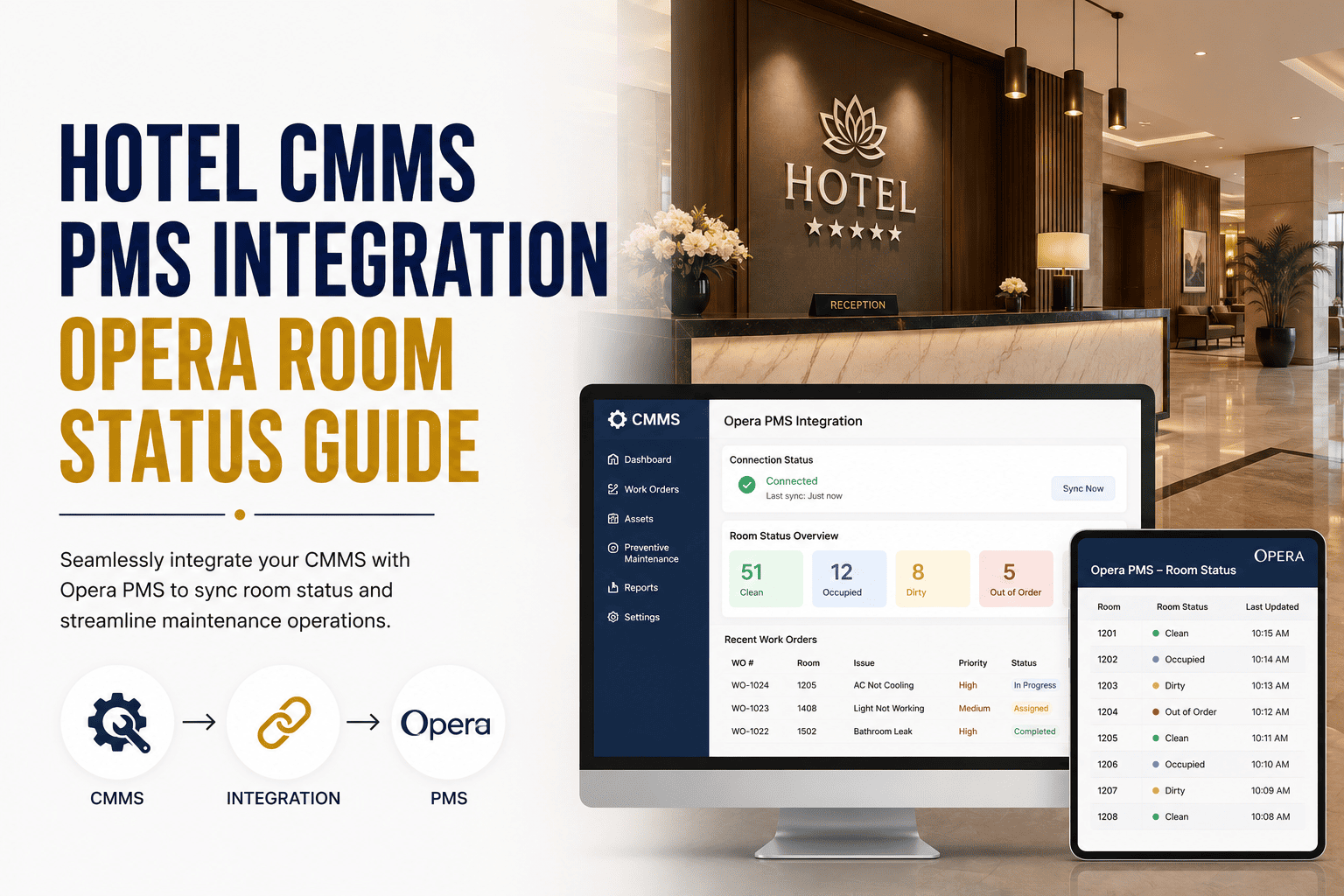
The PMS (Property Management System) owns reservations and check-in; the CMMS owns maintenance execution and asset condition. Without a live integration between the two, room status lives in two disconnected silos — and the front desk is flying blind. Here is what a properly integrated CMMS hotel room status pipeline looks like end to end.
Guest Checkout
PMS fires a checkout event. The CMMS receives the room number via API and auto-sets status to Dirty, triggering a housekeeping task and scanning for any open engineering work orders on assets in that room.
Housekeeping Turnover
Room attendant completes cleaning and taps "Clean" in the OxMaint mobile app. If an asset issue is spotted — a flickering TV, a slow drain — they attach a photo and the CMMS instantly creates an engineering work order.
Supervisor Inspection
Supervisor inspects the room against a digital checklist. On pass, status flips to Inspected. The CMMS pushes the update to the PMS, and the room becomes available for sale in under three seconds.
Engineering Resolution
If the inspection fails or a work order is open, the CMMS holds the room in Engineering Hold status. The PMS blocks assignment. Once the work order is closed and verified, the CMMS releases the room to Inspected automatically.
Engineering hold codes that prevent selling broken rooms
A room should never be assigned to a guest while a maintenance issue is unresolved — yet 22% of hotels lack a formal hold-code system, according to the 2025 AHLA Operations Benchmark. Engineering hold codes in a CMMS create an immutable lock that no front desk agent can override without documented escalation.
| Hold Code | Trigger | SLA Target | CMMS Action |
|---|---|---|---|
| M-HVAC | Temperature complaint or sensor fault | 2 hours | Auto-assign HVAC tech, parts check, PMS block |
| M-PLUMB | Leak, slow drain, water pressure | 90 minutes | Priority dispatch, shutdown isolation if needed |
| M-ELEC | Outlet, lighting, or panel trip | 1 hour | Safety flag, engineering lead notification |
| M-AME | Amenity, furniture, or cosmetic | 4 hours | Queue to housekeeping + engineering joint ticket |
| M-PEST | Pest sighting reported | 30 minutes | Vendor dispatch, adjacent room proactive inspection |
Each hold code carries an SLA timer in OxMaint. If the resolution window is breached, the CMMS automatically escalates to the Director of Engineering and the GM — turning invisible delays into accountable, tracked events.
How OxMaint CMMS keeps hotel room status accurate in real time
OxMaint was built for the realities of hotel operations — high turnover, multi-department handoffs, and zero tolerance for selling a room that is not ready. These four capabilities map directly to the room-status problem and deliver measurable ROI within the first 90 days of implementation.
Bi-Directional PMS Sync
Real-time API integration with Opera, Mews, Cloudbeds, and 40+ PMS platforms. Status changes propagate in under 3 seconds, eliminating the lag that costs hotels an average of 1.4 room-nights per week in unrentable inventory.
94% on-time room readinessDigital Inspection Checklists
Customizable room-inspection forms with photo evidence, mandatory checkpoints, and pass/fail logic. Inspectors complete inspections 40% faster, and every record is audit-ready for brand-compliance reviews.
40% faster inspectionsAI-Predictive Asset Holds
OxMaint's AI analyzes HVAC run-hours, filter cycles, and vibration data to predict asset failures before they trigger a guest complaint. Predictive holds catch 60% of issues during scheduled turnover — not during occupancy.
60% fewer in-stay failuresMobile Work Order Routing
Housekeeping staff report issues with a photo and a tap. The CMMS instantly creates, prioritizes, and routes the work order to the right engineer — cutting average issue-to-resolution time from 4.2 hours to 38 minutes.
85% faster resolutionThe cost of inaccurate room status — and the payback of fixing it
Consider a 220-room full-service hotel running at 84% occupancy. With a manual whiteboard-and-radio system, an average of 3 rooms per day are not ready by the 3:00 PM check-in window. At an ADR of $189, that is $567 in daily at-risk revenue — plus the reputation cost of guests waiting in the lobby and posting 1-star reviews that suppress future bookings.
Seaside Harbor Hotel — 180 rooms, Marriott-branded. Before OxMaint, the property averaged 4.1 guest-reported maintenance issues per day and a 2.8-hour average resolution time. Housekeeping used paper slips; engineering ran on a clipboard rack. After deploying OxMaint's CMMS hotel housekeeping status module with PMS integration: issue-to-resolution dropped to 41 minutes, guest-reported issues fell to 1.2 per day, and the property recovered 1.6 room-nights per week that were previously lost to hold-code blindness. Net first-year impact: $51,200 in recovered revenue and a 0.4-point increase in TripAdvisor cleanliness score.
CMMS hotel room status setup: a 30-day implementation timeline
Most hotels can fully deploy OxMaint's room-status tracking module in under 30 days. The timeline below reflects a typical 150-to-300-room property with an existing PMS and a maintenance team of 3 to 8 engineers. No rip-and-replace — OxMaint layers on top of your current PMS and housekeeping workflow.
PMS Integration & Asset Mapping
OxMaint engineers connect the API to your PMS, map every room number to its assets (HVAC unit, water heater, minifridge, lighting circuit), and import historical work orders for AI baseline training.
Status Workflow Configuration
Configure clean/dirty/inspected/hold states, engineering hold codes, SLA timers, escalation rules, and the digital inspection checklist template aligned to your brand standards.
Team Training & Mobile Rollout
Housekeeping, supervisors, and engineering receive hands-on training on the OxMaint mobile app. Average adoption time is under 20 minutes per user — the interface is designed for non-technical staff.
Go-Live & AI Calibration
Full cutover from manual tracking. OxMaint's AI begins learning your property's failure patterns, optimizing PM schedules, and flagging predictive holds. Dashboard analytics go live for the GM and Director of Engineering.
Stop selling rooms you haven't inspected.
See how OxMaint's CMMS hotel room status module synchronizes housekeeping, front desk, and engineering in real time — and recover the revenue you are losing to unready rooms.
Hotel room status tracking: what teams ask before switching
What is the difference between clean and inspected room status in a hotel?
Clean means the room attendant has completed housekeeping turnover — beds made, bathroom sanitized, amenities restocked. Inspected means a supervisor or inspector has verified the room against a brand-standard checklist and confirmed it is ready for guest arrival. A room should only be released to the front desk for assignment after it reaches Inspected status, which is why a CMMS that enforces this sequence prevents assigning unverified rooms.
How does a CMMS integrate with a hotel PMS for room status tracking?
A CMMS connects to the PMS through a real-time API. When a guest checks out, the PMS sends a checkout event to the CMMS, which sets the room to Dirty and triggers housekeeping and engineering workflows. When the room passes inspection, the CMMS pushes an Inspected status back to the PMS, making the room available for sale. OxMaint supports Opera, Mews, Cloudbeds, RoomRaccoon, and 40+ PMS platforms out of the box. Book a Demo to see a live integration walkthrough.
What are engineering hold codes and why do they matter?
Engineering hold codes are standardized status flags — such as M-HVAC, M-PLUMB, or M-ELEC — that lock a room in the PMS and prevent it from being assigned to a guest while a maintenance issue is unresolved. Each code carries an SLA timer, so if resolution exceeds the target window, the CMMS auto-escalates to the Director of Engineering. Without hold codes, front desk agents may sell rooms with active maintenance issues, leading to guest complaints and comp-room costs.
Can housekeeping staff use a CMMS mobile app to report maintenance issues?
Yes. OxMaint's mobile app lets room attendants snap a photo of a maintenance issue — a leaking faucet, a cracked tile, a dead TV — and submit it in under 15 seconds. The CMMS automatically creates a work order, assigns it to the correct engineer based on skill and proximity, and sets the room to Engineering Hold in the PMS. This eliminates the phone-call-and-paper-slip workflow that loses 30% of reported issues.
How long does it take to implement CMMS hotel room status tracking?
A typical 150-to-300-room hotel fully deploys OxMaint's room-status module in 30 days. Week one covers PMS integration and asset mapping, week two configures status workflows and hold codes, week three trains housekeeping and engineering on the mobile app, and week four goes live with AI calibration. No infrastructure changes are required — OxMaint is cloud-based and works on existing smartphones and tablets. You can Start Free Trial and begin configuration the same day.
Ready to make every room ready — every time?
Join the hotels using OxMaint to cut resolution times by 85%, recover $48K+ in annual at-risk revenue, and deliver the spotless room experience guests expect in 2026.
Free 14-day trial · No credit card