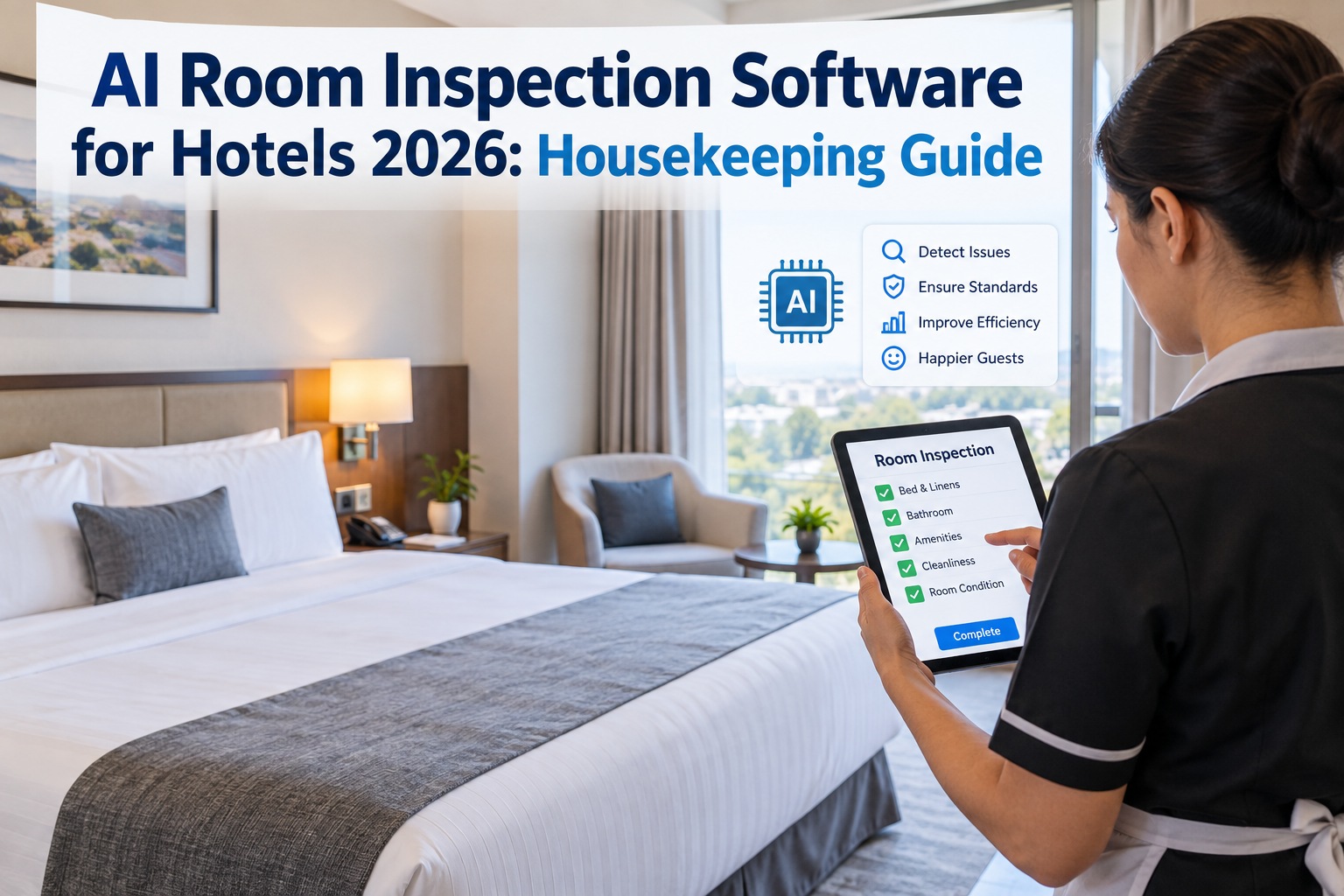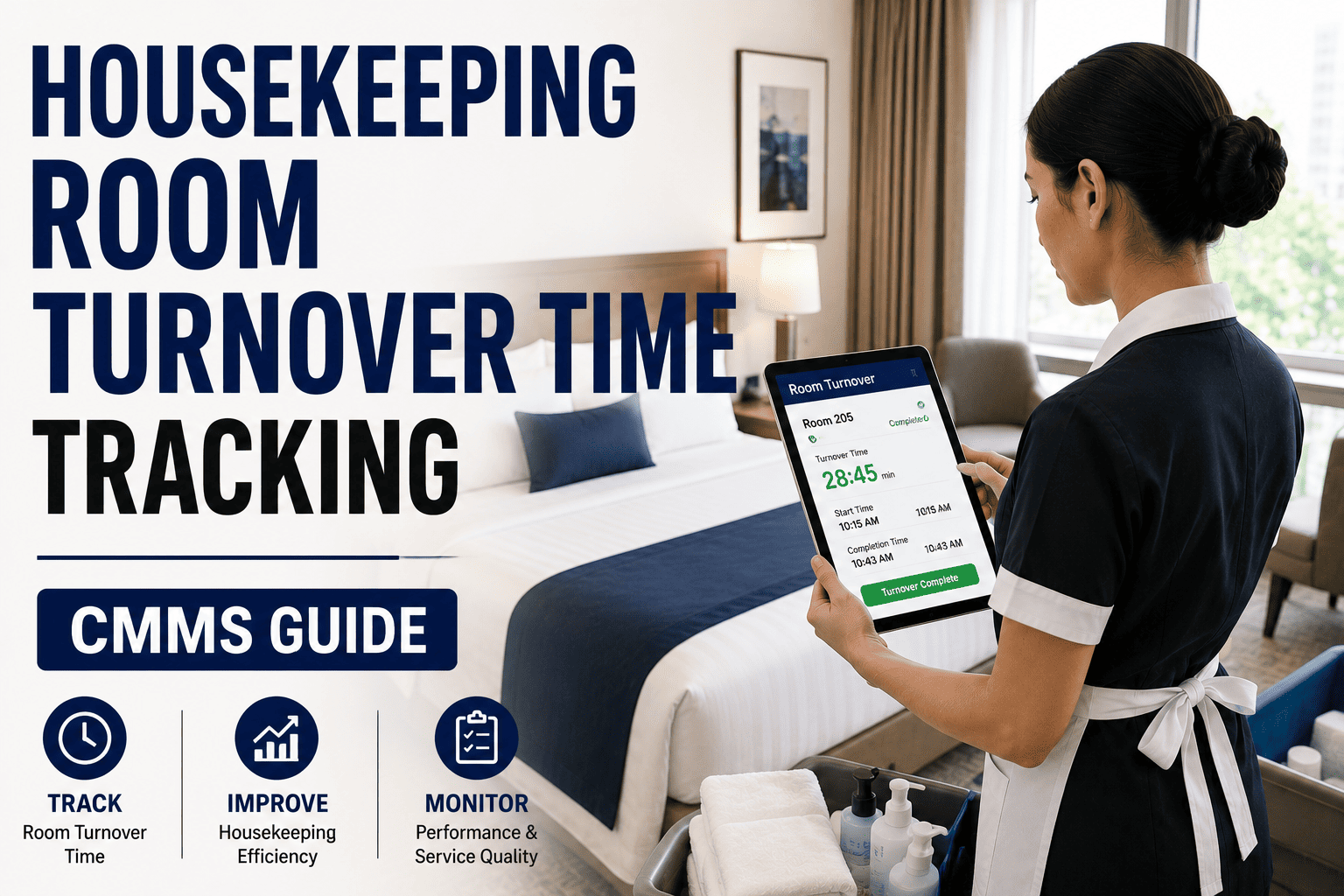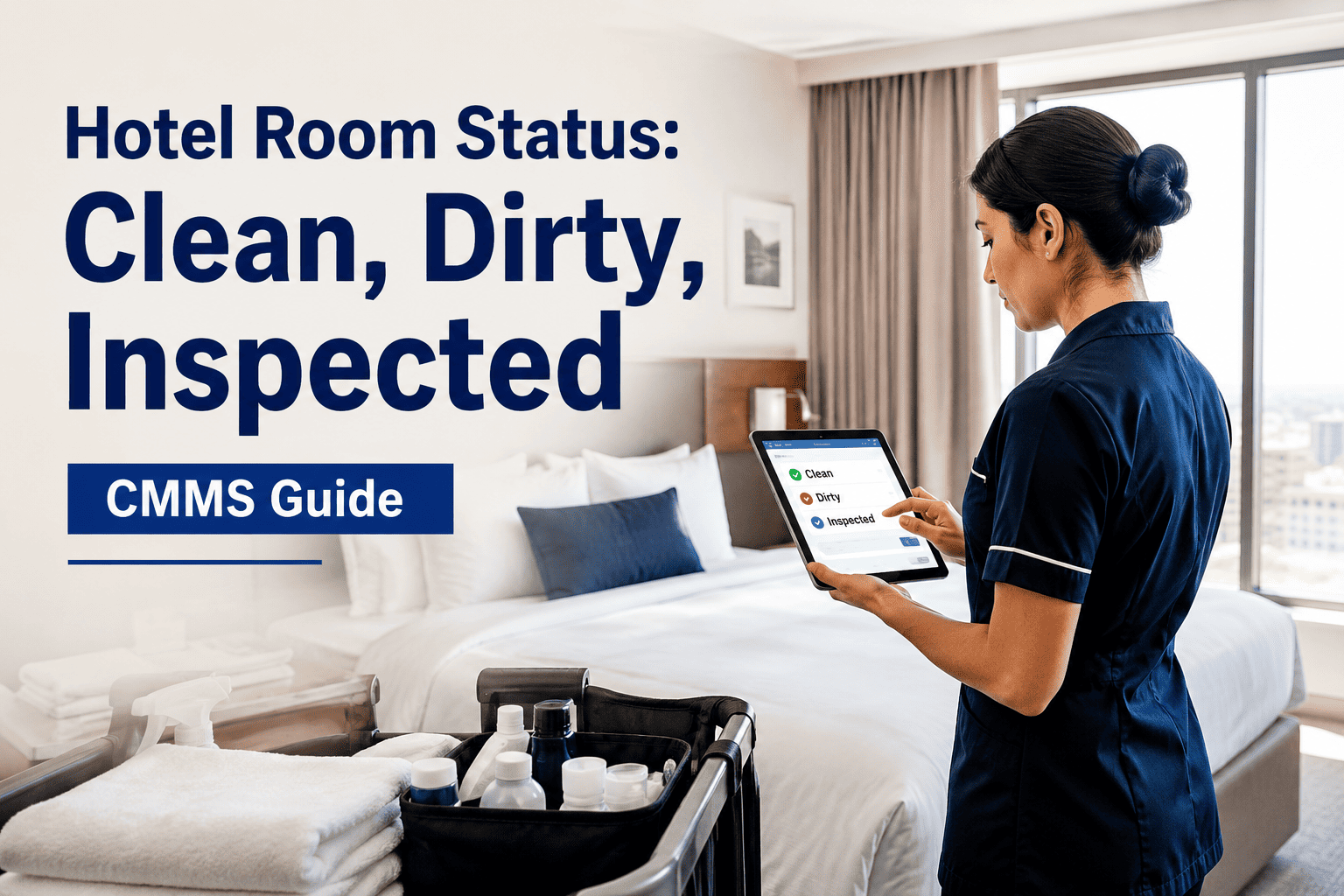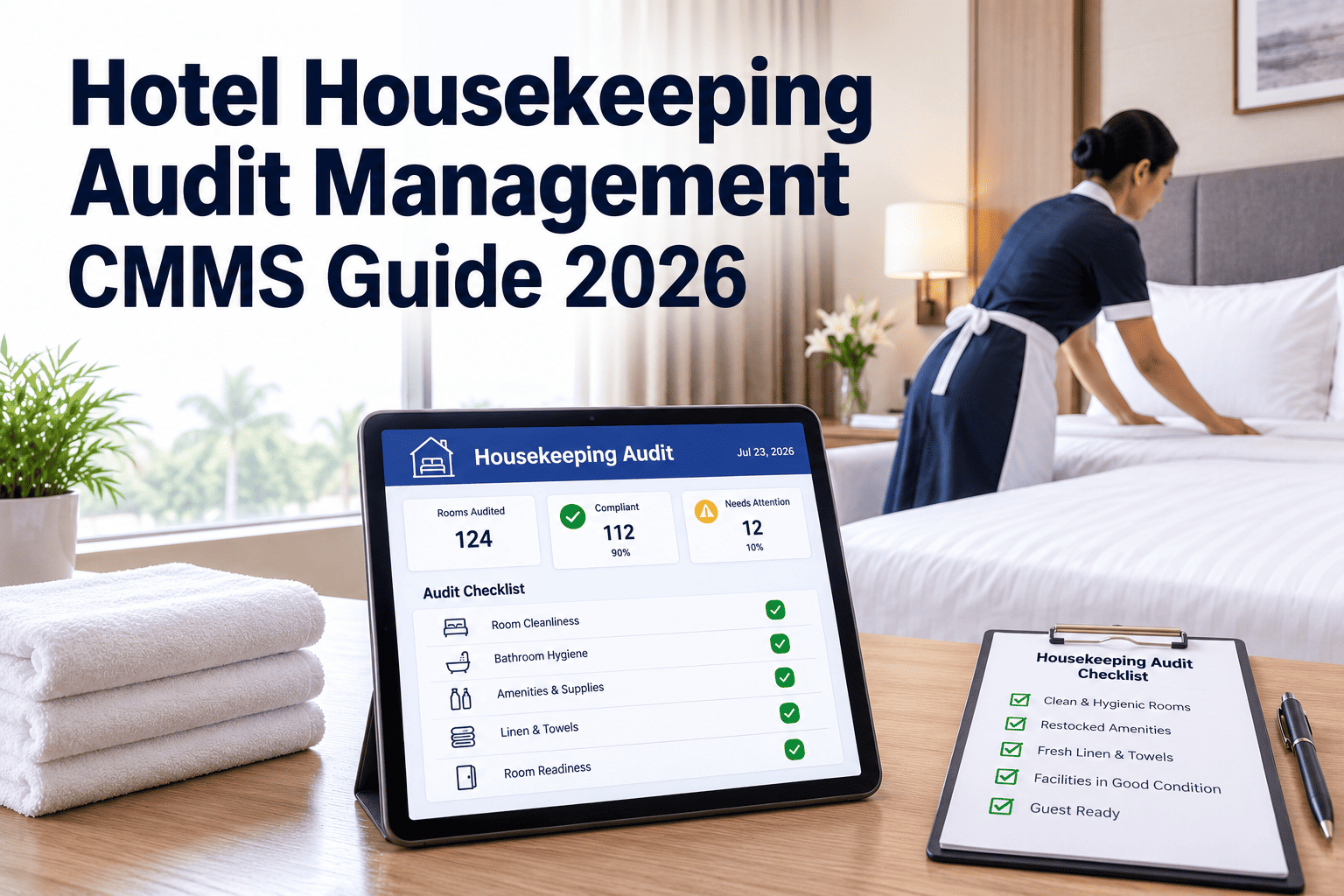
A hotel housekeeping audit is the checkpoint where brand-standard compliance and room-turnover quality are either verified or quietly lost — and in 2026, the properties winning on guest satisfaction scores are the ones running that audit inside a CMMS rather than on paper. This housekeeping audit management guide covers audit template design, room sampling logic, deficiency-report workflow, corrective-action tracking, and the CMMS workflow that converts housekeeping findings into engineering work orders automatically. If your team is still chasing deficiency slips across departments, it is time to Start Free Trial of a system built to close that loop.
Is your housekeeping audit actually catching deficiencies — or just creating paperwork?
Most hotels run room-turnover audits on clipboards, then hand deficiency notes to engineering through a disconnected process that loses 30–40% of corrective actions. A CMMS-based housekeeping audit converts every flagged item into a tracked, routed, verifiable work order — closing the loop between housekeeping and maintenance in minutes, not days.
Why hotel housekeeping audit management needs a CMMS in 2026
A 250-room hotel runs roughly 7,500 room-turnover audits per month. When even 4% of flagged deficiencies slip through the paper-handoff crack, that is 300 unresolved issues — dripping faucets, dead bulbs, misaligned door locks — reaching the next guest.
How to design a hotel housekeeping audit template that actually drives corrective action
The best housekeeping audit templates group inspection items by asset category — not by room zone — so each flagged item maps directly to a CMMS work-order type and priority level. That mapping is what turns a checklist into a managed quality system.
- Bed linens folded to brand-standard triple-fold
- Pillows arranged in correct count and orientation
- Carpet vacuumed — edge lines visible along baseboards
- All lamps test-cycled before room release
- HVAC set to occupied temperature — flag if no airflow
- All outlets tested with surge-verified plug tester
- Bathroom fan confirmed operational within 5 seconds
- Door lock battery level checked via RFID reader
- Towel count matches brand-par for room category
- Safe opened, reset, and battery checked
- Minibar seals intact — temperature logged below 4°C
- Guest information folder complete with current collateral
- Smoke detector LED confirms green — flag if amber or dead
- Fire sprinkler head clearance verified at 18 inches minimum
- Bathroom grab bars torque-tested where applicable
- Emergency exit map posted and legible
"Every audit line item should carry three attributes: a pass-fail threshold, a CMMS work-order category, and an SLA clock. Without all three, you are collecting data — not managing quality."
The CMMS housekeeping-to-engineering conversion workflow
The single biggest failure in hotel housekeeping audit management is the handoff. A CMMS eliminates that failure point by auto-converting each flagged deficiency into a categorized, prioritized work order the moment the auditor taps "fail" on their mobile device.
Room sampled and audited on mobile device
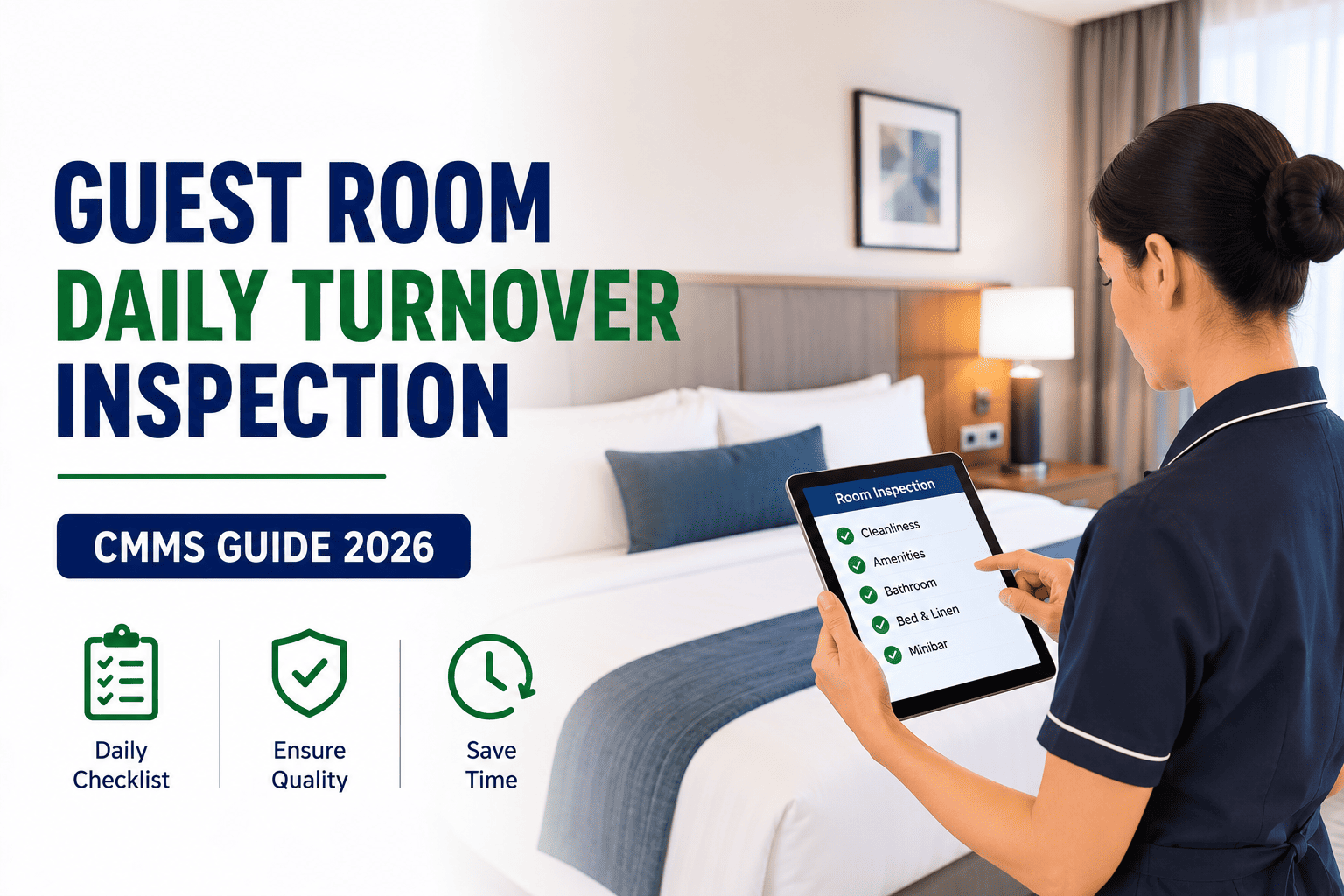
Housekeeping supervisor opens the audit template on a tablet, inspects the sampled room, and taps pass or fail on each line item. Timestamps and room numbers auto-attach — no paper, no re-entry.
Deficiency auto-converts to CMMS work order
Each failed item triggers a work order pre-tagged with asset type, priority, location, and SLA. A failed smoke detector becomes a P1 safety work order; a missing towel becomes a P3 restock task — routing rules handle it automatically.
Engineering receives, acknowledges, and repairs
The engineer sees the work order on their mobile CMMS app within seconds, including the auditor's photo and notes. Acknowledgement timestamps start the SLA clock — no more "I never got the note."
Repair verified and room released
Engineer closes the work order with a completion photo. Housekeeping gets an auto-notification to re-inspect. The room is not released to the front desk until the audit system confirms the deficiency is resolved.
Audit trail archived for brand compliance
Every action — audit, deficiency, work order, repair, verification — is timestamped and linked. Corporate audits pull a full report in seconds, not by digging through three-ring binders.
Room turnover quality: how to sample without missing systemic issues
A 250-room property cannot full-audit every room daily. The right sampling strategy balances coverage with labor cost — and a CMMS makes it easy to rotate sample sets so no room goes more than 5 days without a deep audit.
| Sampling Method | Daily Coverage | Deficiency Detection Rate | Best For |
|---|---|---|---|
| Random 15% rotation | 35–40 rooms | 72% | Steady-state operations |
| Risk-weighted priority | 35–40 rooms | 89% | Properties with VIP or loyalty-floor concentration |
| Post-repair verification | 5–15 rooms | 96% | Closing the loop on recently serviced assets |
| Full-floor sweep | 50–60 rooms | 94% | Weekly deep-audit rotation across all floors |
OxMaint capabilities that transform housekeeping audit management
OxMaint turns the housekeeping audit from a standalone checklist into the front end of a closed-loop maintenance system — every deficiency becomes a tracked work order, every repair becomes a verified data point, and every audit cycle feeds predictive analytics.
Mobile audit templates with auto-routing
Build brand-standard audit templates in OxMaint and deploy them to tablets instantly. Each failed line item auto-generates a work order tagged with the correct asset, priority, and SLA — eliminating manual handoff entirely.
Housekeeping-to-engineering work-order bridge
OxMaint's cross-departmental workflow engine routes housekeeping-generated work orders directly to the on-shift engineer's mobile app, with photo attachments, room location, and SLA countdown — no phone calls, no radios, no paper slips.
Closed-loop verification before room release
Rooms stay locked in "audit-hold" status until every deficiency work order is closed and verified. The front-desk system only sees the room as available once OxMaint confirms the repair — protecting guest experience automatically.
Audit analytics and brand-compliance reporting
OxMaint aggregates every audit cycle into trend dashboards — deficiency rates by room, by floor, by asset type, by auditor. Corporate compliance reports generate in one click, with full timestamped traceability for every action taken.
See how OxMaint closes the housekeeping-to-engineering loop on your property
Book a 30-minute demo and we will map your current audit workflow into OxMaint live — showing exactly where deficiency reports get lost and how auto-routing fixes it.
Hotel housekeeping audit management: frequently asked questions
What is a hotel housekeeping audit and why does it need CMMS software?
A hotel housekeeping audit is a structured inspection of a turned-over room to verify it meets brand standards before guest check-in. It needs CMMS software because paper-based audits lose 30–40% of deficiency reports in the handoff to engineering — a CMMS auto-converts each failed item into a tracked work order, ensuring nothing is missed and every action is timestamped for compliance.
How does a CMMS improve room turnover quality in hotels?
A CMMS improves room turnover quality by closing the loop between the auditor who finds a deficiency and the engineer who fixes it. Instead of paper notes and phone calls, each flagged item becomes a routed work order with an SLA clock — and the room is not released to the front desk until the repair is verified. Properties using OxMaint see up to a 3.2× reduction in guest complaints tied to room condition. Start Free Trial to see the workflow live.
What should a hotel housekeeping audit checklist include in 2026?
A 2026 audit checklist should include four category groups: room readiness (linens, carpet, lamps), engineering handoff (HVAC, outlets, locks, fans), amenities and supplies (towels, safe, minibar), and compliance and safety (smoke detectors, sprinkler clearance, grab bars). Each item must map to a CMMS work-order type and priority so deficiencies auto-route without manual sorting.
How many rooms should a housekeeping supervisor audit each day?
A housekeeping supervisor should audit 10–15 rooms per day using a risk-weighted sampling strategy that prioritizes VIP rooms, recently repaired rooms, and loyalty-floor rooms at 2× standard weight. A 250-room property at 78% occupancy should audit 35–40 rooms daily across 3 supervisors, rotating so no room goes more than 5 days without a deep audit.
How much does hotel housekeeping audit CMMS software cost?
Hotel housekeeping audit CMMS software typically costs $35–$75 per user per month, with enterprise properties negotiating custom pricing based on room count and integration scope. The ROI typically pays back within 3–4 months through reduced guest-compensation costs, lower reactive maintenance spend, and faster room turnaround — a mid-size property can save $8K–$14K annually. Book a Demo for a property-specific ROI estimate.
Turn your housekeeping audit into a managed quality system
Stop losing deficiency reports to paper handoffs. OxMaint converts every audit finding into a tracked, routed, verified work order — and gives you the compliance trail corporate demands.
Free 14-day trial · No credit card