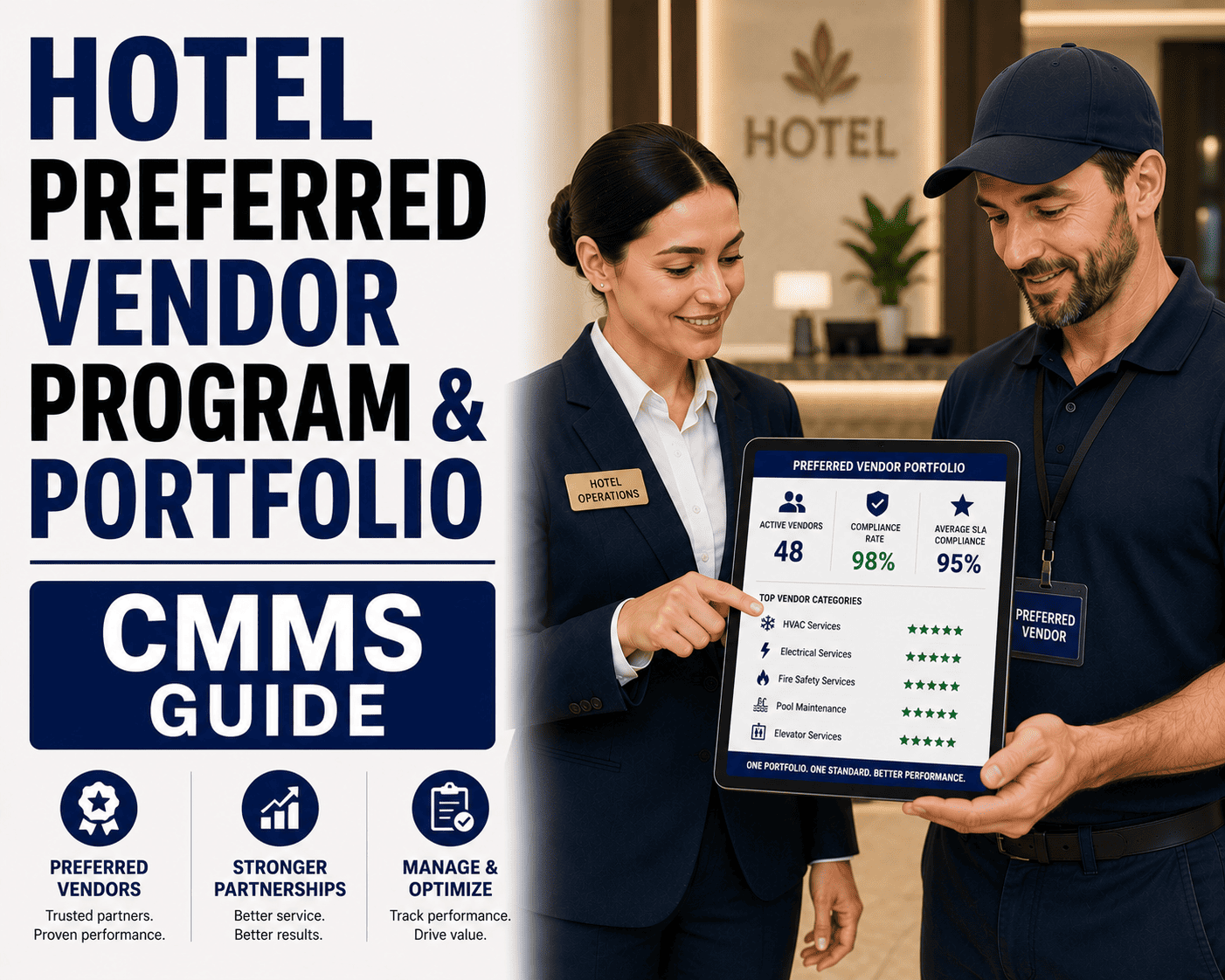
A hotel preferred vendor program turns multi-property scale into real pricing leverage — but only if the program is actively managed with the right portfolio CMMS. Without a centralized system to enforce pre-qualified vendor lists, track negotiated rates, and measure vendor performance across every property, hotel chains typically overpay 12–18% on maintenance contracts and lose visibility into service quality. This guide explains how to build, tier, and enforce a preferred vendor program using a CMMS built for hotel portfolios — and how to Start Free Trial to see the platform in action on your assets.
CMMS Hotel Preferred Vendor Guide
Is your hotel portfolio leaving 15% on every vendor contract?
Most hotel chains negotiate preferred rates — then lose them at the property level because nobody enforces the list. A portfolio-wide CMMS closes the gap between negotiated pricing and what GMs actually pay.
How It Works
How a CMMS hotel preferred vendor program works
A preferred vendor program is the operational layer that converts multi-property scale into measurable pricing and reliability leverage — but it only delivers when every property is held to the same standard.
Collect COIs, W-9s, SLA templates, and trade licenses once — not at every property. A CMMS stores these against the vendor record and flags expirations 30 days out, so a lapsed insurance certificate never blocks a work order at 2 a.m.
Armed with consolidated work-order volume data from the CMMS, procurement negotiates blended rates across all properties — typically 10–18% below single-property pricing for HVAC, plumbing, elevator, and pest-control contracts.
When a GM or maintenance director opens a work order, the CMMS surfaces only approved, pre-qualified vendors for that trade and region — with the negotiated rate pre-filled. Off-list spend requires documented override approval.
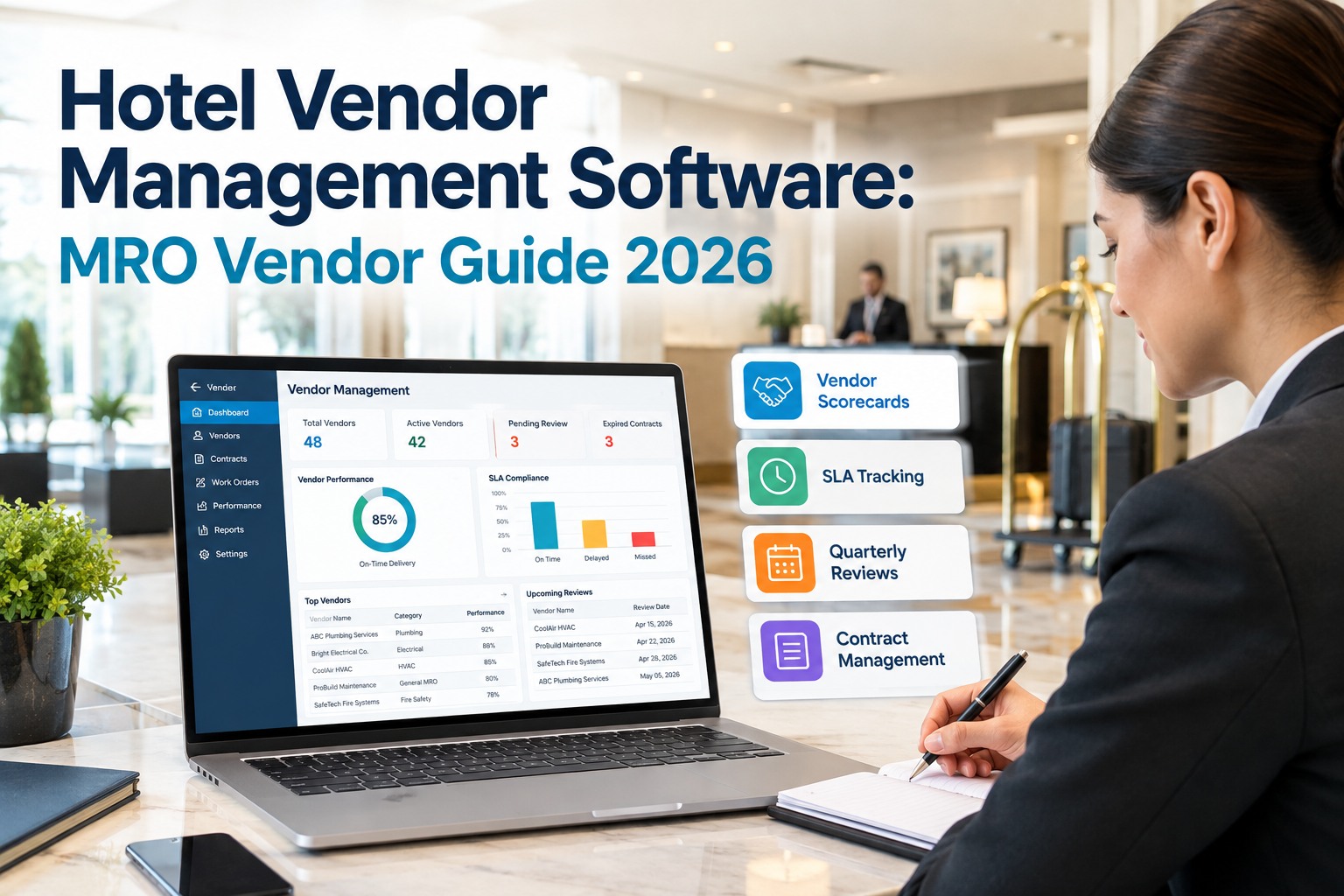
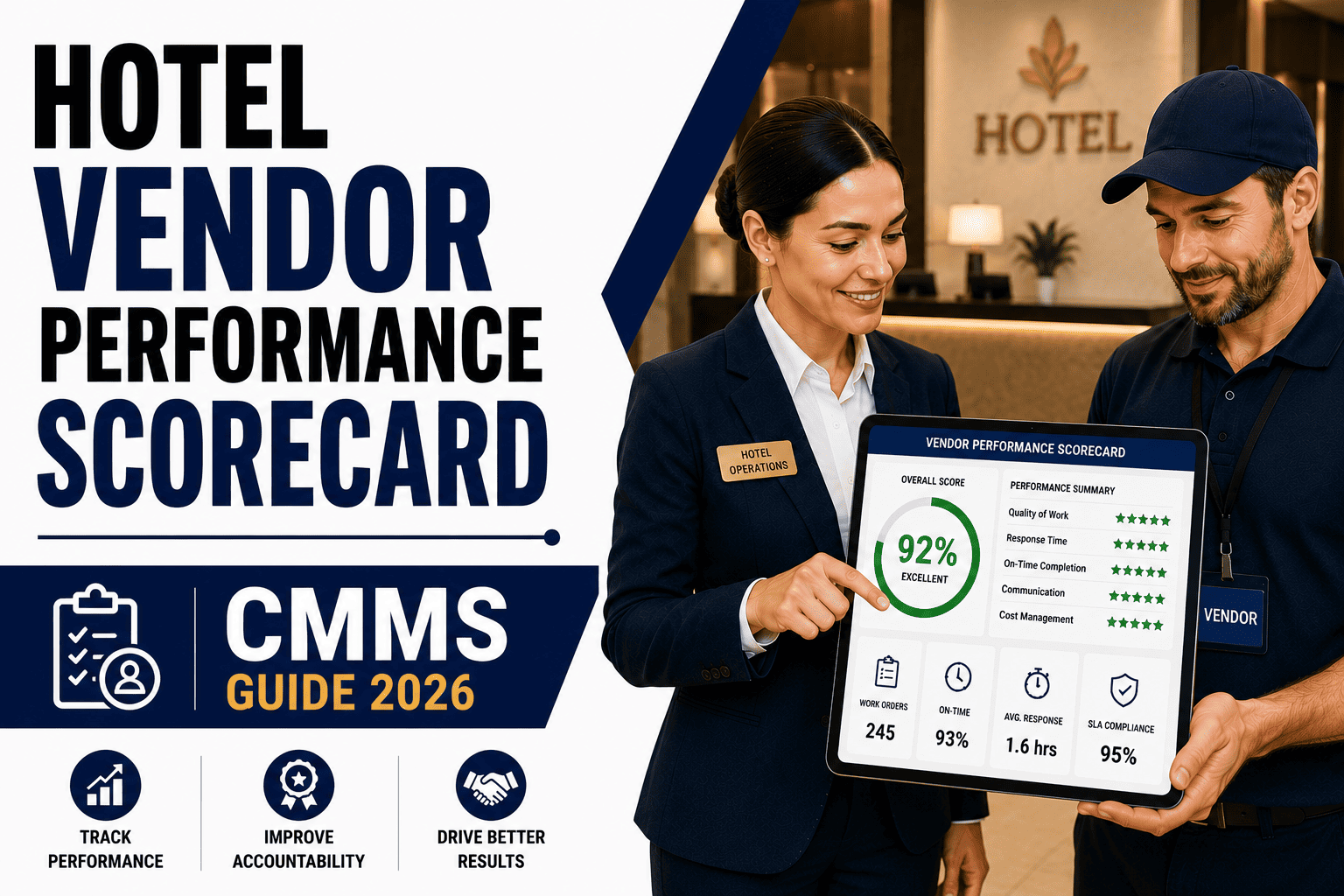
Response time, first-time-fix rate, and guest-impact hours feed a vendor scorecard. Top performers move to Tier 1 (preferred routing); consistent underperformers drop to Tier 3 or exit the program — keeping the list competitive.
Tiering Model
Preferred vendor tiering: structuring your hotel vendor program
A three-tier structure gives procurement negotiating leverage while giving properties enough depth to handle peak-season call volume without long downtime waits.
| Tier | Allocation | Negotiated Rate Discount | SLA & Response | Review Cadence |
|---|---|---|---|---|
| Tier 1 — Preferred | 60–70% of portfolio spend | 12–18% below market | 4-hour response, 90% FTFR | Quarterly scorecard |
| Tier 2 — Approved | 20–30% of portfolio spend | 6–10% below market | 8-hour response, 85% FTFR | Semi-annual review |
| Tier 3 — Backup | 5–10% overflow only | Market rate | Next-day response | Annual review |
A 24-property hotel portfolio spending $1.4M annually on outsourced maintenance moved 68% of spend to Tier 1 vendors through a CMMS-enforced program. Negotiated rates saved $182K in year one, and average guest-impact hours per maintenance event dropped 31% because Tier 1 vendors hit the 4-hour SLA 92% of the time — versus 71% for off-list vendors.
Compliance Checklist
Hotel preferred vendor compliance checklist for 2026
Use this checklist to audit whether your current vendor program is actually enforced — or just a negotiated rate sheet that properties ignore when a chiller fails at midnight.
- COI on file for every active vendor, with CMMS auto-alert 30 days pre-expiry
- W-9 and trade license stored against vendor record, not in a property inbox
- Minimum $2M general liability coverage required for Tier 1 & Tier 2
- Negotiated rate pre-populates on every work order assigned to that vendor
- Off-list vendor spend requires named approver and documented reason code
- Monthly variance report flags properties exceeding Tier 2+3 spend thresholds
- First-time-fix rate captured on every closed work order, not estimated quarterly
- Response time measured from CMMS dispatch timestamp to vendor check-in
- Scorecard auto-generates and routes to procurement every 90 days
- Complete work-order history retrievable by property, vendor, and asset in <60 seconds
- Spend by vendor category exportable for brand-standard and franchise audits
- Override approvals traceable to named individual with timestamp
ROI & Savings
Cost savings: negotiated rates vs. unmanaged vendor spend
The ROI of a CMMS-enforced preferred vendor program comes from three compounding levers — rate discounts, SLA-driven downtime reduction, and administrative time saved chasing documentation.
| Scenario | Annual Vendor Spend | Avg. Rate Paid | Guest-Impact Hrs/Event | Year-One Cost |
|---|---|---|---|---|
| No program (reactive, per-property) | $720,000 | Market rate | 6.2 hrs | $720,000 |
| Negotiated rates, no CMMS enforcement | $720,000 | 5% below market | 5.8 hrs | $684,000 |
| CMMS-enforced preferred vendor program | $720,000 | 14% below market | 4.3 hrs | $585,640 |
See OxMaint enforce your preferred vendor program across every property
Book a 30-minute demo and we'll walk you through vendor tiering, rate enforcement, and scorecards on a live hotel portfolio environment — tailored to your brand standards.
How OxMaint Helps
How OxMaint powers your hotel portfolio preferred vendor program
OxMaint combines work-order management, vendor records, and maintenance analytics into one platform — so preferred vendor compliance is enforced by the system, not by a spreadsheet nobody updates.
Vendor compliance engine
COI expiration alerts, W-9 storage, and trade-license tracking built into the vendor record. Work orders auto-block when insurance lapses — eliminating 100% of uninsured-vendor risk without manual checking.
Negotiated rate enforcement
Pre-approved vendor lists and contracted rates populate automatically at work-order creation. Off-list spend triggers a documented override workflow with named approval — so every dollar is traceable.
Vendor performance scorecards
Response time, first-time-fix rate, and cost variance are captured automatically from closed work orders. Scorecards generate quarterly and recommend tier movement — no manual data compilation.
Portfolio-wide visibility
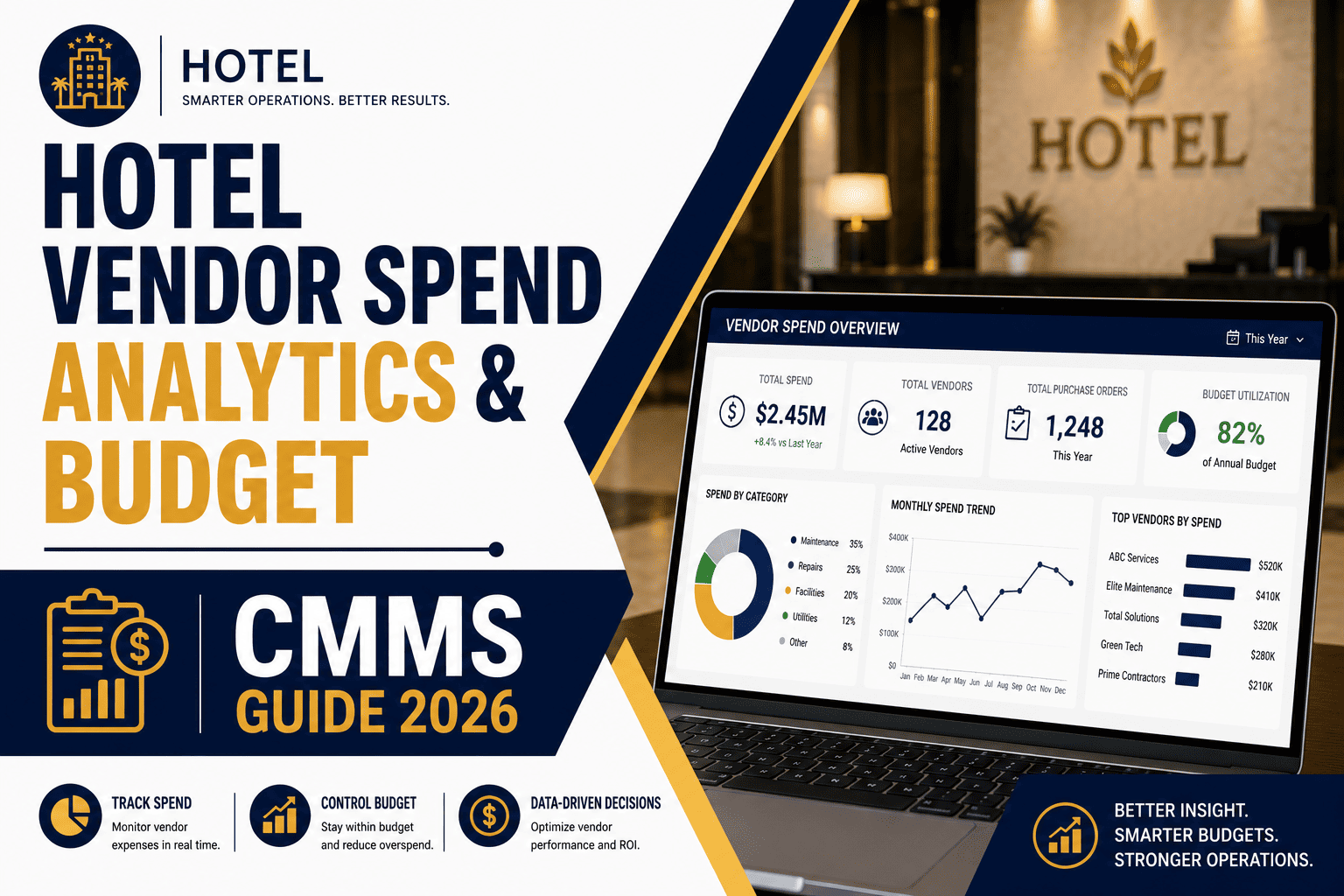
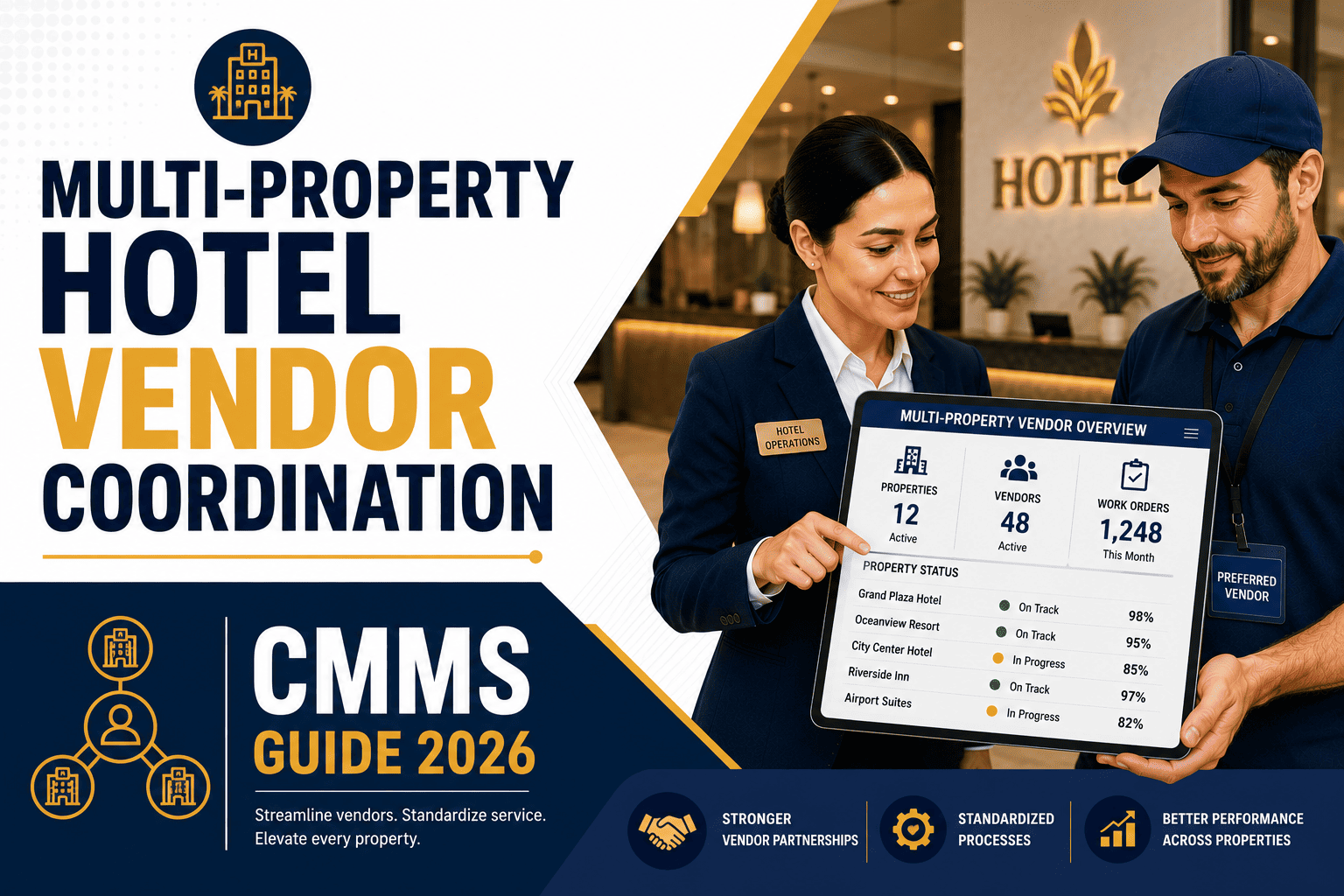
Roll up vendor spend, SLA compliance, and work-order volume by property, region, or brand — in real time. Procurement negotiates from actual data, not last quarter's estimates.
FAQ
Hotel preferred vendor program & CMMS: frequently asked questions
What is a hotel preferred vendor program?
A hotel preferred vendor program is a structured system where a hotel portfolio pre-qualifies vendors, negotiates portfolio-wide rates, and enforces use of those vendors at every property. The program typically uses a three-tier structure (preferred, approved, backup) with performance-based tier movement managed through a CMMS that tracks compliance, rates, and service quality.
How does a CMMS enforce preferred vendor compliance in hotels?
A CMMS enforces compliance by surfacing only approved vendors at work-order creation, pre-filling negotiated rates, and blocking work orders when a vendor's insurance or license has lapsed. Off-list spend requires documented override approval, and all activity is logged for audit. You can see this in action — book a demo and we'll walk you through a live hotel portfolio environment.
How much can a hotel portfolio save with negotiated vendor rates?
Hotel portfolios typically save 10–18% on outsourced maintenance spend by consolidating volume and negotiating portfolio-wide contracts, with additional savings from reduced downtime (31% fewer guest-impact hours) and administrative automation ($8K+ per property annually). A CMMS-enforced program captures the full negotiated rate because properties can't bypass it.
What should be in a pre-qualified vendor list for a hotel CMMS?
A pre-qualified vendor list should include the vendor's trade category, tier assignment, negotiated rate schedule, COI expiration date, W-9, trade license number, SLA terms (response time and first-time-fix rate target), and performance score from prior work orders. The CMMS should auto-flag expired documents and surface this data at work-order creation.
How often should hotel vendor performance be reviewed?
Tier 1 preferred vendors should be reviewed quarterly, Tier 2 semi-annually, and Tier 3 annually. Reviews should be driven by CMMS-generated scorecards covering response time, first-time-fix rate, cost variance, and guest-impact hours — not manual surveys. Consistent underperformers move down a tier or exit the program, keeping the preferred list competitive.
Turn your portfolio's scale into real vendor leverage
OxMaint's AI-powered CMMS enforces preferred vendor compliance, captures negotiated rates at every property, and scores vendor performance automatically — so your program produces measurable savings, not just a rate sheet.
Free 14-day trial · No credit card