Stormwater pump stations are the unsung heroes of municipal infrastructure—until they fail during a major rain event. When a lift station goes offline, the consequences are immediate: localized flooding, property damage, environmental contamination, and intense public scrutiny. A single pump failure can cost a municipality tens of thousands of dollars in emergency response, cleanup, and potential fines.
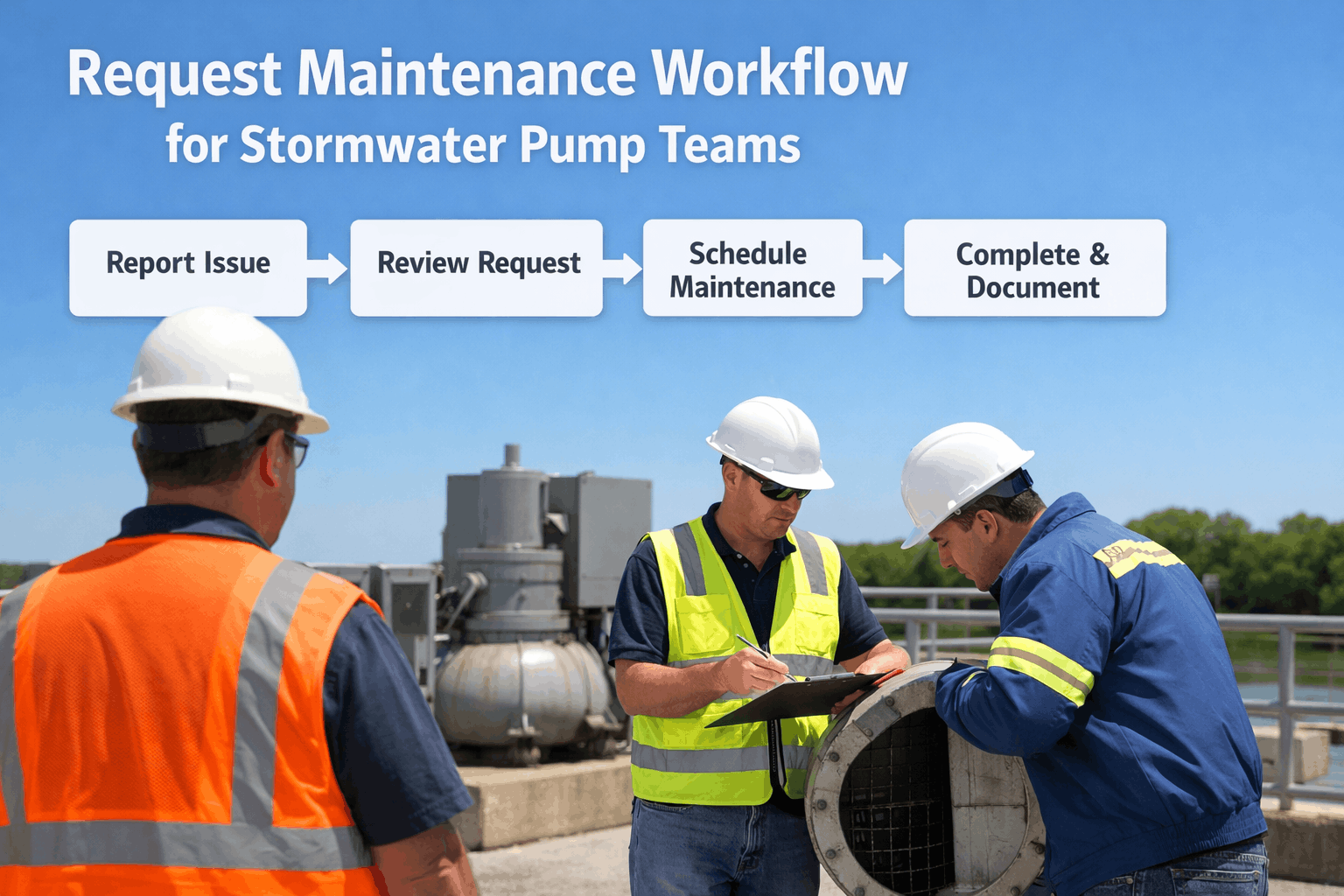
This guide provides public works directors and stormwater managers with a robust workflow for requesting and executing pump maintenance. From identifying early warning signs like vibration or amp draw anomalies to coordinating predictive repairs, we cover the essential steps to keep your stations storm-ready. Agencies ready tomodernize their stormwater management can start their free trial today.
The High Cost of Reactive Maintenance
Waiting for a high-water alarm to trigger maintenance is a risky strategy. By then, the pump has already failed to perform, and the clock is ticking on a potential overflow. Reactive maintenance forces crews into dangerous, high-stress situations often during severe weather, drives up overtime costs, and requires expedited parts shipping.
Most pump failures signal their arrival weeks in advance. A slight increase in vibration, a rise in motor temperature, or a drop in pumping efficiency (GPM/Amp) are all measurable precursors. Stormwater teams that implement condition-based monitoring can detect these signals early, scheduling repairs during dry weather and normal business hours. Start Free Trial.
How Predictive Analytics Works for Stormwater Pumps
IoT sensors installed on pump motors and bearings continuously monitor critical health parameters. Unlike periodic manual inspections, these sensors provide 24/7 visibility into pump condition. AI algorithms analyze the data to detect anomalies—like the specific vibration signature of a clogged impeller vs. a worn bearing—allowing for targeted maintenance actions.
From Data to Decision: The CMMS Integration Advantage
Sensor data is only valuable if it triggers the right action. An integrated CMMS platform automates the workflow: sensor detects anomaly -> AI validates issue -> Work order generated -> Technician dispatched with correct parts. This eliminates the "alarm fatigue" of SCBA systems and ensures critical issues are addressed before the next rain event. Agencies ready to see this integration can schedule a demo to watch the workflow firsthand.
The ROI Numbers That Matter
Maintenance costs represent a significant portion of a public works budget. Shifting from reactive to predictive maintenance delivers measurable returns. Municipalities investing in condition monitoring aren't just avoiding breakdowns—they're extending equipment life, reducing overtime, and preventing costly environmental fines.
| Metric | Reactive | Preventive | Predictive |
|---|---|---|---|
| Unplanned Downtime | High | Medium | Minimal |
| Emergency Costs | Highest | High | Lowest |
| Labor Efficiency | Poor | Moderate | High |
| Equipment Life | Shortened | Standard | +25-40% |
| Risk of Overflow | High | Medium | Low |
Expert Perspective: Why Early Detection Changes Everything
Condition monitoring in stormwater management isn't optional anymore—it's essential. Lift stations, trash racks, and generators all require proactive monitoring to identify component wear before storms hit. The agencies that invest in early detection aren't just avoiding breakdowns; they're ensuring community resilience against increasingly severe weather events.
The stormwater teams succeeding with predictive maintenance share common characteristics: they've connected their sensors to a CMMS platform that automates the response workflow. They're not just collecting data—they're receiving actionable work orders. If you're ready to explore what this looks like for your operation, our team can walk you through the implementation process and help you identify which stations should be monitored first.
Getting Started: Your First 30 Days
Implementing predictive maintenance doesn't require overhauling every lift station at once. Modern wireless sensors install quickly, connect to cloud platforms automatically, and begin establishing baseline patterns immediately. The key is starting with your most critical or problematic stations—those with a history of failure or those protecting high-value areas.
For agencies ready to move from reactive firefighting to predictive intelligence, the path forward is clear: identify critical assets, install monitoring sensors, connect to a CMMS platform that automates response workflows, and begin capturing the data that prevents failures before they happen. Book a consultation to discuss which stations in your system would benefit most from monitoring and see how the integration works in practice.